Kirjojen hintavertailu. Mukana 11 342 296 kirjaa ja 12 kauppaa.

Kirjahaku

Etsi kirjoja tekijän nimen, kirjan nimen tai ISBN:n perusteella.

7 kirjaa tekijältä C. W. Marshall

The Stagecraft and Performance of Roman Comedy

The Stagecraft and Performance of Roman Comedy

C. W. Marshall

Cambridge University Press
2006
sidottu
A comprehensive survey of Roman theatrical production, this book examines all aspects of Roman performance practice, and provides fresh insights on the comedies of Plautus and Terence. Following an introductory chapter on the experience of Roman comedy from the perspective of Roman actors and the Roman audience, addressing among other things the economic concerns of putting on a play in the Roman republic, subsequent chapters provide detailed studies of troupe size and the implications for role assignment, masks, stage action, music, and improvisation in the plays of Plautus and Terence. Marshall argues that Roman comedy was raw comedy, much more rough-and-ready than its Hellenistic precursors, but still fully conscious of its literary past. The consequences of this lead to fresh conclusions concerning the dramatic structure of Roman comedy, and a clearer understanding of the relationship between the plays-as-text and the role of improvisation during performance.
The Structure and Performance of Euripides' Helen

The Structure and Performance of Euripides' Helen

C. W. Marshall

Cambridge University Press
2014
sidottu
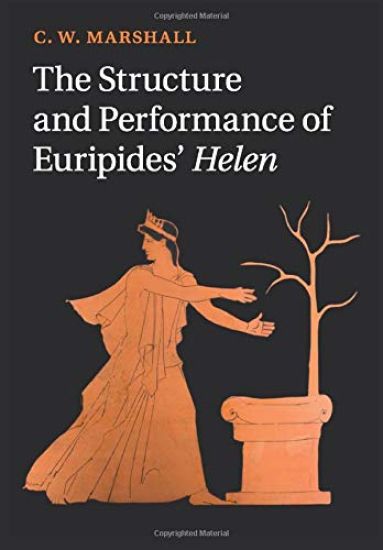
Using Euripides' play Helen as the main point of reference, C. W. Marshall's detailed study expands our understanding of Athenian tragedy and provides new interpretations of how Euripides created meaning in performance. Marshall focuses on dramatic structure to show how assumptions held by the ancient audience shaped meaning in Helen and to demonstrate how Euripides' play draws extensively on the satyr play Proteus, which was part of Aeschylus' Oresteia. Structure is presented not as a theoretical abstraction, but as a crucial component of the experience of performance, working with music, the chorus and the other plays in the tetralogy. Euripides' Andromeda in particular is shown to have resonances with Helen not previously described. Arguing that the role of the director is key, Marshall shows that the choices that a director can make about role doubling, gestures, blocking, humour, and masks play a crucial part in forming the meaning of Helen.
The Structure and Performance of Euripides' Helen

The Structure and Performance of Euripides' Helen

C. W. Marshall

Cambridge University Press
2017
pokkari
Using Euripides' play Helen as the main point of reference, C. W. Marshall's detailed study expands our understanding of Athenian tragedy and provides new interpretations of how Euripides created meaning in performance. Marshall focuses on dramatic structure to show how assumptions held by the ancient audience shaped meaning in Helen and to demonstrate how Euripides' play draws extensively on the satyr play Proteus, which was part of Aeschylus' Oresteia. Structure is presented not as a theoretical abstraction, but as a crucial component of the experience of performance, working with music, the chorus and the other plays in the tetralogy. Euripides' Andromeda in particular is shown to have resonances with Helen not previously described. Arguing that the role of the director is key, Marshall shows that the choices that a director can make about role doubling, gestures, blocking, humour, and masks play a crucial part in forming the meaning of Helen.
Aristophanes: Frogs

Aristophanes: Frogs

C. W. Marshall

Bloomsbury Academic
2020
nidottu
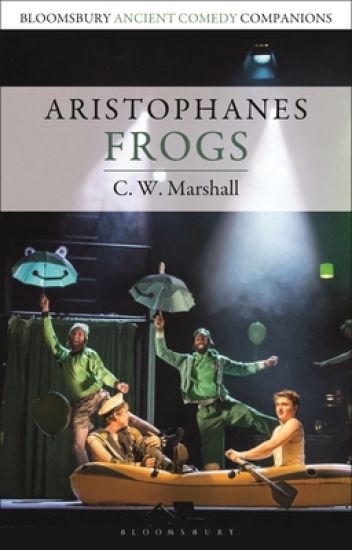
A comedy about tragedy and a play about playmaking, Aristophanes’ Frogs (405 BCE) is perhaps the most popular of ancient comedies. This new introduction guides students through the play, its themes and contemporary contexts, and its reception history. Frogs offers sustained engagement with the Athenian literary scene, with the politics of Athens at the end of the Peloponnesian War, and with the religious understanding of the fifth-century city. It presents the earliest direct criticism of theatre and a detailed description of the Underworld, and also dramatizes the place of Mystery cults in the religious life of Athens and shows the political concerns that galvanized the citizens. It is also genuinely funny, showcasing a range of comic techniques, including literary and musical parody, political invective, grotesque distortion, wordplay, prop comedy, and funny costumes. Frogs has inspired literary works by Henry Fielding, George Bernard Shaw, and Tom Stoppard.This book explores all of these features in a series of short chapters designed to be accessible to a new reader of ancient comedy. It proceeds linearly through the play, addressing a range of issues, but paying particular attention to stagecraft and performance. It also offers a bold new interpretation of the play, suggesting that the action of Frogs was not the first time Euripides and Aeschylus had competed against each other.
Aristophanes: Frogs

Aristophanes: Frogs

C. W. Marshall

Bloomsbury Academic
2020
sidottu
A comedy about tragedy and a play about playmaking, Aristophanes’ Frogs (405 BCE) is perhaps the most popular of ancient comedies. This new introduction guides students through the play, its themes and contemporary contexts, and its reception history. Frogs offers sustained engagement with the Athenian literary scene, with the politics of Athens at the end of the Peloponnesian War, and with the religious understanding of the fifth-century city. It presents the earliest direct criticism of theatre and a detailed description of the Underworld, and also dramatizes the place of Mystery cults in the religious life of Athens and shows the political concerns that galvanized the citizens. It is also genuinely funny, showcasing a range of comic techniques, including literary and musical parody, political invective, grotesque distortion, wordplay, prop comedy, and funny costumes. Frogs has inspired literary works by Henry Fielding, George Bernard Shaw, and Tom Stoppard.This book explores all of these features in a series of short chapters designed to be accessible to a new reader of ancient comedy. It proceeds linearly through the play, addressing a range of issues, but paying particular attention to stagecraft and performance. It also offers a bold new interpretation of the play, suggesting that the action of Frogs was not the first time Euripides and Aeschylus had competed against each other.
Aeschylus: Libation Bearers

Aeschylus: Libation Bearers

C. W. Marshall

Bloomsbury Academic
2017
nidottu
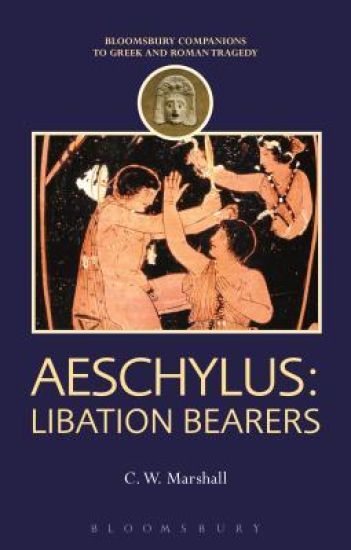
Libation Bearers is the 'middle' play in the only extant tragic trilogy to survive from antiquity, Aeschylus’ Oresteia, first produced in 458 BCE. This introduction to the play will be useful for anyone reading it in Greek or in translation. Drawing on his wide experience teaching about performance in the ancient world, C. W. Marshall helps readers understand how the play was experienced by its ancient audience. His discussion explores the impact of the chorus, the characters, theology, and the play’s apparent affinities with comedy. The architecture of choral songs is described in detail. The book also investigates the role of revenge in Athenian society and the problematic nature of Orestes’ matricide. Libation Bearers immediately entered the Athenian visual imagination, influencing artistic depictions on red-figured vases, and inspiring plays by Euripides and Sophocles. This study looks to the later plays to show how 5th-century audiences understood Libation Bearers. Modern reception of the play is integrated into the analysis. The volume includes a full range of ancillary material, providing a list of relevant red-figure vase illustrations, a glossary of technical terms, and a chronology of ancient and modern theatrical versions.
Aeschylus: Libation Bearers

Aeschylus: Libation Bearers

C. W. Marshall

Bloomsbury Academic
2017
sidottu
Libation Bearers is the 'middle' play in the only extant tragic trilogy to survive from antiquity, Aeschylus’ Oresteia, first produced in 458 BCE. This introduction to the play will be useful for anyone reading it in Greek or in translation. Drawing on his wide experience teaching about performance in the ancient world, C. W. Marshall helps readers understand how the play was experienced by its ancient audience. His discussion explores the impact of the chorus, the characters, theology, and the play’s apparent affinities with comedy. The architecture of choral songs is described in detail. The book also investigates the role of revenge in Athenian society and the problematic nature of Orestes’ matricide. Libation Bearers immediately entered the Athenian visual imagination, influencing artistic depictions on red-figured vases, and inspiring plays by Euripides and Sophocles. This study looks to the later plays to show how 5th-century audiences understood Libation Bearers. Modern reception of the play is integrated into the analysis. The volume includes a full range of ancillary material, providing a list of relevant red-figure vase illustrations, a glossary of technical terms, and a chronology of ancient and modern theatrical versions.