Kirjojen hintavertailu. Mukana 12 016 292 kirjaa ja 12 kauppaa.

Kirjahaku

Etsi kirjoja tekijän nimen, kirjan nimen tai ISBN:n perusteella.

67 kirjaa tekijältä C.G. Jung

General Bibliography of C.G. Jung's Writings
This bibliography records the initial publication of each original work by C.G. Jung, each translation, and significant revisions and expansions of both, up to 1975. In nearly every case, the compilers have examined the publications in German, French and English. Translations are recorded in Danish, Dutch, English, Finnish, French, Greek Hebrew, Hungarian, Italian, Japanese, Norwegian, Portuguese, Russian, Serbo-Croatian, Slovenian, Spanish, Swedish and Turkish. It is arranged according to language, with German and English first, publications being listed chronologically in each language.The General Bibliography lists the contents of the respective volumes of the Collected Works (of which this is Volume 19) and the Gesammelte Werke, published in Switzerland, and shows the interrelation of the two editions. It also lists Jung's seminars and provides, where possible, information about the origin of works that were first conceived as lectures. An index is provided of all the titles in English and German, and all original works in the other languages. Three specialist indexes, of personal names, organizations and societies and periodicals, complete the work.The publication of the General Bibliography, together with the General Index (Volume 20 of the Collected Works), complete the publication of the Collected Works of C.G. Jung in English.
Collected Works of C.G. Jung: Alchemical Studies (Volume 13)
The psychological and religious implications of alchemy were Jung's major preoccupation during the last thirty years of his life. The essays composing the present volume complete the publication of his alchemial researches, to which three entire volumes have been devoted ^DDL the monumental Mysterium Coniunctionis, Psychology and Alchemy, and Aion ^DDL besides shorter papers in other volumes.This collection of shorter Alchemial Studies has special value as an introduction to Jung's work on alchemy. The first study, on Chinese alchemy, marked the beginning of his interest in the subject, and was originally published in a volume written jointly with Richard Wilhelm. The other four are now published for the first time completely in English.
Collected Works of C.G. Jung: Alchemical Studies (Volume 13)
The psychological and religious implications of alchemy were Jung's major preoccupation during the last thirty years of his life. The essays composing the present volume complete the publication of his alchemial researches, to which three entire volumes have been devoted ^DDL the monumental Mysterium Coniunctionis, Psychology and Alchemy, and Aion ^DDL besides shorter papers in other volumes.This collection of shorter Alchemial Studies has special value as an introduction to Jung's work on alchemy. The first study, on Chinese alchemy, marked the beginning of his interest in the subject, and was originally published in a volume written jointly with Richard Wilhelm. The other four are now published for the first time completely in English.
General Bibliography of C.G. Jung's Writings
This bibliography records the initial publication of each original work by C.G. Jung, each translation, and significant revisions and expansions of both, up to 1975. In nearly every case, the compilers have examined the publications in German, French and English. Translations are recorded in Danish, Dutch, English, Finnish, French, Greek Hebrew, Hungarian, Italian, Japanese, Norwegian, Portuguese, Russian, Serbo-Croatian, Slovenian, Spanish, Swedish and Turkish. It is arranged according to language, with German and English first, publications being listed chronologically in each language.The General Bibliography lists the contents of the respective volumes of the Collected Works (of which this is Volume 19) and the Gesammelte Werke, published in Switzerland, and shows the interrelation of the two editions. It also lists Jung's seminars and provides, where possible, information about the origin of works that were first conceived as lectures. An index is provided of all the titles in English and German, and all original works in the other languages. Three specialist indexes, of personal names, organizations and societies and periodicals, complete the work.The publication of the General Bibliography, together with the General Index (Volume 20 of the Collected Works), complete the publication of the Collected Works of C.G. Jung in English.
THE COLLECTED WORKS OF C. G. JUNG: Mysterium Coniunctionis (Volume 14)
Mysterium Coniunctionis was first published in the Collected Works of C.G. Jung in 1963. For this second edition of the work, numerous corrections and revisions have been made in cross-references to other volumes of the Collected Works now available and likewise in the Bibliography.Mysterium Coniunctionis was Jung's last work of book length and gives a final account of his lengthy researches in alchemy. It was Jung's empirical discovery that certain key problems of modern man were prefigures in what t he alchemists called their 'art' or 'process'. Jung maintained that 'the world of alchemical symbols does not belong to the rubbish heap of the past, but stands in a very real and living relationship to our most recent discoveries concerning the psychology of the unconscious'. The volume includes ten plates, a Bibliography, an Index, and an Appendix of original Latin and Greek texts quoted in the work.
THE COLLECTED WORKS OF C. G. JUNG: Symbols of Transformation (Volume 5)
In 1911 Jung published a book of which he says: '...it laid down a programme to be followed for the next few decades of my life.' It was vastly erudite and covered innumerable fields of study: psychiatry, psychoanalysis, ethnology and comparitive religion amongst others. In due course it became a standard work and was translated into French, Dutch and Italian as well as English, in which language it was given the well-known but somewhat misleading title of The Psychology of the Unconscious.In the Foreword to the present revised edition which first appeared in 1956, Jung says: '...it was the explosion of all those psychic contents which could find no room, no breathing space, in the constricting atmosphere of Freudian psychology... It was an attempt, only partially successful, to create a wider setting for medical psychology and to bring the whole of the psychic phenomena within its purview.'For this edition, appearing ten years after the first, bibliographical citations and entries have been revised in the light of subsequent publications in the Collected Works and in the standard edition of Freud's works, some translations have been substituted in quotations, and other essential corrections have been made, but there have been no changes of substance in the text.
Collected Works of C.G. Jung

Collected Works of C.G. Jung

C.G. Jung

TAYLOR FRANCIS LTD
2023
muu
The Collected Works of C. G. Jung is a multi-volume work containing the writings of psychiatrist Carl Jung. Contains revised versions of works previously published, works not previously translated, and new translations of virtually all of Jung's writings. Prior to his death he supervised the textual revision. Several of the volumes are extensively illustrated; each contains an index and most a bibliography.
Collected Works of C.G. Jung
The Collected Works of C. G. Jung is a multi-volume work containing the writings of psychiatrist Carl Jung.Contains revised versions of works previously published, works not previously translated, and new translations of virtually all of Jung's writings. Prior to his death he supervised the textual revision.Several of the volumes are extensively illustrated; each contains an index and most a bibliography.
The Gnostic Jung

The Gnostic Jung

C.G. Jung

Routledge
1992
nidottu
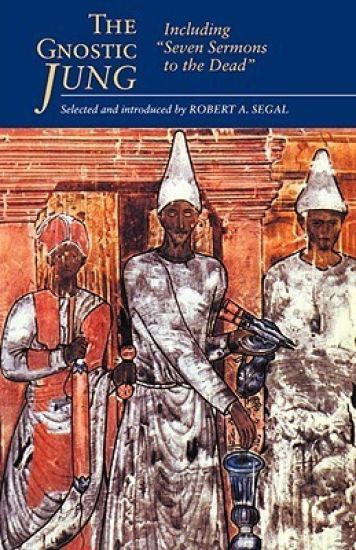
Gnosticism was for C.G. jung the chief prefiguration of his analytical psychology. In this volume Robert Segal, an authority on theories of myth and Gnosticism, has searched the Jungian corpus for Jung's main discussions of this ancient form of spirituality. The progression in Gnosticism from sheer bodily existence to the release of the immaterial spark imprisoned in the body - and the reunion of that spark with the godhead - represents for Jung the psychological progression from ego consciousness to the ego's rediscovery of the unconscious, and the ego's integration with the unconscious to forge the self. Included in this volume are both Jung's sole work devoted entirely to Gnosticism, "Gnostic Symbols of the Self," and his own Gnostic myth, "Seven Sermons to the Dead." The book also contains key essays by Father Victor White and Gilles Quispel, whose "C.G. Jung und die Gnosis" is here translated for the first time. In his extensive introduction Segal discusses the parallel for Jung between ancient Gnostic and contemporary Jungian patients, the Jungian meaning of Gnostic myths and of the Seven Sermons, Jung's possible misinterpretation of Gnosticism, and the common characterization of Jung himself as a Gnostic.
Jung on Alchemy

Jung on Alchemy

C.G. Jung

Routledge
1994
nidottu
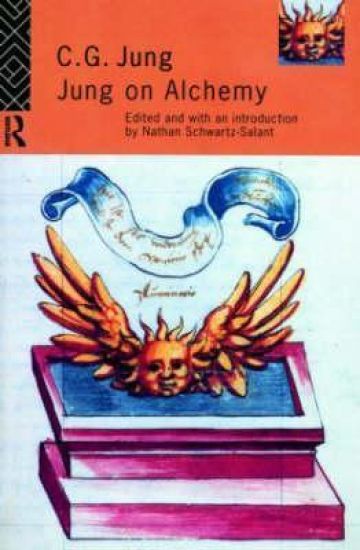
Jung realized that the fantastic images of alchemy - fire-breathing dragons, hermaphrodites, lions giving birth to the sun - are not so far from our daily lives. He made sense of such seemingly incomprehensible symbols and showed how, in fact, such images represent a usually unseen level that has immense power over how we feel, think and imagine our existence. Nathan Schwartz-Salant, a leading Jungian analyst with a special interest in alchemy, has brought together a key selection of Jung's writings on alchemy. His lucid introduction provides a clear account of the basics of alchemy and explains to the reader Jung's ideas on alchemical studies.Jung on Alchemy provides an excellent introduction to one of Jung's most exciting, yet most challenging, fields of study.
Jung on the East

Jung on the East

C.G. Jung

Routledge
1994
nidottu
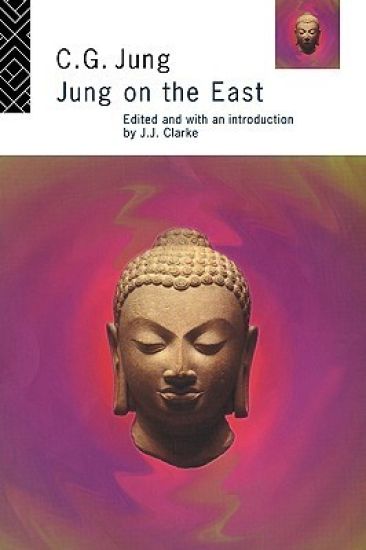
Jung's interest in the East was deep-rooted and life-long, and the traditional teachings of China and India played an important role in his personal and intellectual development, as well as in the formations of the ideas and practices that are central to Jungian psychology.Jung on the East brings together key selections from his work on Buddhism, yoga and Taoism, and on such classic texts as the I Ching and The Tibetan Book of the Dead. It also includes accounts on his own journey to India.The clear and perceptive introduction sets the context for Jung's encounter with the East, and provides an excellent framework that will enable the reader to get the most out of Jung's writings in this area. The book will be of interest to everyone seeking to further their understanding both of Jung, and of Eastern thought and spirituality.
Jung on Active Imagination

Jung on Active Imagination

C.G. Jung

Routledge
1997
nidottu
Jung's discovery of active imagination is one of the most important milestones in his personal and professional life. Prompted by the trauma of his break up with Freud, he developed a method of self healing which later formed the basis of his analytic practice and is now regarded as the origin of non-directive psychotherapy and creative arts therapies. Jungian analyst, Joan Chodorow brings together a key selection of Jung's writings. In her introduction to this selection of his writings Joan Chodorow explains clearly Jung's method of focusing the conscious mind on unconscious processes as a means of achieving self-knowledge and individuation.
Jung on Synchronicity and the Paranormal
Jung's lifelong interest in the paranormal contributed significantly to the development of his influential but controversial theory of synchronicity. In this volume Roderick Main brings together a selection of Jung's writings on topics from well-known and less accessible sources to explore the close relationship between them.In a searching introduction he addresses all the main aspects of synchronicity and clarifies the confusions and difficulties commonly experienced by readers interested in achieving a real understanding of what Jung had to say.This book provides an excellent companion to Jung's Synchronicity: An Acausal Connecting Principle (Routledge) and reveals the full extent and range of Jung's researches into a range of psychic phenomena which are still not yet adequately explained.
Jung on Synchronicity and the Paranormal
Jung's lifelong interest in the paranormal contributed significantly to the development of his influential but controversial theory of synchronicity. In this volume Roderick Main brings together a selection of Jung's writings on topics from well-known and less accessible sources to explore the close relationship between them.In a searching introduction he addresses all the main aspects of synchronicity and clarifies the confusions and difficulties commonly experienced by readers interested in achieving a real understanding of what Jung had to say.This book provides an excellent companion to Jung's Synchronicity: An Acausal Connecting Principle (Routledge) and reveals the full extent and range of Jung's researches into a range of psychic phenomena which are still not yet adequately explained.
The Gnostic Jung

The Gnostic Jung

C.G. Jung

Routledge
2016
sidottu
Gnosticism was for C.G. jung the chief prefiguration of his analytical psychology. In this volume Robert Segal, an authority on theories of myth and Gnosticism, has searched the Jungian corpus for Jung's main discussions of this ancient form of spirituality. The progression in Gnosticism from sheer bodily existence to the release of the immaterial spark imprisoned in the body - and the reunion of that spark with the godhead - represents for Jung the psychological progression from ego consciousness to the ego's rediscovery of the unconscious, and the ego's integration with the unconscious to forge the self. Included in this volume are both Jung's sole work devoted entirely to Gnosticism, "Gnostic Symbols of the Self," and his own Gnostic myth, "Seven Sermons to the Dead." The book also contains key essays by Father Victor White and Gilles Quispel, whose "C.G. Jung und die Gnosis" is here translated for the first time. In his extensive introduction Segal discusses the parallel for Jung between ancient Gnostic and contemporary Jungian patients, the Jungian meaning of Gnostic myths and of the Seven Sermons, Jung's possible misinterpretation of Gnosticism, and the common characterization of Jung himself as a Gnostic.
Jung on Alchemy

Jung on Alchemy

C.G. Jung

Routledge
2016
sidottu
Jung realized that the fantastic images of alchemy - fire-breathing dragons, hermaphrodites, lions giving birth to the sun - are not so far from our daily lives. He made sense of such seemingly incomprehensible symbols and showed how, in fact, such images represent a usually unseen level that has immense power over how we feel, think and imagine our existence. Nathan Schwartz-Salant, a leading Jungian analyst with a special interest in alchemy, has brought together a key selection of Jung's writings on alchemy. His lucid introduction provides a clear account of the basics of alchemy and explains to the reader Jung's ideas on alchemical studies.Jung on Alchemy provides an excellent introduction to one of Jung's most exciting, yet most challenging, fields of study.
Jung on the East

Jung on the East

C.G. Jung

Routledge
2016
sidottu
Jung's interest in the East was deep-rooted and life-long, and the traditional teachings of China and India played an important role in his personal and intellectual development, as well as in the formations of the ideas and practices that are central to Jungian psychology.Jung on the East brings together key selections from his work on Buddhism, yoga and Taoism, and on such classic texts as the I Ching and The Tibetan Book of the Dead. It also includes accounts on his own journey to India.The clear and perceptive introduction sets the context for Jung's encounter with the East, and provides an excellent framework that will enable the reader to get the most out of Jung's writings in this area. The book will be of interest to everyone seeking to further their understanding both of Jung, and of Eastern thought and spirituality.
The Archetypes and the Collective Unconscious
The concept of 'Archteypes' and the hypothesis of 'A Collective Unconscious' are two of Jung's better known and most exciting ideas. In this volume - taken from the Collected Works and appearing in paperback for the first time - Jung describes and elaborates the two concepts.Three essays establish the theoretical basis which are then followed by essays on specific archetypes. The relation of these to the process of individuation is examined in the last section. The Archetypes and the Collective Unconscious is one of Jung's central works. There are many illustrations in full colour.
Aion

Aion

C.G. Jung

Routledge
1991
nidottu
Aion is one of a number of major works that Jung wrote during his seventies that were concerned with the relations between psychology, alchemy and religion.He is particularly concerned in this volume with the rise of Christianity and with the figure of Christ. He explores how Christianity came about when it did, the importance of the figure of Christ and the identification of the figure of Christ with the archetype of the Self. A matter of special importance to Jung in his seventies - the problem of opposites, particularly good and evil - is further discussed and the importance of the symbolism of the fish, which recurs as a symbol of both Christ and the devil, is examined.As a study of the archetype of the self, Aion complements The Archetypes and the Collective Unconscious, which is also published in paperback.
The Development of Personality
Though Jung's main researches have centred on the subject of individuation as an adult ideal he has a unique contribution to make to the psychology of childhood.Jung repeatedly underlined the importance of the psychology of parents and teachers in a child's development and he emphasized that an unsatisfactory psychological relationship between parents may be an important cause of disorders in childhood. He maintained that all real education of children needs teachers who not only know how to learn but who can also develop their own personalities. Jung devotes a large part of the book to expounding his views on these important subjects. There is also an outline of the theory of child development, a delightful snapshot from the life of a girl called Anna and her parents, and a stimulating discussion of marriage as a psychological relationship. Finally there is a chapter on child development and individuation.