Kirjojen hintavertailu. Mukana 11 717 486 kirjaa ja 12 kauppaa.

Kirjahaku

Etsi kirjoja tekijän nimen, kirjan nimen tai ISBN:n perusteella.

9 kirjaa tekijältä C.R. Kitchin

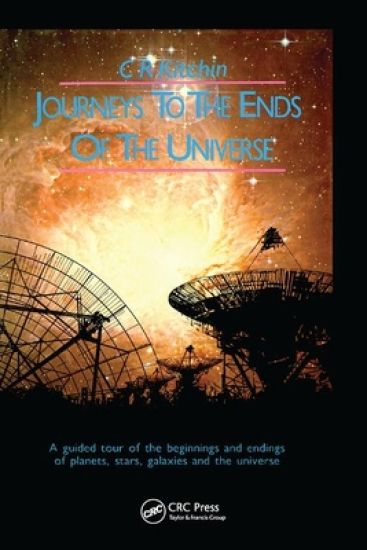
Journeys to the Ends of the Universe
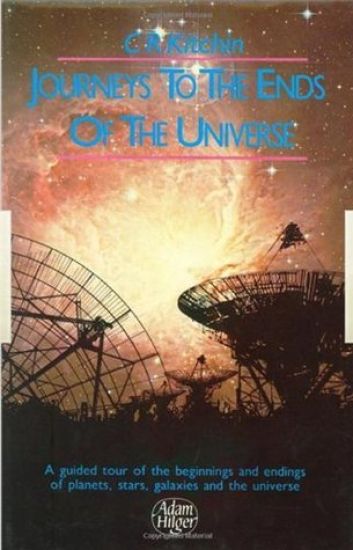
Journeys to the Ends of the Universe presents a tour through the universe from the big bang onward. The book explores the limits of knowledge where scientific fact overtakes and merges with the wilder speculations of science fiction. The beginnings of galaxies, stars, planets, and even life itself are related back to the raveled turmoil of the first few seconds and years of life in the cosmos. The journey continues past the ultimate fate of the solar system to probe the nature of supernovae. The future of galaxies, clusters of galaxies, super-clusters of clusters of galaxies, and so on leads toward the finale, where the author provides some bizarre musings of physicists and astronomers, suggesting possible destinies for the universe stretching its present age billions of times into the future.
Remote and Robotic Investigations of the Solar System
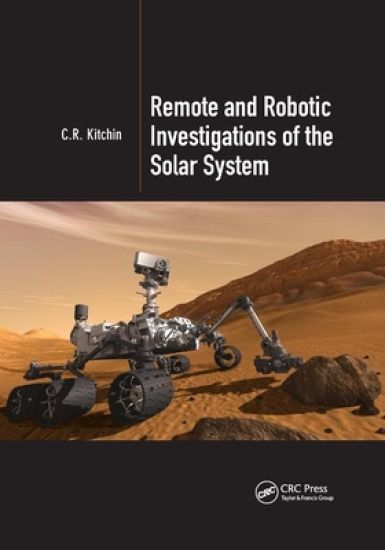
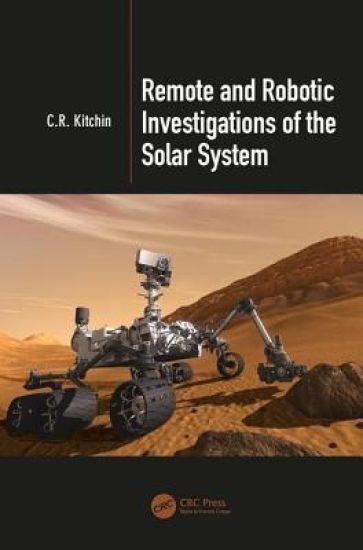
Interest in and knowledge of the techniques utilised to investigate our solar system has been growing rapidly for decades and has now reached a stage of maturity. Therefore, the time has now arrived for a book that provides a cohesive and coherent account of how we have obtained our present knowledge of solar system objects, not including the Sun.Remote and Robotic Investigations of the Solar System covers all aspects of solar system observations: the instruments, their theory, and their practical use both on Earth and in space. It explores the state-of-the-art telescopes, cameras, spacecraft and instruments used to analyse the interiors, surfaces, atmospheres and radiation belts of solar system objects, in addition to radio waves, gamma rays, cosmic rays and neutrinos. This book would be ideal for university students undertaking physical science subjects and professionals working in the field, in addition to amateur astronomers and anyone interested in learning more about our local astronomical neighbours.
Journeys to the Ends of the Universe

Journeys to the Ends of the Universe

C.R. Kitchin

Institute of Physics Publishing
1990
sidottu
Journeys to the Ends of the Universe presents a tour through the universe from the big bang onward. The book explores the limits of knowledge where scientific fact overtakes and merges with the wilder speculations of science fiction. The beginnings of galaxies, stars, planets, and even life itself are related back to the raveled turmoil of the first few seconds and years of life in the cosmos. The journey continues past the ultimate fate of the solar system to probe the nature of supernovae. The future of galaxies, clusters of galaxies, super-clusters of clusters of galaxies, and so on leads toward the finale, where the author provides some bizarre musings of physicists and astronomers, suggesting possible destinies for the universe stretching its present age billions of times into the future.
Optical Astronomical Spectroscopy

Optical Astronomical Spectroscopy

C.R. Kitchin

Institute of Physics Publishing
1995
nidottu
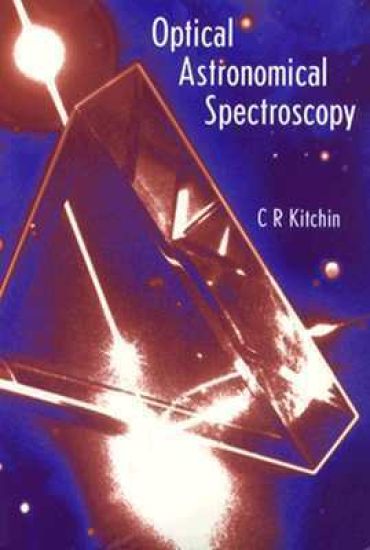
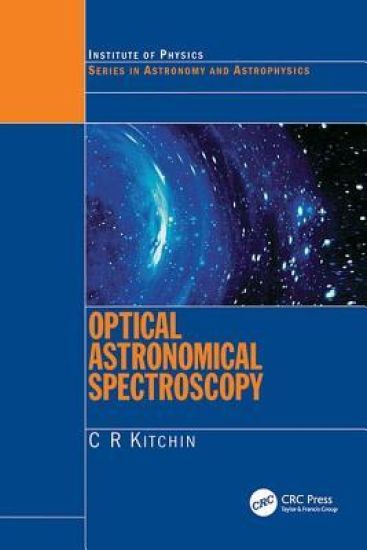
A concise introduction, Optical Astronomical Spectroscopy appeals to the newcomer of astronomical spectroscopy and assumes no previous specialist knowledge. Beginning from the physical background of spectroscopy with a clear explanation of energy levels and spectroscopic notation, the book proceeds to introduce the main techniques of optical spectroscopy and the range of instrumentation that is available. With clarity and directness, it then describes the applications of spectroscopy in modern astronomy, such as the solar system, stars, nebulae, the interstellar medium, and galaxies, giving an immediate appeal to beginners.
Habitable Exoplanets for Extra-Terrestrials

Habitable Exoplanets for Extra-Terrestrials

C.R. Kitchin

TAYLOR FRANCIS LTD
2024
sidottu
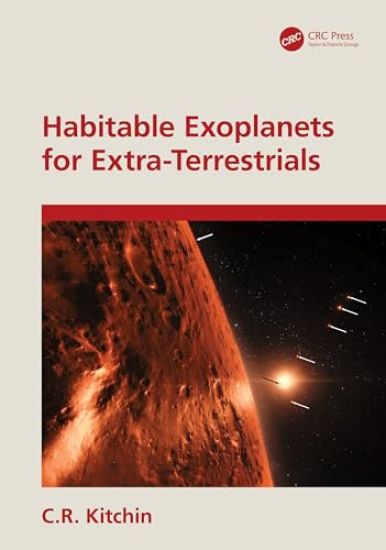
This book explores the questions of What, Why, When, How and Where we might find Extra-Terrestrials (a.k.a. Aliens) and their habitats throughout the Universe – and Who might they be? Starting from ourselves and the Earth and eventually speculating about life-forms that might span multiple Universes, it provides an accessible introduction to extra-terrestrial life, the search for extra-terrestrial intelligence and exoplanets. It will enable readers to appreciate, follow and sometimes answer questions on life and planets outside Earth. It details these exciting topics by pondering what comprises an alien life form and what suitable habitats might exist for them inside and out of our solar system. The book also looks ahead to the future and the realities of finding alien life and the possibilities of mankind leaving Earth and living on another planet.This guide is accessible to those without a formal scientific or mathematical background. It will also be of interest to students of astrobiology, astronomy, astrophysics, planets throughout the Universe, the origin and evolution of life-forms beyond the Earth and (perhaps) of the ultimate limits attainable by life in the Universe, who are looking to learn more about those same topics, but which are outside their own specialisms.Key Features:Combines the exciting topics of extra-terrestrial life, the search for life outside Earth and exoplanets into one accessible guideContains no complex mathematical formulae or contentAuthored by a professional educator and a professional and amateur astronomer, with a life-long interest in getting everyone and anyone as fascinated by astronomy and its related subjects as he himself has been, since discovering the subject in early secondary school
Optical Astronomical Spectroscopy
A concise introduction, Optical Astronomical Spectroscopy appeals to the newcomer of astronomical spectroscopy and assumes no previous specialist knowledge. Beginning from the physical background of spectroscopy with a clear explanation of energy levels and spectroscopic notation, the book proceeds to introduce the main techniques of optical spectroscopy and the range of instrumentation that is available. With clarity and directness, it then describes the applications of spectroscopy in modern astronomy, such as the solar system, stars, nebulae, the interstellar medium, and galaxies, giving an immediate appeal to beginners.
Astrophysical Techniques

Astrophysical Techniques

C.R. Kitchin

CRC Press
2020
sidottu
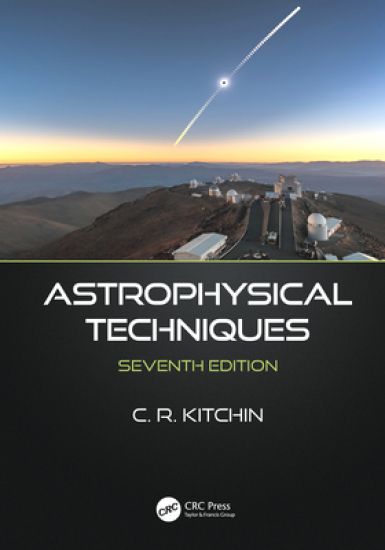
Long used in undergraduate and introductory graduate courses, Astrophysical Techniques, Seventh Edition provides an accessible yet comprehensive account of the innovate instruments, detectors, and techniques employed in astronomy and astrophysics. Emphasizing the underlying unity of all astronomical observations, this popular textbook provides a coherent state-of-the-art account of the instruments and techniques used in current astronomy and astrophysics.Fully updated throughout, this seventh edition builds upon the sixth edition, covering improved techniques and cutting-edge methods in the field, as well as other exciting new developments in gravitational waves, dark matter and energy, the use of photonics, and astronomy education and outreach, in addition to further detailed discussions on the latest scientific instruments and individual detectors. The book is written in a very accessible manner, and most of the mathematics is accessible to those who have attended a mathematics course in their final years at school. Nevertheless, the treatment of the topics in general is at a sufficiently high level to be of use to those professionals seeking technical information in areas of astronomy with which they might not be completely familiar.Key Features: Details the instrumentation and theory of astronomical observations, including radio waves, gamma rays, cosmic rays, neutrinos, gravitational waves and dark matter and energy and more Presents the background theory and operating practice of state-of-the-art detectors and instruments Fully updated to contain the latest technology and research developments
Astrophysical Techniques

Astrophysical Techniques

C.R. Kitchin

CRC Press
2020
nidottu
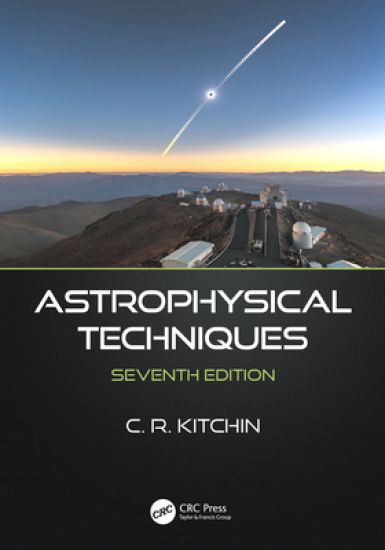
Long used in undergraduate and introductory graduate courses, Astrophysical Techniques, Seventh Edition provides an accessible yet comprehensive account of the innovate instruments, detectors, and techniques employed in astronomy and astrophysics. Emphasizing the underlying unity of all astronomical observations, this popular textbook provides a coherent state-of-the-art account of the instruments and techniques used in current astronomy and astrophysics.Fully updated throughout, this seventh edition builds upon the sixth edition, covering improved techniques and cutting-edge methods in the field, as well as other exciting new developments in gravitational waves, dark matter and energy, the use of photonics, and astronomy education and outreach, in addition to further detailed discussions on the latest scientific instruments and individual detectors. The book is written in a very accessible manner, and most of the mathematics is accessible to those who have attended a mathematics course in their final years at school. Nevertheless, the treatment of the topics in general is at a sufficiently high level to be of use to those professionals seeking technical information in areas of astronomy with which they might not be completely familiar.Key Features: Details the instrumentation and theory of astronomical observations, including radio waves, gamma rays, cosmic rays, neutrinos, gravitational waves and dark matter and energy and more Presents the background theory and operating practice of state-of-the-art detectors and instruments Fully updated to contain the latest technology and research developments
Remote and Robotic Investigations of the Solar System
Interest in and knowledge of the techniques utilised to investigate our solar system has been growing rapidly for decades and has now reached a stage of maturity. Therefore, the time has now arrived for a book that provides a cohesive and coherent account of how we have obtained our present knowledge of solar system objects, not including the Sun.Remote and Robotic Investigations of the Solar System covers all aspects of solar system observations: the instruments, their theory, and their practical use both on Earth and in space. It explores the state-of-the-art telescopes, cameras, spacecraft and instruments used to analyse the interiors, surfaces, atmospheres and radiation belts of solar system objects, in addition to radio waves, gamma rays, cosmic rays and neutrinos. This book would be ideal for university students undertaking physical science subjects and professionals working in the field, in addition to amateur astronomers and anyone interested in learning more about our local astronomical neighbours.