Kirjojen hintavertailu. Mukana 11 699 587 kirjaa ja 12 kauppaa.

Kirjahaku

Etsi kirjoja tekijän nimen, kirjan nimen tai ISBN:n perusteella.

2 kirjaa tekijältä Cael M. Keegan

Lana and Lilly Wachowski

Lana and Lilly Wachowski

Cael M. Keegan

University of Illinois Press
2018
sidottu
Lana and Lilly Wachowski have redefined the technically and topically possible while joyfully defying audience expectations. Visionary films like The Matrix trilogy and Cloud Atlas have made them the world's most influential transgender media producers, and their coming out retroactively put trans* aesthetics at the very center of popular American culture. Cáel M. Keegan views the Wachowskis' films as an approach to trans* experience that maps a transgender journey and the promise we might learn "to sense beyond the limits of the given world." Keegan reveals how the filmmakers take up the relationship between identity and coding (be it computers or genes), inheritance and belonging, and how transgender becoming connects to a utopian vision of a post-racial order. Along the way, he theorizes a trans* aesthetic that explores the plasticity of cinema to create new social worlds, new temporalities, and new sensory inputs and outputs. Film comes to disrupt, rearrange, and evolve the cinematic exchange with the senses in the same manner that trans* disrupts, rearranges, and evolves discrete genders and sexes.
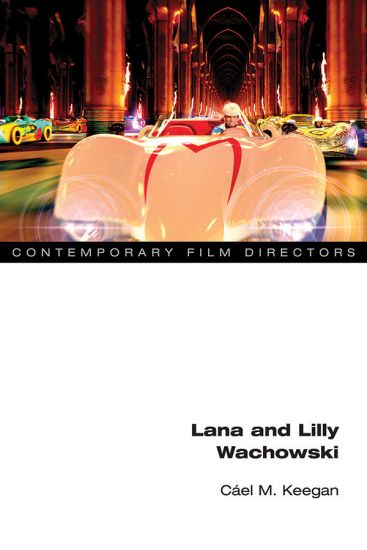
Lana and Lilly Wachowski

Lana and Lilly Wachowski

Cael M. Keegan

University of Illinois Press
2018
nidottu
Lana and Lilly Wachowski have redefined the technically and topically possible while joyfully defying audience expectations. Visionary films like The Matrix trilogy and Cloud Atlas have made them the world's most influential transgender media producers, and their coming out retroactively put trans* aesthetics at the very center of popular American culture. Cáel M. Keegan views the Wachowskis' films as an approach to trans* experience that maps a transgender journey and the promise we might learn "to sense beyond the limits of the given world." Keegan reveals how the filmmakers take up the relationship between identity and coding (be it computers or genes), inheritance and belonging, and how transgender becoming connects to a utopian vision of a post-racial order. Along the way, he theorizes a trans* aesthetic that explores the plasticity of cinema to create new social worlds, new temporalities, and new sensory inputs and outputs. Film comes to disrupt, rearrange, and evolve the cinematic exchange with the senses in the same manner that trans* disrupts, rearranges, and evolves discrete genders and sexes.