Kirjojen hintavertailu. Mukana 11 244 527 kirjaa ja 12 kauppaa.

Kirjahaku

Etsi kirjoja tekijän nimen, kirjan nimen tai ISBN:n perusteella.

3 kirjaa tekijältä Caleb Kelly

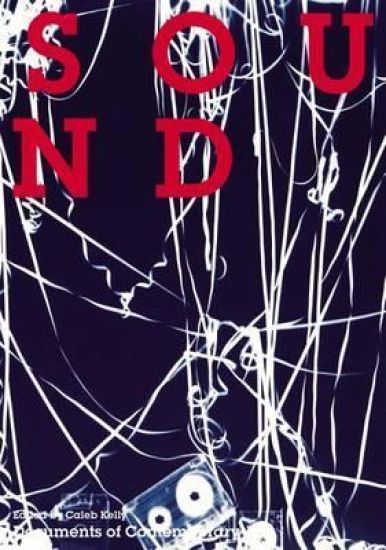
Sound

Sound

Caleb Kelly

Whitechapel Gallery
2011
nidottu
Part of the acclaimed 'Documents of Contemporary Art' series of anthologies . The ‘sonic turn’ in recent art reflects a wider cultural awareness that sight no longer dominates our perception or understanding of contemporary reality. The background buzz of myriad mechanically reproduced sounds increasingly mediates our lives. Tuning in to this incessant auditory stimulus some of our most influential artists have investigated the corporeal, cultural and political resonance. In tandem with recent experimental music and technology, art has opened up to hitherto excluded dimensions of noise, silence and the act of listening. Artists working with sound have engaged in new forms of aesthetic encounter with the city and nature, the everyday and cultural otherness, technological effects and psychological states. New perspectives on sound have generated a wave of scholarship in musicology, cultural studies and the social sciences. But the equally important rise of sound in the arts since 1960 has so far been sparsely documented. This volume is the first sourcebook to provide, through original critical writings and artists’ statements, a genealogy of sonic pathways into the arts; philosophical reflections on the meanings of noise and silence; dialogues between art and music; investigations of the role of listening and acoustic space; and a comprehensive survey of sound works by international artists from the avant-garde era to the present. Artists surveyed include: Marina Abramovic, Vito Acconci, Doug Aitken, Maryanne Amacher, Laurie Anderson, John Cage, Kim Cascone, Martin Creed, Paul DeMarinis, Bill Fontana, Kim Gordon, Dan Graham, Ryoji Ikeda, Mike Kelley, Christina Kubisch, Bernhard Leitner, Alvin Lucier, Len Lye, Christian Marclay, Max Neuhaus, Carsten Nicolai, Hermann Nitsch, Yoko Ono, Nam June Paik, Luigi Russolo, Karin Sander, Mieko Shiomi, Michael Snow and Bill Viola. Writers include: Ralph T. Coe, Christoph Cox, Suzanne Delehanty, William Furlong, Liam Gillick, Paul Hegarty, Branden W. Joseph, Douglas Kahn, Dan Lander, W.J.T. Mitchell, Michael Nyman, R. Murray Schafer, Michel Serres, David Toop and Paul Virilio.
Gallery Sound

Gallery Sound

Caleb Kelly

Bloomsbury Academic USA
2017
nidottu
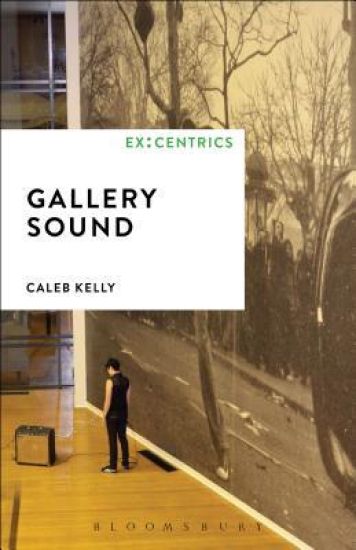
Sound is an integral part of contemporary art. Once understood to be a marginal practice, increasingly we encounter sound in art exhibitions through an array of sound making works in various art forms, at times played to very high audio levels. However, works of art are far from the only thing one might hear: music performances, floor talks, exhibition openings and the noisy background sounds that emanate from the gallery café fill contemporary exhibition environments. Far from being hallowed spaces of quiet reflection, what this means is that galleries have swiftly become very noisy places. As such, a straightforward consideration of artworks alone can then no longer account for our experiences of art galleries and museums. To date there has been minimal scholarship directed towards the intricacies of our experiences of sound that occur within the bounds of this purportedly ‘visual’ art space. Kelly addresses this gap in knowledge through the examination of historical and contemporary sound in gallery environments, broadening our understanding of artists who work with sound, the institutions that exhibit these works, and the audiences that visit them. Gallery Sound argues for the importance of all of the sounds to be heard within the walls of art spaces, and in doing so listens not only to the deliberate inclusion of sound within the art gallery in the form of artworks, performances, and music, but also to its incidental sounds, such as their ambient sounds and the noise generated by audiences. More than this, however, Gallery Sound turns its attention to the ways in which the acoustic characteristics specific to gallery spaces have been mined by artists for creative outputs, ushering in entirely new art forms.
Gallery Sound

Gallery Sound

Caleb Kelly

Bloomsbury Academic USA
2017
sidottu
Sound is an integral part of contemporary art. Once understood to be a marginal practice, increasingly we encounter sound in art exhibitions through an array of sound making works in various art forms, at times played to very high audio levels. However, works of art are far from the only thing one might hear: music performances, floor talks, exhibition openings and the noisy background sounds that emanate from the gallery café fill contemporary exhibition environments. Far from being hallowed spaces of quiet reflection, what this means is that galleries have swiftly become very noisy places. As such, a straightforward consideration of artworks alone can then no longer account for our experiences of art galleries and museums. To date there has been minimal scholarship directed towards the intricacies of our experiences of sound that occur within the bounds of this purportedly ‘visual’ art space. Kelly addresses this gap in knowledge through the examination of historical and contemporary sound in gallery environments, broadening our understanding of artists who work with sound, the institutions that exhibit these works, and the audiences that visit them. Gallery Sound argues for the importance of all of the sounds to be heard within the walls of art spaces, and in doing so listens not only to the deliberate inclusion of sound within the art gallery in the form of artworks, performances, and music, but also to its incidental sounds, such as their ambient sounds and the noise generated by audiences. More than this, however, Gallery Sound turns its attention to the ways in which the acoustic characteristics specific to gallery spaces have been mined by artists for creative outputs, ushering in entirely new art forms.