Kirjojen hintavertailu. Mukana 11 244 527 kirjaa ja 12 kauppaa.

Kirjahaku

Etsi kirjoja tekijän nimen, kirjan nimen tai ISBN:n perusteella.

11 kirjaa tekijältä Caleb Scharf

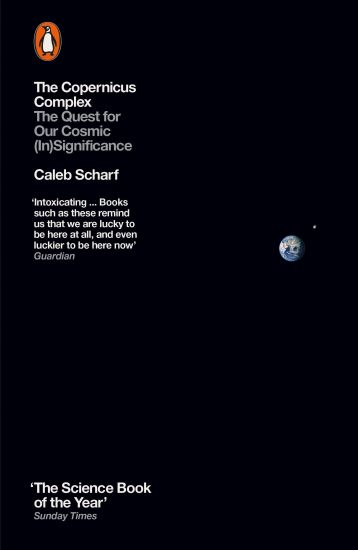
The Copernicus Complex

The Copernicus Complex

Caleb Scharf

Penguin Books Ltd
2015
pokkari
A thrilling journey through the recent discoveries in astronomy that point to our cosmic significanceIn The Copernicus Complex, the renowned astrophysicist and author Caleb Scharf takes us on a cosmic adventure like no other, asserting that the age-old Copernican principle is in need of updating. When Copernicus proposed that the Earth was not the fixed point at the center of the known universe (and therefore we are not unique), he set in motion a colossal scientific juggernaut, forever changing our vision of nature. But the principle, Scharf argues, has never been entirely true-we do live at a particular time, in a particular location, under particular circumstances. By bringing together the latest discoveries in cutting-edge astronomy, Scharf shows how many aspects of our cosmic home are genuinely unique, and reveals what it means for our quest to determine whether we are alone in the universe.
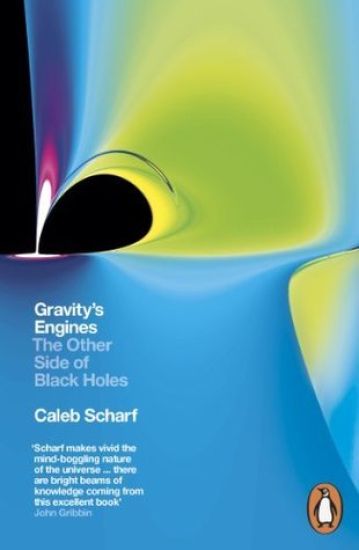
Gravity's Engines

Gravity's Engines

Caleb Scharf

Penguin Books Ltd
2013
pokkari
We have long understood black holes to be where the universe as we know it comes to an end - huge bodies so destructive that not even light can escape their deadly power. In Gravity's Engines, however, renowned astrophysicist Caleb Scharf reveals an entirely new, and crucially important, side to these mysterious chasms. The latest research has located super-sized black holes, often billions of times more massive than the Sun, which have the power to rearrange the cosmos and control entire galaxies of stars. Engaging with our deepest questions about our origins, Scharf shows how, without these black holes, life in the universe could not exist.
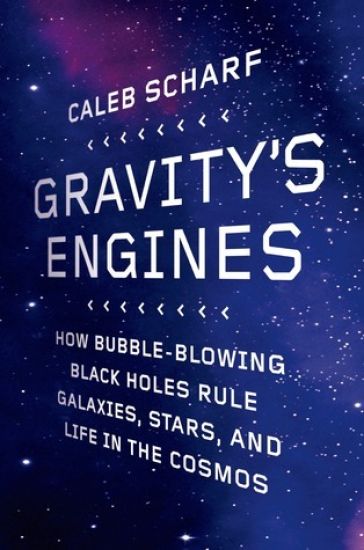
Gravity's Engines: How Bubble-Blowing Black Holes Rule Galaxies, Stars, and Life in the Cosmos
One of The Barnes and Noble Review Editors' Picks: Best Nonfiction of 2012 Selected by The Christian Science Monitor as one of "21 smart nonfiction titles we think you'll enjoy this summer" Selected by The New Scientist as one of 10 books to look out for in 2012 We've long understood black holes to be the points at which the universe as we know it comes to an end. Often billions of times more massive than the Sun, they lurk in the inner sanctum of almost every galaxy of stars in the universe. They're mysterious chasms so destructive and unforgiving that not even light can escape their deadly wrath. Recent research, however, has led to a cascade of new discoveries that have revealed an entirely different side to black holes. As the astrophysicist Caleb Scharf reveals in Gravity's Engines, these chasms in space-time don't just vacuum up everything that comes near them; they also spit out huge beams and clouds of matter. Black holes blow bubbles. With clarity and keen intellect, Scharf masterfully explains how these bubbles profoundly rearrange the cosmos around them. Engaging with our deepest questions about the universe, he takes us on an intimate journey through the endlessly colorful place we call our galaxy and reminds us that the Milky Way sits in a special place in the cosmic zoo--a "sweet spot" of properties. Is it coincidental that we find ourselves here at this place and time? Could there be a deeper connection between the nature of black holes and their role in the universe and the phenomenon of life? We are, after all, made of the stuff of stars.
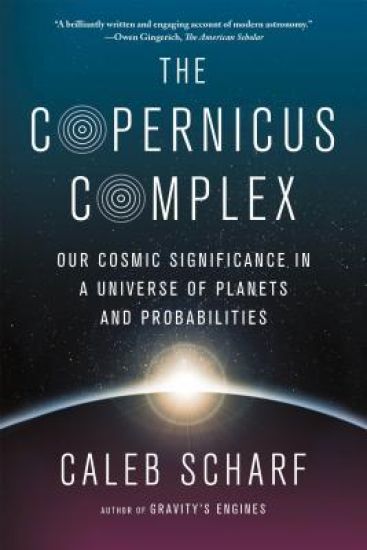
The Copernicus Complex: Our Cosmic Significance in a Universe of Planets and Probabilities
Longlisted for the 2015 PEN/E.O. Wilson Literary Science Writing AwardShort-listed for Physics World's Book of the YearThe Sunday Times (UK) Best Science Book of 2014A Publishers Weekly Top 10 Science Book of Fall 2014An NBC News Top Science and Tech Book of 2014A Politics & Prose 2014 Staff Pick In the sixteenth century, Nicolaus Copernicus dared to go against the establishment by proposing that Earth rotates around the Sun. Having demoted Earth from its unique position in the cosmos to one of mediocrity, Copernicus set in motion a revolution in scientific thought. This perspective has influenced our thinking for centuries. However, recent evidence challenges the Copernican Principle, hinting that we do in fact live in a special place, at a special time, as the product of a chain of unlikely events. But can we be significant if the Sun is still just one of a billion trillion stars in the observable universe? And what if our universe is just one of a multitude of others-a single slice of an infinity of parallel realities? In The Copernicus Complex, the renowned astrophysicist Caleb Scharf takes us on a scientific adventure, from tiny microbes within the Earth to distant exoplanets, probability theory, and beyond, arguing that there is a solution to this contradiction, a third way of viewing our place in the cosmos, if we weigh the evidence properly. As Scharf explains, we do occupy an unusual time in a 14-billion-year-old universe, in a somewhat unusual type of solar system surrounded by an ocean of unimaginable planetary diversity: hot Jupiters with orbits of less than a day, planet-size rocks spinning around dead stars, and a wealth of alien super-Earths. Yet life here is built from the most common chemistry in the universe, and we are a snapshot taken from billions of years of biological evolution. Bringing us to the cutting edge of scientific discovery, Scharf shows how the answers to fundamental questions of existence will come from embracing the peculiarity of our circumstance without denying the Copernican vision. With characteristic verve, Scharf uses the latest scientific findings to reconsider where we stand in the balance between cosmic significance and mediocrity, order and chaos. Presenting a compelling and bold view of our true status, The Copernicus Complex proposes a way forward in the ultimate quest: determining life's abundance, not just across this universe but across all realities.
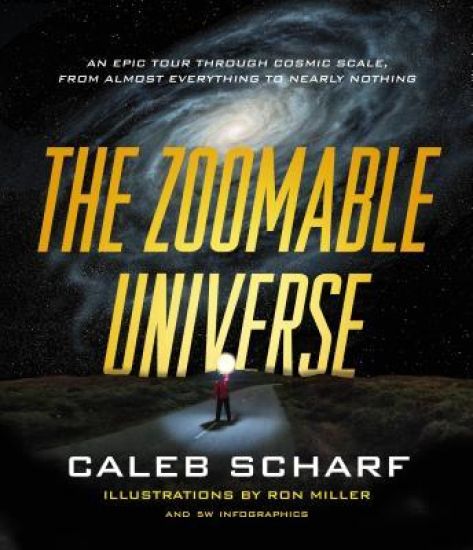
The Zoomable Universe: An Epic Tour Through Cosmic Scale, from Almost Everything to Nearly Nothing
An epic, full-color visual journey through all scales of the universe In The Zoomable Universe, the award-winning astrobiologist Caleb Scharf and the acclaimed artist Ron Miller take us on an epic tour through all known scales of reality, from the largest possible magnitude to the smallest. Drawing on cutting-edge science, they begin at the limits of the observable universe, a scale spanning 10 27 meters--about 93 billion light-years. And they end in the subatomic realm, at 10 -35 meters, where the fabric of space-time itself confounds all known rules of physics. In between are galaxies, stars and planets, oceans and continents, plants and animals, microorganisms, atoms, and much, much more. Stops along the way--all enlivened by Scharf's sparkling prose and his original insights into the nature of our universe--include the brilliant core of the Milky Way, the surface of a rogue planet, the back of an elephant, and a sea of jostling quarks. The Zoomable Universe is packed with more than 100 original illustrations and infographics that will captivate readers of every age. It is a whimsical celebration of discovery, a testament to our astounding ability to see beyond our own vantage point and chart a course from the farthest reaches of the cosmos to its subatomic depths--in short, a must-have for the shelves of all explorers.
The Ascent Of Information

The Ascent Of Information

Caleb Scharf

Penguin Putnam Inc
2022
nidottu
Caleb Scharf argues that all the data we create - all of our emails, tweets, selfies, A.I.-generated text and funny cat videos - amounts to an aggregate lifeform. It has goals and needs. It can control our behaviour and influence our well-being. And its an organism that has evolved right alongside us. This symbiotic relationship with information offers a startling new lens for looking at the world. Data isnt just something we produce its the reason we exist. This powerful idea has the potential to upend the way we think about our technology, our role as humans, and the fundamental nature o
The Giant Leap

The Giant Leap

Caleb Scharf

BASIC BOOKS
2025
sidottu
A leading astrobiologist argues that space travel is an evolutionary event at least as important as life's first journey from sea to land The story of life has always been one of great transitions, of crossing new frontiers. The dawn of life itself is one; so, too, is the first time two cells stuck together rather than drifting apart. And perhaps most dramatic were the moves from the sea to land, land to air. Each transition has witnessed wild storms of innovation, opportunity, and hazard. It might seem that there are no more realms for life to venture. But there is one: space. In The Giant Leap, astrobiologist Caleb Scharf argues that our journey into space isn't simply a giant leap for humankind-it's life's next great transition, an evolution of evolution itself. Humans and our technology are catalysts for an interplanetary transformation, marking a disruption in the story of life as fundamental as life's movement from sea to land, and land to sky. Inspired by Darwin's account of his journey on the Beagle, and packed with stories from the past, present, and future of space travel, The Giant Leap thrills at both life's creativity and the marvels of technology that have propelled us into the cosmos. And it offers an awesome glimpse of the grander vistas that wait in the great beyond.
The Zoomable Universe

The Zoomable Universe

Caleb Scharf

Atlantic Books
2017
sidottu
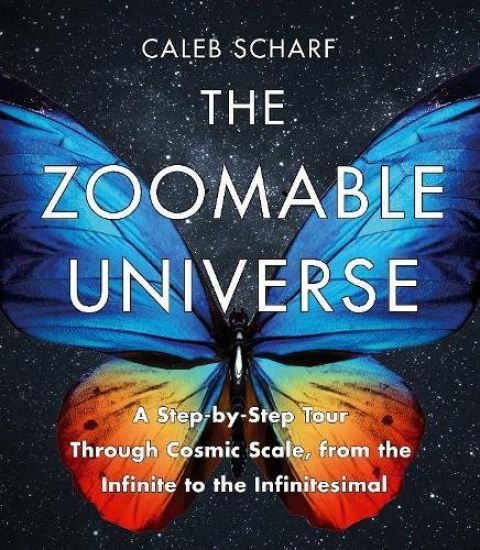
Embark on a breath-taking, cutting-edge voyage through the enormity of our reality - travelling one "power of ten" or order of magnitude at a time. Echoing the classic film by Charles and Ray Eames, acclaimed astrobiologist Caleb Scharf and artist Ron Miller guide us from the very edge of the observable universe - about 91 billion light-years away - to the subatomic realm, where the fabric of space-time itself behaves in a way that confounds all the rules of physics we currently know. Gorgeously designed and visually inspiring, The Zoomable Universe takes a truly unique approach toward explaining our place in the universe, charting an unforgettable course through galaxies, black holes, solar systems, stars and planets, oceans, plants and animals, microorganisms, atoms, quantum fields, and much more. Illustrated with stunning colour artwork and infographics, this is an unforgettable journey that will thrill readers who want to discover more about the incredible reality we inhabit.
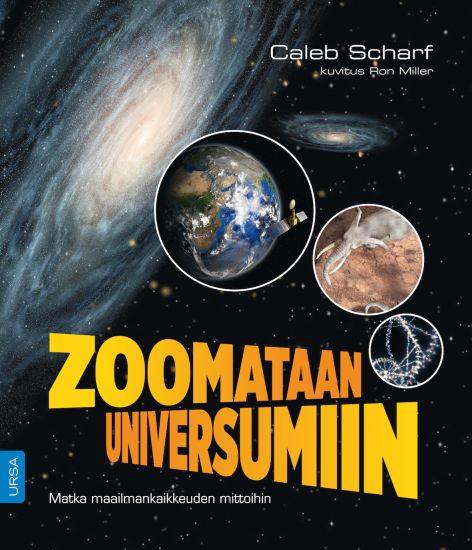
Zoomataan universumiin

Zoomataan universumiin

Caleb Scharf

Tähtitieteellinen yhdistys Ursa
2018
sidottu
Haluatko kuulla mahtavimman tarinan ikinä? Kauan aikaa sitten kehosi atomit olivat pitkin poikin melko tyhjää avaruutta. Ajan mittaan ne kerääntyivät yhteen ja muodostivat galaksit, tähdet, planeetat, norsut, virukset ja sinut, ehkä myös ilkeän kaksoisolentosi toisessa universumissa. Ihmisen mittakaava on vain kapea viipale maailmasta. Suurin tuntemamme mitta on koko havaittavan maailmankaikkeuden halkaisija, 10 potenssiin 27 metriä. Kaikkein pienin on Planckin pituus 10 potenssiin -35 metriä, lyhin mielekäs matka fysiikassa. Näiden kahden mittakaavan välissä on kaikki, minkä voimme havaita, kenties kaikki, minkä tulemme ikinä tuntemaan. Löytöretki maailmankaikkeuden mittoihin on 62 askelta pitkä. Jokainen askel on kymmenen potenssi, ja niillä matkataan kaukaisimman kosmoksen ääriltä atomia pienempään kvarkkien ja kvanttien maailmaan. Pääset tutustumaan tähän kaikkeen upeiden kuvien ja infografiikoiden kautta. Tässä on sinun maailmankaikkeutesi.