
Kirjahaku
Etsi kirjoja tekijän nimen, kirjan nimen tai ISBN:n perusteella.
10 kirjaa tekijältä Caleb Smith

The Description, use, and Excellency of a new Instrument, or sea Quadrant, Invented by Caleb Smith, for Taking Altitudes of the sun, Moon, and Stars, From the Visible Horizon ... Without Impediment ... From the Ship's Motion;
Caleb Smith
Gale Ecco, Print Editions
2018
sidottu
The 18th century was a wealth of knowledge, exploration and rapidly growing technology and expanding record-keeping made possible by advances in the printing press. In its determination to preserve the century of revolution, Gale initiated a revolution of its own: digitization of epic proportions to preserve these invaluable works in the largest archive of its kind. Now for the first time these high-quality digital copies of original 18th century manuscripts are available in print, making them highly accessible to libraries, undergraduate students, and independent scholars.Medical theory and practice of the 1700s developed rapidly, as is evidenced by the extensive collection, which includes descriptions of diseases, their conditions, and treatments. Books on science and technology, agriculture, military technology, natural philosophy, even cookbooks, are all contained here.++++The below data was compiled from various identification fields in the bibliographic record of this title. This data is provided as an additional tool in helping to insure edition identification: ++++British LibraryT031710London: to be had of the inventor, at his office for insuring ships and merchandize; or at the Crown Coffee-House, near Guildhall, 1740?]. 24p., plates: map; 8
How did a nation so famously associated with freedom become internationally identified with imprisonment? After the scandals of Abu Ghraib and Guantanamo Bay, and in the midst of a dramatically escalating prison population, the question is particularly urgent. In this timely, provocative study, Caleb Smith argues that the dehumanization inherent in captivity has always been at the heart of American civil society. Exploring legal, political, and literary texts—including the works of Dickinson, Melville, and Emerson—Smith shows how alienation and self-reliance, social death and spiritual rebirth, torture and penitence came together in the prison, a scene for the portrayal of both gothic nightmares and romantic dreams. Demonstrating how the “cellular soul” has endured since the antebellum age, The Prison and the American Imagination offers a passionate and haunting critique of the very idea of solitude in American life.
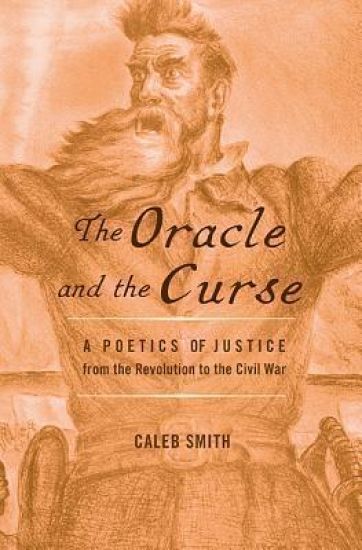
Condemned to hang after his raid on Harper’s Ferry, John Brown prophesied that the crimes of a slave-holding land would be purged away only with blood. A study of omens, maledictions, and inspired invocations, The Oracle and the Curse examines how utterances such as Brown’s shaped American literature between the Revolution and the Civil War.In nineteenth-century criminal trials, judges played the role of law’s living oracles, but offenders were also given an opportunity to address the public. When the accused began to turn the tables on their judges, they did so not through rational arguments but by calling down a divine retribution. Widely circulated in newspapers and pamphlets, these curses appeared to channel an otherworldly power, condemning an unjust legal system and summoning readers to the side of righteousness.Exploring the modes of address that communicated the authority of law and the dictates of conscience in antebellum America’s court of public opinion, Caleb Smith offers a new poetics of justice which assesses the nonrational influence that these printed confessions, trial reports, and martyr narratives exerted on their first audiences. Smith shows how writers portrayed struggles for justice as clashes between human law and higher authority, giving voice to a moral protest that transformed American literature.
How nineteenth-century “disciplines of attention” anticipated the contemporary concern with mindfulness and being “spiritual but not religious”Today, we’re driven to distraction, our attention overwhelmed by the many demands upon it—most of which emanate from our beeping and blinking digital devices. This may seem like a decidedly twenty-first-century problem, but, as Caleb Smith shows in this elegantly written, meditative work, distraction was also a serious concern in American culture two centuries ago. In Thoreau’s Axe, Smith explores the strange, beautiful archives of the nineteenth-century attention revival—from a Protestant minister’s warning against frivolous thoughts to Thoreau’s reflections on wakefulness at Walden Pond. Smith examines how Americans came to embrace attention, mindfulness, and other ways of being “spiritual but not religious,” and how older Christian ideas about temptation and spiritual devotion endure in our modern ideas about distraction and attention.Smith explains that nineteenth-century worries over attention developed in response to what were seen as the damaging mental effects of new technologies and economic systems. A “wandering mind,” once diagnosed, was in need of therapy or rehabilitation. Modeling his text after nineteenth-century books of devotion, Smith offers close readings of twenty-eight short passages about attention. Considering social reformers who designed moral training for the masses, religious leaders who organized Christian revivals, and spiritual seekers like Thoreau who experimented with regimens of simplified living and transcendental mysticism, Smith shows how disciplines of attention became the spiritual exercises of a distracted age.
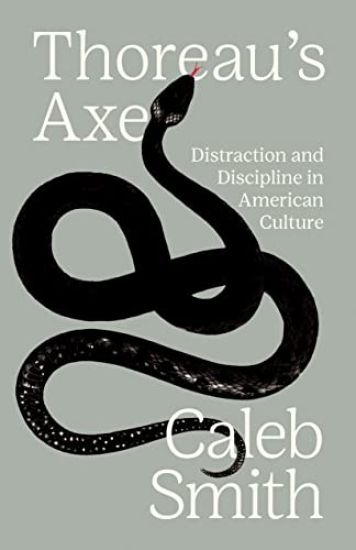
How nineteenth-century “disciplines of attention” anticipated the contemporary concern with mindfulness and being “spiritual but not religious”Today, we’re driven to distraction, our attention overwhelmed by the many demands upon it—most of which emanate from our beeping and blinking digital devices. This may seem like a decidedly twenty-first-century problem, but, as Caleb Smith shows in this elegantly written, meditative work, distraction was also a serious concern in American culture two centuries ago. In Thoreau’s Axe, Smith explores the strange, beautiful archives of the nineteenth-century attention revival—from a Protestant minister’s warning against frivolous thoughts to Thoreau’s reflections on wakefulness at Walden Pond. Smith examines how Americans came to embrace attention, mindfulness, and other ways of being “spiritual but not religious,” and how older Christian ideas about temptation and spiritual devotion endure in our modern ideas about distraction and attention.Smith explains that nineteenth-century worries over attention developed in response to what were seen as the damaging mental effects of new technologies and economic systems. A “wandering mind,” once diagnosed, was in need of therapy or rehabilitation. Modeling his text after nineteenth-century books of devotion, Smith offers close readings of twenty-eight short passages about attention. Considering social reformers who designed moral training for the masses, religious leaders who organized Christian revivals, and spiritual seekers like Thoreau who experimented with regimens of simplified living and transcendental mysticism, Smith shows how disciplines of attention became the spiritual exercises of a distracted age.
Diligence in the Work of God, and, Activity During Life. A Sermon, Occasioned by the Much-lamented Death of the Reverend Mr. Aaron Burr, A.M. President of the College of New-Jersey
Caleb Smith
Gale Ecco, Print Editions
2018
sidottu
The 18th century was a wealth of knowledge, exploration and rapidly growing technology and expanding record-keeping made possible by advances in the printing press. In its determination to preserve the century of revolution, Gale initiated a revolution of its own: digitization of epic proportions to preserve these invaluable works in the largest archive of its kind. Now for the first time these high-quality digital copies of original 18th century manuscripts are available in print, making them highly accessible to libraries, undergraduate students, and independent scholars.The Age of Enlightenment profoundly enriched religious and philosophical understanding and continues to influence present-day thinking. Works collected here include masterpieces by David Hume, Immanuel Kant, and Jean-Jacques Rousseau, as well as religious sermons and moral debates on the issues of the day, such as the slave trade. The Age of Reason saw conflict between Protestantism and Catholicism transformed into one between faith and logic -- a debate that continues in the twenty-first century.++++The below data was compiled from various identification fields in the bibliographic record of this title. This data is provided as an additional tool in helping to insure edition identification: ++++Library of CongressW037947New-York: Printed by H. Gaine, at the Bible & Crown, MDCCLVIII. 1758]. 39, 1]p.; 8

Ponderings of a Simple Man: Wit and Wisdom from Appalachia
Caleb Smith
Independently Published
2019
nidottu
This compilation of articles by award-winning columnist Caleb Smith, "Ponderings of a Simple Man" will make you laugh out loud with every page. Filled with 66 "best-of" articles, each is a new entry in the ongoing battle between a man and his own bumbling incompetence. Supported by his kind and long-suffering wife, the Simple Man faces challenges in home repair, malicious household pets, and all the various flora and fauna north Georgia has to offer. Learn the motivating properties of a swarm of wasps, why it's a bad idea to use fire to deal with yellowjackets, and how difficult it is for a fat guy covered in oil to chase a cat up a tree, along with much, much more. Filled with riotous, clean humor, "Ponderings of a Simple Man" is a collection of stories for the whole family. Join the Simple Man and his (mostly true) misadventures. He's a modern-day mountain man that just can't seem to get the hang of it.