Kirjahaku
Etsi kirjoja tekijän nimen, kirjan nimen tai ISBN:n perusteella.
8 kirjaa tekijältä Calvin J. Roetzel
Already known from his clear and succinct guide The Letters of Paul, Professor Roetzel here brings the same approach to the New Testament world. In little more than a hundred pages he discusses the political setting of early Christianity; contemporary forms of religious expression, both Jewish and Hellenistic; institutions from temple and synagogue to the Greek polis and Hellenistic kingship; scripture and its interpretation, from Philo via Qumran to the rabbis; and the feeling dominant at the time of being involved in a struggle between the powers of light and the powers of darkness. This can now claim to be the best available introduction to the subject which is not only factual and reliable, but holds the reader's interest from beginning to end.
Winner of 'New Testament Book of the Year, Biblical Archaeology Society 1999' A masterly new evaluation of Paul: the man, his work and his world. Professor Roetzel breaks new ground in exploring some aspects of Paul which have remained shadowy: his sexual asceticism, his preoccupation with holiness - Holy Spirit, holy community and holy ethos - the evolution of his theology, and his emergence as a legendary figure. Roetzel also furthers our understanding of the culture, the social world and the political realities of Paul's time.
The World That Shaped the New Testament, Revised Edition
Calvin J. Roetzel
Westminster/John Knox Press,U.S.
2002
nidottu
In this book, Calvin Roetzel explores the social, political, religious, and intellectual environment of the New Testament writers. Roetzel maps the major features of the first-century landscape so that the student may be able to view the whole, and through the whole gain new perspective on and insight into each part. Now updated with the most current scholarship and with revisions taking into account archeological findings, this is the best available introduction to the subject.Expanded materials include discussion of the social structure of Roman society, political dimensions of Pharisaism, Hellenistic religious expression, the Jewish Diaspora, the influence of the Septuagint on the Gospel writers and Paul, and women in antiquity. Pictures are integrated into the text at relevant points, the end of each chapter contains suggestions for further reading, and there is also a current and comprehensive bibliography of topics and authors.
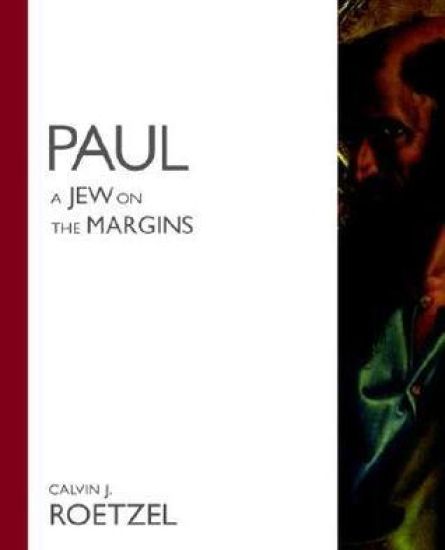
Paul's messianism put him at the margins of Pharisaism, his preaching placed him in tension with the Synagogue, and his Gospel set him on the outer border of Hellenistic religion. This book explores the tensions and creativity that Paul's marginality let loose. In six short chapters, Roetzel explains Paul's complex relationship to first century Judaism and elements of the early church. In so doing, he tackles a great many of the most disputed areas of Pauline theology: How can we speak of Paul as a convert? How far did Paul accept the apocalyptic myth? What are we to make of Paul's theology of weakness? How far did Paul embrace pluralism? And how could Paul preach that Gentiles shared in God's election without excluding Jews?
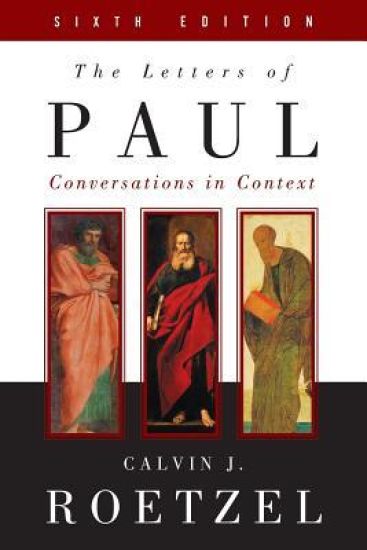
This is the sixth edition of the classic textbook that has been introducing Paul and his writing to seminary and undergraduate students for over forty years. Roetzel provides a comprehensive look at Paul in light of recent scholarship and theological understandings of Paul. This new edition includes four brand-new sections on the following: the chronology of Paul's letters; Paul's concept of "law" in the context of messianic expectation; the religious and political contexts in which Paul's letters were written; and Jewish understandings of Gentiles and Paul's mission to include them among the elect of God. This long-established textbook is the ideal choice for any student of Paul.
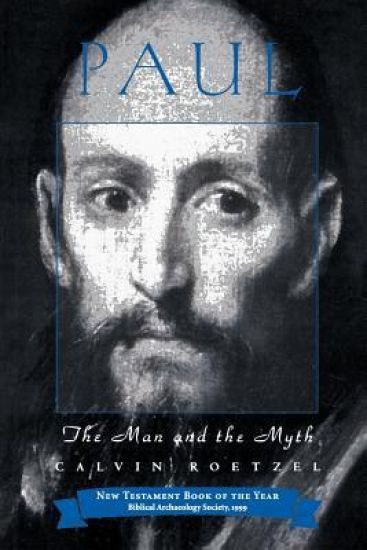
Winner of Biblical Archaeology Society Award - Best New Testament Book "We are left to construct a portrait of Paul with only scraps of what was once a large and imposing canvas - a small collection of letters and a historical narrative written a generation after his death. This reconstruction focuses on important parts of the image that usually fall in the shadows, parts dealing with Paul's sexual asceticism, his preoccupation with holiness - holy Spirit, holy community, and holy ethos - the evolution of his theology, and his emergence as a legendary figure. Although I have tried to follow the strict rules of historical investigation, of necessity much guesswork is involved in any exploration of Paul's life... All of these efforts are attempts to deal with the gaps in the text, understood in the broadest sense to include not just Paul's written words but also the culture, social world, and political realities surrounding them. - From the Introduction