Kirjojen hintavertailu. Mukana 11 717 486 kirjaa ja 12 kauppaa.

Kirjahaku

Etsi kirjoja tekijän nimen, kirjan nimen tai ISBN:n perusteella.

4 kirjaa tekijältä Cameron M. Smith

Anthropology For Dummies

Anthropology For Dummies

Cameron M. Smith

John Wiley Sons Inc
2021
nidottu
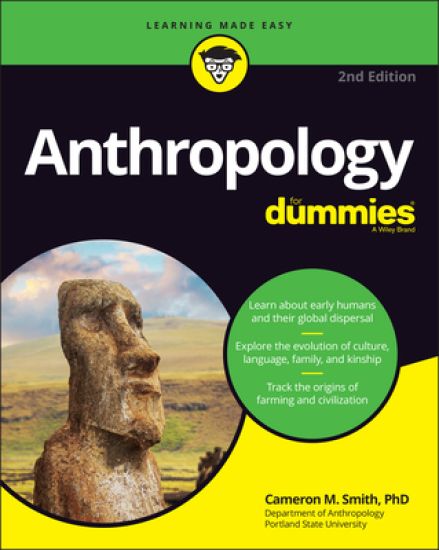
Study the science of all of us Anthropology is the organized study of what makes humans human. It takes an objective step back to view homo sapiens as a species and ask questions like: Given our common characteristics, why aren’t all of us exactly the same? Why do people across the world have variable skin and hair color and so many inventive ways to say hello? And how can knowing the reasons behind our differences—as well as our similarities—teach us useful lessons for the future? The updated edition of Anthropology For Dummies gives you a panoramic view of the fascinating fieldwork and theory that seeks to answer these questions—and helps you view the human world through impartial, anthropological eyes. Keeping the jargon to a minimum, Anthropology For Dummies explores the four main subdivisions of the discipline, from the adventurous Indiana Jones territory of archaeology and the hands-on biological insights provided by our physical nature to the studious book-cracking brainwork of cultural and linguistic investigation. Along the way, you’ll journey deep into our prehistory where we begin to differentiate ourselves from our primate relatives—and then fast forward into the possibilities of centuries yet to come. Explore the history of anthropology and apply its methods Get a deep, scientific take on contemporary debates such as identity Excavate the human past through new fossil discoveries Peer into humanity’s future in space Whether you’re studying anthropology for school or just want to know more about what makes us humans who we are, this is the perfect introduction to humanity’s past and present—and a clue to what we need to build a better future.
An Atlas of Human Prehistory

An Atlas of Human Prehistory

Cameron M. Smith

Cognella Academic Publishing
2018
sidottu
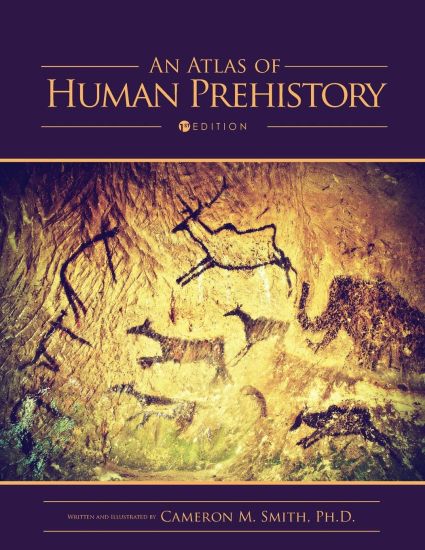
Many undergraduates struggle to fully understand the size of the earth and the diverse environments to which human beings have successfully adapted. An Atlas of Human Prehistory gives students an appreciation for the sheer size of the earth and the diverse geographies through which humanity and our ancestors have migrated and settled over millions of years. The book's unique formatting allows students to read a stand-alone topical essay on the left-hand page, which refers to the accompanying detailed maps and diagrams on the right-hand page. The maps and diagrams provide additional details and enable students to "see" human adaptation across time and space. This fresh, engaging approach covers hominin evolution, important fossil sites, early dispersal around the world, biocultural and subsistence adaptations, and the establishment of ancient civilizations. An outstanding blend of words and visuals, An Atlas of Human Prehistory gives readers excellent graphical representations of the chief lessons of our shared past and a greater understanding of the pace of movement across time. It is an excellent supplement for courses in archaeology, ancient history, human geography, and physical anthropology.Cameron M. Smith completed his undergraduate studies at London's Institute of Archaeology and Durham University, learning paleoanthropology through two field seasons at Koobi Fora, Kenya. He went on to pursue his Ph.D. in archaeology at Simon Fraser University in Canada, specializing in stone tool analysis and continuing to excavate sites worldwide. Dr. Smith is now a faculty member at Portland State University, where he teaches courses in world prehistory and field and laboratory methods. His research interests include evolution, biocultural adaptation, cognitive evolution, and the archaeology of Pacific Northwest Coast.
An Atlas of Human Prehistory

An Atlas of Human Prehistory

Cameron M. Smith

Cognella, Inc
2018
nidottu
Many undergraduates struggle to fully understand the size of the earth and the diverse environments to which human beings have successfully adapted. An Atlas of Human Prehistory gives students an appreciation for the sheer size of the earth and the diverse geographies through which humanity and our ancestors have migrated and settled over millions of years.The book’s unique formatting allows students to read a stand-alone topical essay on the left-hand page, which refers to the accompanying detailed maps and diagrams on the right-hand page. The maps and diagrams provide additional details and enable students to “see” human adaptation across time and space. This fresh, engaging approach covers hominin evolution, important fossil sites, early dispersal around the world, biocultural and subsistence adaptations, and the establishment of ancient civilizations.An outstanding blend of words and visuals, An Atlas of Human Prehistory gives readers excellent graphical representations of the chief lessons of our shared past and a greater understanding of the pace of movement across time. It is an excellent supplement for courses in archaeology, ancient history, human geography, and physical anthropology.
Principles of Space Anthropology

Principles of Space Anthropology

Cameron M. Smith

Springer Nature Switzerland AG
2019
sidottu
This book shows how anthropology can provide an innovative perspective on the human movement into space. It examines adaptation to space on timescales of generations, rather than merely months or years, and uses evolutionary adaptation as a guiding theme. Employing the lessons of evolutionary adaptation, Principles of Extraterrestrial Anthropology recommends evolutionarily-sound strategies of space settlement, covering genetics at the organismal and population levels. The author organizes the concept of cultural adaptation to environments beyond Earth according to observed patterns in human adaptation on Earth. He uses original artwork and tables to help convey complex information in a form accessible to undergraduate and graduate students. Though primarily written to engage students interested in space settlement and exploration, who will eventually build a full anthropology of space settlement, Principles of Extraterrestrial Anthropology is engaging to anthropologists across sub-disciplines, as well as scholars interested in the human dimensions of space exploration and settlement. Just as the term exobiology was invented only a few decades ago to shape the field of space life studies, exoanthropology is outlined to assist in the perpetuation of Earth life through human space settlement.