Kirjahaku
Etsi kirjoja tekijän nimen, kirjan nimen tai ISBN:n perusteella.
23 kirjaa tekijältä Carl Becker

Becker, C: Beiden Bohmischen Reformatoren Und Martyrer Johan
Carl Becker
KESSINGER PUBLISHING, LLC
2010
nidottu

According to Carl Becker "if the framers of the Constitution could come back to earth and see what the federal government is doing to-day, they would all agree that this monstrous thing was no child of theirs; for to-day the federal government exercises as a matter of course powers which they never dreamed of." This prescient statement rings as true today as it did when Becker wrote An Experiment in Democracy nearly eighty years ago. This American classic is an engaging, gracefully rendered piece of historical literature as well as a non-ideological meditation on the "meaning of America."Carl Becker's ruminations are invariably provocative, notably wise, and remarkably enduring. He clearly believed in what has been called a "living Constitution," one that must be adapted to changing circumstances and imperatives in America life, and his faith in democracy seems to have strengthened as the decades progressed.In his new introduction, Michael Kammen places this American classic in historical perspective. Kammen sees Becker as more than an archival historian, but rather as a master of the "creative synthesis" looking at familiar sources in fresh ways and developing new points of view that were frequently revisionist and, on occasion, radically arresting. Much has changed between 1920 and the present; but Carl Becker's sagacity persists, just as his expository prose will continue to please a new generation of historians and students of American social history. Carl Becker was the author of "Kansas"; The Declaration of Independence: A Study in the History of Political Ideas; Modern History: The Rise of a Democratic, Scientific, and Industrial Civilization; "Benjamin Franklin"; "Everyman His Own Historian"; The Heavenly City of the Eighteenth-Century Philosophers; How New Will the Better World Be?; and Freedom and Responsibility in the American Way of Life.

In this much-needed examination of Buddhist views of death and the afterlife, Carl B. Becker bridges the gap between books on death in the West and books on Buddhism in the East. Other Western writers have addressed the mysteries surrounding death and the afterlife, but few have approached the topic from a Buddhist perspective. Here, Becker resolves questions that have troubled scholars since the beginning of Buddhism: How can Buddhism reconcile its belief in karma and rebirth with its denial of a permanent soul? What is reborn? And when, exactly, is the moment of death?By systematically tracing Buddhism's migration from India through China, Japan, and Tibet, Becker demonstrates how culture and environment affect Buddhist religious tradition.In addition to discussing historical Buddhism, Becker shows how Buddhism resolves controversial current issues as well. In the face of modern medicine's trend toward depersonalization, traditional Buddhist practices imbue the dying process with respect and dignity. At the same time, Buddhist tradition offers documented precedents for decision making in cases of suicide and euthanasia.
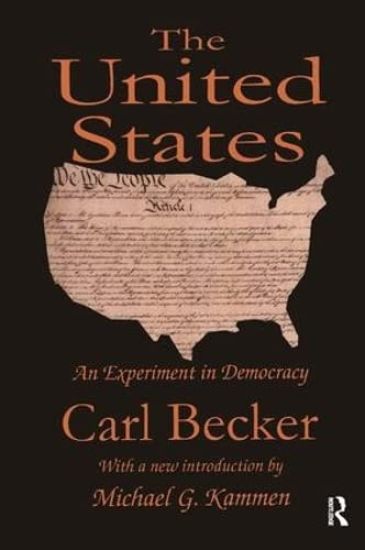
According to Carl Becker "if the framers of the Constitution could come back to earth and see what the federal government is doing to-day, they would all agree that this monstrous thing was no child of theirs; for to-day the federal government exercises as a matter of course powers which they never dreamed of." This prescient statement rings as true today as it did when Becker wrote An Experiment in Democracy nearly eighty years ago. This American classic is an engaging, gracefully rendered piece of historical literature as well as a non-ideological meditation on the "meaning of America."Carl Becker's ruminations are invariably provocative, notably wise, and remarkably enduring. He clearly believed in what has been called a "living Constitution," one that must be adapted to changing circumstances and imperatives in America life, and his faith in democracy seems to have strengthened as the decades progressed.In his new introduction, Michael Kammen places this American classic in historical perspective. Kammen sees Becker as more than an archival historian, but rather as a master of the "creative synthesis" looking at familiar sources in fresh ways and developing new points of view that were frequently revisionist and, on occasion, radically arresting. Much has changed between 1920 and the present; but Carl Becker's sagacity persists, just as his expository prose will continue to please a new generation of historians and students of American social history. Carl Becker was the author of "Kansas"; The Declaration of Independence: A Study in the History of Political Ideas; Modern History: The Rise of a Democratic, Scientific, and Industrial Civilization; "Benjamin Franklin"; "Everyman His Own Historian"; The Heavenly City of the Eighteenth-Century Philosophers; How New Will the Better World Be?; and Freedom and Responsibility in the American Way of Life.

The Eve Of The Revolution - A Chronicle Of The Breach With England
Carl Becker
Read Books
2006
pokkari


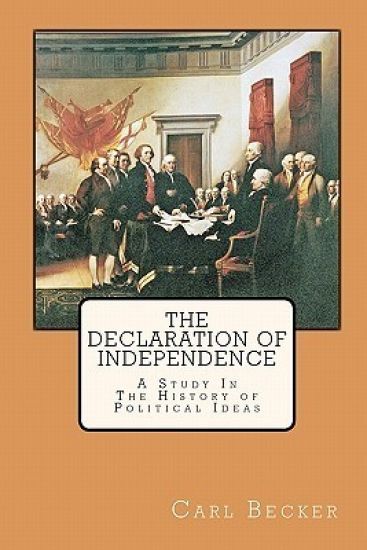
The Declaration of Independence: A Study In The History of Political Ideas
Carl Becker
Createspace Independent Publishing Platform
2010
nidottu

The Eve of the Revolution: A Chronicle of The Breach With England
Carl Becker
Createspace Independent Publishing Platform
2010
nidottu

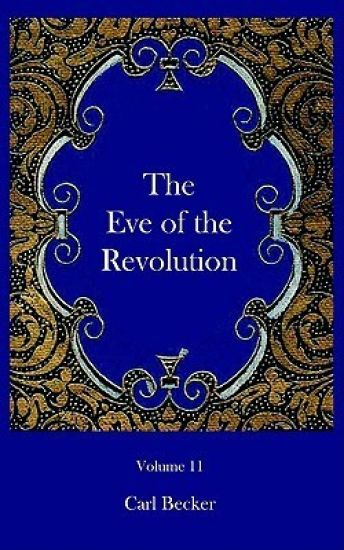
The Eve of the Revolution V11: Chronicles of America
Carl Becker
Literary Licensing, LLC
2014
nidottu
The Eve of the Revolution A Chronicle of the Breach with England
Carl Becker
Createspace Independent Publishing Platform
2014
nidottu
The Eve of the Revolution A Chronicle of the Breach with England
Carl Becker
Createspace Independent Publishing Platform
2015
nidottu

Doctor Martin Luther in den Hauptzügen seines Lebens geschildert
Carl Becker
Anatiposi Verlag
2023
pokkari

Doctor Martin Luther in den Hauptzügen seines Lebens geschildert
Carl Becker
Anatiposi Verlag
2023
sidottu