Kirjahaku
Etsi kirjoja tekijän nimen, kirjan nimen tai ISBN:n perusteella.
11 kirjaa tekijältä Carl Friedrich

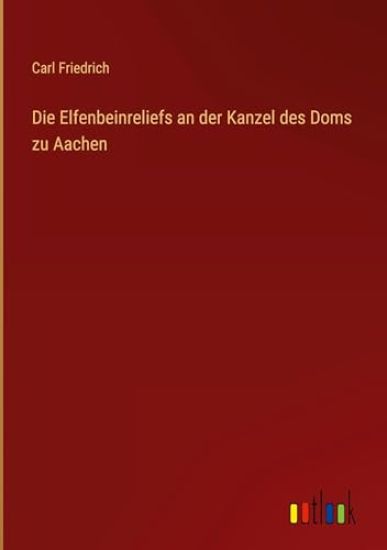
Friedrich, C: Elfenbeinreliefs An Der Kanzel Des Doms Zu Aac
Carl Friedrich
KESSINGER PUBLISHING, LLC
2010
nidottu

Friedrich, C: Elfenbeinreliefs an der Kanzel des Doms zu Aac
Carl Friedrich
Antigonos Verlag
2025
nidottu

Friedrich, C: Elfenbeinreliefs an der Kanzel des Doms zu Aac
Carl Friedrich
Antigonos Verlag
2025
sidottu
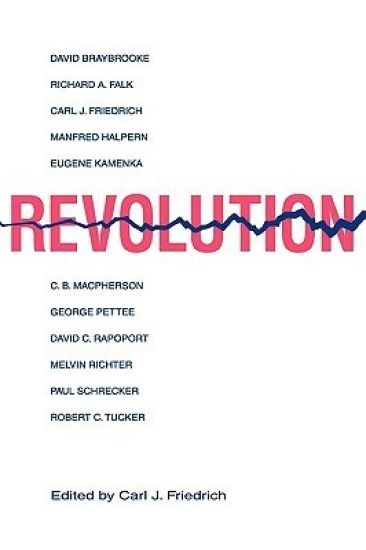
Professor C.E. Black of Princeton University called this "a valuable contribution to our understanding of the revolutionary movements that are now a worldwide phenomenon. It includes thoughtful essays on many varieties of revolution, considered in the light both of past developments and future prospects. The twentieth century was an age of revolution. Over many areas of the world the two great ideologies of nationalism and communism spawned violent upheavals, often differing in form but aiming at the transformation of the existing order by means of coups d'etat, revolutions, and "wars of national liberation." Eleven distinguished political scientists and policy theorists offer a penetrating analysis of the theoretical and substantive aspects of revolution. Their scholarly, lucid, and well-balanced essays explore the revolutionary theories and experience of several centuries and apply them to the most crucial problem of this century. Carl J. Friedrich argues that it is the failure of government, which is at the core of the political revolution, and shows that constitutional regimes that have allowed "little revolutions" promoting gradual political and social change have been singularly free of revolutionary upheaval. Presenting the thinking of some of the best minds of the 20th century, this volume offers important guideposts for the future study of the etiology of revolutions. Here are not mere speculative and historical distillations, but new insights and conclusions regarding the origin, purpose, and impact of revolution on the world of today and tomorrow. An indispensable work for every student and scholar of comparative politics, international relations, and the history and theory of Communism, it will also be welcomed by the statesman and the educated layman who want to probe the causes of the historical upheavals of our time.
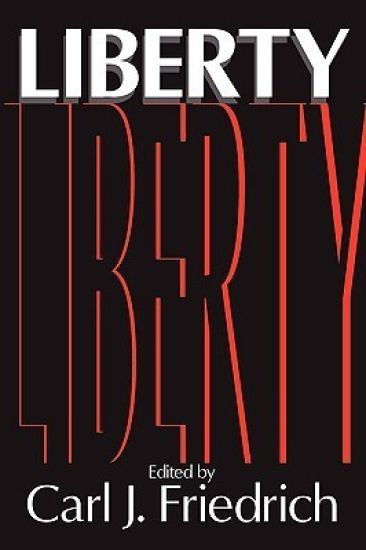
Recent writing on the nature of freedom has served to underline a crucial gap in the academic experience. First--and most obviously--the concept of freedom has been modernized by its application to contemporary institutions. Second, a new approach to the concept of liberty has been pioneered in the construction of new typologies of freedom. Finally, awareness of variety in concepts of freedom has been paralleled in variations in the practice of freedom. The tumultuous history of Western man may be conceptualized as the story of how freedom has become embodied. What is missing from the story is the relationship of concepts to actions.This relationship has been established for some specific notions of freedom. Many of the philosophical analyses--especially recent ones like pragmatism and existentialism--have been predicated on actual human behavior. On the other hand, many classic histories of freedom--those of Georg Wilhelm Friedrich Hegel, John Bagnell Bury, Guido de Ruggiero, and Harold Laski--have traced the actual development of a definite kind of freedom.This volume contains essays prepared to celebrate the anniversary of the publication of John Stuart Mill's On Liberty, revised in the light of discussions by Henry D. Aiken, William Ebenstein, Mark DeWolfe Howe, and David Spitz, as well as other articles, many of them growing out of the discussion either in the form of commentary or independent contributions. There are also two papers written independently (Andrew Hacker and Leonard Krieger).
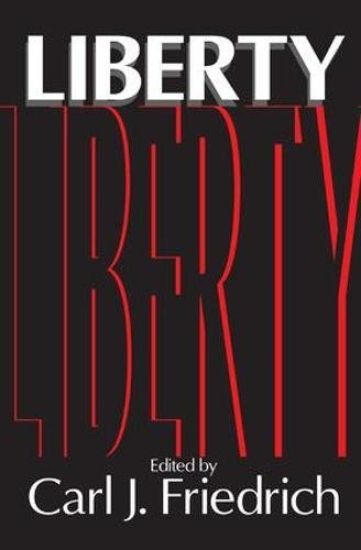
Recent writing on the nature of freedom has served to underline a crucial gap in the academic experience. First--and most obviously--the concept of freedom has been modernized by its application to contemporary institutions. Second, a new approach to the concept of liberty has been pioneered in the construction of new typologies of freedom. Finally, awareness of variety in concepts of freedom has been paralleled in variations in the practice of freedom. The tumultuous history of Western man may be conceptualized as the story of how freedom has become embodied. What is missing from the story is the relationship of concepts to actions.This relationship has been established for some specific notions of freedom. Many of the philosophical analyses--especially recent ones like pragmatism and existentialism--have been predicated on actual human behavior. On the other hand, many classic histories of freedom--those of Georg Wilhelm Friedrich Hegel, John Bagnell Bury, Guido de Ruggiero, and Harold Laski--have traced the actual development of a definite kind of freedom.This volume contains essays prepared to celebrate the anniversary of the publication of John Stuart Mill's On Liberty, revised in the light of discussions by Henry D. Aiken, William Ebenstein, Mark DeWolfe Howe, and David Spitz, as well as other articles, many of them growing out of the discussion either in the form of commentary or independent contributions. There are also two papers written independently (Andrew Hacker and Leonard Krieger).
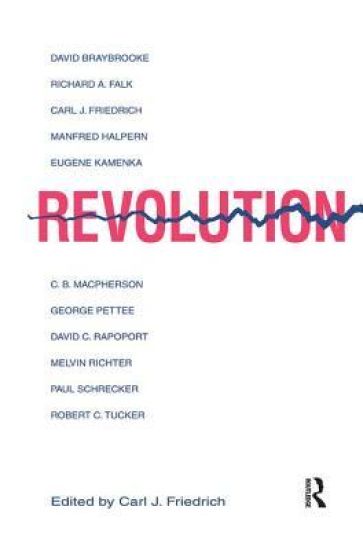
Professor C.E. Black of Princeton University called this "a valuable contribution to our understanding of the revolutionary movements that are now a worldwide phenomenon. It includes thoughtful essays on many varieties of revolution, considered in the light both of past developments and future prospects. The twentieth century was an age of revolution. Over many areas of the world the two great ideologies of nationalism and communism spawned violent upheavals, often differing in form but aiming at the transformation of the existing order by means of coups d'etat, revolutions, and "wars of national liberation." Eleven distinguished political scientists and policy theorists offer a penetrating analysis of the theoretical and substantive aspects of revolution. Their scholarly, lucid, and well-balanced essays explore the revolutionary theories and experience of several centuries and apply them to the most crucial problem of this century. Carl J. Friedrich argues that it is the failure of government, which is at the core of the political revolution, and shows that constitutional regimes that have allowed "little revolutions" promoting gradual political and social change have been singularly free of revolutionary upheaval. Presenting the thinking of some of the best minds of the 20th century, this volume offers important guideposts for the future study of the etiology of revolutions. Here are not mere speculative and historical distillations, but new insights and conclusions regarding the origin, purpose, and impact of revolution on the world of today and tomorrow. An indispensable work for every student and scholar of comparative politics, international relations, and the history and theory of Communism, it will also be welcomed by the statesman and the educated layman who want to probe the causes of the historical upheavals of our time.

Unver nderter Nachdruck der Originalausgabe von 1883.