Kirjojen hintavertailu. Mukana 12 083 983 kirjaa ja 12 kauppaa.

Kirjahaku

Etsi kirjoja tekijän nimen, kirjan nimen tai ISBN:n perusteella.

5 kirjaa tekijältä Carl Plasa

Charlotte Brontë

Charlotte Brontë

Carl Plasa

Red Globe Press
2004
sidottu
The writings of Charlotte Brontë - a member of one of the great literary families - have inspired, fascinated and moved readers ever since their first publication in the mid-nineteenth century. In this new study, Carl Plasa elaborates a series of textually focused, historically grounded and theoretically informed analyses of the full range of the author's texts. As well as providing original readings of Brontë's four best known novels - The Professor, Jane Eyre, Shirley and Villette - attention is given to less familiar and critically neglected areas of Brontë's work, such as the Ashanti narratives, the poetry and the Belgian essays of the early 1840s. Charlotte Brontë's work has undergone a significant reassessment from a postcolonial critical perspective in recent years. By examining Brontë's textual production from its exuberant and experimental beginnings to the formal complexity of Villette, her last completed novel, Plasa offers what is the most comprehensive exploration to date of the shifts in the writer's engagement with the question of colonialism. In so doing, he brings to light the subtle relationships of continuity and transformation between the earlier and later stages of Brontë's literary career and demonstrates the extent to which that career was sparked and driven by her 'colonial imagination'.
Charlotte Brontë

Charlotte Brontë

Carl Plasa

Red Globe Press
2004
nidottu
The writings of Charlotte Brontë - a member of one of the great literary families - have inspired, fascinated and moved readers ever since their first publication in the mid-nineteenth century. In this new study, Carl Plasa elaborates a series of textually focused, historically grounded and theoretically informed analyses of the full range of the author's texts. As well as providing original readings of Brontë's four best known novels - The Professor, Jane Eyre, Shirley and Villette - attention is given to less familiar and critically neglected areas of Brontë's work, such as the Ashanti narratives, the poetry and the Belgian essays of the early 1840s. Charlotte Brontë's work has undergone a significant reassessment from a postcolonial critical perspective in recent years. By examining Brontë's textual production from its exuberant and experimental beginnings to the formal complexity of Villette, her last completed novel, Plasa offers what is the most comprehensive exploration to date of the shifts in the writer's engagement with the question of colonialism. In so doing, he brings to light the subtle relationships of continuity and transformation between the earlier and later stages of Brontë's literary career and demonstrates the extent to which that career was sparked and driven by her 'colonial imagination'.
Literature, Art and Slavery

Literature, Art and Slavery

Carl Plasa

EDINBURGH UNIVERSITY PRESS
2023
sidottu
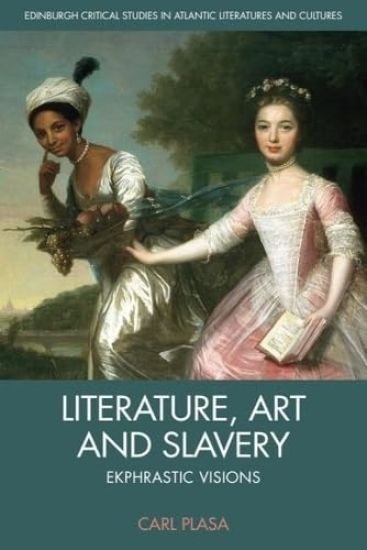
Examines a range of literary responses to images drawn from the transatlantic slave trade and its aftermath A focus on texts that (with the obvious exception of David Dabydeen's 'Turner' [1994]) exist at the critical and canonical margin An emphasis on Black Atlantic writers, designed to counter the bias in much ekphrastic criticism towards white authors Location of African American literature in conversation with African American as well as white American art Since around 2000, there has been a noticeable upsurge in critical work on the visual archive of Atlantic slavery, resulting in a host of important studies. While most of these contributions are weighted towards images created during the era of slavery itself, some critics have adopted a more historically far-reaching approach, exploring the ways in which such images live on beyond the original context of their production, circulation and consumption, returning imaginatively in different forms at different times and in different places. This book shares the fascination with the afterlives which such visual materials have enjoyed, but places the accent on how that posterity has evolved in the realms of literature, especially poetry. It focuses on transactions between texts written between the mid-1990s and 2020 and images of slavery that belong to British, American and (in one case) French traditions, as produced between c. 1779 and 1939.
Literature, Art and Slavery

Literature, Art and Slavery

Carl Plasa

EDINBURGH UNIVERSITY PRESS
2025
nidottu
Since around 2000, there has been a noticeable upsurge in critical work on the visual archive of Atlantic slavery, resulting in a host of important studies. While most of these contributions are weighted towards images created during the era of slavery itself, some critics have adopted a more historically far-reaching approach, exploring the ways in which such images live on beyond the original context of their production, circulation and consumption, returning imaginatively in different forms at different times and in different places. This book shares the fascination with the afterlives which such visual materials have enjoyed, but places the accent on how that posterity has evolved in the realms of literature, especially poetry. It focuses on transactions between texts written between the mid-1990s and 2020 and images of slavery that belong to British, American and (in one case) French traditions, as produced between c. 1779 and 1939.
Slaves to Sweetness

Slaves to Sweetness

Carl Plasa

Liverpool University Press
2009
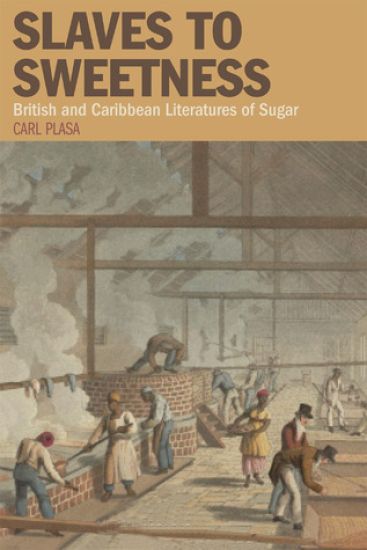
sidottu
Apparently innocuous, sugar is a substance which brings with it a profound disquiet, not least because of its direct links with the histories of slavery in the New World. These links have long been a source of critical fascination, generating several landmark analyses, ranging from Fernando Ortis’s Cuban Counterpoint: Tobacco and Sugar (1940) and Noël Deerr’s monumental two-volume The History of Sugar (1949-50) to Sidney Mintz’s Sweetness and Power: The Place of Sugar in Modern History (1985). Unlike previous texts, Plasa’s meticulously researched book not only examines the traditional classic studies but also the hitherto largely ignored work produced by a number of expatriate Caribbean authors, both male and female, from the 1980s onwards. As a result Slaves to Sweetness provides the most comprehensive account to date of the historical transformations which sugar’s representation has undergone, providing a rich resource for scholars in Slavery, Caribbean, Black Atlantic, Postcolonial and Literary Studies.