
Kirjahaku
Etsi kirjoja tekijän nimen, kirjan nimen tai ISBN:n perusteella.
44 kirjaa tekijältä Carl Rollyson, Lisa Paddock

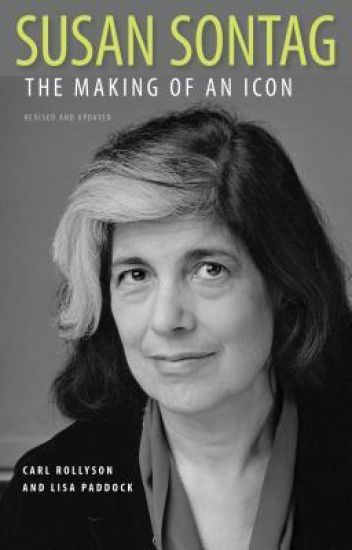
This first biography of Susan Sontag (1933-2004) is now fully revised and updated, providing an even more intimate portrayal of the influential writer's life and career. The authors base this revision on Sontag's newly released private correspondence - including emails - and the letters and memoirs of those who knew her best. The authors reveal as never before her early years in Tucson and Los Angeles, her conflicted relationship with her mother, her longing for her absent father, and her precocious achievements at the University of California, Berkeley, and the University of Chicago. Papers, diaries, and lecture notes, many accessible for the first time, spark a passionate fire in this biography.The authors follow Sontag as she abruptly ends an early first marriage, establishes herself in Paris, and embraces the open lifestyle she began as a teenager in Berkeley. As a single mother she struggled with teaching at Columbia University and other colleges while aiming for a career as a novelist and essayist. Eventually she made her own way in New York City after acquiring her one and only publisher, Farrar, Straus & Giroux.In her later years Sontag became a world figure, a tastemaker, dramatist, and political activist who risked her life in besieged Sarajevo. Love affairs with men and women troubled her. Diagnosed with cancer, she responded with determination, and her experience with illness inspired some of her best writing. This biography shows Sontag always craving ""more life"" at whatever cost and depicts her harrowing final decline even as she resisted terminal cancer. Susan Sontag: The Making of an Icon, Revised and Updated presents in candid and stark relief a new assessment of a heroic and controversial figure.
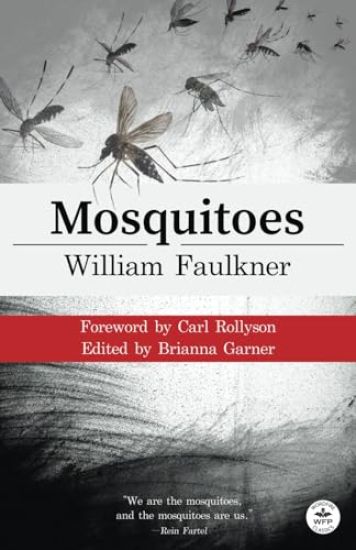
Mosquitoes with Original Foreword by Carl Rollyson
William Faulkner; Carl Rollyson
WordFire Press
2024
pokkari
One of Faulkner's most controversial novels A lesser-known but compelling novel from the author of Absalom, Absalom and The Sound and the Fury.Have you ever wondered what speaks to the tortured soul of an artist? What would it be like to be stuck on a yacht with only the musings of the world and a group of artists as your company?In the heat of the late Louisiana summer, Faulkner brings us a story of artistry that examines the thoughts and actions of Southern bohemians who have nothing to interrupt them but the hum and fire of the mosquitoes that surround them. "Faulkner's message is clear: We are the mosquitoes, and the mosquitoes are us."-Rein Fartel, "Twentieth Century Millennial: Revisiting Faulkner's Mosquitoes." With a foreword by Carl Rollyson, a renowned biographer of Faulkner and other eminent authors, this fine new edition works to highlight the "Louisiana Faulkner," the Faulkner before fame, and his thoughts on the lives of Southern artists.
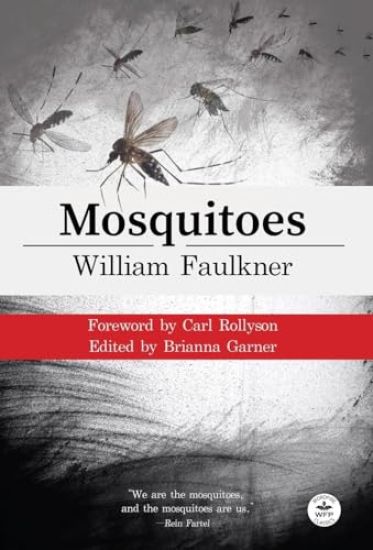
Mosquitoes with Original Foreword by Carl Rollyson
William Faulkner; Carl Rollyson
WordFire Press
2024
sidottu
One of Faulkner's most controversial novels A lesser-known but compelling novel from the author of Absalom, Absalom and The Sound and the Fury.Have you ever wondered what speaks to the tortured soul of an artist? What would it be like to be stuck on a yacht with only the musings of the world and a group of artists as your company?In the heat of the late Louisiana summer, Faulkner brings us a story of artistry that examines the thoughts and actions of Southern bohemians who have nothing to interrupt them but the hum and fire of the mosquitoes that surround them. "Faulkner's message is clear: We are the mosquitoes, and the mosquitoes are us."-Rein Fartel, "Twentieth Century Millennial: Revisiting Faulkner's Mosquitoes." With a foreword by Carl Rollyson, a renowned biographer of Faulkner and other eminent authors, this fine new edition works to highlight the "Louisiana Faulkner," the Faulkner before fame, and his thoughts on the lives of Southern artists.
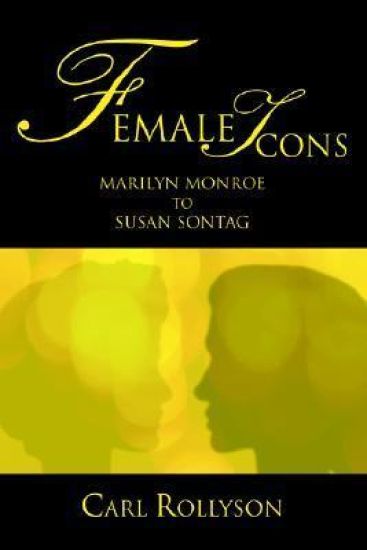
This volume represents more than twenty-five years of writing about female icons and biography. Rollyson provides the bits and pieces that resulted not only in his biography of "Marilyn Monroe" but also in much of the work he has subsequently done on "Lillian Hellman," "Martha Gellhorn," "Rebecca West," "Susan Sontag," and on the nature of biography itself. This book includes a selection of Rollyson's "New York Sun" book reviews dealing with female icons such as Mary Stuart, Mary Wollstonecraft, The Brontë s, Marie Curie, Harriet Tubman, Zelda Fitzgerald, and Sylvia Plath. Rollyson's writing about icons has provoked him to question the process by which selves are defined. Discovering the shaping mechanisms of the self is simultaneously a way of understanding how biographies are built. In the end, this book should be of interest not merely to devotees of Monroe, Sontag, and other icons but also to anyone curious about the nature of biography and the biographer.
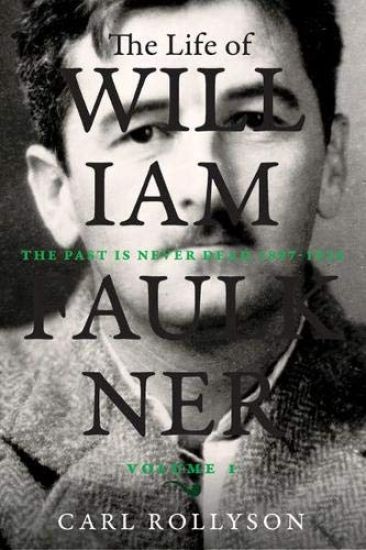
Awarded the Nobel Prize in Literature in 1949, William Faulkner was a southerner who became widely regarded as one of the greatest American writers of all time. Despite being such a studied figure, however, to date no biography has captured the complexities at the heart of the man and his work. In The Life of William Faulkner, acclaimed literary biographer Carl Rollyson portrays a new Faulkner—a man of astonishing paradoxes. Based on extensive interviews with family and friends of Faulkner, as well as unparalleled access to primary and secondary source materials, this first of what will be a major two-volume work offers a dramatic narrative that breaks the bounds of the traditional literary biography.This first volume covers Faulkner's formative years. The oldest brother born into a family who had lost their glory, Faulkner at first excelled at school, until his teens when he defied family expectations by pursuing an interest in art and writing that promised no discernable profit for himself or others. World War I and its aftermath galvanized a new generation of writers, none more than Faulkner. Yet while his contemporaries Ernest Hemingway and F. Scott Fitzgerald were establishing themselves in Paris and New York, the shy Faulkner kept his distance, not even crossing the length of a café to introduce himself to James Joyce.Drenched in the culture of the Deep South, Faulkner came to write iconic novels of enduring literary significance, but his body of work also included Hollywood screenplays and potboilers for the Saturday Evening Post. Presenting himself as an aloof, self-proclaimed renegade artist, he was at the same time a dedicated family man. He could not create a cosmos of his own without having a sense of counterpull, of being in two places at once, like many of the characters in his novels. In letters to his friends and publishers, Faulkner frequently wrote of "this alarming paradox" that, Rollyson argues, would define his life.Integrating Faulkner's screenplays, fiction, and life, Rollyson argues that the novelist deserves to be reread not just as a literary figure but as a still-relevant force, especially in relation to issues of race, sexuality, and equality. The culmination of years of research in archives that have been largely ignored by previous biographers, The Life of William Faulkner offers a significant challenge and an essential contribution to Faulkner scholarship.
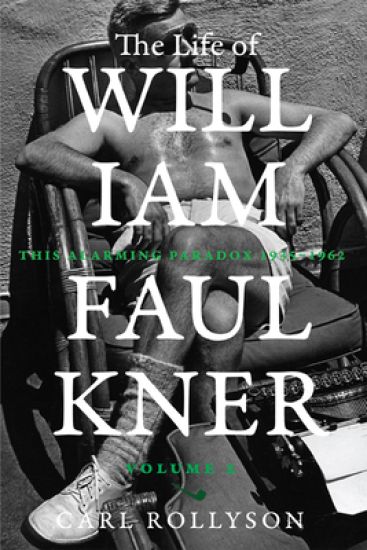
By the end of volume 1 of The Life of William Faulkner (""A filling, satisfying feast for Faulkner aficianados""- Kirkus), the young Faulkner had gone from an unpromising, self-mythologizing bohemian to the author of some of the most innovative and enduring literature of the century, including The Sound and the Fury and Light in August. The second and concluding volume of Carl Rollyson's ambitious biography finds Faulkner lamenting the many threats to his creative existence. Feeling, as an artist, he should be above worldly concerns and even morality, he has instead inherited only debts- a symptom of the South's faded fortunes- and numerous mouths to feed and funerals to fund. And so he turns to the classic temptation for financially struggling writers- Hollywood.Thus begins roughly a decade of shuttling between his home and family in Mississippi- lifeblood of his art- and the backlots of the Golden Age film industry. Through Faulkner's Hollywood years, Rollyson introduces such personalities as Humphrey Bogart and Faulkner's long-time collaborator Howard Hawks, while telling the stories behind films such as The Big Sleep and To Have and Have Not. At the same time, he chronicles with great insight Faulkner's rapidly crumbling though somehow resilient marriage and his numerous extramarital affairs- including his deeply felt, if ultimately doomed, relationship with Meta Carpenter. (In his grief over their breakup, Faulkner- a dipsomaniac capable of ferocious alcoholic binges- received third-degree burns when he passed out on a hotel-room radiator.)Where most biographers and critics dismiss Faulkner's film work as at best a necessary evil, at worst a tragic waste of his peak creative years, Rollyson approaches this period as a valuable window on his artistry. He reveals a fascinating, previously unappreciated cross-pollination between Faulkner's film and literary work, elements from his fiction appearing in his screenplays and his film collaborations influencing his later novels- undamentally changing the character of late-career works such as the Snopes trilogy.Rollyson takes the reader on a fascinating journey through the composition of Absalom, Absalom!, widely considered Faulkner's masterpiece, as well as the film adaptation he authored- unproduced and never published- Revolt in the Earth. He reveals how Faulkner wrestled with the legacy of the South- both its history and its dizzying racial contradictions- and turned it into powerful art in works such as Go Down, Moses and Intruder in the Dust.Volume 2 of this monumental work rests on an unprecedented trove of research, giving us the most penetrating and comprehensive life of Faulkner and providing a fascinating look at the author's trajectory from under-appreciated ""writer's writer"" to world-renowned Nobel laureate and literary icon. In his famous Nobel speech, Faulkner said what inspired him was the human ability to prevail. In the end, this beautifully wrought life shows how Faulkner, the man and the artist, embodies this remarkable capacity to endure and prevail.
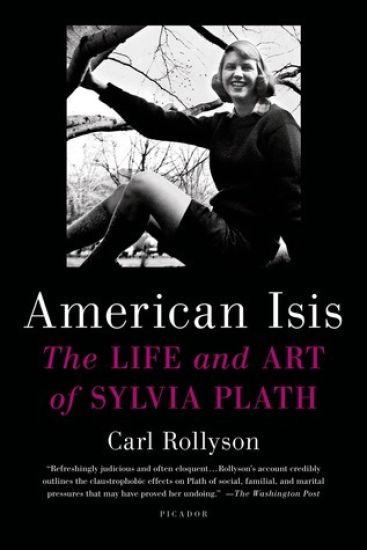
The life and work of Sylvia Plath has taken on the proportions of legend. Educated at Smith College, she had a conflicted relationship with her mother, Aurelia. She then married the poet Ted Hughes and plunged into the Sturm und Drang of literary celebrity. Her poems were fought over, rejected, accepted and ultimately embraced by readers everywhere. At age thirty she committed suicide by putting her head in an oven while her children slept on the floor above in rooms she had sealed off from the poisonous gas. "Ariel," a collection of poems she wrote at white-hot speed during her final months, became a modern classic. Her novel, "The Bell Jar," has become a part of the literary canon, appearing on student reading lists worldwide. On the fiftieth anniversary of her death, Carl Rollyson gives us a new biography of Plath that shows her as a powerful figure who embraced both high and low culture to become the Marilyn Monroe of modern literature, a writer who wanted nothing less than to become central to the mythology of modern consciousness. "American Isis" is the first biography of Sylvia Plath to use materials newly deposited in the Ted Hughes archive at the British Library including forty-one letters between Plath and Hughes to create a fresh and startling look at this American icon."
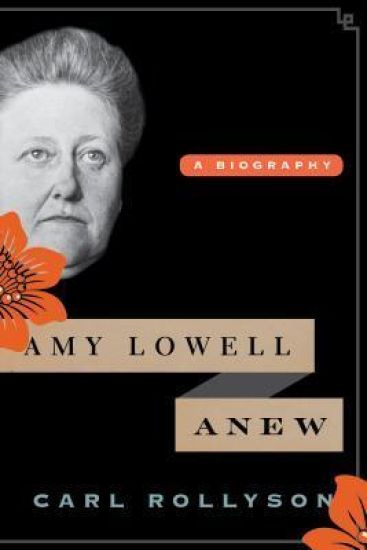
The controversial American poet Amy Lowell (1874-1925), a founding member of the Imagist group that included D. H. Lawrence and H. D., excelled as the impresario for the “new poetry” that became news across the U. S. in the years after World War I. Maligned by T. S. Eliot as the “demon saleswoman” of poetry, and ridiculed by Ezra Pound, Lowell has been treated by previous biographers as an obese, sex-starved, inferior poet who smoked cigars and made a spectacle of herself, canvassing the country on lecture tours that drew crowds in the hundreds for her electrifying performances. In fact, Lowell wrote some of the finest love lyrics of the 20th century and led a full and loving life with her constant companion, the retired actress Ada Russell. She was awarded the Pulitzer Prize posthumously in 1926. This provocative new biography, the first in forty years, restores Amy Lowell to her full humanity in an era that, at last, is beginning to appreciate the contributions of gays and lesbians to American’s cultural heritage. Drawing on newly discovered letters and papers, Rollyson’s biography finally gives this vibrant poet her due.

From hefty biographies and fact-based novels to photograph collections and memoirs, more books have been written about Marilyn Monroe than any other female over the past century. However, no biography—regardless how authoritative—can contain all of the facts and events of an individual’s life, and Marilyn’s is no exception. In Marilyn Monroe Day by Day: A Timeline of People, Places, and Events, Carl Rollyson provides a documentary approach to the life and legend of this singular personality. With details of her childhood, her young adult years, her ascent to superstardom, and the hour by hour moments leading to her tragic early death, this volume supplements—and, in some cases, corrects—the accounts of previous biographies. In addition to restoring what is left out in other narratives about Marilyn’s life, this book also illuminates the gaps and discrepancies that still exist in our knowledge of her. Drawing on excerpts from her diaries, journals, letters, and even checks and receipts—as well as reports of others—Rollyson recreates the day-to-day world of a woman who still fascinates us more than fifty years after her death. In addition to the calendar, Rollyson also profiles important figures in Marilyn’s life and includes a brief biography of the actress, providing a context for the timeline. An annotated bibliography of books and websites highlights the most reliable sources about Marilyn. With its vivid recreation of the key events in her life, Marilyn Monroe Day by Day is the perfect book for fans who can’t get enough of this cultural icon.