

Kirjahaku
Etsi kirjoja tekijän nimen, kirjan nimen tai ISBN:n perusteella.
43 kirjaa tekijältä Carlos Fuentes

A radiant family saga set in a century of Mexican history, by one of the world's greatest writers. Carlos Fuentes's hope-filled novel sees the twentieth century through the eyes of Laura Diaz, a woman who becomes as much a part of our history as of the Mexican history she observes and helps to create. Born in 1898, this extraordinary woman grows into a wife and mother, becomes the lover of great men, and, before her death in 1972, is celebrated as a politically committed artist. A complicated and alluring heroine, she lives a happy life despite the tragedies and losses she experiences, for she has borne witness to great changes in her country's life, and she has loved and understood with unflinching honesty. In his most important novel in decades, Carlos Fuentes has created a world filled with brilliantly colored scenes and heartbreaking dramas. The result is a novel of subtle, penetrating insight and immense power.

Two narratives twine through this superb novel: one introduces Gabriel Atlan-Ferrara, a fabled orchestral conductor, and his great passion, Inez Prada, a red-haired Mexican diva; the other is a mysterious telling of the first encounter in human history between a man and a woman. Berlioz's music for The Damnation of Faust brings Gabriel and Inez together, while the emerging love of neh-el and ah-nel--the original lovers--echoes the Faustian pact of love and death. Linking these narratives is a beautiful crystal seal that belongs to Atlan-Ferrara, its meaning an enigma that obsesses him. And like the light refracted through the seal, these stories begin in prehistory and spiral out into infinity. In Inez, we find Carlos Fuentes at the height of his magical and realist powers. This profound and beautiful work confirms his standing as one of the world's pre-eminent novelist.
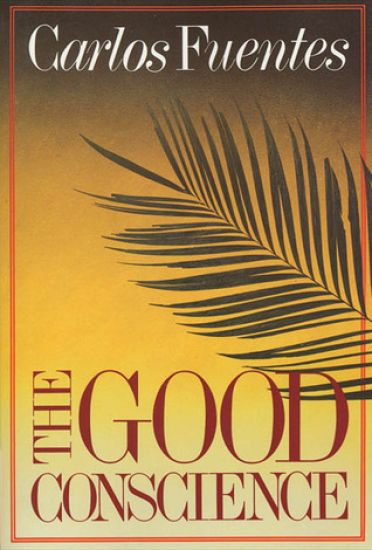
The Good Conscience is Carlos Fuentes's second novel. The scene is Guanajuato, a provincial capital in Central Mexico, once one of the world's richest mining centers. The Ceballos family has been reinstated to power, and adolescent Jaime Ceballos, its only heir, is torn between the practical reality of his family's life and the idealism of his youth and his Catholic education. His father is a good man but weak; his uncle is powerful, yet his actions are inconsistent with his professed beliefs. Jaime's struggle to emerge as a man with a "good conscience" forms the theme of the book: can a rebel correct the evils of an established system and at the same time retain the integrity of his principles?
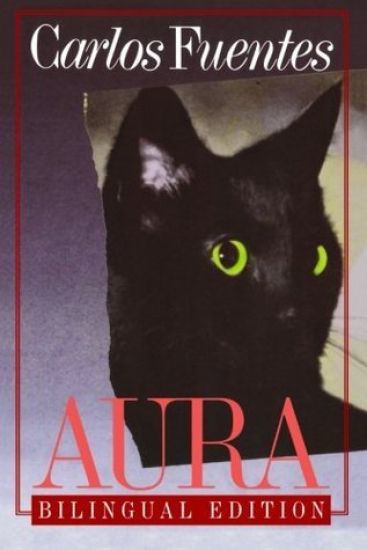
Felipe Montero is employed in the house of an aged widow to edit her deceased husband's memoirs. There Felipe meets her beautiful green-eyed niece, Aura. His passion for Aura and his gradual discovery of the true relationship between the young woman and her aunt propel the story to its extraordinary conclusion.
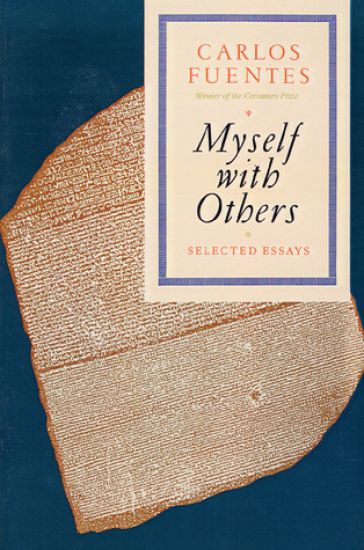
In "Myself with Others," Fuentes has assembled essays reflecting three of the great elements of his work: autobiography, love of literature, and politics. They include his reflections on his beginning as a writer, his celebrated Harvard University commencement address, and his trenchant examinations of Cervantes, Gabriel Garcia Marquez, and Borges.
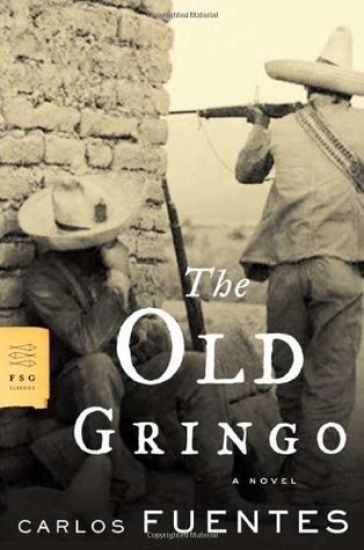
One of Carlos Fuentes's greatest works, "The Old Gringo" tells the story of Ambrose Bierce, the American writer, soldier, and journalist, and of his last mysterious days in Mexico living among Pancho Villa's soldiers, particularly his encounter with General Tomas Arroyo. In the end, the incompatibility of the two countries (or, paradoxically, their intimacy) claims both men, in a novel that is, most of all, about the tragic history of two cultures in conflict.
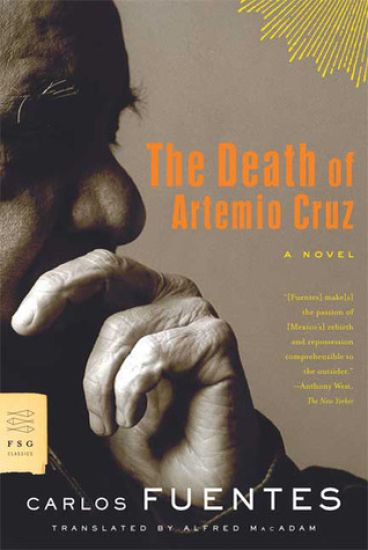
As the novel opens, Artemio Cruz, the all-powerful newspaper magnate and land baron, lies confined to his bed and, in dreamlike flashes, recalls the pivotal episodes of his life. Carlos Fuentes manipulates the ensuing kaleidoscope of images with dazzling inventiveness, layering memory upon memory, from Cruz's heroic campaigns during the Mexican Revolution, through his relentless climb from poverty to wealth, to his uneasy death. Perhaps Fuentes's masterpiece, The Death of Artemio Cruz is a haunting voyage into the soul of modern Mexico.
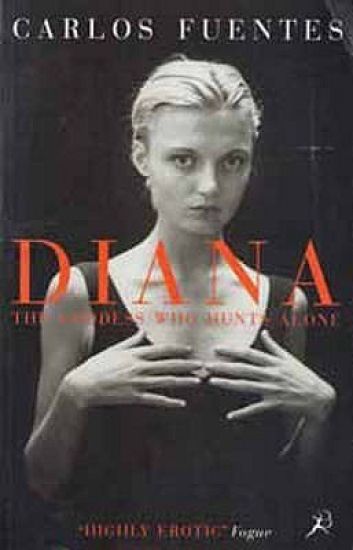
___________________ AN EXPLORATION OF LOVE, LUST AND BETRAYAL Part novel, part expose, Diana is a stirring portrait of a passionate affair amid the cultural chaos of the 1960s and 1970s. The central character is Diana Soren, an elegy for a decade that refused to die. She is a predator set on self-destruction, and a casualty of her own times and beauty. Mexico's pre-eminent novelist presents a poignant story of bittersweet love that was a huge success in his native country.

_______________________ A DRAMATIC FICTIONAL PORTRAIT OF THE US-MEXICO BORDER, MIGRATION, AND ITS IMPACT ON PEOPLE’S LIVES _______________________ Through this network of nine personal stories, Carlos Fuentes sets out to explain Mexico and America to each other – and to the rest of the world. He presents a dramatic fictional portrait of the relationship between the United States and Mexico, as played out in a Mexican dynasty led by a powerful Mexican oligarch with complex ties north of the border. It is the story of Mexican families who send their sons north to provide for whole villages with dollars and of Mexican tycoons who exploit their own people. Young Jose Francisco grows up in Texas, determined to write about the border world – the immigrants and illegals, Mexican poverty and Yankee prosperity – stories to break the stand-off silence with a victory shout, to shatter at last the crystal frontier.
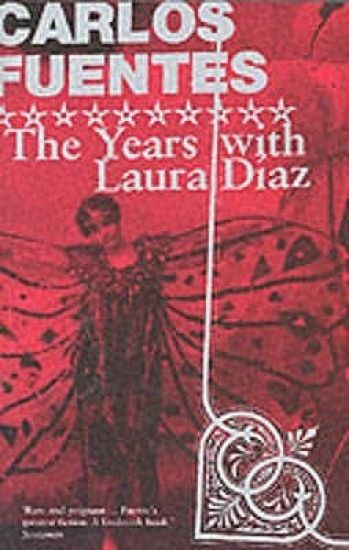
From 1905 to 1978, the author traces Laura Diaz's life, as she grows into a politically committed artist, whose bravery prevails despite losing a brother, a son and grandson to the darkests forces of Mexico's turbulent, often currupt politics.
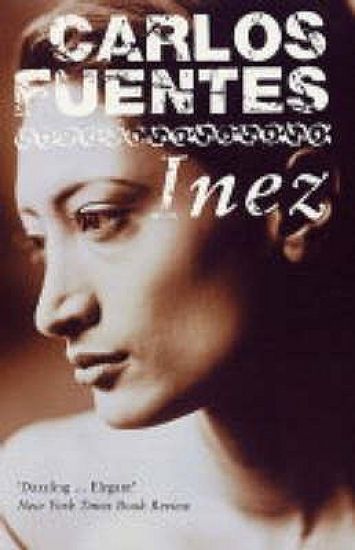
_________________________ ‘Dazzling ... The translation by Margaret Sayers Paden is elegant' - New York Times Book Review ‘A complex, focused novel ' - The Times 'Passionate ... a paean to music and musical genius, to romantic love and the mysterious sources of language and creativity' - Newsday _________________________ In this magical story of love and art, life and death, Carlos Fuentes entwines two narratives: one tells of the passion of orchestra conductor Gabriel Atlan-Ferrara for red-haired Mexican diva, Inez Prada; the other of the first encounter in human history between a man and a woman. Berlioz's music for The Damnation of Faust brings Atlan-Ferrara and Inez together, and continues to resound on every page of this haunting work. At the same time, the emergent love of neh-el and ah-nel - the original lovers - reminds us of the Faustian pact of love and death. The link between these two stories is a beautiful crystal seal that belongs to Atlan-Ferrara, who is obsessed by its meaning. Maybe this ancient and seductive object gives its bearer the ability to read unknown languages and hear music of impossible beauty...
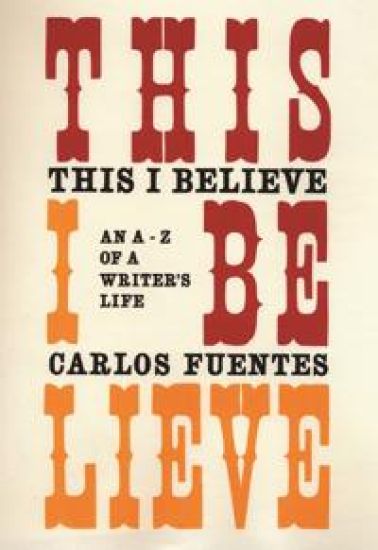
_________________________ ‘This collection examines the people, places and ideas that have shaped Fuentes's life ... stimulating and provoking' - Sunday Times ‘A characteristically dazzling display of Fuentes' erudition and of a remarkable life ... The book defies categorization ... There are flashes of his soul' - Financial Times ‘Magnificent ... an essay on children made me weep as I read it ... he is a marvellous novelist' - Nicholas Shakespeare, Daily Telegraph _________________________ Carlos Fuentes is Mexico's most admired novelist, and this is his manifesto, and memoir, offering a rare and wonderful insight into the mind of a great writer. This I Believe is an A to Z of the things that he loves and believes in. In a series of inspired meditations and polemics, he embraces his subjects from ‘Balzac' and ‘Beauty' to ‘Sex' and ‘Shakespeare'. The essays are woven together with the familiar Fuentes themes of politics, time and language, and through them runs the vein of his personal journey, his views on love, sex, women, friendship and family. From ‘Amor' to ‘Zürich', this is a collection of thoughts that is both witty and profoundly searching. _________________________ ‘Fuentes certainly dazzles; he cites aptly, and scatters one-liners. As you read him, you sense genuine mental alertness and snappy judgements. There's a touch of the guru in this latest book, revealing our world to us' - Independent
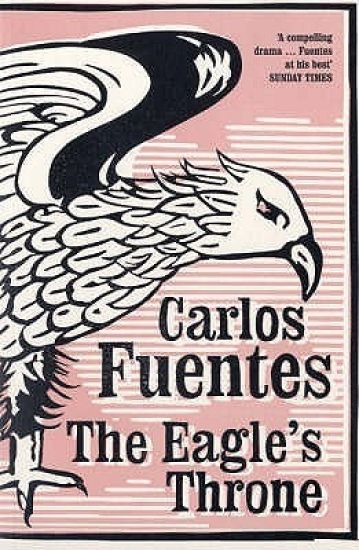
_________________________ ‘A compelling drama ... Fuentes at his best' - Sunday Times ‘[Fuentes] writes with an energy, passion and humour that are as compelling now as when he first published a novel, more than forty years ago ... rattlingly good entertainment' - Daily Telegraph ‘A man of remarkable gifts ... Fuentes has produced a narrative crammed with penetrating insights and provocative comments not merely on politics but also on history, art and literature' - Spectator _________________________ The year is 2020. The Mexican President has provoked the United States by calling for the removal of US troops from Colombia and demanding higher prices for Mexico's oil. But the country's satellite communications system is controlled in Miami and suddenly Mexico is deprived of phone, fax and email. In a country where politicians never put anything in writing, letters are now the only way to communicate, leaving the private lives and true feelings of all brutally exposed. Especially regarding the hot topic of the day: Who will be the next President, the next to ascend the Eagle's Throne? As the characters struggle to identify and ally themselves to the future President, the letters fly ever faster. Who will be the victor? Handsome Nicolás Valdivia? Bald satyr Tácito de la Canal? Or the ‘unsavoury' ex-President César León? There are many questions to be answered before the last letter is sent. _________________________ ‘This is Fuentes at his satirical best, mixing political wisdom, biting wit and poignant self-realisation' - Scotland on Sunday
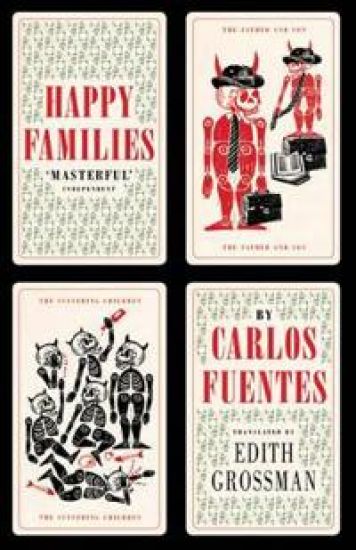
‘The country's living national treasure ... The stories overflow with the kind of insights that only maturity brings. They are also painfully topical ... Fuentes keeps his finger on modern Mexico's pulse' - Ángel Gurría-Quintana, Financial Times ‘Fuentes, now 80, is still masterful in evoking the lives of damaged characters ... beautifully observed ... a book seething with timeless rancour' - Independent _____________________ A choral novel on the hopes, disillusionments and betrayals of family life in Mexico. _____________________ A rich Catholic rancher wants his four sons to become priests, while the boys themselves have other plans; a bereaved mother explains her daughter's life to the man who killed her; three daughters meet up around their father's coffin for the first time in ten years; a middle-aged couple meet by chance on a cruise-ship and wonder if they were once young lovers. The result is a picture of contemporary Mexico seen through a violently fragmented narrative, not unlike the internationally successful film Amores Perros. The stories are punctuated by a chorus, commenting as if in a Greek tragedy, crudely and unsentimentally on the underbelly of modern Mexican life, offering a raw but richly textured glimpse of the inequalities of that society - street children, junkies, dead rock icons, the ideal wife, a honeymoon gone wrong, a child suicide, a man faking his death and beginning a new life - that throw the middle-class dramas of the linked stories into harsh relief. Happy Families is a dramatic polyphony of the many conflicting strands of Latin America and the modern urban world.
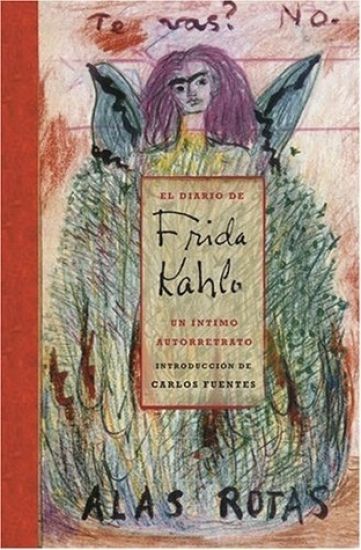
Published in its entirety, Frida Kahlo’s amazing illustrated journal documents the last ten years of her turbulent life. These passionate, often surprising, intimate records, kept under lock and key for some 40 years in Mexico, reveal many new dimensions in the complex personal life of this remarkable Mexican artist. The 170-page journal contains the artist’s thoughts, poems, and dreams—many reflecting her stormy relationship with her husband, artist Diego Rivera—along with 70 mesmerizing watercolor illustrations. The text entries, written in Frida’s round, full script in brightly colored inks, make the journal as captivating to look at as it is to read. Her writing reveals the artist’s political sensibilities, recollections of her childhood, and her enormous courage in the face of more than 35 operations to correct injuries she had sustained in an accident at the age of 18. This intimate portal into her life is sure to fascinate fans of the artist, art historians, and women’s culturalists alike.
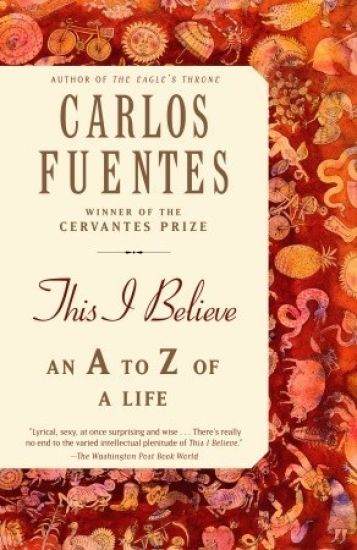
In this masterly, deeply personal, and provocative book, the internationally renowned Mexican writer Carlos Fuentes, whose work has been called "a combination of Poe, Baudelaire, and Isak Dinesen" (Newsweek), steps back to survey the wellsprings of art and ideology, the events that have shaped our time, and his extraordinary life and fiercest passions. Arranged alphabetically from "Amore" to "Zurich," This I Believe takes us on a marvelous inner journey with a great writer. Fuentes ranges wide, from contradictions inherent in Latin American culture and politics to his long friendship with director Luis Bu uel. Along the way, we find reflection on the mixed curse and blessing of globalization; memories of a sexual initiation in Zurich; a fond tracing of a family tree heavy with poets, dreamers, and diplomats; evocations of the streets, caf s, and bedrooms of Washington, Paris, Santiago de Chile, Cambridge, Oaxaca, and New York; and a celebration of literary heroes including Balzac, Cervantes, Faulkner, Kafka, and Shakespeare. Throughout, Fuentes captivates with the power of his intellect and his prose. Here, too, are vivid, often heartbreaking glimpses into his personal life. "Silvia" is a powerful love letter to his beloved wife. In "Children," Fuentes recalls the births of his daughters and the tragic death of his son; in "Cinema" he relives the magic of films such as Citizen Kane and The Wizard of Oz. Further extending his reach, he examines the collision between history and contemporary life in "Civil Society," "Left," and "Revolution." And he poignantly addresses the experiences we all hold in common as he grapples with beauty, death, freedom, God, and sex. By turns provocative and intimate, partisan and universal, this book is a brilliant summation of an international literary career. Revisiting the influences, commitments, readings, and insights of a lifetime, Fuentes has fashioned a magnificently coherent statement of his view of the world, reminding us once again why reading Fuentes is "like standing beneath the dome of the Sistine Chapel. . . . The breadth and enormity of this accomplishment is breathtaking" (The Denver Post).
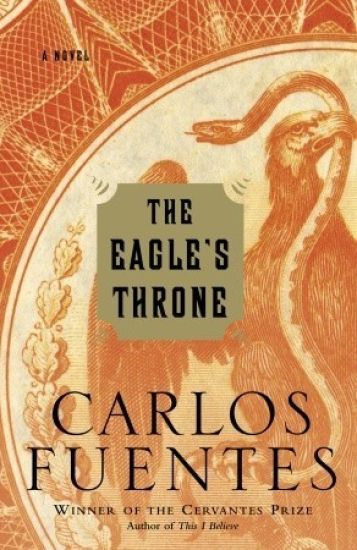
In a near future Mexico, a turbulent country teetering on the very edge of utter chaos and anarchy in which all communications with the outside world have been cut off, political adversaries on all sides--an ambitious president, his scheming cabinet secretary, an unscrupulous sexual diva, and others--compete for power. Reprint. 10,000 first printing.
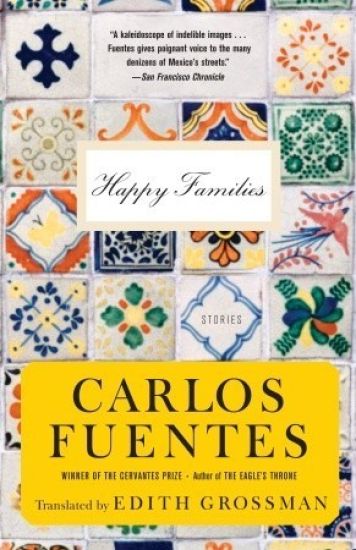
In these spectacular vignettes, the internationally acclaimed author Carlos Fuentes explores Tolstoy's classic observation that "happy families are all alike; every unhappy family is unhappy in its own way." In "A Family Like Any Other," each member of the Pag n family lives in isolation, despite sharing a tiny house. In "The Mariachi's Mother," the limitless devotion of a woman is revealed as she secretly tends to her estranged son's wounds. "Sweethearts" reunites old lovers unexpectedly and opens up the possibilities for other lives and other loves. These are just a few of the remarkable stories in Happy Families, but they all inhabit Fuentes's trademark Mexico, where modern obsessions bump up against those of the mythic past-and the result is a triumphant display of the many ways we reach out to one another and find salvation through irrepressible acts of love.
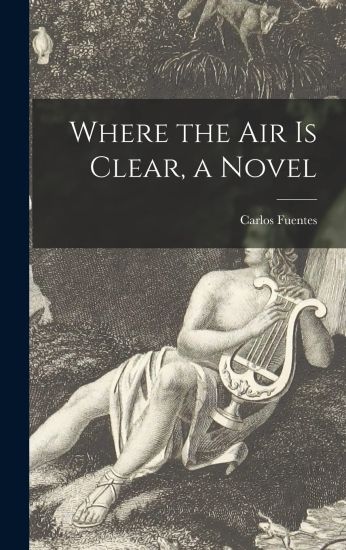
This work has been selected by scholars as being culturally important and is part of the knowledge base of civilization as we know it.This work is in the public domain in the United States of America, and possibly other nations. Within the United States, you may freely copy and distribute this work, as no entity (individual or corporate) has a copyright on the body of the work.Scholars believe, and we concur, that this work is important enough to be preserved, reproduced, and made generally available to the public. To ensure a quality reading experience, this work has been proofread and republished using a format that seamlessly blends the original graphical elements with text in an easy-to-read typeface.We appreciate your support of the preservation process, and thank you for being an important part of keeping this knowledge alive and relevant.