Kirjojen hintavertailu. Mukana 11 244 527 kirjaa ja 12 kauppaa.

Kirjahaku

Etsi kirjoja tekijän nimen, kirjan nimen tai ISBN:n perusteella.

8 kirjaa tekijältä Carole Fink

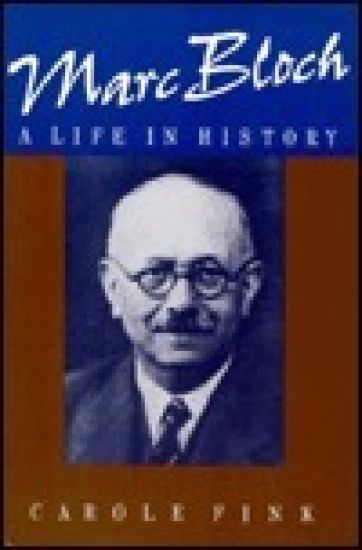
Marc Bloch

Marc Bloch

Carole Fink

Cambridge University Press
1989
sidottu
This is the first biography of Marc Bloch (1886–1944), historian, soldier in both world wars, and leader of the Resistance, who was captured, tortured, and died a heroic death. Based largely on Bloch's private letters, diaries and papers, as well as on other unpublished documents, it traces the remarkable life of this French-Jewish patriot under the Third Republic. As an historian, Bloch is perhaps best known for The Historian's Craft, an inspiring set of meditations on his life's work, and as co-founder of the now legendary journal Annales, which gave rise to a major school of historical writing. Profoundly influenced by the dark events that shaped his era - world wars, anti-semitism, and totalitarianism - Bloch has become something of an intellectual hero of our century, his life an epitome of the endeavour to uphold, in the face of such events, the spirit of unfettered critical enquiry.
Marc Bloch

Marc Bloch

Carole Fink

Cambridge University Press
1991
pokkari
This is the first biography of Marc Bloch (1886–1944), historian, soldier in both world wars, and leader of the Resistance, who was captured, tortured, and died a heroic death. Based largely on Bloch's private letters, diaries and papers, as well as on other unpublished documents, it traces the remarkable life of this French-Jewish patriot under the Third Republic. As an historian, Bloch is perhaps best known for The Historian’s Craft, an inspiring set of meditations on his life’s work, and as co-founder of the now legendary journal Annales, which gave rise to a major school of historical writing. Profoundly influenced by the dark events that shaped his era - world wars, anti-semitism, and totalitarianism - Bloch has become something of an intellectual hero of our century, his life an epitome of the endeavour to uphold, in the face of such events, the spirit of unfettered critical enquiry.
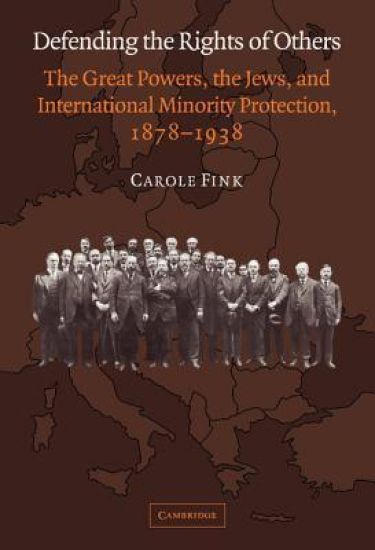
Defending the Rights of Others

Defending the Rights of Others

Carole Fink

Cambridge University Press
2004
sidottu
When the Cold War ended between 1989 and 1991, statesmen and scholars reached back to the period after World War I when the victors devised minority treaties for the new and expanded states of Eastern Europe. This book is the first study of the entire period between 1878 and 1938, when the great powers established a system of external supervision to reduce the threats in Europe’s most volatile regions of irredentism, persecution, and uncontrolled waves of westward migration. It is a study of the strengths and weaknesses of an early state of international human rights diplomacy as practised by rival and often-uninformed Western political leaders, by ardent but divided Jewish advocates, and also by aggressive state minority champions, in the tumultuous age of nationalism and imperialism, bolshevism and fascism between Bismarck and Hitler.
Cold War, 2nd Edition

Cold War, 2nd Edition

Carole Fink

Westview Press Inc
2017
pokkari
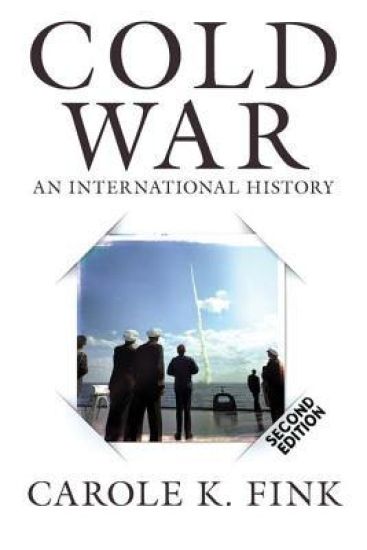
The decades-long Cold War was more than a bipolar conflict between two Superpowers- it had implications for the entire world. In this accessible, comprehensive retelling, Carole K. Fink provides new insights and perspectives on key events with an emphasis on people, power, and ideas. Cold War goes beyond US-USSR relations to explore the Cold War from an international perspective, including developments in Africa, Asia, and Latin America. Fink also offers a broader time line of the Cold War than any other text, charting the lead-up to the conflict from the Russian Revolution to World War II and discussing the aftermath of the Cold War up to the present day. The second edition reflects the latest research and scholarship and offers additional information about the post-Cold War period, including the new Cold War" with Russia. For today's students and history buffs, Cold War is the consummate book on this complex conflict.
The Genoa Conference

The Genoa Conference

Carole Fink

Syracuse University Press
1994
nidottu
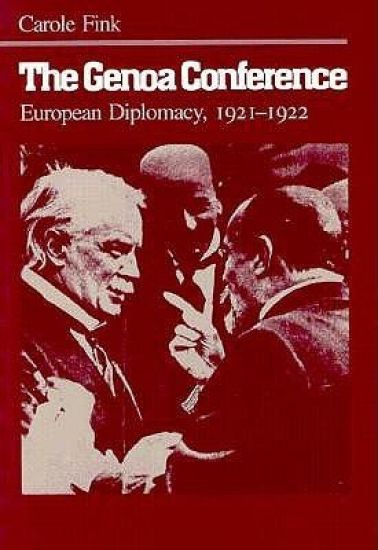
This work, by Carole Fink, winner of the George Louis Beer Prize, traces the origin and outcome of the Genoa Conference in 1921/22, one of the most important events in European diplomacy following World War I.
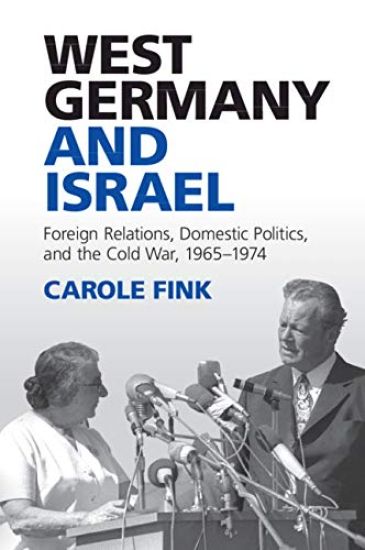
West Germany and Israel

West Germany and Israel

Carole Fink

Cambridge University Press
2019
sidottu
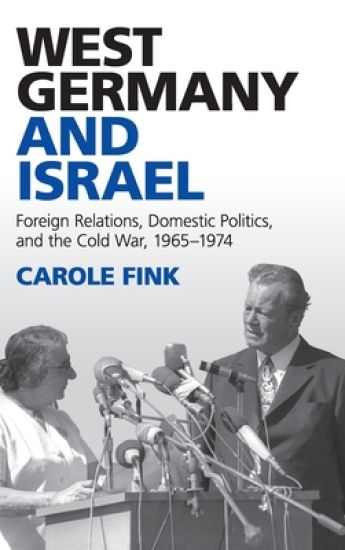
By the late 1960s, West Germany and Israel were moving in almost opposite diplomatic directions in a political environment dominated by the Cold War. The Federal Republic launched ambitious policies to reconcile with its Iron Curtain neighbors, expand its influence in the Arab world, and promote West European interests vis-à-vis the United States. By contrast, Israel, unable to obtain peace with the Arabs after its 1967 military victory and threatened by Palestinian terrorism, became increasingly dependent upon the United States, estranged from the USSR and Western Europe, and isolated from the Third World. Nonetheless, the two countries remained connected by shared security concerns, personal bonds, and recurrent evocations of the German-Jewish past. Drawing upon newly-available sources covering the first decade of the countries' formal diplomatic ties, Carole Fink reveals the underlying issues that shaped these two countries' fraught relationship and sets their foreign and domestic policies in a global context.
West Germany and Israel

West Germany and Israel

Carole Fink

Cambridge University Press
2019
pokkari
By the late 1960s, West Germany and Israel were moving in almost opposite diplomatic directions in a political environment dominated by the Cold War. The Federal Republic launched ambitious policies to reconcile with its Iron Curtain neighbors, expand its influence in the Arab world, and promote West European interests vis-à-vis the United States. By contrast, Israel, unable to obtain peace with the Arabs after its 1967 military victory and threatened by Palestinian terrorism, became increasingly dependent upon the United States, estranged from the USSR and Western Europe, and isolated from the Third World. Nonetheless, the two countries remained connected by shared security concerns, personal bonds, and recurrent evocations of the German-Jewish past. Drawing upon newly-available sources covering the first decade of the countries' formal diplomatic ties, Carole Fink reveals the underlying issues that shaped these two countries' fraught relationship and sets their foreign and domestic policies in a global context.