Kirjojen hintavertailu. Mukana 12 083 983 kirjaa ja 12 kauppaa.

Kirjahaku

Etsi kirjoja tekijän nimen, kirjan nimen tai ISBN:n perusteella.

2 kirjaa tekijältä Caroline A. Jones

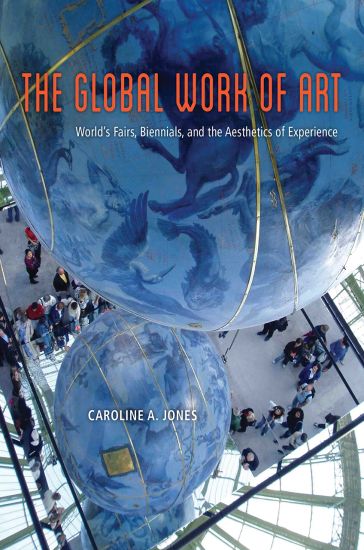
The Global Work of Art

The Global Work of Art

Caroline A. Jones

University of Chicago Press
2017
sidottu
Global biennials have proliferated in the contemporary art world, but artists' engagement with large-scale international exhibitions has a much longer history that has influenced the present in important ways. Going back to the earliest world's fairs in the nineteenth century, this book argues that "globalism" was incubated in a century of international art contests, and today constitutes an important tactic for practicing artists. As world's fairs brought millions of attendees into contact with foreign cultures, products, and processes, artworks became juxtaposed in a "theater of nations," which challenged artists and critics to think outside their local academies for the first time. From Gustave Courbet's rebel pavilion near the official art exhibit at the 1855 French World's Fair to curator Beryl Madra's choice of London-based Cypriot Hussein Chalayan for the off-site Turkish pavilion at the 2006 Venice Biennale, artists have used these exhibitions to reflect on contemporary art, speak to their own governments back home, and challenge the wider geopolitical realm changing art and art history along the way. Ultimately, Caroline A. Jones argues, the modern appetite for experience and event structures, which were cultivated around the art at these earlier expositions, have now come to constitute contemporary art itself, producing encounters that transform the public and force us to reflect critically on the global condition.
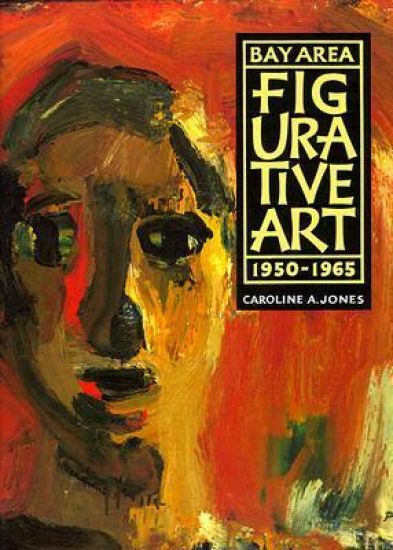
Bay Area Figurative Art

Bay Area Figurative Art

Caroline A. Jones

University of California Press
1989
pokkari
During the 1950s a few painters in the San Francisco Bay Area began to stage personal, dramatic defections from the prevailing style of Abstract Expressionism, creating what would come to be known as Bay Area Figurative Art. In 1949 David Park destroyed many of his nonobjective canvases and began a new style of consciously naive figuration. Soon Elmer Bischoff and Richard Diebenkorn joined Park and other painters such as Nathan Oliveira, Theophilus Brown, James Weeks, and Paul Wonner in the move away from abstraction and toward figurative subject matter. When artists such as Bruce McGaw, Manuel Neri, and Joan Brown emerged as a second generation of figurative artists, the momentum grew for a powerful new development in American painting. The achievement of Bay Area Figurative painters and sculptors has become directly relevant to current debates regarding abstraction and representation, as well as to discourses on modernism and postmodernism. Indeed, the historical phenomenon of the movement is an important case study in the evolution of modernism in America, serving as an early example of rupture in the formalist 'mainstream.' "Bay Area Figurative Art 1950-1965" was written to accompany an exhibition of the same name at the San Francisco Museum of Modern Art. Based on extensive archival research and interviews, it is the first study of the movement as a whole and is the broadest and most accurate account of the careers and interactions of ten Bay Area artists who worked in this new style.