Kirjojen hintavertailu. Mukana 11 699 587 kirjaa ja 12 kauppaa.

Kirjahaku

Etsi kirjoja tekijän nimen, kirjan nimen tai ISBN:n perusteella.

2 kirjaa tekijältä Caroline Anjali Ritchie

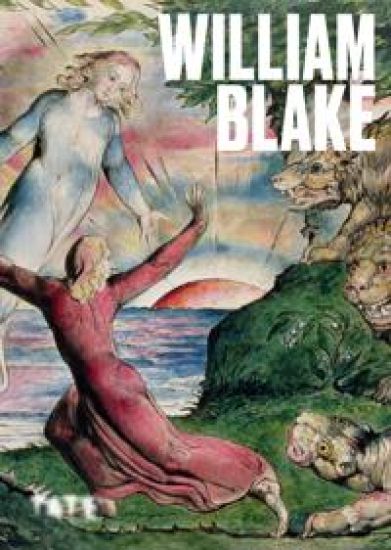
Artists Series: William Blake

Artists Series: William Blake

Caroline Anjali Ritchie

Tate Publishing
2024
nidottu
A compelling introduction to the life and work of William Blake, an exuberant and rebellious personality whose radical vision was deeply concerned with the social, religious and political issues of his age. William Blake (1757–1827) is renowned today for his eccentric imagination and distinctive style. His poems, prints and paintings — inspired by the visions he claimed to see of angels and demons — reveal a free-thinking radical and a champion of artistic experimentation. His elaborate mythological works directly address the major historical events of his time, including industrialisation, revolution and the transatlantic slave trade, and appeal to modern ideas about liberty and social justice. This fascinating introduction explores the life and work of Blake. From his early training in draughtsmanship and his pivotal time as an engraver’s apprentice, it traces his incredible career through a selection of extraordinary works, and highlights his lifelong interest in integrating visual art and poetry, which culminated in the experimental printing technique that he used to create his famous illuminated books. An artist dedicated to his work, Blake’s intriguing creative vision, at times both hopeful and apocalyptic, has had a lasting cultural impact that continues to capture the imagination today.
William Blake and the Cartographic Imagination

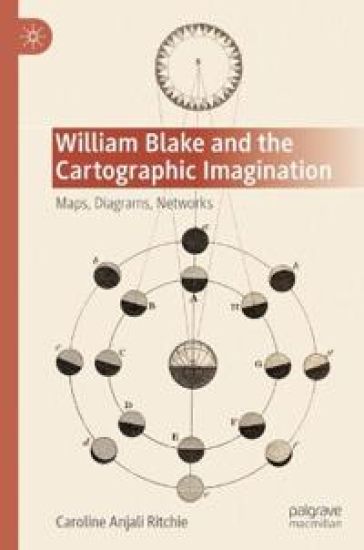
William Blake and the Cartographic Imagination

Caroline Anjali Ritchie

Springer International Publishing AG
2025
sidottu
This book contributes to current discussions about the meaning, history, and theorisation of maps. The monograph focuses on William Blake (1757-1827), whose astute critical angle on cartography invites us to think in a new light about mapping in the eighteenth century, commonly regarded as a key phase within the history of European cartography. Ritchie positions Blake as a participant in a vibrant mesh of cartographic practices, seeking out his antecedents, peers, interlocutors, and followers. She characterises Blake’s participation in cartographic culture as both energetic and uneasy. In addition, the book traces Blake’s legacy as a point of contact for London-based psychogeographical writers and small-press publishers seeking to rethink the nature of maps and mapping in recent years and up to the present day. Through its exploration of Blake's poetry, art, and legacy, this book aims to pluralise and enrich conceptions of cartography from the eighteenth century to the present.