Kirjojen hintavertailu. Mukana 11 717 486 kirjaa ja 12 kauppaa.

Kirjahaku

Etsi kirjoja tekijän nimen, kirjan nimen tai ISBN:n perusteella.

6 kirjaa tekijältä Caroline Franklin

Byron's Heroines

Byron's Heroines

Caroline Franklin

Clarendon Press
1992
sidottu
`Alas! the love of women! it is known/ To be a lovely and fearful thing!' Don Juan, II. 199 Traditionally seen as an archetypal masculine poet, better known for his relationships with women than for the sympathetic study of them, Lord Byron has not lent himself easily to a feminist critique hitherto. In this, the first such example, Caroline Franklin takes an original and polemical standpoint, reading Byron within the setting of the contemporary debate on the nature, role, and rights of women in society. The heroines of Byron's narrative and dramatic verse are considered, not from a biographical perspective, but by relating these representations to ideologies of sexual difference which obtained in the poet's day. Viewed in their literary-historical context, these Byronic heroines are compared with other female protagonists of the age, thereby revealing the poet to be unusually honest and bold in his portrayal of female sexuality and its relation to political issues. Drawing upon original research materials, yron's Heroines presents the poet in a fresh and original context as well as making an important contribution to the debate regarding the representation of women in early nineteenth-century society.
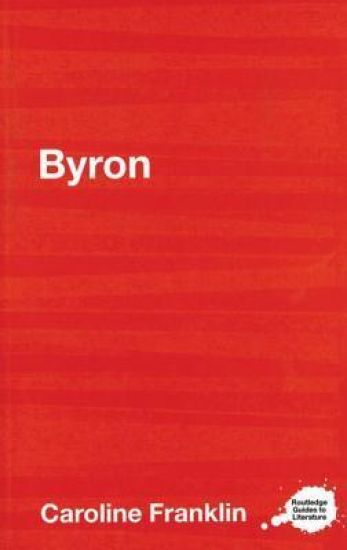
Byron

Byron

Caroline Franklin

Routledge
2006
sidottu
Lord Byron (1788-1824) was a poet and satirist, as famous in his time for his love affairs and questionable morals as he was for his poetry. Looking beyond the scandal, Byron leaves us a body of work that proved crucial to the development of English poetry and provides a fascinating counterpoint to other writings of the Romantic period. This guide to Byron’s sometimes daunting, often extraordinary work offers:an accessible introduction to the contexts and many interpretations of Byron’s texts, from publication to the present an introduction to key critical texts and perspectives on Byron’s life and work, situated in a broader critical history cross-references between sections of the guide, in order to suggest links between texts, contexts and criticism suggestions for further reading.Part of the Routledge Guides to Literature series, this volume is essential reading for all those beginning detailed study of Byron and seeking not only a guide to his works but also a way through the wealth of contextual and critical material that surrounds them.
Byron

Byron

Caroline Franklin

Routledge
2006
nidottu
Lord Byron (1788-1824) was a poet and satirist, as famous in his time for his love affairs and questionable morals as he was for his poetry. Looking beyond the scandal, Byron leaves us a body of work that proved crucial to the development of English poetry and provides a fascinating counterpoint to other writings of the Romantic period. This guide to Byron’s sometimes daunting, often extraordinary work offers:an accessible introduction to the contexts and many interpretations of Byron’s texts, from publication to the present an introduction to key critical texts and perspectives on Byron’s life and work, situated in a broader critical history cross-references between sections of the guide, in order to suggest links between texts, contexts and criticism suggestions for further reading.Part of the Routledge Guides to Literature series, this volume is essential reading for all those beginning detailed study of Byron and seeking not only a guide to his works but also a way through the wealth of contextual and critical material that surrounds them.
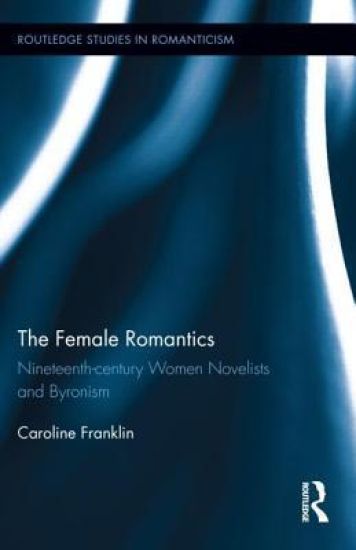
The Female Romantics

The Female Romantics

Caroline Franklin

Routledge
2012
sidottu
Awarded the Elma Dangerfield Prize by the International Byron Society in 2013The nineteenth century is sometimes seen as a lacuna between two literary periods. In terms of women’s writing, however, the era between the death of Mary Wollstonecraft and the 1860s feminist movement produced a coherent body of major works, impelled by an ongoing dialogue between Enlightenment ‘feminism’ and late Romanticism. This study focuses on the dynamic interaction between Lord Byron and Madame de Staël, Lady Morgan, Mary Shelley and Jane Austen, challenging previous critics’ segregation of the male Romantic writers from their female peers. The Romantic movement in general unleashed the creative ambitions of nineteenth-century female novelists, and the public voice of Byron in particular engaged them in transnational issues of political, national and sexual freedom. Byronism had itself been shaped by the poet’s incursion onto a literary scene where women readers were dominant and formidable intellectuals such as Madame de Staël were lionized. Byron engaged in rivalrous dialogue with the novels of his female friends and contemporaries, such as Caroline Lamb, Mary Shelley and Jane Austen, whose critiques of Romantic egotism helped prompt his own self-parody in Don Juan. Later Victorian novelists, such as George Sand, the Brontë sisters and Harriet Beecher Stowe, wove their rejection of their childhood attraction to Byronism, and their dawning awareness of the significance for women of Lady Byron’s actions, into the feminist fabric of their art.
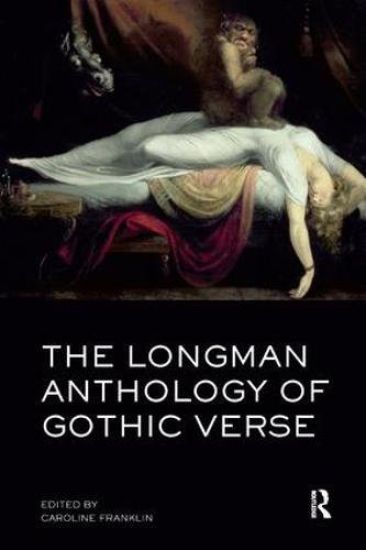
The Longman Anthology of Gothic Verse

The Longman Anthology of Gothic Verse

Caroline Franklin

Routledge
2017
sidottu
Gothic verse liberated the dark side of Romantic and Victorian verse: its medievalism, melancholy and morbidity. Some poets intended merely to shock or entertain, but Gothic also liberated the creative imagination and inspired them to enter disturbing areas of the psyche and to portray extreme states of human consciousness. This anthology illustrates that journey. This is the first modern anthology of Gothic verse. It traces the rise of Gothic in the late eighteenth century and follows its footsteps through the nineteenth century. Gothic has never truly died as it constantly reinvents itself, and this lively, illustrated and annotated anthology offers students the atmospheric poetry that originally studded terror novels and inspired horror films. Alongside canonical verse by Coleridge, Keats and Poe, it introduces readers to lesser-known authors excursions into the macabre and the grotesque. A wide range of poetic forms is included: as well as ballads, tales, lyrics, meditative odes and dramatic monologues, a medievalist romance by Scott and Gothic drama by Byron are also included in full. A substantial introduction by Caroline Franklin puts the rise of Gothic poetry into its historical context, relating it both to Romanticism and Enlightenment historicism. Although Gothic fiction has now been receiving serious critical attention for twenty years, Gothic verse has been largely overlooked. It is therefore hoped that this anthology will stimulate scholarly interest as well as readers pleasure in these unearthly poems.
The Female Romantics

The Female Romantics

Caroline Franklin

Routledge
2014
nidottu
Awarded the Elma Dangerfield Prize by the International Byron Society in 2013The nineteenth century is sometimes seen as a lacuna between two literary periods. In terms of women’s writing, however, the era between the death of Mary Wollstonecraft and the 1860s feminist movement produced a coherent body of major works, impelled by an ongoing dialogue between Enlightenment ‘feminism’ and late Romanticism. This study focuses on the dynamic interaction between Lord Byron and Madame de Staël, Lady Morgan, Mary Shelley and Jane Austen, challenging previous critics’ segregation of the male Romantic writers from their female peers. The Romantic movement in general unleashed the creative ambitions of nineteenth-century female novelists, and the public voice of Byron in particular engaged them in transnational issues of political, national and sexual freedom. Byronism had itself been shaped by the poet’s incursion onto a literary scene where women readers were dominant and formidable intellectuals such as Madame de Staël were lionized. Byron engaged in rivalrous dialogue with the novels of his female friends and contemporaries, such as Caroline Lamb, Mary Shelley and Jane Austen, whose critiques of Romantic egotism helped prompt his own self-parody in Don Juan. Later Victorian novelists, such as George Sand, the Brontë sisters and Harriet Beecher Stowe, wove their rejection of their childhood attraction to Byronism, and their dawning awareness of the significance for women of Lady Byron’s actions, into the feminist fabric of their art.