Kirjojen hintavertailu. Mukana 12 016 292 kirjaa ja 12 kauppaa.

Kirjahaku

Etsi kirjoja tekijän nimen, kirjan nimen tai ISBN:n perusteella.

3 kirjaa tekijältä Caroline Hovanec

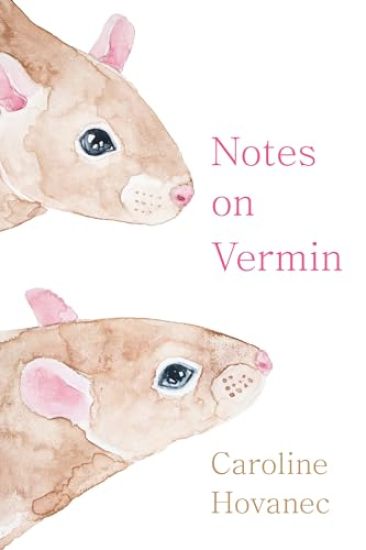
Notes on Vermin

Notes on Vermin

Caroline Hovanec

THE UNIVERSITY OF MICHIGAN PRESS
2025
nidottu
Vermin—rats, cockroaches, pigeons, mosquitoes, and other pests—are, to most people, objects of disgust. And vermin metaphors, likening human beings to these loathed creatures, appear in the ugliest forms of political rhetoric. Indeed, vermin imagery has often been used to denigrate poor, foreign, or racialized people. Yet many writers have reclaimed vermin, giving new meaning to creeping rodents, swarming insects, and wriggling worms. Notes on Vermin is an atlas of the literary vermin that appear in modern and contemporary literature, from Franz Kafka’s gigantic insect to Richard Wright’s city rats to Namwali Serpell’s storytelling mosquitoes. As parasites, trespassers, and collectives, vermin animals prove useful to writers who seek to represent life in the margins of power. Drawing on psychoanalysis, cultural studies, eco-Marxism, and biopolitics, this book explores four uses for literary vermin: as figures for the repressed thought, the uncommitted fugitive, the freeloading parasite, and the surplus life. In a series of short, accessible, interlinked essays, Notes on Vermin explores what animal pests can show us about our cultures, our environments, and ourselves.
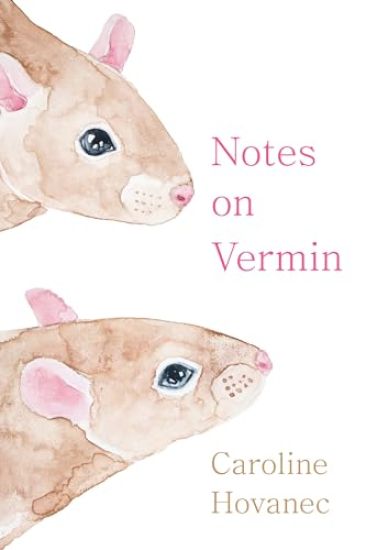
Notes on Vermin

Notes on Vermin

Caroline Hovanec

THE UNIVERSITY OF MICHIGAN PRESS
2025
sidottu
Vermin—rats, cockroaches, pigeons, mosquitoes, and other pests—are, to most people, objects of disgust. And vermin metaphors, likening human beings to these loathed creatures, appear in the ugliest forms of political rhetoric. Indeed, vermin imagery has often been used to denigrate poor, foreign, or racialized people. Yet many writers have reclaimed vermin, giving new meaning to creeping rodents, swarming insects, and wriggling worms. Notes on Vermin is an atlas of the literary vermin that appear in modern and contemporary literature, from Franz Kafka’s gigantic insect to Richard Wright’s city rats to Namwali Serpell’s storytelling mosquitoes. As parasites, trespassers, and collectives, vermin animals prove useful to writers who seek to represent life in the margins of power. Drawing on psychoanalysis, cultural studies, eco-Marxism, and biopolitics, this book explores four uses for literary vermin: as figures for the repressed thought, the uncommitted fugitive, the freeloading parasite, and the surplus life. In a series of short, accessible, interlinked essays, Notes on Vermin explores what animal pests can show us about our cultures, our environments, and ourselves.
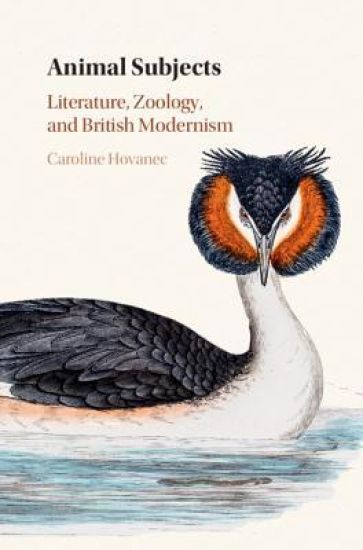
Animal Subjects: Volume 1

Animal Subjects: Volume 1

Caroline Hovanec

Cambridge University Press
2018
sidottu
Animal Subjects identifies a new understanding of animals in modernist literature and science. Drawing on Darwin's evolutionary theory, British writers and scientists of the late nineteenth and early twentieth centuries began to think of animals as subjects dwelling in their own animal worlds. Both science and literature aimed to capture the complexity of animal life, and their shared attention to animals pulled the two disciplines closer together. It led scientists to borrow the literary techniques of fiction and poetry, and writers to borrow the observational methods of zoology. Animal Subjects tracks the coevolution of literature and zoology in works by H. G. Wells, Aldous Huxley, D. H. Lawrence, Virginia Woolf, and modern scientists including Julian Huxley, Charles Elton, and J. B. S. Haldane. Examining the rise of ecology, ethology, and animal psychology, this book shows how new, subject-centered approaches to the study of animals transformed literature and science in the modernist period.