Kirjojen hintavertailu. Mukana 12 083 983 kirjaa ja 12 kauppaa.

Kirjahaku

Etsi kirjoja tekijän nimen, kirjan nimen tai ISBN:n perusteella.

9 kirjaa tekijältä Caroline Potter

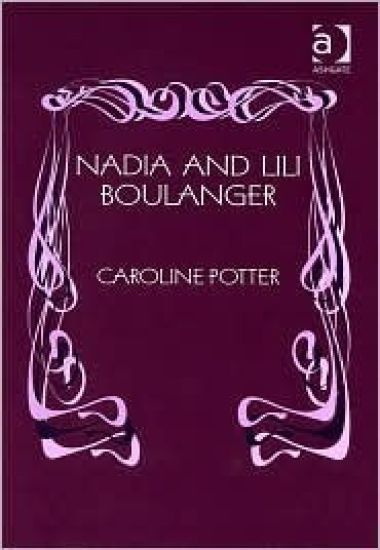
Nadia and Lili Boulanger

Nadia and Lili Boulanger

Caroline Potter

Ashgate Publishing Limited
2006
sidottu
Pioneers in their fields and two of the best-known women in music in the twentieth century, Nadia and Lili Boulanger have previously been considered in isolation from one another. Yet, as Caroline Potter's new book demonstrates, their careers were closely linked during Lili Boulanger's short life (1893-1918) and there are several intriguing connections between their musical works. This biography also provides the first full analysis of the Boulanger sisters' musical styles, placing them within the context of French musical history. Their lives are also a case study in the issues of gender which surround music making even to the present day. Despite an unusually privileged upbringing, Nadia and Lili Boulanger exemplify the struggle women experienced when attempting to enter the professional music world. Lili became the first woman to win the Prix de Rome in 1913, and Nadia gained second place in 1908. Yet in spite of this initial success, Nadia Boulanger was to give up composing in her thirties and devoted the remainder of her long life to teaching. Her pupils included several of the great composers of the century, including Aaron Copland and Elliott Carter. This book, focusing on their musical careers, is essential reading for anyone interested in French music of the twentieth century.

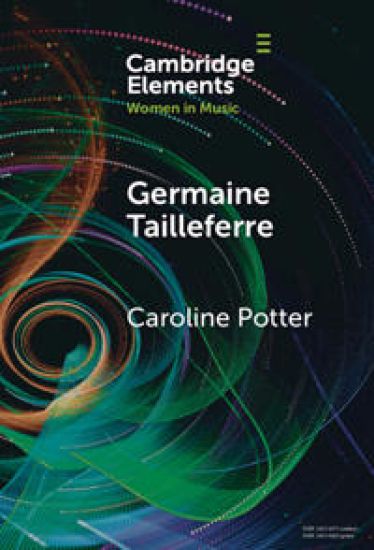
Germaine Tailleferre

Germaine Tailleferre

Caroline Potter

Cambridge University Press
2026
pokkari
Germaine Tailleferre (1892–1983) is now remembered largely because she was a member of Les Six, a group of French composers active in the late 1910s and early 1920s. Tailleferre encountered many obstacles, most notably a difficult personal life including two brief marriages to men who were unsupportive of her musical career; it is also true that critics tended to focus on her gender rather than her musical style. This Element tells the fascinating story of Tailleferre's life and long career and, most significantly, explores the development of her musical style and her role in the development of neoclassicism in France. In recent years, international performers have rediscovered her appealing, lively music and have at last started to bring Tailleferre to wider audiences. This Element will contribute to the rediscovery of Tailleferre and will reveal her to be a significant force in twentieth-century French music.
Germaine Tailleferre

Germaine Tailleferre

Caroline Potter

Cambridge University Press
2026
sidottu
Germaine Tailleferre (1892–1983) is now remembered largely because she was a member of Les Six, a group of French composers active in the late 1910s and early 1920s. Tailleferre encountered many obstacles, most notably a difficult personal life including two brief marriages to men who were unsupportive of her musical career; it is also true that critics tended to focus on her gender rather than her musical style. This Element tells the fascinating story of Tailleferre's life and long career and, most significantly, explores the development of her musical style and her role in the development of neoclassicism in France. In recent years, international performers have rediscovered her appealing, lively music and have at last started to bring Tailleferre to wider audiences. This Element will contribute to the rediscovery of Tailleferre and will reveal her to be a significant force in twentieth-century French music.
Nadia and Lili Boulanger

Nadia and Lili Boulanger

Caroline Potter

Routledge
2016
nidottu
Pioneers in their fields and two of the best-known women in music in the twentieth century, Nadia and Lili Boulanger have previously been considered in isolation from one another. Yet, as Caroline Potter's new book demonstrates, their careers were closely linked during Lili Boulanger's short life (1893-1918) and there are several intriguing connections between their musical works. This biography also provides the first full analysis of the Boulanger sisters' musical styles, placing them within the context of French musical history. Their lives are also a case study in the issues of gender which surround music making even to the present day. Despite an unusually privileged upbringing, Nadia and Lili Boulanger exemplify the struggle women experienced when attempting to enter the professional music world. Lili became the first woman to win the Prix de Rome in 1913, and Nadia gained second place in 1908. Yet in spite of this initial success, Nadia Boulanger was to give up composing in her thirties and devoted the remainder of her long life to teaching. Her pupils included several of the great composers of the century, including Aaron Copland and Elliott Carter. This book, focusing on their musical careers, is essential reading for anyone interested in French music of the twentieth century.
Henri Dutilleux

Henri Dutilleux

Caroline Potter

Routledge
2016
nidottu
Henri Dutilleux (born 1916) is one of France’s leading composers, though until recently his music received more attention in the United States than in Europe. A fiercely independent composer who pursues his own musical path regardless of fashion, he has never courted the public eye, yet in this book he is revealed as a composer very much engaged with the work of other artists from all spheres. Caroline Potter’s fascinating survey examines the relation of some of these artists to Dutilleux’s music. In literature, the notions of memory and time found in the writings of Baudelaire and Proust have had profound effects on his compositional development, whilst the visual arts have informed his aesthetic ideas and their expression in both his music and even in his meticulously produced scores. Always a perfectionist, Dutilleux now rejects those earlier works which are not representative of his mature style. By analysing these early pieces, Dr Potter traces the evolution of his musical style, and she investigates his compositional process and use of particular referential devices in later works. Whilst his music is unequivocally of our time, Dutilleux has never lost the ability to communicate with a wide-ranging audience. Drawing on interviews with the composer, this study provides penetrating insights into this complex composer’s musical world.
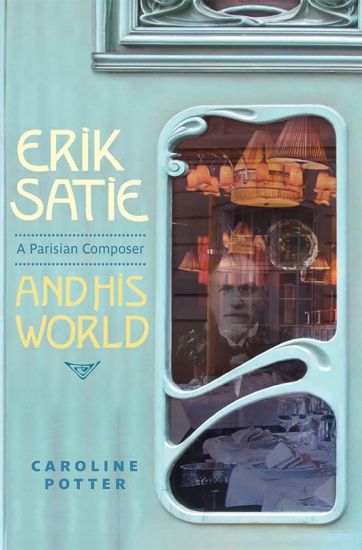
Erik Satie

Erik Satie

Caroline Potter

The Boydell Press
2016
sidottu
Satie's music and ideas are inextricably linked with the City of Light. This book situates Satie's work within the context and sonic environment of contemporary Paris. Sunday Times Classical Music Book of the Year Erik Satie's (1866-1925) music appeals to wide audiences and has influenced both experimental artists and pop musicians. Little about Satie was conventional, and he resists classification under easy headings such as "classical music". Instead of pursuing the path of a professional composer, Satie initially earned a living as a café pianist and moved in bohemian circles which prized satire, popular culture and experiment. Small wonder that his music is fundamentally new in conception. It is music which is not always designed to be listened to attentively: music which can be machine-like but is to be played by humans. For Satie, music was part of a wider concept of artistic creation, as evidenced by his collaborations with leading avant-garde artists and in works which cross traditional genre boundaries such as his texted piano pieces. His music was created in some of the most exciting and creatively stimulating environments of the late nineteenth and early twentieth century: Montmartre and Montparnasse. Paris was the artistic centre of Europe, and Satie was a notorious figure whose music and ideas are inextricably linked with the City of Light. This book situates Satie's work within the context and sonic environment of contemporary Paris. It shows that the influence of street music, musicians and poets interested in new technology, contemporary innovations and radical politics are all crucial to an understanding of Satie. Music from the ever-popular Gymnopédies to newly discovered works are discussed, and an online supplement features rare pieces recorded especially for the book. CAROLINE POTTER is Reader in Music at Kingston University London. A graduate in both French and Music, she has published widely on French music since Debussy and was Series Advisor to the Philharmonia Orchestra's Paris 2014-15 season.
Pierre Boulez: Organised Delirium

Pierre Boulez: Organised Delirium

Caroline Potter

BOYDELL BREWER LTD
2024
sidottu
Exploring the emotional and cultural influences on Pierre Boulez's early works as well as the role surrealism and French culture of the 1930s and 40s played in shaping his radical new musical concepts. Pierre Boulez's (1925-2016) creative output has mostly been studied from an analytical perspective in the context of serialism. While Boulez tends to be pigeonholed as a cerebral composer, his interest in structure coexisted with extreme visceral energy. This book redresses the balance and stresses the febrile cultural environment of Paris in the 1940s and the emotional side of his early works. Surrealism, in particular, had an impact on Boulez's formative years that has until now been underexplored. There are intriguing links between French music and surrealism in the 1930s and 40s, arising within a cultural context where surrealism, ethnography and the emerging discipline of ethnomusicology were closely related. Potter situates the young Boulez within this environment. As an emerging musician, he explored radical new musical concepts alongside peers including Yvette Grimaud, Serge Nigg and Yvonne Loriod, performing and exchanging ideas with them. This book argues that authors associated with surrealism, especially René Char but also Antonin Artaud and André Breton, were crucial to Boulez's musical development. It enhances our understanding of his work by connecting it with significant trends in contemporary French culture, refocusing Boulez studies away from detailed musical analysis and towards a broader and more visceral, emotional response to his work.
Henri Dutilleux

Henri Dutilleux

Caroline Potter

Ashgate Publishing Limited
1997
sidottu
Henri Dutilleux (born 1916) is one of France’s leading composers, though until recently his music received more attention in the United States than in Europe. A fiercely independent composer who pursues his own musical path regardless of fashion, he has never courted the public eye, yet in this book he is revealed as a composer very much engaged with the work of other artists from all spheres. Caroline Potter’s fascinating survey examines the relation of some of these artists to Dutilleux’s music. In literature, the notions of memory and time found in the writings of Baudelaire and Proust have had profound effects on his compositional development, whilst the visual arts have informed his aesthetic ideas and their expression in both his music and even in his meticulously produced scores. Always a perfectionist, Dutilleux now rejects those earlier works which are not representative of his mature style. By analysing these early pieces, Dr Potter traces the evolution of his musical style, and she investigates his compositional process and use of particular referential devices in later works. Whilst his music is unequivocally of our time, Dutilleux has never lost the ability to communicate with a wide-ranging audience. Drawing on interviews with the composer, this study provides penetrating insights into this complex composer’s musical world.
Erik Satie

Erik Satie

Caroline Potter

BOYDELL BREWER LTD
2026
pokkari
Satie's music and ideas are inextricably linked with the City of Light. This book situates Satie's work within the context and sonic environment of contemporary Paris. Sunday Times Classical Music Book of the Year Erik Satie's (1866-1925) music appeals to wide audiences and has influenced both experimental artists and pop musicians. Little about Satie was conventional, and he resists classification under easy headings such as "classical music". Instead of pursuing the path of a professional composer, Satie initially earned a living as a café pianist and moved in bohemian circles which prized satire, popular culture and experiment. Small wonder that his music is fundamentally new in conception. It is music which is not always designed to be listened to attentively: music which can be machine-like but is to be played by humans. For Satie, music was part of a wider concept of artistic creation, as evidenced by his collaborations with leading avant-garde artists and in works which cross traditional genre boundaries such as his texted piano pieces. His music was created in some of the most exciting and creatively stimulating environments of the late nineteenth and early twentieth century: Montmartre and Montparnasse. Paris was the artistic centre of Europe, and Satie was a notorious figure whose music and ideas are inextricably linked with the City of Light. This book situates Satie's work within the context and sonic environment of contemporary Paris. It shows that the influence of street music, musicians and poets interested in new technology, contemporary innovations and radical politics are all crucial to an understanding of Satie. Music from the ever-popular Gymnopédies to newly discovered works are discussed, and an online supplement features rare pieces recorded especially for the book.