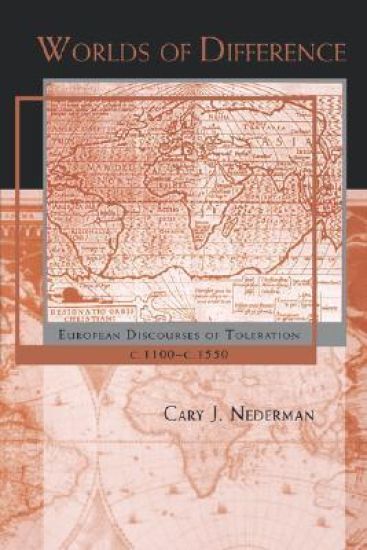
Toleration has become a keystone of liberal political philosophy, but with liberalism under attack today as inadequate for dealing with all the problems of a pluralistic world, other resources are needed. Cary Nederman directs our attention to the creative thinking about toleration that preceded the rise of liberalism and canvasses the diverse ideas proposed then within Christianity as a response to religious, cultural, national, and ethnic differences.
Toleration has become a keystone of liberal political philosophy, but with liberalism under attack today as inadequate for dealing with all the problems of a pluralistic world, other resources are needed. Cary Nederman directs our attention to the creative thinking about toleration that preceded the rise of liberalism and canvasses the diverse ideas proposed then within Christianity as a response to religious, cultural, national, and ethnic differences.
Of the great philosophers of pagan antiquity, Marcus Tullius Cicero is the only one whose ideas were continuously accessible to the Christian West following the collapse of the Roman Empire. Yet, in marked contrast with other ancient philosophers, Cicero has largely been written out of the historical narrative on early European political thought, and the reception of his ideas has barely been studied. The Bonds of Humanity corrects this glaring oversight, arguing that the influence of Cicero’s ideas in medieval and early modern Europe was far more pervasive than previously believed.In this book, Cary J. Nederman presents a persuasive counternarrative to the widely accepted belief in the dominance of Aristotelian thought. Surveying the work of a diverse range of thinkers from the twelfth to the sixteenth century, including John of Salisbury, Brunetto Latini, Marsiglio of Padua, Christine de Pizan, and Bartolomé de Las Casas, Nederman shows that these men and women inherited, deployed, and adapted key Ciceronian themes. He argues that the rise of scholastic Aristotelianism in the thirteenth century did not supplant but rather supplemented and bolstered Ciceronian ideas, and he identifies the character and limits of Ciceronianism that distinguish it from other schools of philosophy.Highly original and compelling, this paradigm-shifting book will be greeted enthusiastically by students and scholars of early European political thought and intellectual history, particularly those engaged in the conversation about the role played by ancient and early Christian ideas in shaping the theories of later times.
Of the great philosophers of pagan antiquity, Marcus Tullius Cicero is the only one whose ideas were continuously accessible to the Christian West following the collapse of the Roman Empire. Yet, in marked contrast with other ancient philosophers, Cicero has largely been written out of the historical narrative on early European political thought, and the reception of his ideas has barely been studied. The Bonds of Humanity corrects this glaring oversight, arguing that the influence of Cicero’s ideas in medieval and early modern Europe was far more pervasive than previously believed.In this book, Cary J. Nederman presents a persuasive counternarrative to the widely accepted belief in the dominance of Aristotelian thought. Surveying the work of a diverse range of thinkers from the twelfth to the sixteenth century, including John of Salisbury, Brunetto Latini, Marsiglio of Padua, Christine de Pizan, and Bartolomé de Las Casas, Nederman shows that these men and women inherited, deployed, and adapted key Ciceronian themes. He argues that the rise of scholastic Aristotelianism in the thirteenth century did not supplant but rather supplemented and bolstered Ciceronian ideas, and he identifies the character and limits of Ciceronianism that distinguish it from other schools of philosophy.Highly original and compelling, this paradigm-shifting book will be greeted enthusiastically by students and scholars of early European political thought and intellectual history, particularly those engaged in the conversation about the role played by ancient and early Christian ideas in shaping the theories of later times.
This book examines some of the salient historiographical and conceptual issues that animate current scholarly debates about the nature of the medieval contribution to modern Western political ideas. On the one hand, scholars who subscribe to the 'Baron thesis' concerning civic humanism have asserted that the break between medieval and modern modes of political thinking formed an unbridgeable chasm associated with the development of an entirely new framework at the dawn of the Florentine Renaissance. Others have challenged this hypothesis, replacing it with another extreme: an unbroken continuity in the intellectual terrain between the twelfth and the seventeenth centuries (or later). The present book seeks to qualify both of these positions. Cary J. Nederman argues for a more nuanced historiography of intellectual continuity and change that depends upon analyzing a host of contextual as well as philosophical factors to account for the emergence of the European tradition of political theory in the medieval and early modern periods. He finds that categories such as 'medieval' and 'modern' can and should be usefully deployed, yet always with the understanding that they are provisional and potentially fluid. The book opens with an introduction that lays out the main issues and sources of the debate, followed by five sets of interrelated chapters. The first section critically assesses some of the leading scholars who have contributed to the current understanding of the relationship between medieval and modern ideas. The central part of the book includes three sections that address salient themes that illuminate and illustrate continuity and change: Dissent and Power, Empire and Republic, and Political Economy. The volume closes with a few examples of the ways in which medieval political doctrines were absorbed into and transformed during the modern period up to the nineteenth century.
This volume deals with the development of moral and political philosophy in the medieval West. Professor Nederman is concerned to trace the continuing influence of classical ideas, but emphasises that the very diversity and diffuseness of medieval thought shows that there is no single scheme that can account for the way these ideas were received, disseminated and reformulated by medieval ethical and political theorists.
Machiavelli has been among the most commented upon, criticized and feared thinkers of the modern world. Infamous for his support of brutality and repression as valid political instruments, he is often portrayed as the pantomime villain of political theorists. In this whirlwind tour of Machiavelli’s writings and eventful life, Nederman highlights the complexities in his thought, showing that he actually advocated democracy as much as dictatorship, debate as much as violence, depending upon prevailing political conditions.