Kirjojen hintavertailu. Mukana 11 627 220 kirjaa ja 12 kauppaa.

Kirjahaku

Etsi kirjoja tekijän nimen, kirjan nimen tai ISBN:n perusteella.

16 kirjaa tekijältä Cary Wolfe

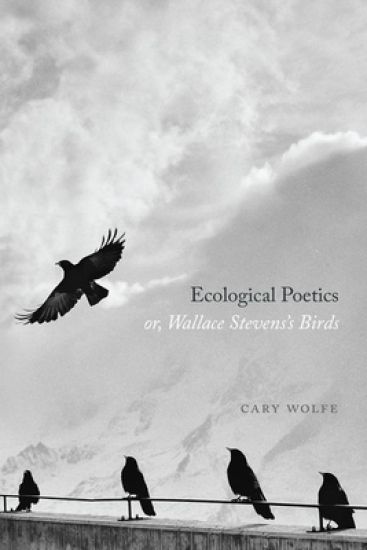
Ecological Poetics; Or, Wallace Stevens's Birds

Ecological Poetics; Or, Wallace Stevens's Birds

Cary Wolfe

University of Chicago Press
2020
sidottu
The poems of Wallace Stevens teem with birds: grackles, warblers, doves, swans, nightingales, owls, peacocks, and one famous blackbird who summons thirteen ways of looking. What do Stevens’s evocations of birds, and his poems more generally, tell us about the relationship between human and nonhuman? In this book, the noted theorist of posthumanism Cary Wolfe argues for a philosophical and theoretical reinvention of ecological poetics, using Stevens as a test case. Stevens, Wolfe argues, is an ecological poet in the sense that his places, worlds, and environments are co-created by the life forms that inhabit them. Wolfe argues for a “nonrepresentational” conception of ecopoetics, showing how Stevens’s poems reward study alongside theories of system, environment, and observation derived from a multitude of sources, from Ralph Waldo Emerson and Niklas Luhmann to Jacques Derrida and Stuart Kauffman. Ecological Poetics is an ambitious interdisciplinary undertaking involving literary criticism, contemporary philosophy, and theoretical biology.
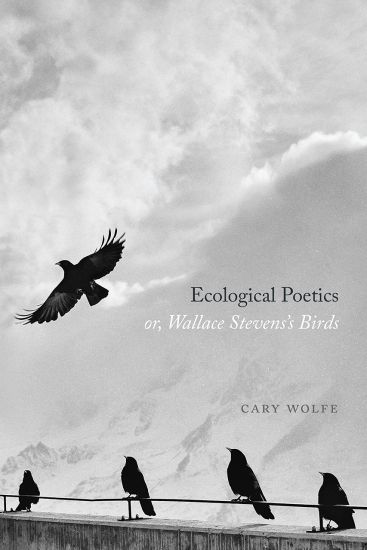
Ecological Poetics; Or, Wallace Stevens's Birds

Ecological Poetics; Or, Wallace Stevens's Birds

Cary Wolfe

University of Chicago Press
2020
nidottu
The poems of Wallace Stevens teem with birds: grackles, warblers, doves, swans, nightingales, owls, peacocks, and one famous blackbird who summons thirteen ways of looking. What do Stevens’s evocations of birds, and his poems more generally, tell us about the relationship between human and nonhuman? In this book, the noted theorist of posthumanism Cary Wolfe argues for a philosophical and theoretical reinvention of ecological poetics, using Stevens as a test case. Stevens, Wolfe argues, is an ecological poet in the sense that his places, worlds, and environments are co-created by the life forms that inhabit them. Wolfe argues for a “nonrepresentational” conception of ecopoetics, showing how Stevens’s poems reward study alongside theories of system, environment, and observation derived from a multitude of sources, from Ralph Waldo Emerson and Niklas Luhmann to Jacques Derrida and Stuart Kauffman. Ecological Poetics is an ambitious interdisciplinary undertaking involving literary criticism, contemporary philosophy, and theoretical biology.
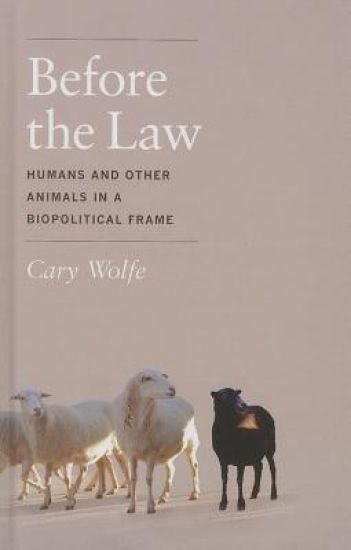
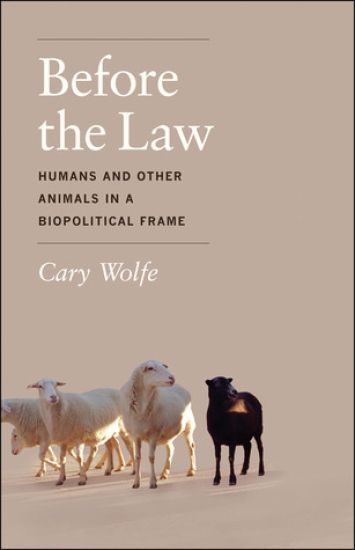
Before the Law

Before the Law

Cary Wolfe

University of Chicago Press
2012
sidottu
Animal studies and biopolitics are two of the most dynamic areas of interdisciplinary scholarship, but until now, they have had little to say to each other. Bringing these two emergent areas of thought into direct conversation in "Before the Law", Cary Wolfe fosters a new discussion about the status of nonhuman animals and the shared plight of humans and animals under biopolitics. Wolfe argues that the human-animal distinction must be supplemented with the central distinction of biopolitics: the difference between those animals that are members of a community and those that are deemed killable but not murderable. From this understanding, we can begin to make sense of the fact that this distinction prevails within both the human and animal domains and address such difficult issues as why we afford some animals unprecedented levels of care and recognition while subjecting others to unparalleled forms of brutality and exploitation. Engaging with many major figures in biopolitical thought - from Heidegger, Arendt, and Foucault to Agamben, Roberto Esposito, and Derrida - Wolfe explores how biopolitics can help us understand both the ethical and political dimensions of the current questions surrounding the rights of animals.
Before the Law

Before the Law

Cary Wolfe

University of Chicago Press
2012
nidottu
Animal studies and biopolitics are two of the most dynamic areas of interdisciplinary scholarship, but until now, they have had little to say to each other. Bringing these two emergent areas of thought into direct conversation in "Before the Law", Cary Wolfe fosters a new discussion about the status of nonhuman animals and the shared plight of humans and animals under biopolitics. Wolfe argues that the human-animal distinction must be supplemented with the central distinction of biopolitics: the difference between those animals that are members of a community and those that are deemed killable but not murderable. From this understanding, we can begin to make sense of the fact that this distinction prevails within both the human and animal domains and address such difficult issues as why we afford some animals unprecedented levels of care and recognition while subjecting others to unparalleled forms of brutality and exploitation. Engaging with many major figures in biopolitical thought - from Heidegger, Arendt, and Foucault to Agamben, Roberto Esposito, and Derrida - Wolfe explores how biopolitics can help us understand both the ethical and political dimensions of the current questions surrounding the rights of animals.
Extinction Studies

Extinction Studies

Cary Wolfe

Columbia University Press
2017
sidottu
Extinction Studies focuses on the entangled ecological and social dimensions of extinction, exploring the ways in which extinction catastrophically interrupts life-giving processes of time, death, and generations. The volume opens up important philosophical questions about our place in, and obligations to, a more-than-human world. Drawing on fieldwork, philosophy, literature, history, and a range of other perspectives, each of the chapters in this book tells a unique extinction story that explores what extinction is, what it means, why it matters-and to whom.
Extinction Studies

Extinction Studies

Cary Wolfe

Columbia University Press
2017
pokkari
Extinction Studies focuses on the entangled ecological and social dimensions of extinction, exploring the ways in which extinction catastrophically interrupts life-giving processes of time, death, and generations. The volume opens up important philosophical questions about our place in, and obligations to, a more-than-human world. Drawing on fieldwork, philosophy, literature, history, and a range of other perspectives, each of the chapters in this book tells a unique extinction story that explores what extinction is, what it means, why it matters-and to whom.
The Limits of American Literary Ideology in Pound and Emerson
In The Limits of American Literary Ideology in Pound and Emerson, Cary Wolfe analyses the dynamics and consequences of radical individualism and the sort of cultural critique it generates in Ralph Waldo Emerson and Ezra Pound. The main purpose of the book is to demonstrate that any form of individualism that is modelled on the logic and structure of private property will always reproduce the very contradictions and alienations that it set out to criticise and to remedy. Part of what makes this study unique and important is that it uses the ideology of individualism, still so powerful and seductive in contemporary America, to build a bridge between the two major figures from literary periods – Modernism and American Romanticism – which are often seen in stark opposition. In doing so, this study extends the critical paradigms and techniques of one of the most exciting new fields of cultural criticism (the so-called 'New Americanist' criticism) to cover a period (Modernism) and a type of writing (poetry) that it has largely ignored.
The Limits of American Literary Ideology in Pound and Emerson
In The Limits of American Literary Ideology in Pound and Emerson, Cary Wolfe analyses the dynamics and consequences of radical individualism and the sort of cultural critique it generates in Ralph Waldo Emerson and Ezra Pound. The main purpose of the book is to demonstrate that any form of individualism that is modelled on the logic and structure of private property will always reproduce the very contradictions and alienations that it set out to criticise and to remedy. Part of what makes this study unique and important is that it uses the ideology of individualism, still so powerful and seductive in contemporary America, to build a bridge between the two major figures from literary periods – Modernism and American Romanticism – which are often seen in stark opposition. In doing so, this study extends the critical paradigms and techniques of one of the most exciting new fields of cultural criticism (the so-called 'New Americanist' criticism) to cover a period (Modernism) and a type of writing (poetry) that it has largely ignored.
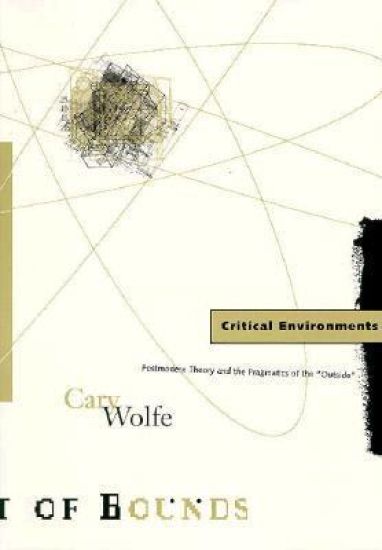
Critical Environments

Critical Environments

Cary Wolfe

University of Minnesota Press
1998
nidottu
Argues for a pragmatist orientation for postmodern theory.Taking up the problem that has stalled contemporary theory-its treatment of the object of knowledge, the “outside,” as nothing but what a particular discourse makes of it-this book suggests a solution: a reinvigorated, posthumanist form of pragmatism. Author Cary Wolfe investigates three of the most significant strains of postmodern theory (pragmatism, systems theory, and poststructuralism) and shows how each confronts the specter of an “outside” not wholly constituted by discourses, language games, and interpretive communities. He then assesses these confrontations in light of an essentially pragmatic view of theory, one that constantly asks what practical and material difference it makes, and to whom, how these issues are negotiated. Wolfe concludes by comparing the pragmatist view of the relation of theory to politics with important work in contemporary post-Marxism. In arguing for a pragmatist orientation for postmodern theory, Wolfe deploys continental critical theory to avoid the nativism and “American exceptionalism” that has traditionally accompanied pragmatist philosophy. Unique in its collation of major theorists rarely considered together, Critical Environments incorporates detailed discussions of the work of Richard Rorty, Walter Benn Michaels, Stanley Cavell, Humberto Maturana, Francisco Varela, Niklas Luhmann, Michel Foucault, Gilles Deleuze, Fredric Jameson, and others, and ranges across fields from feminist philosophy of science to the theory of ideology. Wolfe draws on recent work in systems theory to articulate a properly postmodern pragmatism. In doing so, he offers American readers a detailed introduction to systems theory, which he situates and critiques in the broader context of philosophical pragmatism, the theory of democratic social antagonism, and materialist theories of ideology, knowledge, and power. An answer to the widespread charge of relativism leveled against postmodern theory, his work will enhance and inspire new kinds of critical thought.
Zoontologies

Zoontologies

Cary Wolfe

University of Minnesota Press
2003
sidottu
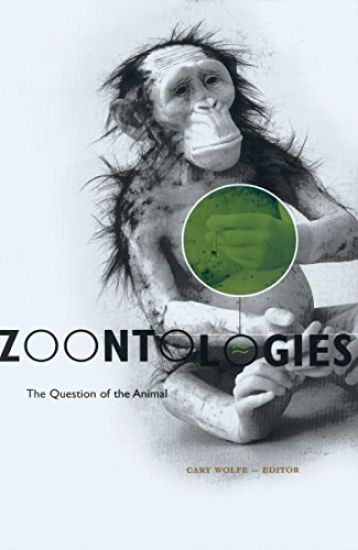
Explores the boundaries between the animal and the human-includes an original essay by Jacques DerridaThose nonhuman beings called animals pose philosophical and ethical questions that go to the root not just of what we think but of who we are. Their presence asks: what happens when the Other can no longer safely be assumed to be human? This collection offers a set of incitements and coordinates for exploring how these issues have been represented in contemporary culture and theory, from Jurassic Park and the “horse whisperer” Monty Roberts, to the work of artists such as Joseph Beuys and William Wegman; from foundational texts on the animal in the works of Heidegger and Freud, to the postmodern rethinking of ethics and animals in figures such as Singer, Deleuze, Lyotard, and Levinas; from the New York Times investigation of a North Carolina slaughterhouse, to the first appearance in any language of Jacques Derrida’s recent detailed critique of Lacan’s rendering of the human/animal divide.Contributors: Steve Baker, U of Central Lancashire; Jacques Derrida, École des Hautes Études en Sciences Sociales, Paris; Ursula K. Heise, Columbia U; Charlie LeDuff, New York Times; Alphonso Lingis, Pennsylvania State U; Paul Patton, U of Sydney; Judith Roof, Michigan State U; David Wills, SUNY, Albany.
Zoontologies

Zoontologies

Cary Wolfe

University of Minnesota Press
2003
nidottu
Explores the boundaries between the animal and the human-includes an original essay by Jacques DerridaThose nonhuman beings called animals pose philosophical and ethical questions that go to the root not just of what we think but of who we are. Their presence asks: what happens when the Other can no longer safely be assumed to be human? This collection offers a set of incitements and coordinates for exploring how these issues have been represented in contemporary culture and theory, from Jurassic Park and the “horse whisperer” Monty Roberts, to the work of artists such as Joseph Beuys and William Wegman; from foundational texts on the animal in the works of Heidegger and Freud, to the postmodern rethinking of ethics and animals in figures such as Singer, Deleuze, Lyotard, and Levinas; from the New York Times investigation of a North Carolina slaughterhouse, to the first appearance in any language of Jacques Derrida’s recent detailed critique of Lacan’s rendering of the human/animal divide.Contributors: Steve Baker, U of Central Lancashire; Jacques Derrida, École des Hautes Études en Sciences Sociales, Paris; Ursula K. Heise, Columbia U; Charlie LeDuff, New York Times; Alphonso Lingis, Pennsylvania State U; Paul Patton, U of Sydney; Judith Roof, Michigan State U; David Wills, SUNY, Albany.
What Is Posthumanism?

What Is Posthumanism?

Cary Wolfe

University of Minnesota Press
2010
nidottu
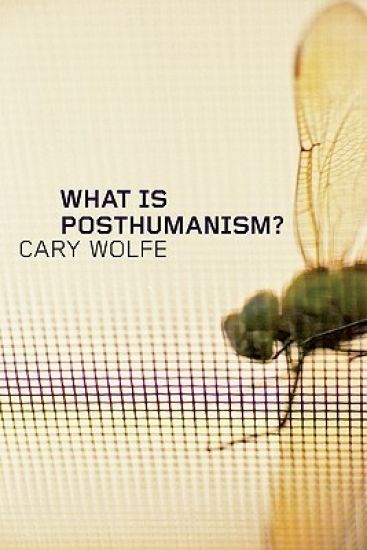
What does it mean to think beyond humanism? Is it possible to craft a mode of philosophy, ethics, and interpretation that rejects the classic humanist divisions of self and other, mind and body, society and nature, human and animal, organic and technological? Can a new kind of humanities-posthumanities-respond to the redefinition of humanity's place in the world by both the technological and the biological or "green" continuum in which the "human" is but one life form among many? Exploring how both critical thought along with cultural practice have reacted to this radical repositioning, Cary Wolfe-one of the founding figures in the field of animal studies and posthumanist theory-ranges across bioethics, cognitive science, animal ethics, gender, and disability to develop a theoretical and philosophical approach responsive to our changing understanding of ourselves and our world. Then, in performing posthumanist readings of such diverse works as Temple Grandin's writings, Wallace Stevens's poetry, Lars von Trier's Dancer in the Dark, the architecture of Diller+Scofidio, and David Byrne and Brian Eno's My Life in the Bush of Ghosts, he shows how this philosophical sensibility can transform art and culture. For Wolfe, a vibrant, rigorous posthumanism is vital for addressing questions of ethics and justice, language and trans-species communication, social systems and their inclusions and exclusions, and the intellectual aspirations of interdisciplinarity. In What Is Posthumanism? he carefully distinguishes posthumanism from transhumanism (the biotechnological enhancement of human beings) and narrow definitions of the posthuman as the hoped-for transcendence of materiality. In doing so, Wolfe reveals that it is humanism, not the human in all its embodied and prosthetic complexity, that is left behind in posthumanist thought.
Art and Posthumanism

Art and Posthumanism

Cary Wolfe

University of Minnesota Press
2022
sidottu
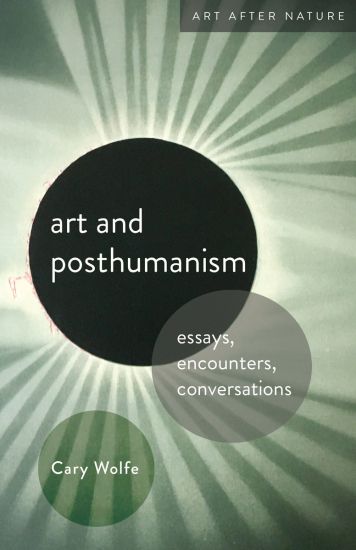
A sustained engagement between contemporary art and philosophy relating to our place in, and responsibility to, the nonhuman world How do contemporary art and theory contemplate the problem of the “bio” of biopolitics and bioart? How do they understand the question of “life” that binds human and nonhuman worlds in their shared travail? In Art and Posthumanism, Cary Wolfe argues for the reconceptualization of nature in art and theory to turn the idea of the relationship between the human and the planet upside down.Wolfe explores a wide range of contemporary artworks-from Sue Coe’s illustrations of animals in factory farms and Eduardo Kac’s bioart to the famous performance pieces of Joseph Bueys and the video installations of Eija-Liisa Ahtila, among others-examining how posthumanist theory can illuminate, and be illuminated by, artists’ engagement with the more-than-human world. Looking at biological and social systems, the question of the animal, and biopolitics, Art and Posthumanism explores how contemporary art rivets our attention on the empirically thick, emotionally charged questions of “life” and the “living” amid ecological catastrophe.One of the foremost theorists of posthumanism, Wolfe pushes that philosophy out of the realm of the purely theoretical to show how a posthumanist engagement with particular works and their conceptual underpinnings help to develop more potent ethical and political commitments.
Art and Posthumanism

Art and Posthumanism

Cary Wolfe

University of Minnesota Press
2022
nidottu
A sustained engagement between contemporary art and philosophy relating to our place in, and responsibility to, the nonhuman world How do contemporary art and theory contemplate the problem of the “bio” of biopolitics and bioart? How do they understand the question of “life” that binds human and nonhuman worlds in their shared travail? In Art and Posthumanism, Cary Wolfe argues for the reconceptualization of nature in art and theory to turn the idea of the relationship between the human and the planet upside down.Wolfe explores a wide range of contemporary artworks-from Sue Coe’s illustrations of animals in factory farms and Eduardo Kac’s bioart to the famous performance pieces of Joseph Bueys and the video installations of Eija-Liisa Ahtila, among others-examining how posthumanist theory can illuminate, and be illuminated by, artists’ engagement with the more-than-human world. Looking at biological and social systems, the question of the animal, and biopolitics, Art and Posthumanism explores how contemporary art rivets our attention on the empirically thick, emotionally charged questions of “life” and the “living” amid ecological catastrophe.One of the foremost theorists of posthumanism, Wolfe pushes that philosophy out of the realm of the purely theoretical to show how a posthumanist engagement with particular works and their conceptual underpinnings help to develop more potent ethical and political commitments.
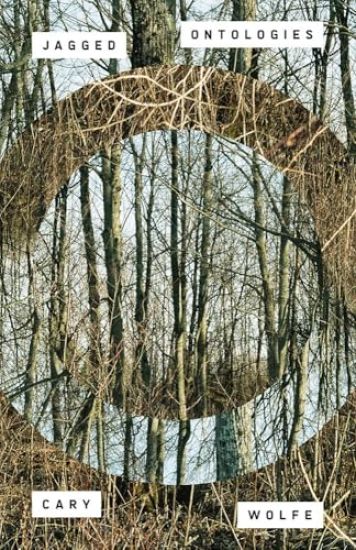
Jagged Ontologies

Jagged Ontologies

Cary Wolfe

UNIVERSITY OF MINNESOTA PRESS
2026
sidottu
Rethinking life, justice, and the biosphere through the sharp edges of jagged ontology In this groundbreaking book, Cary Wolfe dismantles some of the most entrenched assumptions in contemporary interdisciplinary thought, foremost among them the idea that "flat" ontologies are adequate to the challenge of a robust, posthumanist pluralism. Against the fantasy of nature as an interconnected, egalitarian web, Wolfe proposes a "jagged ontology" in which species and systems intersect not through seamless cooperation but through friction, contestation, and uneven exchange. Wolfe pushes back equally, however, against the reductive tendencies of neo-Darwinian competitive individualism, insisting that what separates us from the world is also what binds us to it – a paradox at the core of all living systems, where autopoietic closure unexpectedly creates environmental openness. Through a combination of systems theory, deconstruction, theoretical biology, and biopolitical philosophy, Wolfe develops a radically posthumanist framework for addressing the ethical, social, and political stakes of life in the biosphere. Extending his approach across disciplines and practices—from ecological theory and continental philosophy to law, public policy, and contemporary art—he lays bare the contradictions embedded in even the most progressive attempts to account for the imbrication of the human and the more-than-human. Through a detailed and long-overdue examination of the popular notion of sympoiesis and a skeptical reading of the anthropomorphism of the "new forestry," Wolfe reveals how well-intentioned theories can undermine the very posthumanist pluralism that they claim to champion. More than a critique, Jagged Ontologies opens onto new philosophical terrain for understanding multispecies justice, environmental responsibility, and the structural dynamics of individuation and creativity in the biosphere. Here, Wolfe offers a crucial rethinking of what it means to live and think ethically in a shared yet jagged world. Retail e-book files for this title are screen-reader friendly with images accompanied by short alt text and/or extended descriptions.
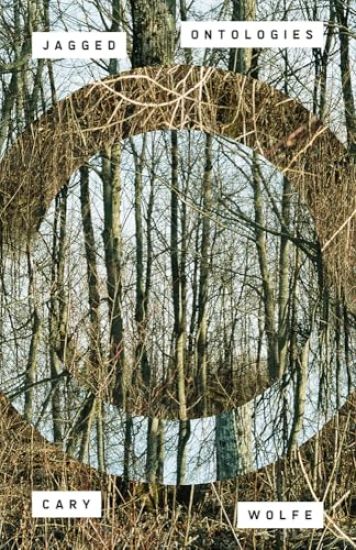
Jagged Ontologies Volume 81

Jagged Ontologies Volume 81

Cary Wolfe

UNIVERSITY OF MINNESOTA PRESS
2026
nidottu
Rethinking life, justice, and the biosphere through the sharp edges of jagged ontology In this groundbreaking book, Cary Wolfe dismantles some of the most entrenched assumptions in contemporary interdisciplinary thought, foremost among them the idea that "flat" ontologies are adequate to the challenge of a robust, posthumanist pluralism. Against the fantasy of nature as an interconnected, egalitarian web, Wolfe proposes a "jagged ontology" in which species and systems intersect not through seamless cooperation but through friction, contestation, and uneven exchange. Wolfe pushes back equally, however, against the reductive tendencies of neo-Darwinian competitive individualism, insisting that what separates us from the world is also what binds us to it – a paradox at the core of all living systems, where autopoietic closure unexpectedly creates environmental openness. Through a combination of systems theory, deconstruction, theoretical biology, and biopolitical philosophy, Wolfe develops a radically posthumanist framework for addressing the ethical, social, and political stakes of life in the biosphere. Extending his approach across disciplines and practices—from ecological theory and continental philosophy to law, public policy, and contemporary art—he lays bare the contradictions embedded in even the most progressive attempts to account for the imbrication of the human and the more-than-human. Through a detailed and long-overdue examination of the popular notion of sympoiesis and a skeptical reading of the anthropomorphism of the "new forestry," Wolfe reveals how well-intentioned theories can undermine the very posthumanist pluralism that they claim to champion. More than a critique, Jagged Ontologies opens onto new philosophical terrain for understanding multispecies justice, environmental responsibility, and the structural dynamics of individuation and creativity in the biosphere. Here, Wolfe offers a crucial rethinking of what it means to live and think ethically in a shared yet jagged world. Retail e-book files for this title are screen-reader friendly with images accompanied by short alt text and/or extended descriptions.