Kirjojen hintavertailu. Mukana 11 342 296 kirjaa ja 12 kauppaa.

Kirjahaku

Etsi kirjoja tekijän nimen, kirjan nimen tai ISBN:n perusteella.

10 kirjaa tekijältä Caryl Emerson

Boris Godunov

Boris Godunov

Caryl Emerson

Indiana University Press
1986
sidottu
The tale of Boris Godunov—tsar, usurper, tsarecide—dating from the early seventeenth-century Time of Troubles, inspired three major nineteenth-century Russian cultural expressions: in history by Nikolai Karamzin, in drama by Alexander Pushkin, and in opera by Modest Musorgsky. Each of these famous creations was a vehicle for generic innovation, in which a specifically Russian concept of genre was asserted in opposition to the reigning European models: German historiography, French melodrama, and Italian opera. Within a Bakhtinian framework, Caryl Emerson explores these three versions of the Boris Tale, the context of their genesis, and their complex interrelationships.
Modest Musorgsky and Boris Godunov

Modest Musorgsky and Boris Godunov

Caryl Emerson

Cambridge University Press
2006
nidottu
Caryl Emerson (a literary specialist) and Robert William Oldani (a music historian) take a comprehensive look at the most famous Russian opera, Modest Musorgsky's Boris Godunov. The result is both a historical study of a famous work and an interpretative piece of scholarship. The topics discussed include: the 'Boris Tale' in history; Karamzin's history and Pushkin's drama as literary sources; Musorgsky's innovations as a librettist and as a theorist of the sung Russian word; the strange story of the opera's composition and revision; its first productions at home and abroad; and an in-depth musical analysis. In the process, several often-met errors in Musorgsky scholarship are clarified and corrected. A final chapter speculates on the opera's themes of political murder, guilt and legitimacy - so important to Russian literary and national identity in the nineteenth and twentieth centuries - and the new role the 'Boris plot' and its composer might come to play in more recent phases of Russian cultural life.
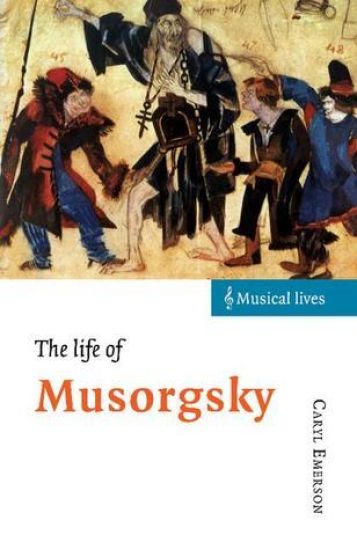
The Life of Musorgsky

The Life of Musorgsky

Caryl Emerson

Cambridge University Press
1999
pokkari
Modest Musorgsky is Russia’s greatest musical dramatist. When he died in 1881 in St Petersburg at the age of forty-two, in poverty and relative obscurity, he was known for a single opera, Boris Godunov and a handful of eccentric ‘realistic’ songs set to prosaic Russian texts. He had no institutional connections, no ‘degree’, no family of his own, not even a permanent address. Except for Franz Liszt, no composer of stature knew of him outside Russia. Through the loyal (if controversial) intervention of his friends, his works survived in various editings into the early twentieth century, when revivals and evolving musical tastes restored him to new life. This account of his life emphasizes the psychological and economic factors that contributed to the composer’s remarkable rise and tragic, premature end and is the first brief biography in English to make use of materials published in the new, de-Sovietized Russian academic climate.
The Cambridge Introduction to Russian Literature

The Cambridge Introduction to Russian Literature

Caryl Emerson

Cambridge University Press
2008
pokkari
Russian literature arrived late on the European scene. Within several generations, its great novelists had shocked - and then conquered - the world. In this introduction to the rich and vibrant Russian tradition, Caryl Emerson weaves a narrative of recurring themes and fascinations across several centuries. Beginning with traditional Russian narratives (saints' lives, folk tales, epic and rogue narratives), the book moves through literary history chronologically and thematically, juxtaposing literary texts from each major period. Detailed attention is given to canonical writers including Pushkin, Gogol, Dostoevsky, Tolstoy, Chekhov, Bulgakov and Solzhenitsyn, as well as to some current bestsellers from the post-Communist period. Fully accessible to students and readers with no knowledge of Russian, the volume includes a glossary and pronunciation guide of key Russian terms as well as a list of useful secondary works. The book will be of great interest to students of Russian as well as of comparative literature.
The Cambridge Introduction to Russian Literature

The Cambridge Introduction to Russian Literature

Caryl Emerson

Cambridge University Press
2008
sidottu
Russian literature arrived late on the European scene. Within several generations, its great novelists had shocked - and then conquered - the world. In this introduction to the rich and vibrant Russian tradition, Caryl Emerson weaves a narrative of recurring themes and fascinations across several centuries. Beginning with traditional Russian narratives (saints' lives, folk tales, epic and rogue narratives), the book moves through literary history chronologically and thematically, juxtaposing literary texts from each major period. Detailed attention is given to canonical writers including Pushkin, Gogol, Dostoevsky, Tolstoy, Chekhov, Bulgakov and Solzhenitsyn, as well as to some current bestsellers from the post-Communist period. Fully accessible to students and readers with no knowledge of Russian, the volume includes a glossary and pronunciation guide of key Russian terms as well as a list of useful secondary works. The book will be of great interest to students of Russian as well as of comparative literature.
The First Hundred Years of Mikhail Bakhtin

The First Hundred Years of Mikhail Bakhtin

Caryl Emerson

Princeton University Press
2000
pokkari
Among Western critics, Mikhail Bakhtin (1895-1975) needs no introduction. His name has been invoked in literary and cultural studies across the ideological spectrum, from old-fashioned humanist to structuralist to postmodernist. In this candid assessment of his place in Russian and Western thought, Caryl Emerson brings to light what might be unfamiliar to the non-Russian reader: Bakhtin's foundational ideas, forged in the early revolutionary years, yet hardly altered in his lifetime. With the collapse of the Soviet system, a truer sense of Bakhtin's contribution may now be judged in the context of its origins and its contemporary Russian "reclamation." A foremost Bakhtin authority, Caryl Emerson mines extensive Russian sources to explore Bakhtin's reception in Russia, from his earliest publication in 1929 until his death, and his posthumous rediscovery. After a reception-history of Bakhtin's published work, she examines the role of his ideas in the post-Stalinist revival of the Russian literary profession, concentrating on the most provocative rethinkings of three major concepts in his world: dialogue and polyphony; carnival; and "outsideness," a position Bakhtin considered essential to both ethics and aesthetics. Finally, she speculates on the future of Bakhtin's method, which was much more than a tool of criticism: it will "tell you how to teach, write, live, talk, think."
Before They Were Titans

Before They Were Titans

Caryl Emerson

Academic Studies Press
2015
sidottu
Dostoevsky and Tolstoy are the titans of Russian literature. As mature artists, they led very different lives and wrote vastly different works, but their early lives and writings display provocative kinships, while also indicating the divergent paths the two authors would take en route to literary greatness. The ten new critical essays here, written by leading specialists in nineteenth-century, Russian literature, give fresh, sophisticated readings to works from the first decade of the literary life of each Russian author—for Dostoevsky, the 1840s; for Tolstoy, the 1850s. Collectively, these essays yield composite portraits of these two artists as young men finding their literary way. At the same time, they show how the early works merit appreciation for themselves, before their authors were Titans.Contributors: Elizabeth Cheresh Allen (Bryn Mawr College), Lewis Bagby (University of Wyoming), Caryl Emerson (Princeton University), Susanne Fusso (Wesleyan University), Liza Knapp (Columbia University), Anne Lounsbery (New York University), Robin Feuer Miller (Brandeis University), Gary Saul Morson (Northwestern University), Dale E. Peterson (Amherst College), William Mills Todd III (Harvard University), Ilya Vinitsky (University of Pennsylvania), Justin Weir (Harvard University)
Before They Were Titans

Before They Were Titans

Caryl Emerson

Academic Studies Press
2018
pokkari
Dostoevsky and Tolstoy are the titans of Russian literature. As mature artists, they led very different lives and wrote vastly different works, but their early lives and writings display provocative kinships, while also indicating the divergent paths the two authors would take en route to literary greatness. The ten new critical essays here, written by leading specialists in nineteenth-century, Russian literature, give fresh, sophisticated readings to works from the first decade of the literary life of each Russian author—for Dostoevsky, the 1840s; for Tolstoy, the 1850s. Collectively, these essays yield composite portraits of these two artists as young men finding their literary way. At the same time, they show how the early works merit appreciation for themselves, before their authors were Titans.
Essays in Russian Literary and Musical Culture

Essays in Russian Literary and Musical Culture

Caryl Emerson

Academic Studies Press
2019
sidottu
The volume contains essays and reviews written over thirty years, linked loosely by three themes. First is the global resonance of Mikhail Bakhtin as moral philosopher, theorist of dialogue, and cultural totem. How does his worldview complement that of his friendly rivals the formalists (and later semioticians), and which aspects of his value-system have been most cogently criticized? Second is an application of Bakhtinian principles of transposition to successive musicalized Russian classics (among them Pushkin’s and Meyerhold’s Boris Godunov, Tchaikovsky’s and Prokofiev’s Eugene Onegin, Prokofiev’s War and Peace, Shostakovich’s Lady Macbeth of Mtsensk District, Pushkin’s and Dargomyzhsky’s Rusalka). A final theme is the creative—or capricious—reading of one literary master by another master, much later in time: Tolstoy’s reading of Shakespeare, Nabokov’s reading of Pushkin’s Eugene Onegin, Krzhizhanovsky’s reading of Shakespeare and Bernard Shaw. Great writers, like great composers, absorb and transform earlier greatness into a new synthesis, and it is this activity that is commemorated in this volume.
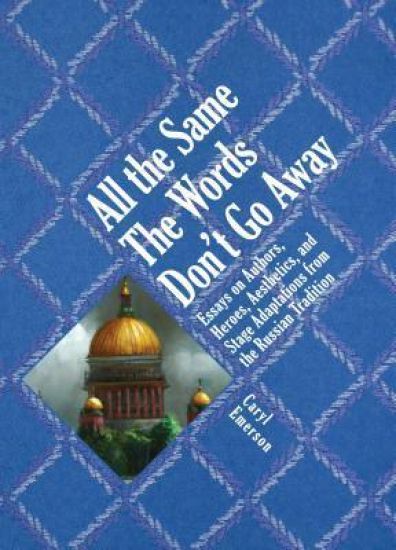
All the Same The Words Don't Go Away

All the Same The Words Don't Go Away

Caryl Emerson

Academic Studies Press
2010
sidottu
This book brings together twenty five years of essays and reviews, linked loosely by three themes. First is the creative potential inherent in transposing classic literary texts into other genres or media (operatic, dramatic) and the responsibilities, if any, that govern the transposer, audience, and critic. The practice of transposition, however, gives rise to a creative conflict: is there a limit to the amount of ornamentation, pressure, or dilution to which the 'mediated' word can be subject? Finally, the more polemical of the essays included here are structured on the Bakhtinian notion of co-existing 'plausibilities' and points of view. What a carnival approach can uncover in Pushkin that might have surprised and even pleased the poet, what a libretto or play script brings out that the 'true original' hides: here the work of the creator and the critic can overlap in thrilling ways that respect the competencies of each. This title includes an original Preface written by renowned Slavic scholar, David Bethea.