Kirjojen hintavertailu. Mukana 11 244 527 kirjaa ja 12 kauppaa.

Kirjahaku

Etsi kirjoja tekijän nimen, kirjan nimen tai ISBN:n perusteella.

4 kirjaa tekijältä Casey High

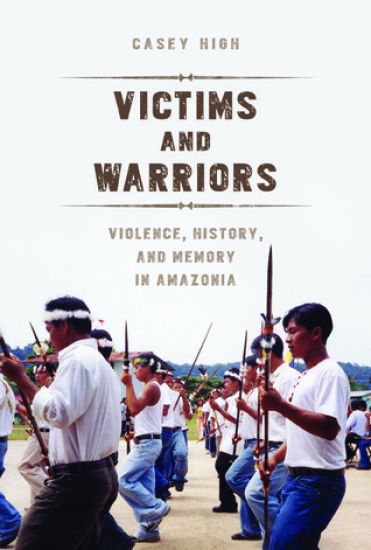
Victims and Warriors

Victims and Warriors

Casey High

University of Illinois Press
2015
sidottu
In 1956, a group of Waorani men killed five North American missionaries in Ecuador. The event cemented the Waorani's reputation as ""wild Amazonian Indians"" in the eyes of the outside world. It also added to the myth of the violent Amazon created by colonial writers and still found in academia and the state development agendas across the region. Victims and Warriors examines contemporary violence in the context of political and economic processes that transcend local events. Casey High explores how popular imagery of Amazonian violence has become part of Waorani social memory in oral histories, folklore performances, and indigenous political activism. As Amazonian forms of social memory merge with constructions of masculinity and other intercultural processes, the Waorani absorb missionaries, oil development, and logging depredations into their legacy of revenge killings and narratives of victimhood. High shows that these memories of past violence form sites of negotiation and cultural innovation, and thus violence comes to constitute a central part of Amazonian sociality, identity, and memory.
Victims and Warriors

Victims and Warriors

Casey High

University of Illinois Press
2015
nidottu
In 1956, a group of Waorani men killed five North American missionaries in Ecuador. The event cemented the Waorani's reputation as ""wild Amazonian Indians"" in the eyes of the outside world. It also added to the myth of the violent Amazon created by colonial writers and still found in academia and the state development agendas across the region. Victims and Warriors examines contemporary violence in the context of political and economic processes that transcend local events. Casey High explores how popular imagery of Amazonian violence has become part of Waorani social memory in oral histories, folklore performances, and indigenous political activism. As Amazonian forms of social memory merge with constructions of masculinity and other intercultural processes, the Waorani absorb missionaries, oil development, and logging depredations into their legacy of revenge killings and narratives of victimhood. High shows that these memories of past violence form sites of negotiation and cultural innovation, and thus violence comes to constitute a central part of Amazonian sociality, identity, and memory.
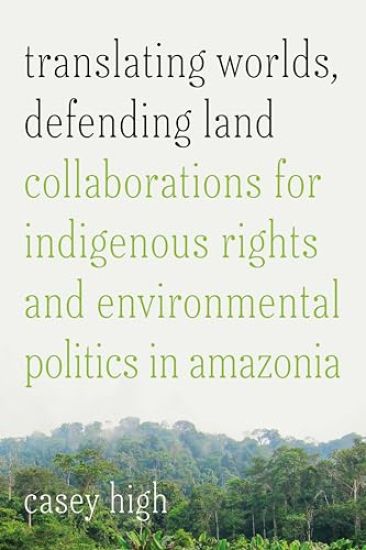
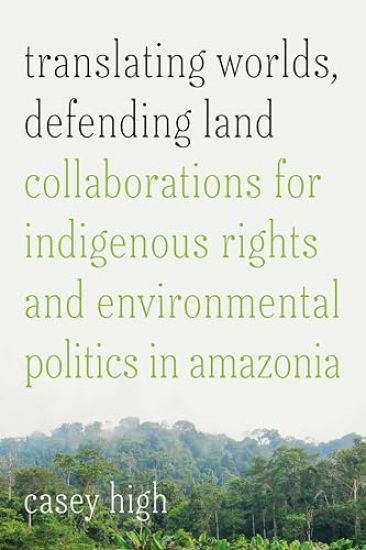
Translating Worlds, Defending Land

Translating Worlds, Defending Land

Casey High

STANFORD UNIVERSITY PRESS
2025
sidottu
In 2019, after decades of ecological damage from oil, Waorani people took to the streets of Amazonian Ecuador to protest drilling on their ancestral lands. Working with international activists, lawyers, and other Indigenous groups, they successfully sued the government for selling oil concessions without prior consent. Placing their struggle for territorial autonomy in the global spotlight, this unprecedented legal victory for environmental rights by an Indigenous people reflected the new forms of collaboration emerging in contemporary Amazonia. Translating Worlds, Defending Land explores how Waorani collaborations, whether with environmentalists or academic researchers, bring about new possibilities, challenges, and imaginative horizons. Based on fieldwork over a period of twenty-five years, Casey High interrogates what these engagements mean for Indigenous communities and how they offer critical reflection on collaboration as a concept, method, and practice. The alliances, misunderstandings, and conflicts that emerge in these contexts challenge the assumption that productive collaborations reflect—or require—shared purposes, generating important implications for an engaged anthropology open to reconsidering what constitutes ethnographic knowledge and who it is for. As some young Waorani adults become not just community leaders or environmental citizens, but also skilled researchers and ethnographers, translating between Indigenous understandings of land and the Western language conservation, they create a powerful new voice in international environmental politics.
Translating Worlds, Defending Land

Translating Worlds, Defending Land

Casey High

STANFORD UNIVERSITY PRESS
2025
pokkari
In 2019, after decades of ecological damage from oil, Waorani people took to the streets of Amazonian Ecuador to protest drilling on their ancestral lands. Working with international activists, lawyers, and other Indigenous groups, they successfully sued the government for selling oil concessions without prior consent. Placing their struggle for territorial autonomy in the global spotlight, this unprecedented legal victory for environmental rights by an Indigenous people reflected the new forms of collaboration emerging in contemporary Amazonia. Translating Worlds, Defending Land explores how Waorani collaborations, whether with environmentalists or academic researchers, bring about new possibilities, challenges, and imaginative horizons. Based on fieldwork over a period of twenty-five years, Casey High interrogates what these engagements mean for Indigenous communities and how they offer critical reflection on collaboration as a concept, method, and practice. The alliances, misunderstandings, and conflicts that emerge in these contexts challenge the assumption that productive collaborations reflect—or require—shared purposes, generating important implications for an engaged anthropology open to reconsidering what constitutes ethnographic knowledge and who it is for. As some young Waorani adults become not just community leaders or environmental citizens, but also skilled researchers and ethnographers, translating between Indigenous understandings of land and the Western language conservation, they create a powerful new voice in international environmental politics.