Kirjojen hintavertailu. Mukana 11 244 527 kirjaa ja 12 kauppaa.

Kirjahaku

Etsi kirjoja tekijän nimen, kirjan nimen tai ISBN:n perusteella.

2 kirjaa tekijältä Casey McNeill

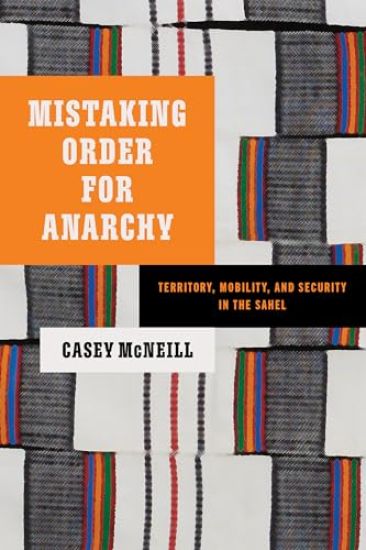
Mistaking Order for Anarchy

Mistaking Order for Anarchy

Casey McNeill

STANFORD UNIVERSITY PRESS
2026
sidottu
International stabilization interventions in so-called fragile states have failed everywhere they have been tried. The United Nation's Multidimensional Integrated Stabilization Mission in Mali, for example, recently withdrew at the request of Mali's military government. It left conditions of even greater instability than when the mission was deployed a decade earlier. Far from an outlier, the failure of this mission exposes flaws in the commonsense notion that territorial governance is a necessary foundation for global security. McNeill historicizes and politicizes this assumption, showing how the modern equation of security with territorial control has displaced a diversity of approaches to ordering and securing collective life. In Mali and the broader Sahel, security conditions are shaped by arid ecologies, which have produced distinctive ways of organizing authority, populations, and resources, oriented toward mobility, pluralism, and flexible boundaries. Drawing on historical and anthropological research—as well as data from more than a hundred interviews conducted in Mali, Niger, and the headquarters of AFRICOM—this book situates contemporary dynamics in the Sahel not as disruptions on the margins of international order but as indicators of core problematics shaping security. In the face of these challenges, McNeill models alternative, non-territorial practices of political order and collective security that are highly relevant to rethinking security more broadly, in the Sahel and beyond.

Mistaking Order for Anarchy

Mistaking Order for Anarchy

Casey McNeill

STANFORD UNIVERSITY PRESS
2026
pokkari
International stabilization interventions in so-called fragile states have failed everywhere they have been tried. The United Nation's Multidimensional Integrated Stabilization Mission in Mali, for example, recently withdrew at the request of Mali's military government. It left conditions of even greater instability than when the mission was deployed a decade earlier. Far from an outlier, the failure of this mission exposes flaws in the commonsense notion that territorial governance is a necessary foundation for global security. McNeill historicizes and politicizes this assumption, showing how the modern equation of security with territorial control has displaced a diversity of approaches to ordering and securing collective life. In Mali and the broader Sahel, security conditions are shaped by arid ecologies, which have produced distinctive ways of organizing authority, populations, and resources, oriented toward mobility, pluralism, and flexible boundaries. Drawing on historical and anthropological research—as well as data from more than a hundred interviews conducted in Mali, Niger, and the headquarters of AFRICOM—this book situates contemporary dynamics in the Sahel not as disruptions on the margins of international order but as indicators of core problematics shaping security. In the face of these challenges, McNeill models alternative, non-territorial practices of political order and collective security that are highly relevant to rethinking security more broadly, in the Sahel and beyond.