Kirjojen hintavertailu. Mukana 11 244 527 kirjaa ja 12 kauppaa.

Kirjahaku

Etsi kirjoja tekijän nimen, kirjan nimen tai ISBN:n perusteella.

3 kirjaa tekijältä Catherine Fowler

Sally Potter

Sally Potter

Catherine Fowler

University of Illinois Press
2008
nidottu
This survey of Sally Potter’s work explores her cinematic development from the feminist reworking of La Bohème in Thriller to the provocative contemplation of romantic relationships after 9/11 in Yes. Catherine Fowler traces a clear trajectory of developing themes and preoccupations and shows how Potter uses song, dance, performance, and poetry to expand our experience of cinema beyond the audiovisual. Potter has relentlessly struggled against predictability and safe options. Again and again, her works grapple with the complexities of being a woman in charge. Instead of the quest to find a romantic partner that drives mainstream cinema, Potter’s films feature characters seeking answers to questions about their sexual, gendered, social, cultural, and ethnic identities. They find answers by retelling stories, investigating mysteries, and traveling and interacting with people. At the heart of Potter’s work is a concern with the ways narrative circumscribes women's ability to act, speak, look, desire, and think for themselves. Her first two films, Thriller and The Gold Diggers, largely deconstruct found stories, clichés, and images. By contrast, later films like Orlando and The Tango Lesson create new and original narratives that place female acts, voices, looks, desires, and thoughts at their center. Fowler’s analysis is supplemented by a detailed filmography, bibliography, and an extensive interview with the director.
Thinking Outside the Black Box

Thinking Outside the Black Box

Catherine Fowler

Edinburgh University Press
2019
sidottu
This book explores contemporary artists' filmmaking within the context of film theory and practice. Remembering Cinema focuses on artists' filmmaking exhibited in gallery spaces since 1990; or 'gallery films'. It argues that although they have chosen a different space for experiment, gallery films should not be expelled from film theory's critical frame, since they explore and expand our understanding of what cinema has been, is now and could be. Therefore, while the auditorium has increasingly been seen as the space for the death of cinema, in the art gallery the cinematic is revived, renewed and remembered. Through a comprehensive assemblage, discussion and analysis of the proliferating field, this book is the first to fully comprehend gallery films' unique explorations of narrative, spectatorship, time, space, film history and identity. In investigating the gallery as the preferred space for experiment in contemporary cinema, Remembering Cinema also questions the actual and theoretical spaces within which cinema practice and cinema studies have circulated and been constructed. This is the first fully comprehensive study of the growing field of films made for the gallery space since 1990. It is the only exploration of contemporary artists' filmmaking that seriously interrogates the work in relation to film theory and film practice. It is an important consideration of 'the cinematic' that considers other spaces in which cinema practice and cinema studies have circulated and been constructed.
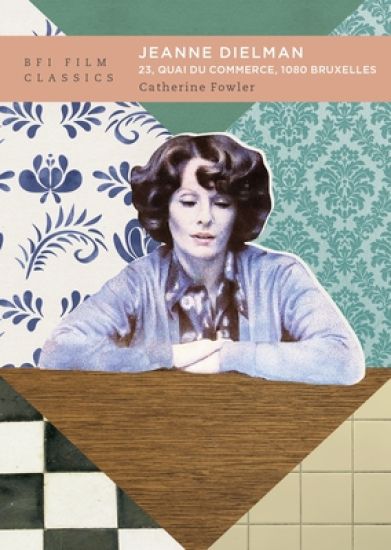
Jeanne Dielman, 23, quai du commerce, 1080 Bruxelles

Jeanne Dielman, 23, quai du commerce, 1080 Bruxelles

Catherine Fowler

Bloomsbury Publishing PLC
2021
nidottu
“Lucid, lively and extremely knowledgeable.” Sight & SoundCatherine Fowler’s study positions Jeanne Dielman as a ‘contrary’ classic, its contrariness arising from director Chantal Akerman’s decision to frame an unliberated housewife through a kind of ‘slow looking’. By choosing to stay with Jeanne in the kitchen, the film both ‘differences’ the canon and diverges from Akerman’s liberated early films, which involved the rejection of domestic space, married life and the heterosexual script.Fowler draws on original footage, scripts, unmade and unseen projects, interviews and other documents to painstakingly piece together the making of the film, discovering an alternative origin story which centers upon female alliances, forged through a combination of shared film culture and lived sexism. Those viewers who take up Akerman’s invitation to spend time with Jeanne will find their expectations of cinema are changed. Because more than any other film before or since, it reminds us that we give our time to a film; and in making us look both harder and for longer it asks us to feel time slipping away, for ourselves as much as for its protagonist.