Kirjojen hintavertailu. Mukana 11 717 486 kirjaa ja 12 kauppaa.

Kirjahaku

Etsi kirjoja tekijän nimen, kirjan nimen tai ISBN:n perusteella.

12 kirjaa tekijältä Catherine Russell

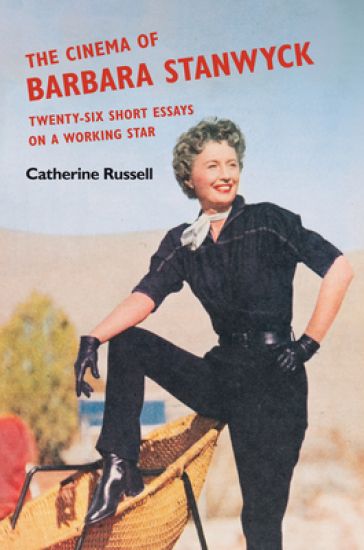
The Cinema of Barbara Stanwyck

The Cinema of Barbara Stanwyck

Catherine Russell

UNIVERSITY OF ILLINOIS PRESS
2023
sidottu
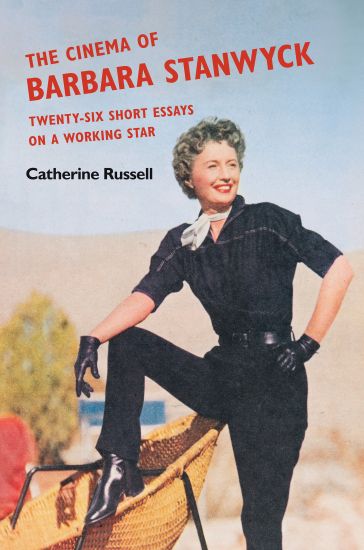
From The Lady Eve, to The Big Valley, Barbara Stanwyck played parts that showcased her multidimensional talents but also illustrated the limits imposed on women in film and television. Catherine Russell’s A to Z consideration of the iconic actress analyzes twenty-six facets of Stanwyck and the America of her times. Russell examines Stanwyck’s work onscreen against the backdrop of costuming and other aspects of filmmaking. But she also views the actress’s off-screen performance within the Hollywood networks that made her an industry favorite and longtime cornerstone of the entertainment community. Russell’s montage approach coalesces into an engrossing portrait of a singular artist whose intelligence and savvy placed her center-stage in the production of her films and in the debates around women, femininity, and motherhood that roiled mid-century America. Original and rich, The Cinema of Barbara Stanwyck is an essential and entertaining reexamination of an enduring Hollywood star.
The Cinema of Barbara Stanwyck

The Cinema of Barbara Stanwyck

Catherine Russell

UNIVERSITY OF ILLINOIS PRESS
2023
nidottu
From The Lady Eve, to The Big Valley, Barbara Stanwyck played parts that showcased her multidimensional talents but also illustrated the limits imposed on women in film and television. Catherine Russell’s A to Z consideration of the iconic actress analyzes twenty-six facets of Stanwyck and the America of her times. Russell examines Stanwyck’s work onscreen against the backdrop of costuming and other aspects of filmmaking. But she also views the actress’s off-screen performance within the Hollywood networks that made her an industry favorite and longtime cornerstone of the entertainment community. Russell’s montage approach coalesces into an engrossing portrait of a singular artist whose intelligence and savvy placed her center-stage in the production of her films and in the debates around women, femininity, and motherhood that roiled mid-century America. Original and rich, The Cinema of Barbara Stanwyck is an essential and entertaining reexamination of an enduring Hollywood star.
Narrative Mortality

Narrative Mortality

Catherine Russell

University of Minnesota Press
1994
nidottu
Analyzes New Wave cinema from a postmodern perspective.What seems like closure might be something more, as Catherine Russell shows us in this book about death in narrative cinema since the 1950s. Analyzing the structural importance of death in narrative endings, as well as the thematics of loss and redemption, Russell identifies mortality as a valuable critical tool for understanding the cinema of the second half of the twentieth century. Her work includes close textual readings of films by Fritz Lang, Wim Wenders, Oshima Nagisa, Jean-Luc Godard, and Robert Altman, among others. In these analyses, Russell reveals an uneasy relationship between death and closure, which she traces to anxieties about identity, gender, and national-cultural myths, as well as to the persistence of desire. Drawing on the work of Walter Benjamin, she shows us death as a fundamentally allegorical structure in cinema-and as a potential sign of historical difference, with crucial implications for theories of film narrative and spectatorship.Narrative Mortality provides fresh insight into the dynamics of postmodern cinema as it emerged from the modernist preoccupation with existential mortality. By tracing the role of death from a work that precedes the Brechtian cinema of the 1960s (Beyond a Reasonable Doubt) to several that succeed it (Nashville, The State of Things), the book expands the narrative project of New Wave cinema and ushers it onto a broader historical plane.
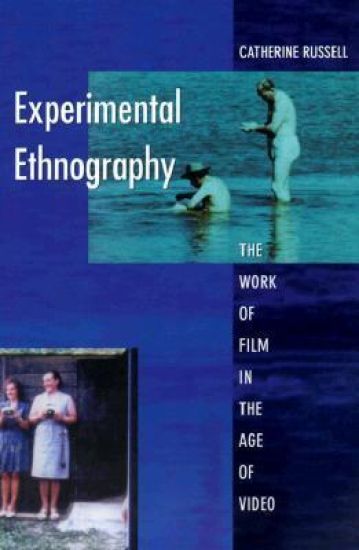
Experimental Ethnography

Experimental Ethnography

Catherine Russell

Duke University Press
1999
sidottu
Experimental film and ethnographic film have long been considered separate, autonomous practices on the margins of mainstream cinema. By exploring the interplay between the two forms, Catherine Russell throws new light on both the avant-garde and visual anthropology. Russell provides detailed analyses of more than thirty-five films and videos from the 1890s to the 1990s and discusses a wide range of film and videomakers, including Georges MÉliÈs, Maya Deren, Peter Kubelka, Ray Birdwhistell, Jean Rouch, Su Friedrich, Bill Viola, Kidlat Tahimik, Margaret Mead, Tracey Moffatt, and Chantal Akerman. Arguing that video enables us to see film differently-not as a vanishing culture but as bodies inscripted in technology, Russell maps the slow fade from modernism to postmodern practices. Combining cultural critique with aesthetic analysis, she explores the dynamics of historical interruption, recovery, and reevaluation. As disciplinary boundaries dissolve, Russell contends, ethnography is a means of renewing the avant-gardism of “experimental” film, of mobilizing its play with language and form for historical ends. “Ethnography” likewise becomes an expansive term in which culture is represented from many different and fragmented perspectives.Original in both its choice of subject and its theoretical and methodological approaches, Experimental Ethnography will appeal to visual anthropologists, as well as film scholars interested in experimental and documentary practices.
Experimental Ethnography

Experimental Ethnography

Catherine Russell

Duke University Press
1999
pokkari
Experimental film and ethnographic film have been considered separate, autonomous practices on the margins of mainstream cinema. By exploring the interplay between the two forms, this text throws new light on both the avant-garde and on visual anthropology.
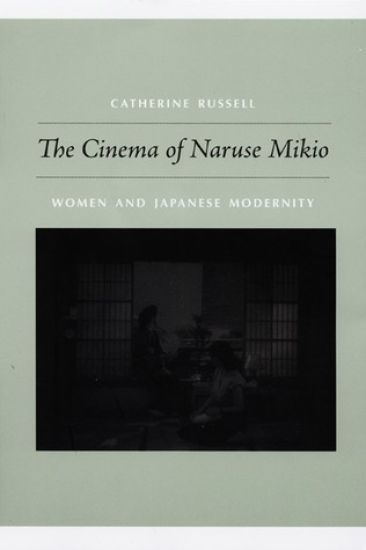
The Cinema of Naruse Mikio

The Cinema of Naruse Mikio

Catherine Russell

Duke University Press
2008
sidottu
One of the most prolific and respected directors of Japanese cinema, Naruse Mikio (1905–69) made eighty-nine films between 1930 and 1967. Little, however, has been written about Naruse in English, and much of the writing about him in Japanese has not been translated into English. With The Cinema of Naruse Mikio, Catherine Russell brings deserved critical attention to this under-appreciated director. Besides illuminating Naruse’s contributions to Japanese and world cinema, Russell’s in-depth study of the director sheds new light on the Japanese film industry between the 1930s and the 1960s.Naruse was a studio-based director, a company man renowned for bringing films in on budget and on time. During his long career, he directed movies in different styles of melodrama while displaying a remarkable continuity of tone. His films were based on a variety of Japanese literary sources and original scripts; almost all of them were set in contemporary Japan. Many were “women’s films.” They had female protagonists, and they depicted women’s passions, disappointments, routines, and living conditions. While neither Naruse or his audiences identified themselves as “feminist,” his films repeatedly foreground, if not challenge, the rigid gender norms of Japanese society. Given the complex historical and critical issues surrounding Naruse’s cinema, a comprehensive study of the director demands an innovative and interdisciplinary approach. Russell draws on the critical reception of Naruse in Japan in addition to the cultural theories of Harry Harootunian, Miriam Hansen, and Walter Benjamin. She shows that Naruse’s movies were key texts of Japanese modernity, both in the ways that they portrayed the changing roles of Japanese women in the public sphere and in their depiction of an urban, industrialized, mass-media-saturated society.
The Cinema of Naruse Mikio

The Cinema of Naruse Mikio

Catherine Russell

Duke University Press
2008
pokkari
One of the most prolific and respected directors of Japanese cinema, Naruse Mikio (1905–69) made eighty-nine films between 1930 and 1967. Little, however, has been written about Naruse in English, and much of the writing about him in Japanese has not been translated into English. With The Cinema of Naruse Mikio, Catherine Russell brings deserved critical attention to this under-appreciated director. Besides illuminating Naruse’s contributions to Japanese and world cinema, Russell’s in-depth study of the director sheds new light on the Japanese film industry between the 1930s and the 1960s.Naruse was a studio-based director, a company man renowned for bringing films in on budget and on time. During his long career, he directed movies in different styles of melodrama while displaying a remarkable continuity of tone. His films were based on a variety of Japanese literary sources and original scripts; almost all of them were set in contemporary Japan. Many were “women’s films.” They had female protagonists, and they depicted women’s passions, disappointments, routines, and living conditions. While neither Naruse or his audiences identified themselves as “feminist,” his films repeatedly foreground, if not challenge, the rigid gender norms of Japanese society. Given the complex historical and critical issues surrounding Naruse’s cinema, a comprehensive study of the director demands an innovative and interdisciplinary approach. Russell draws on the critical reception of Naruse in Japan in addition to the cultural theories of Harry Harootunian, Miriam Hansen, and Walter Benjamin. She shows that Naruse’s movies were key texts of Japanese modernity, both in the ways that they portrayed the changing roles of Japanese women in the public sphere and in their depiction of an urban, industrialized, mass-media-saturated society.
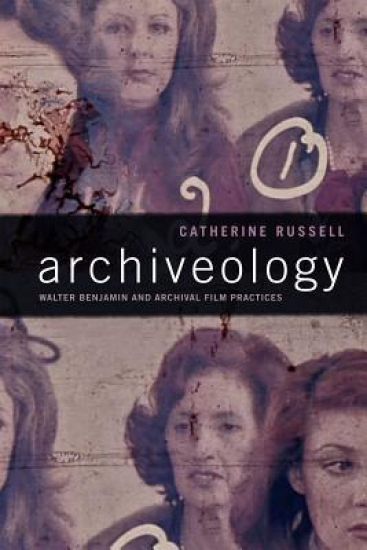
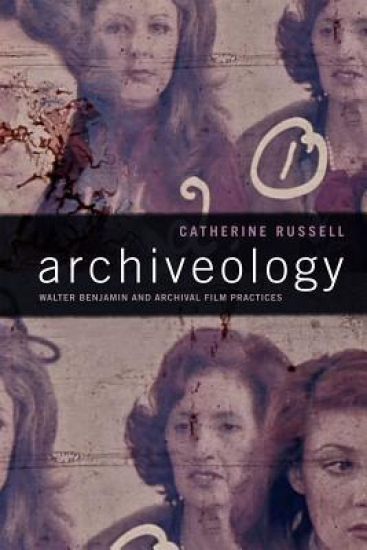
Archiveology

Archiveology

Catherine Russell

Duke University Press
2018
sidottu
In Archiveology Catherine Russell uses the work of Walter Benjamin to explore how the practice of archiveology-the reuse, recycling, appropriation, and borrowing of archival sounds and images by filmmakers-provides ways to imagine the past and the future. Noting how the film archive does not function simply as a place where moving images are preserved, Russell examines a range of films alongside Benjamin's conceptions of memory, document, excavation, and historiography. She shows how city films such as Nicole VÉdrÈs's Paris 1900 (1947) and Thom Andersen's Los Angeles Plays Itself (2003) reconstruct notions of urban life and uses Christian Marclay's The Clock (2010) to draw parallels between critical cinephilia and Benjamin's theory of the phantasmagoria. Russell also discusses practices of collecting in archiveological film and rereads films by Joseph Cornell and Rania Stephan to explore an archival practice that dislocates and relocates the female image in film. In so doing, she not only shows how Benjamin's work is as relevant to film theory as ever; she shows how archiveology can awaken artists and audiences to critical forms of history and memory.
Archiveology

Archiveology

Catherine Russell

Duke University Press
2018
pokkari
In Archiveology Catherine Russell uses the work of Walter Benjamin to explore how the practice of archiveology-the reuse, recycling, appropriation, and borrowing of archival sounds and images by filmmakers-provides ways to imagine the past and the future. Noting how the film archive does not function simply as a place where moving images are preserved, Russell examines a range of films alongside Benjamin's conceptions of memory, document, excavation, and historiography. She shows how city films such as Nicole VÉdrÈs's Paris 1900 (1947) and Thom Andersen's Los Angeles Plays Itself (2003) reconstruct notions of urban life and uses Christian Marclay's The Clock (2010) to draw parallels between critical cinephilia and Benjamin's theory of the phantasmagoria. Russell also discusses practices of collecting in archiveological film and rereads films by Joseph Cornell and Rania Stephan to explore an archival practice that dislocates and relocates the female image in film. In so doing, she not only shows how Benjamin's work is as relevant to film theory as ever; she shows how archiveology can awaken artists and audiences to critical forms of history and memory.
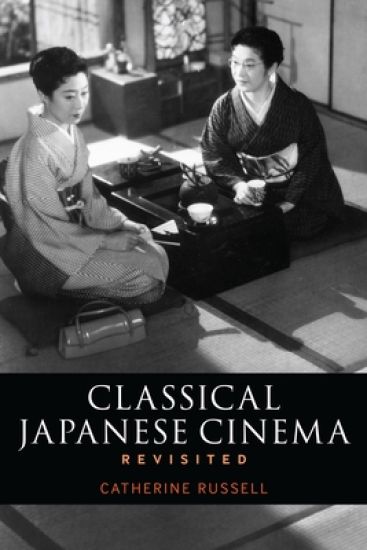
Classical Japanese Cinema Revisited

Classical Japanese Cinema Revisited

Catherine Russell

Continuum Publishing Corporation
2011
sidottu
Catherine Russell demystifies the canon of great Japanese cinema, treating it with fewer auteurist and Orientalist assumptions than many other scholars and critics. Catherine Russell's highly accessible book approaches Japanese cinema as an industry closely modeled on Hollywood, focusing on the classical period - those years in which the studio system dominated all film production in Japan, from roughly 1930 to 1960. Respectful and thoroughly informed about the aesthetics and critical values of the Japanese canon, Russell is also critical of some of its ideological tendencies, and her analyses provide new insights on class and gender dynamics. Russell demonstrates how Japanese classical cinema has had enormous influence on other Asian cinemas, especially in TV broadcast form, and she highlights the importance of the accounting for the industrial production context when discussing these films. Including studies of landmark films by Ozu, Kurosawa and other directors, this book provides a perfect introduction to a crucial and often misunderstood Japanese cultural output. With a critical approach that highlights the "everydayness" of Japanese studio-era cinema, Catherine Russell demystifies the canon of great Japanese cinema, treating it with fewer auteurist and Orientalist assumptions than many other scholars and critics.
Classical Japanese Cinema Revisited

Classical Japanese Cinema Revisited

Catherine Russell

Continuum Publishing Corporation
2011
nidottu
Catherine Russell's highly accessible book approaches Japanese cinema as an industry closely modeled on Hollywood, focusing on the classical period - those years in which the studio system dominated all film production in Japan, from roughly 1930 to 1960. Respectful and thoroughly informed about the aesthetics and critical values of the Japanese canon, Russell is also critical of some of its ideological tendencies, and her analyses provide new insights on class and gender dynamics. Russell demonstrates how Japanese classical cinema has had enormous influence on other Asian cinemas, especially in TV broadcast form, and she highlights the importance of the accounting for the industrial production context when discussing these films. Including studies of landmark films by Ozu, Kurosawa and other directors, this book provides a perfect introduction to a crucial and often misunderstood area of Japanese cultural output. With a critical approach that highlights the everydaynessA" of Japanese studio-era cinema, Catherine Russell demystifies the canon of great Japanese cinema, treating it with fewer auteurist and Orientalist assumptions than many other scholars and critics.
When a Woman Ascends the Stairs (Onna ga kaidan o agaru toki)

When a Woman Ascends the Stairs (Onna ga kaidan o agaru toki)

Catherine Russell

BLOOMSBURY PUBLISHING PLC
2025
nidottu
Mikio Naruse's When A Woman Ascends The Stairs (1960) combines high melodrama with modernist film language, telling the story of Keiko, a bar hostess struggling to succeed in Tokyo's Ginza district. Catherine Russell's study of the film provides an in-depth analysis of Naruse's distinctive filmmaking, from his use of two-shots in confined spaces, unique lighting techniques, and his "invisible" and "rhythmic" editing style. She analyses the recurring motif of a woman’s white-stockinged feet climbing stairs, considering how this symbolizes the social dynamics of the high-class Japanese sex industry that sustains hostess bar culture. Russell goes on to argue that the film is a “late” woman’s film which engages with the institutional barriers to woman’s success in postwar Japan. She situates the film within the trajectory of Naruse's career and analyses how his social critique is balanced with an aestheticization of a harsh and brutally gendered world, creating an affective tension that is symptomatic of Naruse's own position as an industrial worker.