Kirjojen hintavertailu. Mukana 11 627 220 kirjaa ja 12 kauppaa.

Kirjahaku

Etsi kirjoja tekijän nimen, kirjan nimen tai ISBN:n perusteella.

2 kirjaa tekijältä Cathryn Carson

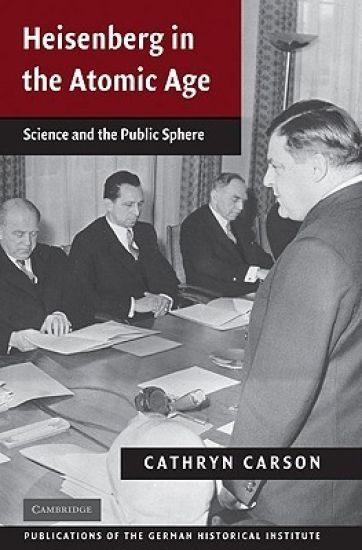
Heisenberg in the Atomic Age

Heisenberg in the Atomic Age

Cathryn Carson

Cambridge University Press
2010
sidottu
The end of the Second World War opened a new era for science in public life. Heisenberg in the Atomic Age explores the transformations of science's public presence in the postwar Federal Republic of Germany. It shows how Heisenberg's philosophical commentaries, circulating in the mass media, secured his role as science's public philosopher, and it reflects on his policy engagements and public political stands, which helped redefine the relationship between science and the state. With deep archival grounding, the book tracks Heisenberg's interactions with intellectuals from Heidegger to Habermas and political leaders from Adenauer to Brandt. It also traces his evolving statements about his wartime research on nuclear fission for the National Socialist regime. Working between the history of science and German history, the book's central theme is the place of scientific rationality in public life - after the atomic bomb, in the wake of the Third Reich.
Heisenberg in the Atomic Age

Heisenberg in the Atomic Age

Cathryn Carson

Cambridge University Press
2014
pokkari
The end of the Second World War opened a new era for science in public life. Heisenberg in the Atomic Age explores the transformations of science's public presence in the postwar Federal Republic of Germany. It shows how Heisenberg's philosophical commentaries, circulating in the mass media, secured his role as science's public philosopher, and it reflects on his policy engagements and public political stands, which helped redefine the relationship between science and the state. With deep archival grounding, the book tracks Heisenberg's interactions with intellectuals from Heidegger to Habermas and political leaders from Adenauer to Brandt. It also traces his evolving statements about his wartime research on nuclear fission for the National Socialist regime. Working between the history of science and German history, the book's central theme is the place of scientific rationality in public life - after the atomic bomb, in the wake of the Third Reich.