Kirjojen hintavertailu. Mukana 11 342 296 kirjaa ja 12 kauppaa.

Kirjahaku

Etsi kirjoja tekijän nimen, kirjan nimen tai ISBN:n perusteella.

10 kirjaa tekijältä Cay S. Horstmann

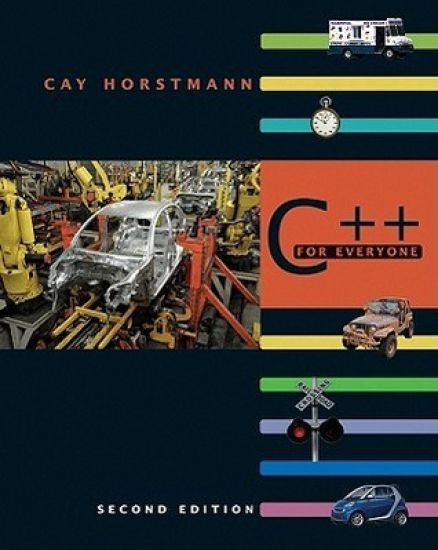
C++ for Everyone

C++ for Everyone

Cay S. Horstmann

John Wiley Sons Inc
2011
nidottu
Thorough and updated coverage on all the essential C++ concepts Aimed at providing you with a solid foundation in programming with C++, this new edition incorporates programming exercises with helpful self-check questions that reinforce the concepts discussed throughout the book. You'll benefit from the how-to sections that show you how concepts are applied and advanced materials are featured on the accompanying Web site when you're ready to take your programming skills to the next level. * Shows you how to use C++ to your benefit * Includes advice for avoiding pitfalls * Incorporates self-check questions and programming exercises to reinforce what you learn * Encourages you to take your C++ programming skills to the next level with the advanced material featured on the accompanying Web site C++ for Everyone, Second Edition, is the go-to guide for getting started with C++!
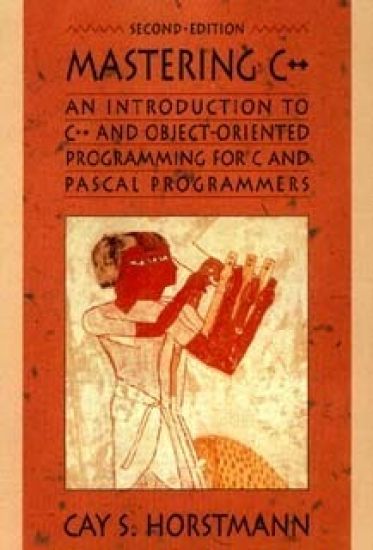
Mastering C++

Mastering C++

Cay S. Horstmann

John Wiley Sons Inc
1995
sidottu
The C++ programming language is introduced with particular emphasis on the techniques used in real–life programs. Requiring little prior knowledge of the C programming language and working from realistic examples, Mastering C++ covers operator overloading and virtual functions, as well as data, pointers, arrays, structured types, input/output, memory management, inheritance, and more.
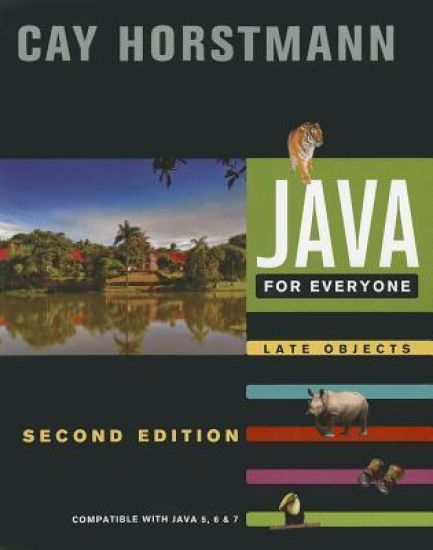
Java For Everyone

Java For Everyone

Cay S. Horstmann

John Wiley Sons Inc
2012
nidottu
Java For Everyone, 2nd Edition is a comprehensive introduction to Java and computer programming, which focuses on the principles of programming, software engineering, and effective learning. It is designed for a one-semester, mixed-major, first course in programming. Nobody supports your desire to teach students good programming skills like Cay Horstmann. Active in both the classroom and the software industry, Horstmann knows that meticulous coding-not shortcuts-is the base upon which great programmers are made. Using an innovative visual design that leads students step-by-step through intricacies of Java programming, Java For Everyone, 2nd Edition instills confidence in beginning programmers and confidence leads to success.
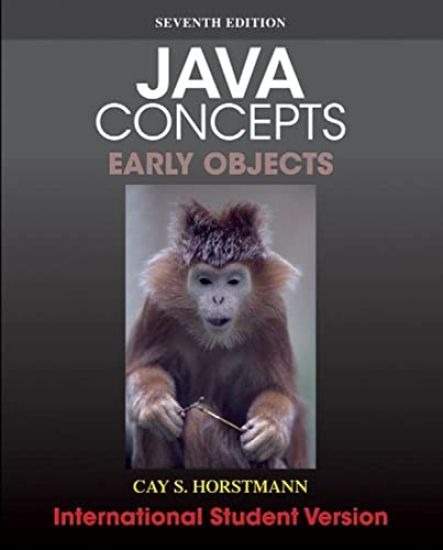
Java Concepts, International Student Version

Java Concepts, International Student Version

Cay S. Horstmann

John Wiley Sons Inc
2013
nidottu
Cay Horstmann’s seventh edition of Java Concepts provides an approachable introduction to fundamental programming techniques and design skills, helping students master basic concepts and become competent coders. Major rewrites and an updated visual design make this student-friendly text even more engaging. The text is known for its realistic programming examples, great quantity and variety of homework assignments, and lab exercises that build student problem-solving abilities. The seventh edition now includes problem solving sections, more example code online, and exercises from Science and Business.
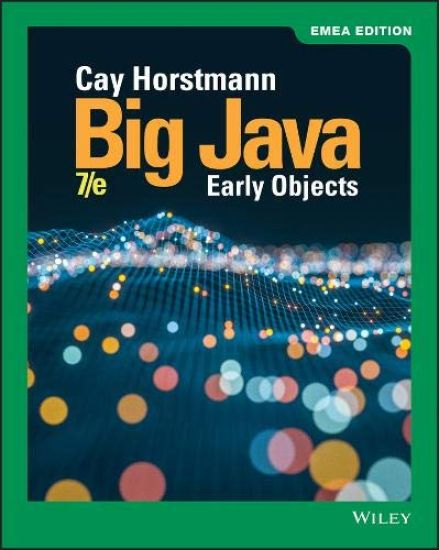
Big Java

Big Java

Cay S. Horstmann

John Wiley Sons Inc
2019
nidottu
Big Java: Early Objects, 7e focuses on the essentials of effective learning and is suitable for a two-semester introduction to programming sequence. The text requires no prior programming experience and only a modest amount of high school algebra. Objects and classes from the standard library are used where appropriate in early sections with coverage on object oriented design starting in Chapter 8. This gradual approach allows students to use objects throughout their study of the core algorithmic topics, without teaching bad habits that must be un-learned later. The second half covers algorithms and data structures at a level suitable for beginning students.
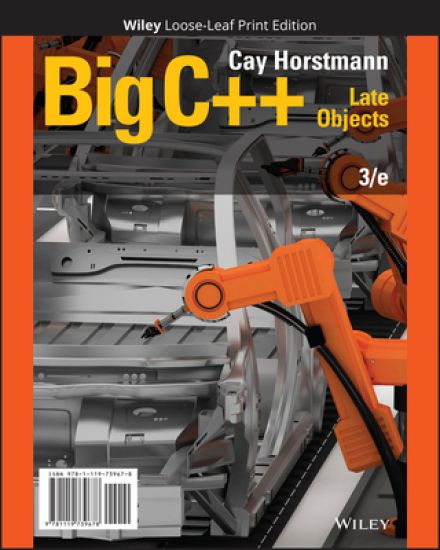
Brief C++: Late Objects

Brief C++: Late Objects

Cay S. Horstmann

WILEY
2020
irtolehti
Brief C++: Late Objects, 3rd Edition focuses on the essentials of effective learning and is suitable for a two-semester introduction to programming sequence. The interactive eText requires no prior programming experience and only a modest amount of high school algebra. It provides an approachable introduction to fundamental programming techniques and design skills, helping students master basic concepts and become competent coders. Objects are used where appropriate in early sections of the program. Students begin designing and implementing their own classes in Section 9. Choosing the enhanced eText format allows students to develop their coding skills using targeted, progressive interactivities designed to integrate with the eText. All sections include built-in activities, open-ended review exercises, programming exercises, and projects to help students practice programming and build confidence. These activities go far beyond simplistic multiple-choice questions and animations. They have been designed to guide students along a learning path for mastering the complexities of programming. Students demonstrate comprehension of programming structures, then practice programming with simple steps in scaffolded settings, and finally write complete, automatically graded programs. The perpetual access VitalSource Enhanced eText, when integrated with your school's learning management system, provides the capability to monitor student progress in VitalSource SCORECenter and track grades for homework or participation. *Enhanced eText and interactive functionality available through select vendors and may require LMS integration approval for SCORECenter.
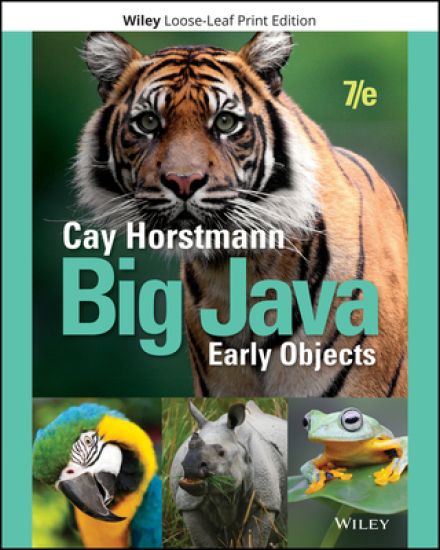
Big Java: Early Objects

Big Java: Early Objects

Cay S. Horstmann

WILEY
2020
irtolehti
Big Java: Early Objects, 7th Edition focuses on the essentials of effective learning and is suitable for a two-semester introduction to programming sequence. This text requires no prior programming experience and only a modest amount of high school algebra. Objects and classes from the standard library are used where appropriate in early sections with coverage on object-oriented design starting in Chapter 8. This gradual approach allows students to use objects throughout their study of the core algorithmic topics, without teaching bad habits that must be un-learned later. The second half covers algorithms and data structures at a level suitable for beginning students.