Kirjojen hintavertailu. Mukana 11 699 587 kirjaa ja 12 kauppaa.

Kirjahaku

Etsi kirjoja tekijän nimen, kirjan nimen tai ISBN:n perusteella.

12 kirjaa tekijältä Cecelia Tichi

Electronic Hearth

Electronic Hearth

Cecelia Tichi

Oxford University Press Inc
1993
nidottu
We all talk about the "tube" or "box," as if television were simply another appliance like the refrigerator or toaster oven. But Cecilia Tichi argues that TV is actually an environment--a pervasive screen-world that saturates almost every aspect of modern life. In Electronic Hearth, she looks at how that environment evolved, and how it, in turn, has shaped the American experience. Tichi explores almost fifty years of writing about television--in novels, cartoons, journalism, advertising, and critical books and articles--to define the role of television in the American consciousness. She examines early TV advertising to show how the industry tried to position the new device as not just a gadget but a prestigious new piece of furniture, a highly prized addition to the home. The television set, she writes, has emerged as a new electronic hearth--the center of family activity. John Updike described this "primitive appeal of the hearth" in Roger's Version: "Television is--its irresistable charm--a fire. Entering an empty room, we turn it on, and a talking face flares into being." Sitting in front of the TV, Americans exist in a safety zone, free from the hostility and violence of the outside world. She also discusses long-standing suspicions of TV viewing: its often solitary, almost autoerotic character, its supposed numbing of the minds and imagination of children, and assertions that watching television drugs the minds of Americans. Television has been seen as treacherous territory for public figures, from generals to presidents, where satire and broadcast journalism often deflate their authority. And the print culture of journalism and book publishing has waged a decades-long war of survival against it--only to see new TV generations embrace both the box and the book as a part of their cultural world. In today's culture, she writes, we have become "teleconscious"--seeing, for example, real life being certified through television ("as seen on TV"), and television constantly ratified through its universal presence in art, movies, music, comic strips, fabric prints, and even references to TV on TV. Ranging far beyond the bounds of the broadcast industry, Tichi provides a history of contemporary American culture, a culture defined by the television environment. Intensively researched and insightfully written, The Electronic Hearth offers a new understanding of a critical, but much-maligned, aspect of modern life.
Embodiment of a Nation

Embodiment of a Nation

Cecelia Tichi

Harvard University Press
2004
nidottu
From Harriet Beecher Stowe's image of the Mississippi's "bosom" to Henry David Thoreau's Cape Cod as "the bared and bended arm of Massachusetts," the U.S. environment has been recurrently represented in terms of the human body. Exploring such instances of embodiment, Cecelia Tichi exposes the historically varied and often contrary geomorphic expression of a national paradigm. Environmental history as cultural studies, her book plumbs the deep and peculiarly American bond between nationalism, the environment, and the human body.Tichi disputes the United States' reputation of being "nature's nation." U.S. citizens have screened out nature effectively by projecting the bodies of U.S. citizens upon nature. She pursues this idea by pairing Mount Rushmore with Walden Pond as competing efforts to locate the head of the American body in nature; Yellowstone's Old Faithful with the Moon as complementary embodiments of the American frontier; and Hot Springs, Arkansas, with Love Canal as contrasting sites of the identification of women and water. A major contribution to current discussions of gender and nature, her book also demonstrates the intellectual power of wedding environmental studies to the social history of the human body.
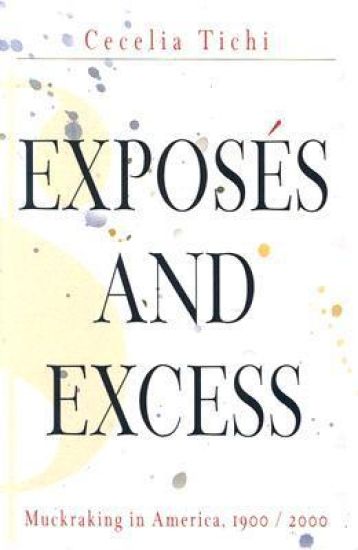
Exposés and Excess

Exposés and Excess

Cecelia Tichi

University of Pennsylvania Press
2005
pokkari
From robber barons to titanic CEOs, from the labor unrest of the 1880s to the mass layoffs of the 1990s, two American Gilded Ages-one in the early 1900s, another in the final years of the twentieth century-mirror each other in their laissez-faire excess and rampant social crises. Both eras have ignited the civic passions of investigative writers who have drafted diagnostic blueprints for urgently needed change. The compelling narratives of the muckrakers-Upton Sinclair, Ida Tarbell, Lincoln Steffens, and Ray Stannard Baker among them-became bestsellers and prizewinners a hundred years ago; today, Cecelia Tichi notes, they have found their worthy successors in writers such as Barbara Ehrenreich, Eric Schlosser, and Naomi Klein. In ExposÉs and Excess Tichi explores the two Gilded Ages through the lens of their muckrakers. Drawing from her considerable and wide-ranging work in American studies, Tichi details how the writers of the first muckraking generation used fact-based narratives in magazines such as McClure's to rouse the U.S. public to civic action in an era of unbridled industrial capitalism and fear of the immigrant "dangerous classes." Offering a damning cultural analysis of the new Gilded Age, Tichi depicts a booming, insecure, fortress America of bulked-up baby strollers, McMansion housing, and an obsession with money-as-lifeline in an era of deregulation, yawning income gaps, and idolatry of the market and its rock-star CEOs. No one has captured this period of corrosive boom more acutely than the group of nonfiction writers who burst on the scene in the late 1990s with their exposÉs of the fast-food industry, the world of low-wage work, inadequate health care, corporate branding, and the multibillion-dollar prison industry. And nowhere have these authors-Ehrenreich, Schlosser, Klein, Laurie Garrett, and Joseph Hallinan-revealed more about their emergence as writers and the connections between journalism and literary narrative than in the rich and insightful interviews that round out the book. With passion and wit, ExposÉs and Excess brings a literary genre up to date at a moment when America has gone back to the future.
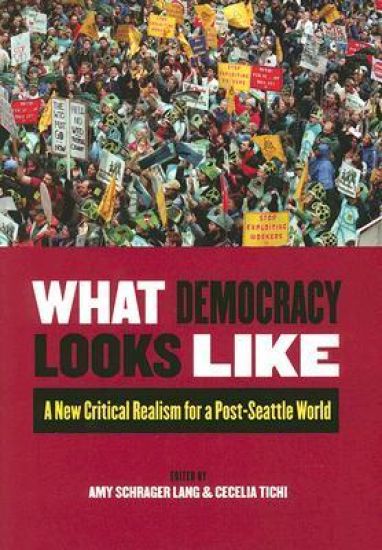
What Democracy Looks Like

What Democracy Looks Like

Cecelia Tichi

Rutgers University Press
2006
nidottu
The convergence of activists in Seattle during the World Trade Organization meetings captured the headlines in 1999. These demonstrations marked the first major expression on U.S. soil of worldwide opposition to inequality, privatization, and political and intellectual repression. This turning point in world politics coincided with an ongoing quandary in academia-particularly in the humanities where the so-called "death of theory" has left the field on tenuous footing.In What Democracy Looks Like, the editors and twenty-seven contributors argue that these crises-in the world and the academy-are not unrelated. The essays insist that, in the wake of "Seattle," teachers and scholars of American literature and culture are faced with the challenge of addressing new points of intersection between American studies and literary studies. The narrative, the poem, the essay, and the drama need to be reexamined in ways that are relevant to the urgent social and political issues of our time.Collectively urging scholars and educators to pay fresh attention to the material conditions out of which literature arises, this path-breaking book inaugurates a new critical realism in American literary studies. It provides a crucial link in the growing need to merge theory and practice with the goal of reconnecting the ivory tower elite to the activists on the street.
Jack London

Jack London

Cecelia Tichi

The University of North Carolina Press
2017
nidottu
Jack London (1876-1916) found fame with his wolf-dog tales and sagas of the frozen North, but Cecelia Tichi challenges the long-standing view of London as merely a mass-market producer of potboilers. A onetime child laborer, London led a life of poverty in the Gilded Age before rising to worldwide acclaim for stories, novels, and essays designed to hasten the social, economic, and political advance of America. In this major reinterpretation of London's career, Tichi examines how the beloved writer leveraged his written words as a force for the future.Tracing the arc of London's work from the late 1800s through the 1910s, Tichi profiles the writer's allies and adversaries in the cities, on the factory floor, inside prison walls, and in the farmlands. Thoroughly exploring London's importance as an artist and as a political and public figure, Tichi brings to life a man who merits recognition as one of America's foremost public intellectuals.
Gilded Age Cocktails

Gilded Age Cocktails

Cecelia Tichi

New York University Press
2021
sidottu
A delightful romp through America's Golden Age of Cocktails The decades following the American Civil War burst with invention—they saw the dawn of the telephone, the motor car, electric lights, the airplane—but no innovation was more welcome than the beverage heralded as the "cocktail." The Gilded Age, as it came to be known, was the Golden Age of Cocktails, giving birth to the classic Manhattan and martini that can be ordered at any bar to this day. Scores of whiskey drinks, cooled with ice chips or cubes that chimed against the glass, proved doubly pleasing when mixed, shaken, or stirred with special flavorings, juices, and fruits. The dazzling new drinks flourished coast to coast at sporting events, luncheons, and balls, on ocean liners and yachts, in barrooms, summer resorts, hotels, railroad train club cars, and private homes. From New York to San Francisco, celebrity bartenders rose to fame, inventing drinks for exclusive universities and exotic locales. Bartenders poured their liquid secrets for dancing girls and such industry tycoons as the newspaper mogul William Randolph Hearst and the railroad king "Commodore" Cornelius Vanderbilt. Cecelia Tichi offers a tour of the cocktail hours of the Gilded Age, in which industry, innovation, and progress all take a break to enjoy the signature beverage of the age. Gilded Age Cocktails reveals the fascinating history behind each drink as well as bartenders' formerly secret recipes. Though the Gilded Age cocktail went "underground" during the Prohibition era, it launched the first of many generations whose palates thrilled to a panoply of artistically mixed drinks.
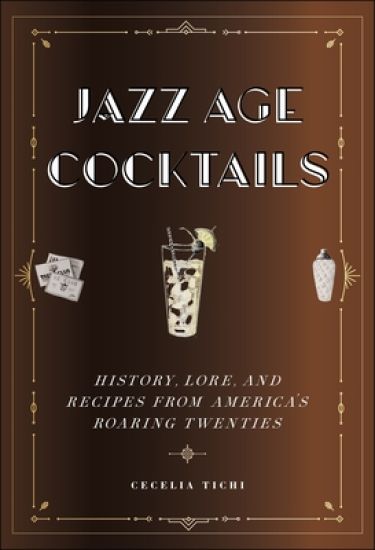
Jazz Age Cocktails

Jazz Age Cocktails

Cecelia Tichi

New York University Press
2021
sidottu
How the Prohibition law of 1920 made alcohol, savored in secret, all the more delectable when the cocktail shaker was forced to go "underground" "Roaring Twenties" America boasted famous firsts: women's right to vote, jazz music, talking motion pictures, flapper fashions, and wondrous new devices like the safety razor and the electric vacuum cleaner. The privations of the Great War were over, and Wall Street boomed. The decade opened, nonetheless, with a shock when Prohibition became the law of the land on Friday, January 16, 1920, when the Eighteenth Amendment banned "intoxicating liquors." Decades-long campaigns to demonize alcoholic beverages finally became law, and America officially went "dry." American ingenuity promptly rose to its newest challenge. The law, riddled with loopholes, let the 1920s write a new chapter in the nation's saga of spirits. Men and women spoke knowingly of the speakeasy, the bootlegger, rum-running, black ships, blind pigs, gin mills, and gallon stills. Passwords ("Oscar sent me") gave entrée to night spots and supper clubs where cocktails abounded, and bartenders became alchemists of timely new drinks like the Making Whoopee, the Petting Party, the Dance the Charleston. A new social event—the cocktail party staged in a private home—smashed the gender barrier that had long forbidden "ladies" from entering into the gentlemen-only barrooms and cafés. From the author of Gilded Age Cocktails, this book takes a delightful new romp through the cocktail creations of the early twentieth century, transporting readers into the glitz and (illicit) glamour of the 1920s. Spirited and richly illustrated, Jazz Age Cocktails dazzles with tales of temptation and temperance, and features charming cocktail recipes from the time to be recreated and enjoyed.
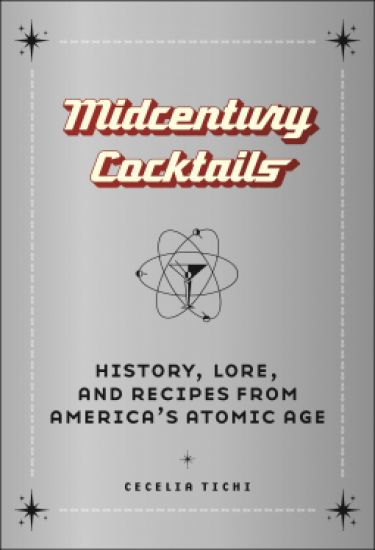
Midcentury Cocktails

Midcentury Cocktails

Cecelia Tichi

NEW YORK UNIVERSITY PRESS
2022
sidottu
A delightful history of cocktails from the era of new interstate highways, sprouting suburbs, and atomic engineering America at midcentury was a nation on the move, taking to wings and wheels along the new interstate highways and in passenger jets that soared to thirty thousand feet. Anxieties rippled, but this new Atomic Age promised cheap power and future wonders, while the hallmark of the era was the pleasure of an evening imbibing cocktails in mixed company, a middle-class idea of sophisticated leisure. This new age, stretching from the post–World War II baby boom years through the presidency of General Dwight Eisenhower into the increasingly volatile mid-1960s, promised affordable homes for those who had never dreamed of owning property and an array of gleaming appliances to fill them. For many, this was America at its best—innovation, style, and the freedom to enjoy oneself—and the spirit of this time is reflected in the whimsical cocktails that rose to prominence: tiki drinks, Moscow mules, Sea Breezes, Pina Coladas, Pink Squirrels, and Sloe Gin Fizzes. Of course, not everyone was invited to the party. Though the drinks were getting sweeter, the racial divide was getting more bitter—Black Americans in search of a drink, entertainment, or a hotel room had to depend on the Green Book for advice on places where they would be welcome and safe. And the Cold War and Space Race proceeded ominously throughout this period, as technological advances alternately thrilled and terrified. The third installment in Cecelia Tichi's tour of the cocktails enjoyed in various historical eras, Midcentury Cocktails brings a time of limitless possibilities to life though the cocktails created, named, and consumed.
What Would Mrs. Astor Do?

What Would Mrs. Astor Do?

Cecelia Tichi

New York University Press
2018
sidottu
A richly illustrated romp with America's Gilded Age leisure class—and those angling to join it Mark Twain called it the Gilded Age. Between 1870 and 1900, the United States' population doubled, accompanied by an unparalleled industrial expansion, and an explosion of wealth unlike any the world had ever seen. America was the foremost nation of the world, and New York City was its beating heart. There, the richest and most influential—Thomas Edison, J. P. Morgan, Edith Wharton, the Vanderbilts, Andrew Carnegie, and more—became icons, whose comings and goings were breathlessly reported in the papers of Joseph Pulitzer and William Randolph Hearst. It was a time of abundance, but also bitter rivalries, in work and play. The Old Money titans found themselves besieged by a vanguard of New Money interlopers eager to gain entrée into their world of formal balls, debutante parties, opera boxes, sailing regattas, and summer gatherings at Newport. Into this morass of money and desire stepped Caroline Astor. Mrs. Astor, an Old Money heiress of the first order, became convinced that she was uniquely qualified to uphold the manners and mores of Gilded Age America. Wherever she went, Mrs. Astor made her judgments, dictating proper behavior and demeanor, men's and women's codes of dress, acceptable patterns of speech and movements of the body, and what and when to eat and drink. The ladies and gentlemen of high society took note. "What would Mrs. Astor do?" became the question every social climber sought to answer. And an invitation to her annual ball was a golden ticket into the ranks of New York's upper crust. This work serves as a guide to manners as well as an insight to Mrs. Astor's personal diary and address book, showing everything from the perfect table setting to the array of outfits the elite wore at the time. Channeling the queen of the Gilded Age herself, Cecelia Tichi paints a portrait of New York's social elite, from the schools to which they sent their children, to their lavish mansions and even their reactions to the political and personal scandals of the day. Ceceilia Tichi invites us on a beautifully illustrated tour of the Gilded Age, transporting readers to New York at its most fashionable. A colorful tapestry of fun facts and true tales, What Would Mrs. Astor Do? presents a vivid portrait of this remarkable time of social metamorphosis, starring Caroline Astor, the ultimate gatekeeper.
Murder, Murder, Murder in Gilded Central Park

Murder, Murder, Murder in Gilded Central Park

Cecelia Tichi

Primedia Elaunch LLC
2022
pokkari
In her Fifth Avenue mansion in autumn, 1898, silver heiress Val DeVere learns a third young woman's strangled body has been found nearby in New York's Central Park. The victim could be someone like Val's late mother-or her-for the Valentine Mackle DeVere is one generation from the Irish immigrants who now risk their lives toiling in the city that promised a better life. Heartsick, Val joins her well-connected husband, Roddy (Roderick Windham DeVere), to press the mayor for action, but scandal-ridden city hall finds little time for the case of "disposable" young women who frequent the park at night. A maverick police detective urges the DeVeres to help him find the killer, but his "evidence" ensnares a family friend and could send an innocent man to death row. The couple feel on trial when the detective baits them with Roddy's Old New York heritage: "Tell me this, Mr. DeVere...how many more murders before you and Mrs. DeVere cooperate to save the park your forefathers built?"
A Gilded Redwood Coffin

A Gilded Redwood Coffin

Cecelia Tichi

Cecelia Tichi
2025
pokkari
Western silver heiress Val DeVere expects nothing but joy at an elegant Newport picnic in 1899, only to be abruptly summoned to New York by a close friend's urgent and cryptic plea: "PLEASE HELP...THEO B."In New York, Theo confides in Val, begging her to save his lively cousin Phoebe from a cunning Irish manservant who, he claims, is plotting her "accidental" death in the Rocky Mountains-just as he allegedly orchestrated the death of her twin sister in Boston a year earlier.Determined to help her friend, Val, now Mrs. Roderick DeVere, tries to convince the headstrong Phoebe to delay her trip to the Rockies. Yet the Irish servant, whom Theo accuses of murder, reminds Val of her beloved late father, an Irish immigrant and "Silver King," whose charm and brogue are unsettlingly familiar.When Phoebe is found murdered in her New York apartment, suspicion falls squarely on the Irishman, appearing to wrap the case up neatly. But for Val, the truth feels far more elusive. Is she blinded by sentiment, or is there another killer lurking in the shadows? As doubt creeps in, Val faces a race against time to uncover the real culprit, all while risking arrest as an accessory to murder.