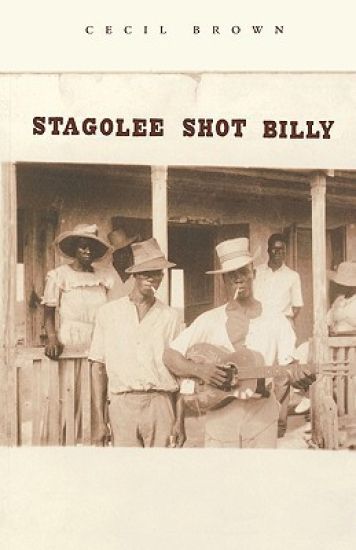
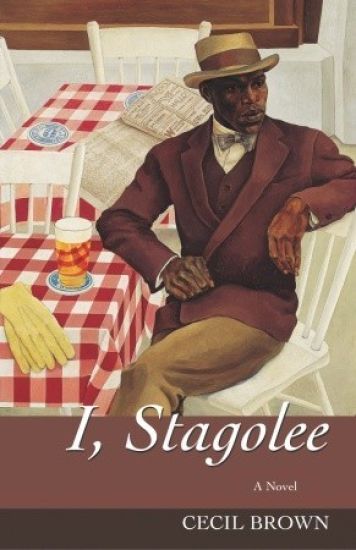
Although his story has been told countless times--by performers from Ma Rainey, Cab Calloway, and the Isley Brothers to Ike and Tina Turner, James Brown, and Taj Mahal--no one seems to know who Stagolee really is. Stack Lee? Stagger Lee? He has gone by all these names in the ballad that has kept his exploits before us for over a century. Delving into a subculture of St. Louis known as "Deep Morgan," Cecil Brown emerges with the facts behind the legend to unfold the mystery of Stack Lee and the incident that led to murder in 1895. How the legend grew is a story in itself, and Brown tracks it through variants of the song "Stack Lee"--from early ragtime versions of the '20s, to Mississippi John Hurt's rendition in the '30s, to John Lomax's 1940s prison versions, to interpretations by Lloyd Price, James Brown, and Wilson Pickett, right up to the hip-hop renderings of the '90s. Drawing upon the works of James Baldwin, Richard Wright, and Ralph Ellison, Brown describes the powerful influence of a legend bigger than literature, one whose transformation reflects changing views of black musical forms, and African Americans' altered attitudes toward black male identity, gender, and police brutality. This book takes you to the heart of America, into the soul and circumstances of a legend that has conveyed a painful and elusive truth about our culture.
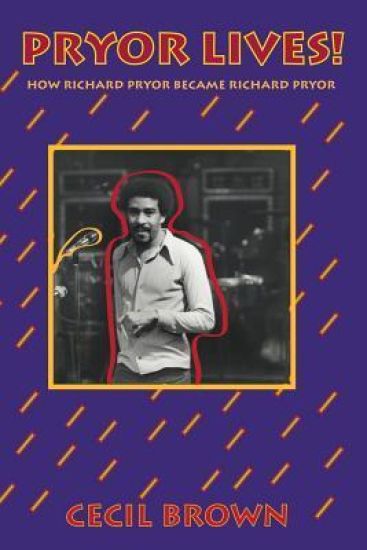
Pryor Lives How Richard Pryor Became Richard Pryor By Cecil Brown How did a scraggly standup comic became one of America's most controversial social satirists? How did Richard Pryor take the traditional stand-up form and used it to become a cultural hero? Cecil Brown, who, after witnessing Mr. Pryor's performance at Mandrake's in 1969 in Berkeley, California, became his running buddy for the next 30 years. He traveled with Mr. Pryor, wrote screenplays for him, and collaborated with him on other projects. Using many years of intimate experiences behind the scenes, Mr. Brown traces the evolution of Mr. Pryor's "white bread" comedy," (in which he imitated Bill Cosby) to the hilariously raunchy material that catapulted him to international fame. Following Mr. Pryor's career from the small standup performances in Berkeley to his performances at the Comedy Store on Sunset Boulevard in Hollywood, the author shows how Mr. Pryor used his stage performances to transform the harsh unforgiving realities of his life (tax evasion, domestic violence, freebase meltdown, heart attacks) into classic American comic art. Tracking Mr. Pryor's rise to star power, this book shows how Mr. Pryor made Stand-Up, into an instrument of spontaneity and a serious platform for public joking. If Pryor had stayed with this program, he would have been just another brilliant comedian. But, as Brown reveals, Mr. Pryor went further. His art depended on his locating, exposing, and tracking the demons that plagued his audience. His performance on stage resembled a shaman performing a ritual of exorcism. As a healer, he used comedy to nurse the damaged souls of the counter-culture, the black power community, the hippies, the new-age, the born-again Christians back to health. There is no better example of this phenomena than the Hollywood Bowl incident that took place in 1977 in Los Angeles, in which Mr. Pryor addressed a 17, 000 crowd that was celebrating support for Gay Pride. He chastised the white and largely gay audience for not giving attention to the suffering of inner city Blacks. The audience booed and hissed him. As one member of the audience later recalled, "Pryor presented his backside to us and informed us we could kiss his 'rich, black ass '". The honesty that Mr. Pryor offered that evening still reverberates in our society today and has caused the gay community to become for aware of the misfortunate of others. Written in a humorous, scholarly, witty style, this biography earns the accolades that Pryor himself wrote about his friend. "I have never met a writer who loved his work as much as Cecil Brown," Pryor wrote in praise of Brown's novel, Days Without Weather (1983), "The humor, the warmth, and even the smell are beautiful. The gentleness with which he handles his memories of his character is great." "A great writer, and a great friend," he said, on the Bicentennial Nigger album. Book Reviews: Forget about those other books written ostensibly about Richard Pryor Finally, there is a sensitive, revealing and truthful book concerning Richard Pryor and how he became the funniest man in America on stage and on film. Part memoir, and part eyewitness to Show Business history, Cecil Brown's book, PRYOR LIVES is the most definitive book to date about the late comedian's rise to unparalleled stardom. From living and working in Berkeley, California - to being swallowed up by the infested shark-filled waters of Hollywood, the reader will see Richard Pryor with a new, eye-opening perspective - as Cecil Brown writes with empathy and passion about Pryor's comedy, his life-style, and the tragic events that encompassed his life. Read this book It's ground breaking in its scope and style And it is funny as hell Robert N. Zagone Film Director
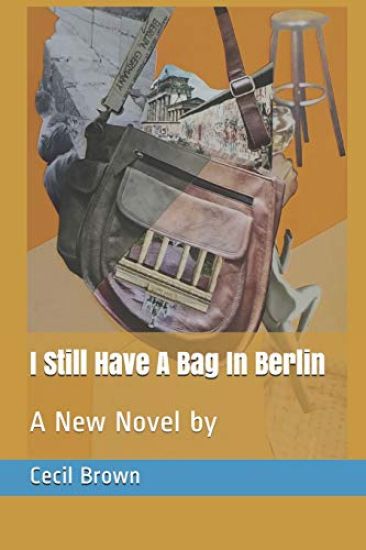
I still Have A Bag in Berlin begins in April 5, 1986, in West Berlin, at 2 O'clock in the morning, when Jimmy Watchman, an Ex-super bowl champion, is sitting with his brother in a GI Disco called La Belle talking to his brother. Then all of the lights go out and there is a loud explosion. When he awakens a few days later, he realizes that there was an attack from an unknown source and that his brother Tony was dead.Twenty-four years later, in 2010, Jimmy receives a letter from the German Government that the unsolved case of the terrorist attack had been resolved and all of the occupants of the nightclub explosion would received 350,000. To receive the money, Jimmy would have to go back to Berlin and stand in front of the court and swear he was there.As much as he hates Berlin to do it, he takes a a plane to Berlin. Back in Berlin after so many years, he finds it completely different. What was so different? Then realizes, The Wall is not there He meets the charismatic lawyer, Udo, playboy millionaire and brilliant lawyer, and teams up with his lead detective, Jutta, the black German woman who works for Udo, to help investigate the international terrorist gang. Preparing to come home with his money, Jimmy .goes to "Check Point Charlie," where, instead of the military police, he finds a cushy seat at a Starbucks. The old Berlin lifestyle of the GI clubs that he knew is long gone, but, then suddenly, its scent whiffs pass him momentarily...and then it is gone again
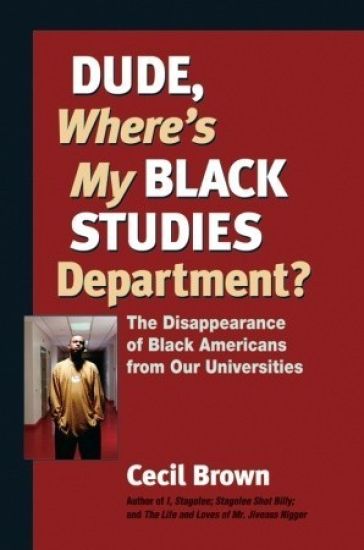
***WINNER, 2008 PEN Oakland - Josephine Miles National Literary Award Blacks have been vanishing from college campuses in the United States and reappearing in prisons, videos, and movies. Cecil Brown tackles this unwitting "disappearing act" head on, paying special attention to the situation at UC Berkeley and the University of California system generally. Brown contends that educators have ignored the importance of the oral tradition in African American upbringing, an oversight mirrored by the media. When these students take exams, their abilities are not tested. Further, university officials, administrators, professors, and students are ignoring the phenomenon of the disappearing black student - in both their admissions and hiring policies. With black studies departments shifting the focus from African American and black community interests to black immigrant issues, says Brown, the situation is becoming dire. "Dude, Where's My Black Studies Department?" offers both a scorching critique and a plan for rethinking and reform of a crucial but largely unacknowledged problem in contemporary society.