Kirjojen hintavertailu. Mukana 11 450 916 kirjaa ja 12 kauppaa.

Kirjahaku

Etsi kirjoja tekijän nimen, kirjan nimen tai ISBN:n perusteella.

15 kirjaa tekijältä Cedric Watts

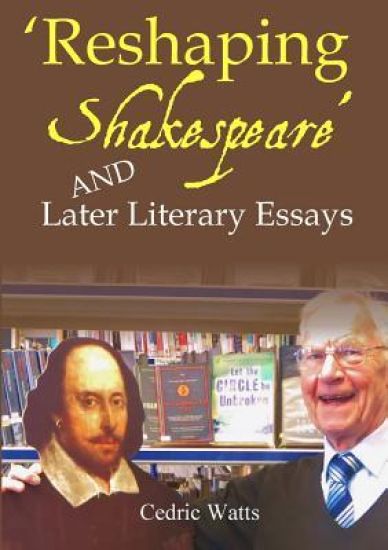
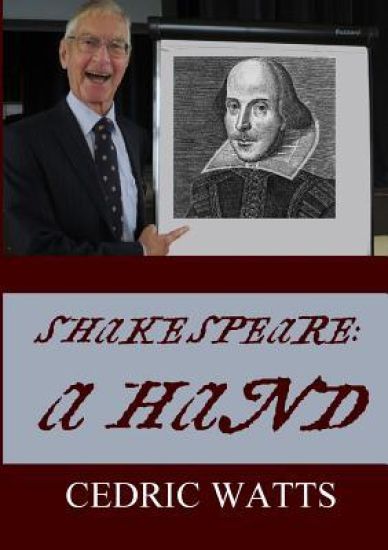
Shakespeare

Shakespeare

Cedric Watts

Lulu.com
2018
pokkari
If you need a helping hand with Shakespeare, this book provides it. Dr Cedric Watts, Emeritus Professor of English Literature at Sussex University, offers a broad introductory survey of Shakespeare's works and techniques. Every play is discussed critically - even Love's Labour's Won! Matters of prosody and rhetoric are explained. The Sonnets are interpreted provocatively. 'An ideal book for those coming to Shakespeare for the first time and for more experienced readers. Watts offers the most lively and cheering company', says Professor David Hopkins of Bristol University. The eminent novelist Ian McEwan adds: 'Cedric Watts is a superb critic in the liberal tradition - highly readable, open and generous in spirit, broad and deep in his reading, and wise in judgement.' Cedric Watts has written numerous books on Shakespeare's works, and has edited 21 of the plays for the Wordsworth Classics' Shakespeare Series.
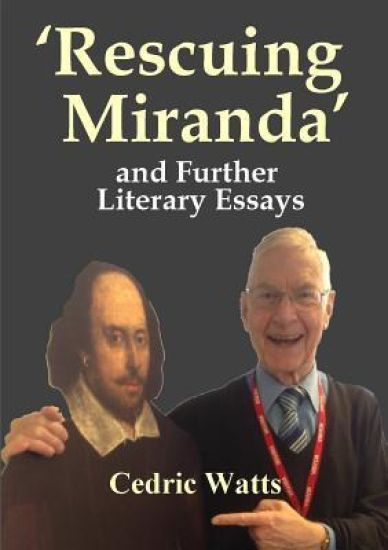
‘Rescuing Miranda’ And Further Literary Essays
Cedric Watts, Emeritus Professor of English at Sussex University, gathers here fifteen of his literary essays which were previously published in a diversity of locations. They include some of his most popular and controversial pieces, notably:' The Semiotics of Othello';'Bakhtin's Monologism';'Haunting Conrad's Under Western Eyes';and 'Jews and Degenerates in The Secret Agent'.Several of the essays concern Shakespeare and Conrad, but there are also discussions of Keats, Sterne, Kipling, D. H. Lawrence, and Edward FitzGerald's translation of The Rubaiyat of Omar Khayyam.
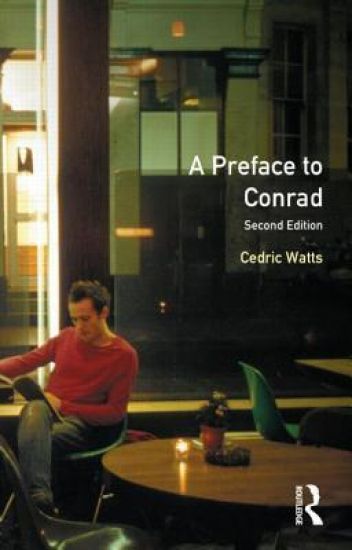
A Preface to Conrad

A Preface to Conrad

Cedric Watts

Longman
2000
nidottu
Widely recommended, this guide to Conrad offers a vivid and incisive account of his life and literary career, and gives detailed attention to the contexts, themes, problems and paradoxes of his works.
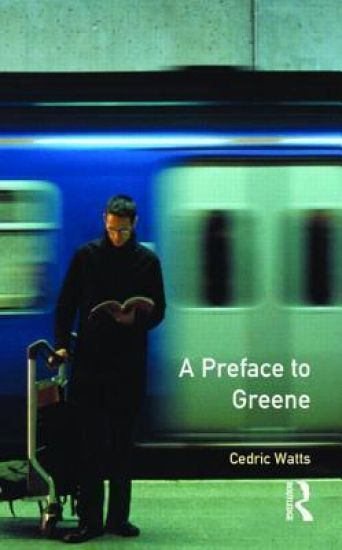
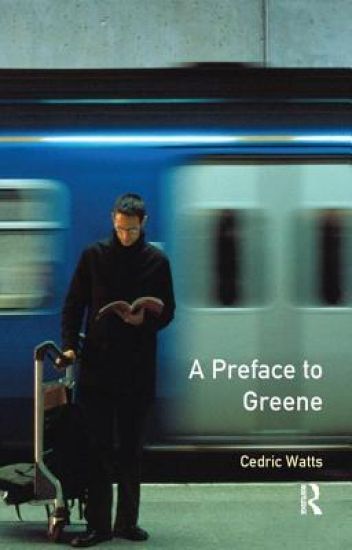
A Preface to Greene

A Preface to Greene

Cedric Watts

Routledge
2000
nidottu
Lively, informed and thorough, this survey of the life and works of Graham Greene opens with a biographical account setting the writer in context of his times and describing and exploring the influences, tensions and contradictions that occur throughout his work. The second half of the book devotes itself to the 'art of Greene' discussing his writing techniques, recurring themes, and imaginative preoccupations. Within this section thorough critical analyses are given of three works: Brighton Rock, The Power and the Glory, and the film, The Third Man. The book concludes with a reference section which comprises a gazeteer, a biographical list and a bibliography. Suggestions for further reading and a list of films encourage the student to explore the works of Greene more widely.
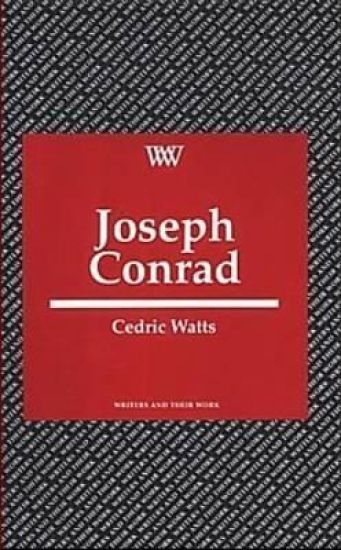
Joseph Conrad

Joseph Conrad

Cedric Watts

Northcote House Publishers Ltd
1994
nidottu
Locating Conrad’s work in the context of the writer’s life and cultural milieu, Professor Watts’s study examines the main phase in Conrad’s literary development. Drawing out the distinctive thematic preoccupations and technical devices in Conrad’s writing, Watts explores Conrad’s importance and influence as a moral, social and political commentator. He focuses in particular on Almayer’s Folly, The Nigger of the “Narcissus”, Heart of Darkness, Lord Jim, Nostromo and Chance. The critical discussions address recent controversial developments in the evaluation of this magisterial, vivid, yet complex and problematic author.
A Preface to Greene

A Preface to Greene

Cedric Watts

Routledge
2017
sidottu
Lively, informed and thorough, this survey of the life and works of Graham Greene opens with a biographical account setting the writer in context of his times and describing and exploring the influences, tensions and contradictions that occur throughout his work. The second half of the book devotes itself to the 'art of Greene' discussing his writing techniques, recurring themes, and imaginative preoccupations. Within this section thorough critical analyses are given of three works: Brighton Rock, The Power and the Glory, and the film, The Third Man. The book concludes with a reference section which comprises a gazeteer, a biographical list and a bibliography. Suggestions for further reading and a list of films encourage the student to explore the works of Greene more widely.
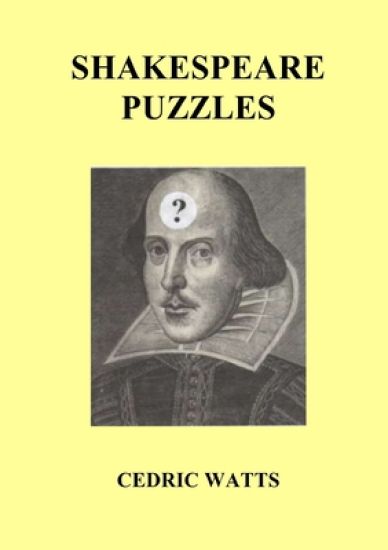
Shakespeare Puzzles

Shakespeare Puzzles

Cedric Watts

Lulu.com
2014
nidottu
Professor Cedric Watts discusses 25 puzzles presented by the works of Shakespeare. For instance: The Sonnets - autobiographical or fictional? What is the plot of the long-lost Love's Labour's Won? What are the 'glass eyes' in King Lear? Prospero's epilogue: it is really Shakespeare's farewell? Repeatedly, these challenging discussions reveal and resolve problematic features of the works, and demonstrate the linkage of minor and major concerns. Cedric Watts, Emeritus Professor of English at Sussex University, was co-author (with John Sutherland) of the acclaimed book, Henry V: War Criminal? and Other Shakespeare Puzzles. This new selection of puzzles was first published in Around the Globe, the magazine of Shakespeare's Globe Theatre in London.
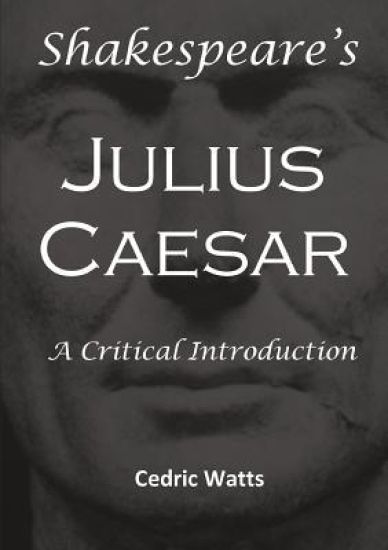
Shakespeare’s 'Julius Caesar': A Critical Introduction
What is the play really about?Tragedy, history, problem play - what is its genre?Who, if anyone, is the play's hero?Is the murder of Caesar justified?Is Brutus a hypocritical Stoic?How does posthumous characterisation work?What makes the play so topical?"Julius Caesar" has long been regarded as one of Shakespeare's greatest dramas. Some of its phrases live on famously: "Beware the Ides of March"; "Et tu, Brute?"; and "Friends, Romans, countrymen: lend me your ears!". When Cassius says, "How many ages hence / Shall this our lofty scene be acted over, / In states unborn and accents yet unknown?", his question is indeed prophetic: history's answer has transformed the question into a boast. This concise, clear introduction explains just why.Professor Cedric Watts, M.A, Ph.D., is the editor of the Wordsworth Classics' Shakespeare Series.
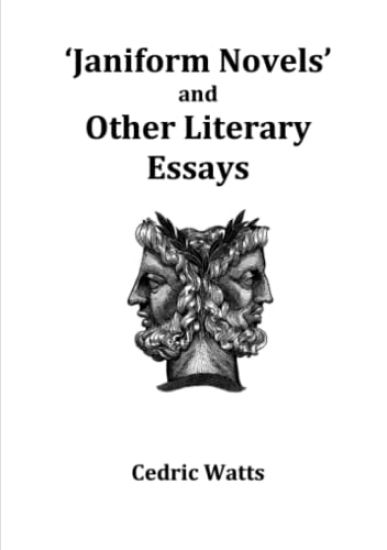
'Janiform Novels' and Other Literary Essays
'Janiform Novels' and Other Literary Essays gathers 25 essays by Cedric Watts, MA, Ph.D., Emeritus Professor of English at Sussex University. Previously published in a diversity of magazines and books, these conveniently-gathered literary discussions deal with such authors as Sophocles, Chaucer, Shakespeare, Donne, Marvell, Milton, Defoe, Richardson, Jane Austen, Emily Bronte, Conrad, Hemingway, Graham Greene, William Golding, Samuel Beckett and Chinua Achebe. Topics include covert plotting, the conceit of the conceit, the fallacies of structuralist and post-structuralist literary theory, delayed decoding, Shakespeare's scepticism, Conrad's opposition to racism and imperialism, Hemingway's profoundly ambiguous style, and Levi-Strauss's ludicrous naivety. Cedric Watts's critical writings have been described as 'fearless', 'perceptive', 'provocative', 'incisive' and 'entertaining' (Neil Sinyard, Graham Greene Newsletter).
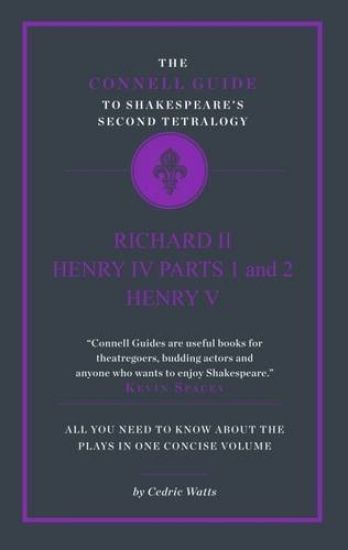
The Connell Guide to Shakespeare's Second Tetralogy
In his first tetralogy of history plays (Henry VI Parts 1, 2 and 3, and Richard III), Shakespeare offered the most extensive dramatic sequence since the great days of ancient Greek drama in Athens. Critics have sometimes disparaged this first tetralogy as episodic and amateurish. There are various lively scenes, and some characters radiate vitality - in Richard III, Shakespeare (defying historical fact) created a superbly memorable monster, the grotesque and arrogant villain whom audiences love to hate. But if the Shakespeare of the first tetralogy blithely embarrasses his modern fans by the abundance of jingoistic propaganda, his second tetralogy (Richard II, Henry IV Parts One and Two and Henry V) is much more sophisticated and ambiguous. Indeed, in view of the problems of censorship which he faced, Shakespeare provides remarkably incisive insights into the behaviour of kings and their followers and opponents. The second tetralogy is rich in characterisation, memorable in heroic and plangent rhetoric, crafty in its plotting, and exceptionally intelligent in the way it relates low life to high life, the small to the great, the farcical to the tragic. The vitality of Shakespeare's second tetralogy has ensured its endurance for more than four centuries. It is not simply a sequence of perennially entertaining plays; it is part of England's cultural identity, and continues to contribute to the shaping of that identity. The tetralogy dramatises nostalgia poignantly and critically; now it, too, forms part of the nation's cultural nostalgia. At the same time, it exposes the continuing wiles of politicians, and offers ever-topical warnings about the cost of military ventures overseas.
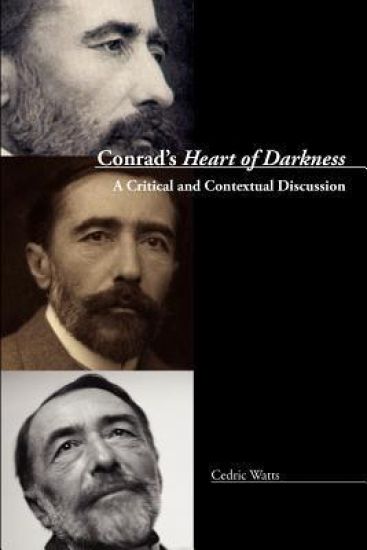
Conrad’s Heart of Darkness

Conrad’s Heart of Darkness

Cedric Watts

Editions Rodopi B.V.
2012
nidottu
This book offers a detailed discussion of Conrad’s most brilliant and problematic work. Many significant aspects of Heart of Darkness are examined, from plot and characterisation to imagery and symbolism, and particular attention is paid to its ambiguity and paradoxes. By relating the text to a variety of contexts, Cedric Watts explores Conrad’s central preoccupations as a writer and as a commentator on his age. The first edition of this study appeared in 1977, and reviewers described it as ‘criticism of the highest order’ (Joseph Conrad Today) and ‘an important book’ (Conradiana).