Kirjojen hintavertailu. Mukana 12 257 930 kirjaa ja 12 kauppaa.

Kirjahaku

Etsi kirjoja tekijän nimen, kirjan nimen tai ISBN:n perusteella.

9 kirjaa tekijältä Chad Engelland

Phenomenology

Phenomenology

Chad Engelland

MIT Press
2020
nidottu
A concise and accessible introduction to phenomenology, which investigates the experience of experience.This volume in the MIT Press Essential Knowledge series offers a concise and accessible introduction to phenomenology, a philosophical movement that investigates the experience of experience. Founded by Edmund Husserl (1859–1938) and expounded by Max Scheler, Martin Heidegger, Maurice Merleau-Ponty, and others, phenomenology ventures forth into the field of experience so that truth might be met in the flesh. It investigates everything as experienced. It does not study mere appearance but the true appearances of things, holding that the unfolding of experience allows us to sort true appearances from mere appearance. The book unpacks a series of terms—world, flesh, speech, life, truth, love, and wonder—all of which are bound up with each other in experience. For example, world is where experience takes place; flesh names the way our experiential exploration is inscribed into the bearings of our bodily being; speech is instituted in bodily presence; truth concerns the way our claims about things are confirmed by our experience. A chapter on the phenomenological method describes it as a means of clarifying the modality of experience that is written into its very fabric; and a chapter on the phenomenological movement bridges its divisions while responding to criticisms from analytic philosophy and postmodernism.
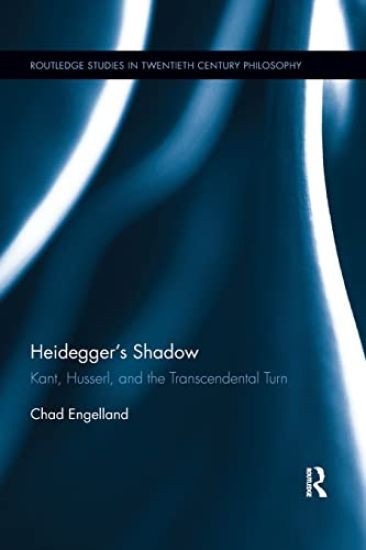
Heidegger's Shadow

Heidegger's Shadow

Chad Engelland

Routledge
2019
nidottu
Heidegger’s Shadow is an important contribution to the understanding of Heidegger’s ambivalent relation to transcendental philosophy. Its contention is that Heidegger recognizes the importance of transcendental philosophy as the necessary point of entry to his thought, but he nonetheless comes to regard it as something that he must strive to overcome even though he knows such an attempt can never succeed. Engelland thoroughly engages with major texts such as Kant and the Problem of Metaphysics, Being and Time, and Contributions and traces the progression of Heidegger’s readings of Kant and Husserl to show that Heidegger cannot abandon his own earlier breakthrough work in transcendental philosophy. This book will be of interest to those working on phenomenology, continental philosophy, and transcendental philosophy.
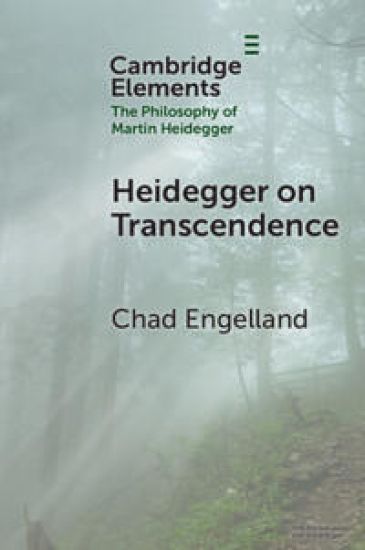
Heidegger on Transcendence

Heidegger on Transcendence

Chad Engelland

Cambridge University Press
2025
pokkari
Heidegger on Transcendence maps the deep ambivalences that attend Heidegger's lasting commitment to the transcendental tradition, construed here broadly to include not only phenomenological but also modern, medieval, and ancient predecessors. It defends Heidegger's commitment by explicating the essential function of the transcendental within his path of thinking and by contextualizing his later comments on transcending the limits of the subject still inherent in the metaphysical language heretofore available to transcendental thought.
Heidegger's Shadow

Heidegger's Shadow

Chad Engelland

Routledge
2017
sidottu
Heidegger’s Shadow is an important contribution to the understanding of Heidegger’s ambivalent relation to transcendental philosophy. Its contention is that Heidegger recognizes the importance of transcendental philosophy as the necessary point of entry to his thought, but he nonetheless comes to regard it as something that he must strive to overcome even though he knows such an attempt can never succeed. Engelland thoroughly engages with major texts such as Kant and the Problem of Metaphysics, Being and Time, and Contributions and traces the progression of Heidegger’s readings of Kant and Husserl to show that Heidegger cannot abandon his own earlier breakthrough work in transcendental philosophy. This book will be of interest to those working on phenomenology, continental philosophy, and transcendental philosophy.
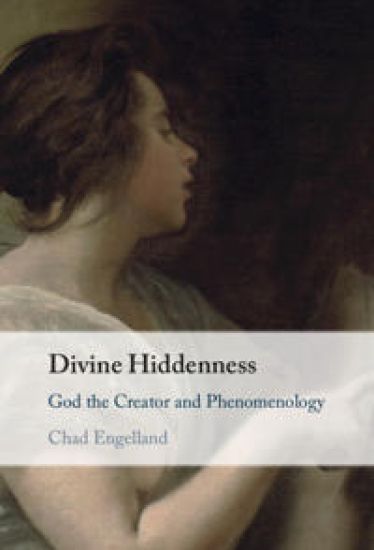
Divine Hiddenness

Divine Hiddenness

Chad Engelland

Cambridge University Press
2026
pokkari
Why is God hidden? How might God be pointed out? In this timely study, Chad Engelland provides an original and compelling account of why God the creator is naturally hidden and how God can be intended. Drawing on phenomenology, philosophy of language, and medieval thought, he explores these questions, arguing that if the God in question is the ultimate source of all things, then hiddenness is necessary. Only a creature, rather than the creator, can appear directly in experience. Nonetheless, God the creator can be named as the ultimate source of all through a deferred ostension, which is a way of establishing the reference to a hidden cause through some manifest effect. Moreover, the deferred ostension can be clarified not only through the phenomenology of absent authors, which is a special case of the problem of other minds, but also via the fulfillment of desire in giving thanks for all.
Divine Hiddenness

Divine Hiddenness

Chad Engelland

Cambridge University Press
2026
sidottu
Why is God hidden? How might God be pointed out? In this timely study, Chad Engelland provides an original and compelling account of why God the creator is naturally hidden and how God can be intended. Drawing on phenomenology, philosophy of language, and medieval thought, he explores these questions, arguing that if the God in question is the ultimate source of all things, then hiddenness is necessary. Only a creature, rather than the creator, can appear directly in experience. Nonetheless, God the creator can be named as the ultimate source of all through a deferred ostension, which is a way of establishing the reference to a hidden cause through some manifest effect. Moreover, the deferred ostension can be clarified not only through the phenomenology of absent authors, which is a special case of the problem of other minds, but also via the fulfillment of desire in giving thanks for all.