Kirjojen hintavertailu. Mukana 11 342 296 kirjaa ja 12 kauppaa.

Kirjahaku

Etsi kirjoja tekijän nimen, kirjan nimen tai ISBN:n perusteella.

13 kirjaa tekijältä Charles Barber

Citizen Outlaw

Citizen Outlaw

Charles Barber

Ecco Press
2020
nidottu
A dramatic narrative account of the life of William Juneboy Outlaw III, whose journey from housing-project youth to ruthless gangland kingpin to change-making community advocate represents a vital next chapter in the ongoing conversation about race and social justice in AmericaWhen he was in his early twenties, William Juneboy Outlaw III was sentenced to eighty-five years in prison for homicide and armed assault. The sentence brought his brief but prolific criminal career as the head of a forty-member cocaine gang in New Haven, Connecticut, to a close. But behind bars, Outlaw quickly became a feared prison "shot caller" with 150 men under his sway.Then everything changed: his original sentence was reduced by sixty years. At the same time, he was shipped to a series of the most notorious federal prisons in the country, where he endured long stints in solitary confinement--and where transformational relationships with a fellow inmate and a prison therapist made him realize that he wanted more for himself.Upon his release, Outlaw took a job at Dunkin' Donuts, volunteered in the New Haven community, and started to rebuild his life. He now is an award-winning community advocate, leading a team of former felons who negotiate truces between gangs on the very streets that he once terrorized. The homicide rate in New Haven has dropped 70 percent in the decade that he's run the team--a drop as dramatic as in any city in the country.Written with exclusive access to Outlaw himself, Charles Barber's Citizen Outlaw is the unforgettable story of how a gang leader became the catalyst for one of the greatest civic crime reductions in America, and an inspiring argument for love and compassion in the face of insurmountable odds
Eccentric Renaissance

Eccentric Renaissance

Charles Barber

OXFORD UNIVERSITY PRESS INC
2024
sidottu
The Byzantine icon has long remained marginal to the study of art's history, only emerging from Giorgio Vasari's condemnation of the gilded, unnatural style of Byzantine painting (maniera greca) when his theories were challenged in the early twentieth century. Eccentric Renaissance focuses on an earlier reaction to Vasari's narrative and discusses three artists who shaped distinct responses to the hegemonic sway of sixteenth-century Italian art. Domenikos Theotokopoulos (more familiarly known as El Greco), Michael Damaskenos, and Georgios Klontzas were contemporary icon painters on the Venetian colony of Crete. Trained in the rich tradition of Cretan painting, these artists differed from their forebears in asserting a self-conscious creativity in their work. They renewed the art of icon painting in the context of Venetian colonialism by reconsidering how their art might address the contemporary world. Deemed eccentric, El Greco's work presented a Greek path contrary to the one promoted in Vasari's history of art. His was an art that was sensual, complex, and difficult. Michael Damaskenos's profound engagement with Venetian painting was mixed with traditional iconic styles, reflecting life in a colony in which Orthodox and Catholic, Greek and Venetian were fluid rather than static descriptors of the self. Georgios Klontzas used his art to confront the horrors of his day. The impending threat of the Ottoman conquest of Crete and the outbreak of plague in 1592 shaped his extraordinary manuscript, Apocalypse and History, that sought to understand these calamities in light of both divine providence and human experience. Each of these artists chose an eccentric point of departure for their work. Greek, colonized, and fearful, they invite us to look again and to look differently at the later sixteenth century.
Comfortably Numb: How Psychiatry Is Medicating a Nation
American doctors dispense approximately 230 million antidepressant prescriptions every year, more than any other class of medication. Charles Barber explores this disturbing phenomenon, examining the ways in which pharmaceutical companies first create the need for a drug and then rush to fill it. Most importantly, he convincingly argues that, without an industry to promote them, non-pharmaceutical approaches are tragically overlooked in favor of an instant cure for all emotional difficulties.Compulsively readable and urgently relevant, Comfortably Numb is an unprecedented account of the impact of psychiatric medications on American culture and on Americans themselves.
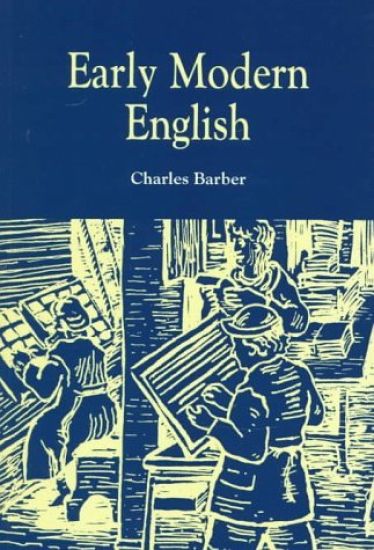
Early Modern English

Early Modern English

Charles Barber

Edinburgh University Press
1997
nidottu
Now available in a completely revised edition, this book describes the English language between the years 1500 and 1700 - the different varieties of the language, the attitudes of its speakers towards it, its pronunciation, vocabulary and grammar. It will be useful to serious students of the history of English and takes full account of those readers who are mainly interested in the literature of the period by providing plenty of references to literary works and authors.
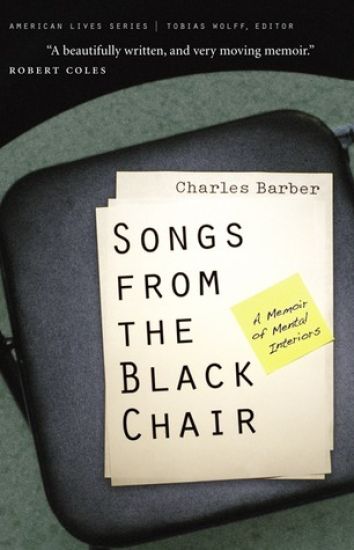
Songs from the Black Chair

Songs from the Black Chair

Charles Barber

University of Nebraska Press
2005
sidottu
Day after day, night after night, the desperate men come and sit in the black chair next to Charles Barber's desk in a basement office at Bellevue and tell of their travails, of prison and AIDS and heroin, of crack and methadone and sexual abuse, and the voices that plague them. In the silence between the stories, amid the peeling paint, musty odour, and flickering fluorescent light, Barber observes that this isn't really where he is supposed to be. How this child of privilege, the product of Andover and Harvard and Columbia, came to find himself at home among the homeless of New York City is just one story Barber tells in Songs from the Black Chair. Interlaced with his memoir, and illuminating the nightmare of mental illness that gripped him after his friend's suicide, are the stories of his confidants at Bellevue and the "mental health" shelters of Manhattan - men so traumatized by the distortions of their lives and minds that only in the chaotic aftermath of 9/11 do they feel in sync with their world. In the intertwined narrative of these troubled lives and his own, Charles Barber brings to shimmering light some of the most disturbing and enduring truths of human nature. Charles Barber is an associate of the Yale Program for Recovery and Community Health, Yale University School of Medicine.
Songs from the Black Chair

Songs from the Black Chair

Charles Barber

University of Nebraska Press
2007
pokkari
Title essay "Songs from the Black Chair" won the 2005 Pushcart Prize."An amazing book. . . . Barber is a gifted writer, and the work he has produced is an important addition to the literature of both mental health and New York City."- The Village Voice."Imaginative and beautifully written, with vivid imagery and wit. . . . Songs from the Black Chair should enjoy a wide audience."- JAMA, Journal of the American Medical Association."For those who work in mental health services, the best teachers are often those who are themselves mentally ill. Thus, personal accounts that bring us closer to the inner maelstrom of mental illness-books such as William Styron's Darkness Visible, Sylvia Nasar's A Beautiful Mind. . . and now Charles Barber's equally eloquent and insightful Songs from the Black Chair-have long made important contributions to the field. . . . As the title suggests, the book is often less a typical memoir than a 'song'-a free-flowing, lyrical, and imaginative story. . . . Barber's ability to convey the experience of mental illness is striking."-The New England Journal of Medicine."[A] perceptive gem"-starred review, Library Journal Recovery Memoir Roundup.“Barber has written a passionate and honest book about those with mental illness. He combines the personal and the political quite subtly. It is also original, which is something to be prized.”--Sue Bond, Metapsychology Online Review"Barber . . . Isn't afraid of words like 'crazy' or 'madness'; he'd rather render his 'clients' as human characters than as case studies. [Barber] relates [their stories] with detailed vitality and with respect for the tellers. As his obsessive-compulsiveness becomes a pathology, Barber evokes in this compelling and artfully crafted book a sort of cinematic tension; that he survived to tell the tale . . . Doesn't lessen the punch. As in first-person mysteries, Barber is alive and, though not unscathed, balanced at book's end."-Publishers Weekly."Barber draws a compelling and compassionate portrait of the struggle for peace and clarity of mind."-Booklist."A beautifully written, and very moving memoir-a story of hope and talent that persists, no matter the tragedies that await any of us at one or another point in our lives."-Robert Coles, James Agee Professor of Social Ethics at Harvard University, Pulitzer Prize–winner, and author of The Spiritual Lives of Children“A complex and sophisticated memoir by a young man who survived a harrowing brush with mental illness and eventually became, by a roundabout route, a mental health professional. His account of his odyssey is compelling, disturbing, many-faceted, and highly imaginative. I’ve never read another book quite like it.”-William Finnegan, author of Cold New World: Growing up in Harder Country and staff writer for The New Yorker“Written from inside the belly of the beast, Charles Barber’s Songs soars like a lovely melody above the din of the world, and in juxtaposition to the silence of those who suffer from mental illness of any sort. Engrossing, perceptive, and elegantly written.”-Carlos Eire, author of Waiting for Snow in Havana and winner of the National Book Award“A valuable, well-written memoir that skillfully interweaves the strands of Barber’s young adult life with his affinity for working with the mentally ill. The author provides many insights.”--Literature, Arts, and Medicine Database“Tobias Wolff, author of the autobiographical This Boy’s Life, selects the memoirs in the University of Nebraska Press’s American Lives series, and what a beautiful choice he’s made in this modest, bittersweet, story of three boys lives that didn’t turn out as expected.”--Wilson Quarterly"Barber writes well, and some of his comments are delightfully insightful." --Psychiatric ServicesDay after day, night after night, the desperate men come and sit in the black chair next to Charles Barber’s desk in a basement office at Bellevue and tell of their travails, of prison and AIDS and heroin, of crack and methadone and sexual abuse, and the voices that plague them. In the silence between the stories, amid the peeling paint, musty odor, and flickering fluorescent light, Barber observes that this isn’t really where he is supposed to be.How this child of privilege, the product of Andover and Harvard and Columbia, came to find himself at home among the homeless of New York City is just one story Barber tells in Songs from the Black Chair. Interlaced with his memoir, and illuminating the nightmare of mental illness that gripped him after his friend’s suicide, are the stories of his confidants at Bellevue and the “mental health” shelters of Manhattan-men so traumatized by the distortions of their lives and minds that only in the chaotic aftermath of 9/11 do they feel in sync with their world. In the intertwined narrative of these troubled lives and his own, Charles Barber brings to shimmering light some of the most disturbing and enduring truths of human nature.Charles Barber is an associate of the Yale Program for Recovery and Community Health, Yale University School of Medicine.

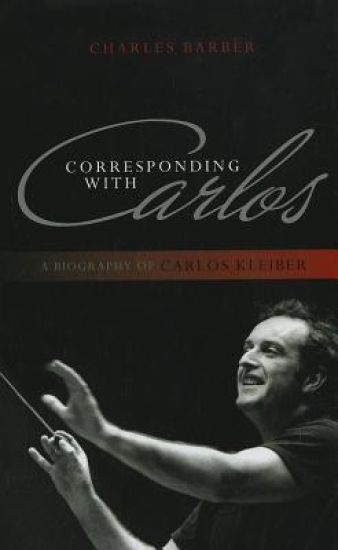
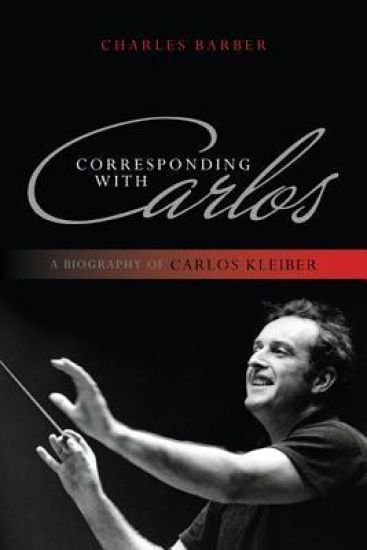
Corresponding with Carlos

Corresponding with Carlos

Charles Barber

Scarecrow Press
2011
sidottu
Carlos Kleiber (1930-2004) was the greatest conductor of his generation. His reputation is legendary, and yet astonishingly, in his five decades on the podium, he conducted only 89 concerts, some 600 opera performances, and produced 12 recordings. How did someone who worked so little compared to his peers achieve so much? Between his relatively small output and well-known aversion to publicity, many came to regard Kleiber as reclusive and remote, bordering on unapproachable. But in 1989 a conducting student at Stanford University wrote him a letter, and an unusual thing occurred: the world-renowned conductor replied. And so began a 15-year correspondence, study, and friendship by mail. Drawing heavily on this decade-and-a-half exchange, Corresponding with Carlos is the first English-language biography of Kleiber ever written. Charles Barber offers unique insights into how Kleiber worked based on their long and detailed correspondence. This biography by one friend of another considers, among other matters, Kleiber's singular aesthetic, his playful and often erudite sense of humor, his reputation for perfectionism, his much-studied baton technique, and the famous concert and opera performances he conducted. Comic and compelling, Corresponding with Carlos explores the great conductor's musical lineage and the contemporary contexts in which he worked. It repudiates myths that inevitably crop up around genius and reflects on Kleiber's contribution to modern musical performance. This biography is ideal for musicians, scholars, and anyone with a special love of the great classical music tradition.
Corresponding with Carlos

Corresponding with Carlos

Charles Barber

Rowman Littlefield
2013
nidottu
Carlos Kleiber (1930-2004) was the greatest conductor of his generation. His reputation is legendary, and yet astonishingly, in his five decades on the podium, he conducted only 89 concerts, some 600 opera performances, and produced 12 recordings. How did someone who worked so little compared to his peers achieve so much? Between his relatively small output and well-known aversion to publicity, many came to regard Kleiber as reclusive and remote, bordering on unapproachable. But in 1989 a conducting student at Stanford University wrote him a letter, and an unusual thing occurred: the world-renowned conductor replied. And so began a 15-year correspondence, study, and friendship by mail. Drawing heavily on this decade-and-a-half exchange, Corresponding with Carlos is the first English-language biography of Kleiber ever written. Charles Barber offers unique insights into how Kleiber worked based on their long and detailed correspondence. This biography by one friend of another considers, among other matters, Kleiber's singular aesthetic, his playful and often erudite sense of humor, his reputation for perfectionism, his much-studied baton technique, and the famous concert and opera performances he conducted. Comic and compelling, Corresponding with Carlos explores the great conductor's musical lineage and the contemporary contexts in which he worked. It repudiates myths that inevitably crop up around genius and reflects on Kleiber's contribution to modern musical performance. This biography is ideal for musicians, scholars, and anyone with a special love of the great classical music tradition.
Peace & Health

Peace & Health

Charles Barber

Octoberworks
2022
pokkari
The story of how the work of one small group of people grew to meet the size of their calling: to ensure that Health Care is a Right, Not a Privilege.Peace & Health is the story behind this improbable effort: the 20-year-old who plants the flag in his small hometown of Middletown, Connecticut; the daughter of a sharecropper, who made her way north during the great migration and becomes the North Star of the drive to transform health in the community; the son of a Jewish migr and pharmacist who breaks from his peers to support the cause; the musician who played in the big bands of the South in the 1930's, who loses his teeth and is now determined to make sure others do not lose theirs; and the college student and future US Senator who helps buy the building so the free clinic would not be shut down permanently. A young nurse-practitioner joins the organization as it expands beyond one Connecticut town, and today, CHC and its Weitzman Institute operate programs across the US, transforming the delivery of health care for populations who have been ignored.
Peace & Health

Peace & Health

Charles Barber

Octoberworks
2022
pokkari
The story of how the work of one small group of people grew to meet the size of their calling: to ensure that Health Care is a Right, Not a Privilege.Peace & Health is the story behind this improbable effort: the 20-year-old who plants the flag in his small hometown of Middletown, Connecticut; the daughter of a sharecropper, who made her way north during the great migration and becomes the North Star of the drive to transform health in the community; the son of a Jewish migr and pharmacist who breaks from his peers to support the cause; the musician who played in the big bands of the South in the 1930's, who loses his teeth and is now determined to make sure others do not lose theirs; and the college student and future US Senator who helps buy the building so the free clinic would not be shut down permanently. A young nurse-practitioner joins the organization as it expands beyond one Connecticut town, and today, CHC and its Weitzman Institute operate programs across the US, transforming the delivery of health care for populations who have been ignored.
Paz y Salud

Paz y Salud

Charles Barber

Octoberworks
2023
sidottu
La historia de c mo el trabajo de un peque o grupo de personas creci hasta alcanzar el tama o de su vocaci n: garantizar que el cuidado de la salud sea un derecho, no un privilegio.Salud y Paz es la historia que hay detr s de este improbable esfuerzo: el joven de 20 a os que planta la bandera en su peque a ciudad natal de Middletown, Connecticut; la hija de jornalero que se abri camino hacia el norte durante la gran migraci n y se convierte en la estrella polar del impulso para transformar el cuidado de la salud en la comunidad; el hijo de un emigrante jud o y farmaceuta que se separa de sus compa eros para apoyar la causa; el m sico que tocaba en las grandes bandas del Sur en los a os 30, que pierde sus dientes y ahora est decidido a asegurarse de que otros no pierdan los suyos; y el estudiante universitario y futuro senador estadounidense que ayuda a comprar el edificio para que la cl nica gratuita no cierre definitivamente. Una joven enfermera practicante se une a la organizaci n cuando sta se expande m s all de un pueblo de Connecticut y, hoy en d a, el CHC y su Instituto Weitzman llevan a cabo programas en todo EE.UU., transformando la prestaci n de cuidados de salud para las poblaciones que han sido ignoradas.
In the Blood: How Two Outsiders Solved a Centuries-Old Medical Mystery and Took on the US Army
2024 PEN America E.O. Wilson Literary Science Writing Award Finalist The "high-stakes" true story of how an absent-minded inventor and a down-on-his-luck salesman joined forces to create a once-in-a-generation lifesaving product: "Suspenseful storytelling helps us see and feel the struggle and frustration, the sweat and tears . . . Inspiring" (Robert Kolker, #1 New York Times bestselling author of Hidden Valley Road). At the 1993 Battle of Mogadishu, dramatized by the popular film Black Hawk Down, the majority of soldiers who died were killed instantly or bled to death before they could reach an operating table. This tragedy reinforced the need for a revolutionary treatment that could transform trauma medicine. So, when Frank Hursey and Bart Gullong--who had no medical or military experience--discovered that a cheap, crushed rock called zeolite had blood-clotting properties, they brought it to the military's attention. The Marines and the Navy adopted the resulting product, QuikClot, immediately. The Army, however, resisted. It had two products of its own being developed to prevent excessive bleeds, one of which had already cost tens of millions of dollars. The other, "Factor Seven," had a more dangerous complication: its side effects could be deadly. Unwilling to let its efforts end in failure--and led by the highly influential surgeon Colonel John Holcomb--the Army set out to smear QuikClot's reputation. Over the course of six years, Hursey and Gullong engaged in an epic struggle with Holcomb for recognition. Ultimately, a whistle-blower inside the Army challenged the Army's embrace of Factor Seven, which resulted in a massive lawsuit led by the U.S. Department of Justice. The lawsuit focused further attention on the financial ties between the pharmaceutical company that produced Factor Seven and Holcomb's research institute. By withholding QuikClot--which later became the medical miracle of the Iraq War--and in the use of Factor Seven with its known, life-threatening risks of heart attacks and strokes, the lives of countless soldiers were imperiled. Using deep reportage and riveting prose, In the Blood recounts this little-known David-and-Goliath story of corruption, greed, and power within the military--and the devastating consequences of unchecked institutional arrogance.