Kirjojen hintavertailu. Mukana 12 390 323 kirjaa ja 12 kauppaa.

Kirjahaku

Etsi kirjoja tekijän nimen, kirjan nimen tai ISBN:n perusteella.

24 kirjaa tekijältä Charles Bowden

The Charles Bowden Reader

The Charles Bowden Reader

Charles Bowden

University of Texas Press
2010
pokkari
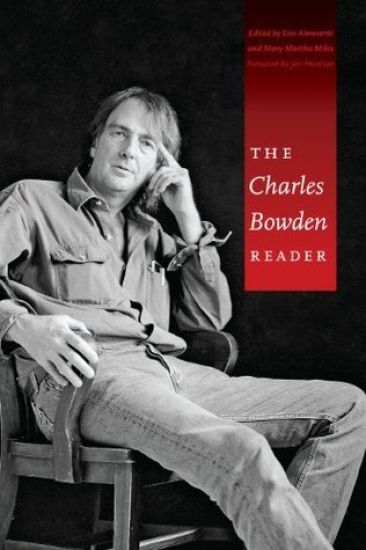
“I will make bold to say that Bowden is America’s most alarming writer. Just when you think you’ve heard it all you learn you haven’t in the most pungent manner possible. . . . With The Charles Bowden Reader in hand you get a taste of it all, and any literate resident or visitor should want this book. It will lead them back to a close, alarming reading of the entire oeuvre. It is to ride in a Ferrari without brakes. There’s lots of oxygen but no safe way to stop. . . . Read him at your risk. You have nothing to lose but your worthless convictions about how things are.” -Jim Harrison, from the forewordFrom his first book, Killing the Hidden Waters, to his most recent, Murder City: Cuidad JuÁrez and the Global Economy's New Killing Fields, Charles Bowden has been sounding an alarm about the rapacious appetites of human beings and the devastation we inflict on the natural world we arrogantly claim to possess. His own corner of the world, the desert borderlands between the United States and Mexico, is Bowden's prime focus, and through books, magazine articles, and newspaper journalism he has written eloquently about key issues roiling the border-drug-related violence that is shredding civil society, illegal immigration and its toll on human lives and the environment, destruction of fragile ecosystems as cities sprawl across the desert and suck up the limited supplies of water.This anthology gathers the best and most representative writing from Charles Bowden's entire career. It includes excerpts from his major books-Killing the Hidden Waters, Blue Desert, Desierto: Memories of the Future, Blood Orchid,Blues for Cannibals, A Shadow in the City, Inferno, Exodus, and Some of the Dead Are Still Breathing-as well as articles that appeared in Esquire, Harper's, Mother Jones, and other publications. Imbued with Bowden's distinctive rhythm and lyrical prose, these pieces also document his journey of exploration-a journey guided, in large part, by the question posed in Some of the Dead Are Still Breathing: "How do we live a moral life in a culture of death?" This is no metaphor; Bowden is referring to the people, history, animals, and ecosystems that are being extinguished in the onslaught of twenty-first-century culture.The perfect introduction to his work, The Charles Bowden Reader is also essential for those who know him well and want to see the whole panorama of his passionate, intense writing.
Inferno

Inferno

Charles Bowden

University of Texas Press
2006
sidottu
One of America's foremost environmental writers joins with an acclaimed landscape photographer to create an unmatched portrait of the Sonoran Desert in all its harsh beauty. Winner, Southwest Book Award, Border Regional Library Association, 2007 Runner-up, Honorable Mention, Orion Book Award, 2007Charles Bowden has been an outspoken advocate for the desert Southwest since the 1970s. Recently his activism helped persuade the U.S. government to create the Sonoran Desert National Monument in southern Arizona. But in working for environmental preservation, Bowden refuses to be one who "outline[s] something straightforward, a manifesto with clear rules and a set of plans for others to follow." In this deeply personal book, he brings the Sonoran Desert alive, not as a place where well-meaning people can go to enjoy "nature," but as a raw reality that defies bureaucratic and even literary attempts to define it, that can only be experienced through the senses.Inferno burns with Charles Bowden's passion for the desert he calls home. "I want to eat the dirt and lick the rock. Or leave the shade for the sun and feel the burning. I know I don't belong here. But this is the only place I belong," he says. His vivid descriptions, complemented by Michael Berman's acutely observed photographs of the Sonoran Desert, make readers feel the heat and smell the dryness, see the colors in earth and sky, and hear the singing of dry bones across the parched ground.Written as "an antibiotic" during the time Bowden was lobbying the government to create the Sonoran Desert National Monument, Inferno repudiates both the propaganda and the lyricism of contemporary nature writing. Instead, it persuades us that "we need these places not to remember our better selves or our natural self or our spiritual self. We need these places to taste what we fear and devour what we are. We need these places to be animals because unless we are animals we are nothing at all. That is the price of being a civilized dude."
Exodus/Éxodo

Exodus/Éxodo

Charles Bowden

University of Texas Press
2008
sidottu
Immigration has become one of the most important and contentious issues of our time. But even as policy makers in the United States and Mexico argue over what to do about the half million or more Mexicans who cross the border illegally each year to work in the United States, one fact has become indisputable. Illegal immigration has enhanced the lives of poor people more than any policy attempted by either the U.S. or the Mexican governments. Immigrants sent home $23 billion dollars in 2006 alone, rivaling what Mexico earned from selling oil. But the human cost of migration is equally high. Border crossers risk injury, attack, rape, and death, while undocumented workers often toil under dangerous and exploitative conditions in the United States. These harsh realities constitute the heart of Exodus/Éxodo, a powerful collaboration between writer Charles Bowden and photographer Julián Cardona that puts a human face on the issue of illegal immigration. Expanding on their award-winning 2006 Mother Jones article titled "Exodus: Border-Crossers Forge a New America," Bowden and Cardona take us to border towns, in which impoverished men and women hire "coyotes" to get them across the line; to Ciudad Juárez, where hundreds of young women maquiladora workers have been murdered and their families still seek justice; to Minutemen camps along the border, where citizen vigilantes keep watch; to New Orleans, North Carolina, and California, where migrants find back-breaking work in construction, agriculture, and other industries; to protest marches, as immigrants assert their right to stay in the United States; and to villages in Mexico, in which remitted dollars are building homes as lavish as the dreams that fuel the migrations.
Dreamland

Dreamland

Charles Bowden

University of Texas Press
2010
pokkari
This striking work of graphic journalism pairs previously unpublished creative nonfiction by Charles Bowden with provocative scratchboard drawings by Alice Leora Briggs to create a vignette of daily life in JuÁrez, Mexico, in all its surreal brutality and beauty. Winner, Southwest Book Award, Border Regional Library Association, 2011What do you call a place where people are tortured and murdered and buried in the backyard of a nice, middle-class condo? Where police work for the drug cartels? Where the meanings of words such as "border" and "crime" and "justice" are emptying out into the streets and flowing down into the sewers? You call it JuÁrez or, better yet, Dreamland.Realizing that merely reporting the facts cannot capture the massive disintegration of society that is happening along the border, Charles Bowden and Alice Leora Briggs use nonfiction and sgraffito drawings to depict the surreality that is Ciudad JuÁrez, Mexico. Starting from an incident in which a Mexican informant for the U.S. Department of Homeland Security murdered a man while U.S. agents listened in by cell phone-and did nothing to intervene-Bowden forcefully and poetically describes the breakdown of all order in JuÁrez as the power of the drug industry outstrips the power of the state. Alice Leora Briggs's drawings-reminiscent of Northern Renaissance engraving and profoundly disquieting-intensify the reality of this place where atrocities happen daily and no one, neither citizens nor governments, openly acknowledges them.With the feel of a graphic novel, the look of an illuminated medieval manuscript, and the harshness of a police blotter, Dreamland captures the routine brutality, resilient courage, and rapacious daily commerce along the U.S.-Mexico border.
Killing the Hidden Waters

Killing the Hidden Waters

Charles Bowden

University of Texas Press
1985
pokkari
In the quarter-century since his first book, Killing the Hidden Waters, was published in 1977, Charles Bowden has become one of the premier writers on the American environment, rousing a generation of readers to both the wonder and the tragedy of humanity's relationship with the land. Revisiting his earliest work with a new introduction, "What I Learned Watching the Wells Go Down," Bowden looks back at his first effort to awaken people to the costs and limits of using natural resources through a simple and obvious example-water. He drives home the point that years of droughts, rationing, and even water wars have done nothing to slake the insatiable consumption of water in the American West. Even more timely now than in 1977, Killing the Hidden Waters remains, in Edward Abbey's words, "the best all-around summary I've read yet, anywhere, of how our greed-driven, ever-expanding urban-industrial empire is consuming, wasting, poisoning, and destroying not only the resource basis of its own existence, but also the vital, sustaining basis of life everywhere."
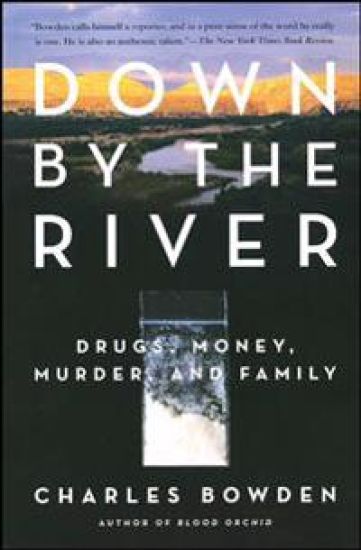
Down by the River

Down by the River

Charles Bowden

Simon and Schuster
2004
nidottu
The acclaimed journalist offers readers an illuminating tour of the drug war, shining light into the dark, troubling recesses of drug lords, high-level corruption, and ultra-violence that respects no borders. Reprint. 20,000 first printing.
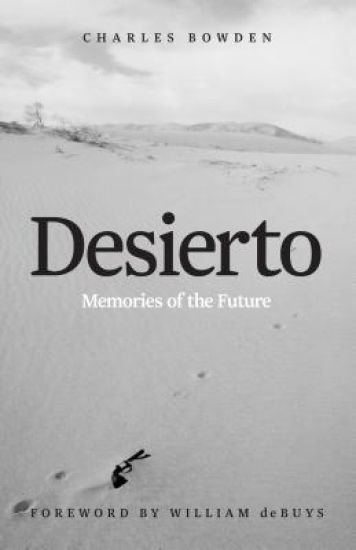
Desierto

Desierto

Charles Bowden

University of Texas Press
2018
nidottu
"A dark, troubling vision of life in the desert, defined broadly; of mountain lions and drug kingpins, Mexican hopes and Indian feuds."—Los Angeles Times"In these powerful epic tales of the Sonora Desert, Bowden peoples the harsh land on both sides of the US-Mexican border with saints and sinners, but his enduring hero is the desert itself."—Kirkus Reviews
Red Line

Red Line

Charles Bowden

University of Texas Press
2018
nidottu
“At its best, Red Line can read like an original synthesis of Peter Matthiessen and William Burroughs . . . a brave and interesting book.” -David Rieff, Los Angeles Times Book Review“Charles Bowden’s Red Line is a look at America through the window of the southwest. His vision is as nasty, peculiar, brutal, as it is intriguing and, perhaps, accurate. Bowden offers consciousness rather than consolation, but in order to do anything about our nightmares we must take a cold look and Red Line casts the coldest eye in recent memory.” -Jim HarrisonOne of Charles Bowden's earliest books, Red Line powerfully conveys a desert civilization careening over the edge—and decaying at its center. Bowden's quest for the literal and figurative truth behind the assassination of a murderous border-town drug dealer becomes a meditation on the glories of the desert landscape, the squalors of the society that threatens it, and the contradictions inherent in trying to save it.
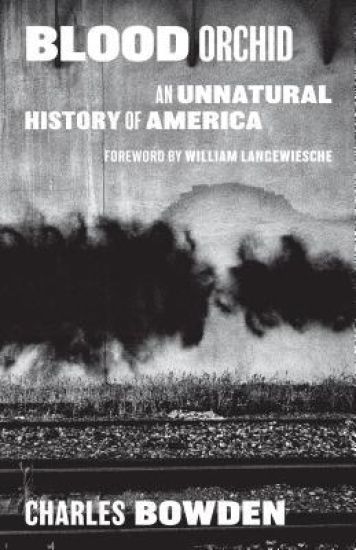
Blood Orchid

Blood Orchid

Charles Bowden

University of Texas Press
2018
nidottu
Through stark observations and visceral experiences, Blood Orchid begins Charles Bowden’s dizzying excavation of the brutal, systemic violence and corruption at the roots of American society. Like a nightmarish fever dream that turns out to be our own reality, Bowden visits dying friends in skid row apartments in Los Angeles, traverses San Francisco byways lined with clubs and joints, and roams through village bars and streets in the Sierra Madre mountains. In these wanderings resides a yearning for the understanding of past and present sins, the human penchant for warfare, abuse, and oppression, and the true war between humanity, the industrialized world, and the immense tolls of our shared land. Deeply personal, hauntingly prophetic, and bracingly sharp, the start to Bowden’s harrowed quest to unearth our ugly truths remains strikingly poignant today.
Blues for Cannibals

Blues for Cannibals

Charles Bowden

University of Texas Press
2018
nidottu
Cultivated from the fierce ideas seeded in Blood Orchid, Blues for Cannibals is an elegiac reflection on death, pain, and a wavering confidence in humanity’s own abilities for self-preservation. After years of reporting on border violence, sex crimes, and the devastation of the land, Bowden struggles to make sense of the many ways in which we destroy ourselves and whether there is any way to survive. Here he confronts a murderer facing execution, sex offenders of the most heinous crimes, a suicidal artist, a prisoner obsessed with painting portraits of presidents, and other people and places that constitute our worst impulses and our worst truths. Painful, heartbreaking, and forewarning, Bowden at once tears us apart and yearns for us to find ourselves back together again.
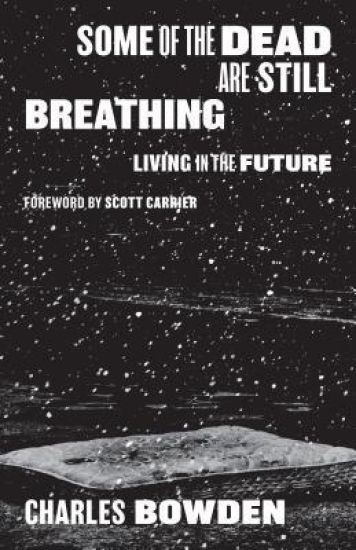
Some of the Dead Are Still Breathing

Some of the Dead Are Still Breathing

Charles Bowden

University of Texas Press
2018
nidottu
The third book in Charles Bowden’s “accidental trilogy” that began with Blood Orchid and Blues for Cannibals, Some of the Dead Are Still Breathing attempts to resolve the overarching question: “How can a person live a moral life in a culture of death?” As humanity moves further into the twenty-first century, Bowden continues to interrogate our roles in creating the ravaged landscapes and accumulated death that still surround us, as well as his own childhood isolation, his lust for alcohol and women, and his waning hope for a future. We witness post-Katrina New Orleans and terrorist-bombed Bali; we encounter our shared actions with the animal world and the desirous need for consumption; we see the clash and erosion of our physical and figurative borders, the savagery of our own civilization. A man of his time and out of time, Bowden seeks acceptance and a will to endure what may lie ahead.
Mezcal

Mezcal

Charles Bowden

University of Texas Press
2020
nidottu
Praise for Mezcal:"Mezcal is also a lyrical meditation upon the ultimate strength of the land, specifically the desert Southwest, and how that land prevails and endures despite every effort of modern industry and development to rape and savage it in the name of progress. Mezcal lingers in the mind as only the very best books manage to do."-Harry Crews"The author . . . excavates his own tormented life-and its relation to the land he loves-in a series of powerful, imagistic autobiographical essays. Like the desert he cherishes, this memoir is harsh yet lovely, full of sour self-truth. . . . A potent presentation of the wounds of one man's life, packed with indelible impressions; but there's little healing here, making this a bitter if beautiful read."-Kirkus Review "In Mezcal . . . Bowden drops the journalistic veil, exploring the ecology of his interior landscape at least as thoroughly as the changing scenery that surrounds him. . . . Others-Aldo Leopold, Edward Abbey-have already staked inviolate claims on the Southwestern deserts. But Bowden owns the complex terrain where, like a mezcal-inspired mirage, the Sonoran sun-belt overlaps the gray convolutions of the American mind."-Los Angeles Times
Jericho

Jericho

Charles Bowden

University of Texas Press
2020
sidottu
When Charles Bowden died in 2014, he left behind an archive of unpublished manuscripts. Jericho marks the fifth installment in his venerable “Unnatural History of America” sextet. In it he invokes the cycles of destruction and rebirth that have defined the ancient biblical city over millennia. From the ruins of Jericho’s walls Bowden reflects on the continuum of war and violence-the many conquests of the Americas; the US-Mexican War; the Vietnam War; and the ongoing militarization of our southern border-to argue against the false promise of security that is offered when men “build that wall.” Walls-both real and imagined-will always come tumbling down.Along the way, Bowden tells stories of loss and violence, like that of David Hartley, who mysteriously vanishes on Falcon Lake; of murdered drug runners and their cartel bosses; and of a haunted sicario, or hitman, who is running from his past and compulsively confesses his sins as he searches for an absolution that will never come. Set against these scenes of trauma and violence are Bowden’s gorgeous meditations on nature: dancing cranes, soaring eagles, winding paths that traverse mountains, lakes, and deserts. And threaded throughout are the heroic narratives of men like Martin Luther King Jr., who defied the boundaries that surrounded him and was able to reshape the arc of history. Jericho is a remarkable affirmation of our shared humanity and a timely rejection of violence and nationalism by one of our most prophetic writers working at the height of his powers.
Sonata

Sonata

Charles Bowden

University of Texas Press
2020
sidottu
"I believe every sunrise and I remember the smell of wet grass, the color of robins, and rustle of leaves on the big oaks that outlive nations, all this comes with each sunrise."Sonata marks the sixth and final installment of Charles Bowden’s towering “Unnatural History of America” series. While his earlier volumes were suffused with violence and war, Bowden offers here a celebration of rebirth and regrowth. Rendered in Bowden's inimitable style, more prose poetry than reportage, he evokes panoramas that contain the potential for respite and offer a state of grace all but lost in the endless wars of man.Bowden travels back in time to the worlds of artists Francisco Goya and Vincent van Gogh, the latter painting furiously against encroaching madness. “Van Gogh tries to dream a life of color,” writes Bowden. “Powder blue sheds, yellow stubble, pink skies-but the fears and dark things drag him down.” As Bowden’s vivid prose wrestles with the madness of the world, van Gogh’s paintings represent an act of resistance, ultimately unsuccessful, against depression and suicide.Moving from the vibrant hues of van Gogh’s painted gardens to America’s southern border, Bowden returns once more to the Mexican asylum run by "El Pastor," Jose Antonio Galvan, who was first introduced to readers of the sextet in Jericho. Here, too, is the dream of a garden that will be planted in the desert, a promise of regeneration in a world gone mad. Poetic, elegiac, and elliptical, Sonata is the final, captivating book of Bowden’s monumental career.
The Red Caddy

The Red Caddy

Charles Bowden

University of Texas Press
2020
nidottu
A passionate advocate for preserving wilderness and fighting the bureaucratic and business forces that would destroy it, Edward Abbey (1927–1989) wrote fierce, polemical books such as Desert Solitaire and The Monkey Wrench Gang that continue to inspire environmental activists. In this eloquent memoir, his friend and fellow desert rat Charles Bowden reflects on Abbey the man and the writer, offering up thought-provoking, contrarian views of the writing life, literary reputations, and the perverse need of critics to sum up “what he really meant and whether any of it was truly up to snuff.”The Red Caddy is the first literary biography of Abbey in a generation. Refusing to turn him into a desert guru, Bowden instead recalls the wild man in a red Cadillac convertible for whom liberty was life. He describes how Desert Solitaire paradoxically “launched thousands of maniacs into the empty ground” that Abbey wanted to protect, while sealing his literary reputation and overshadowing the novels that Abbey considered his best books. Bowden also skewers the cottage industry that has grown up around Abbey’s writing, smoothing off its rougher (racist, sexist) edges while seeking “anecdotes, little intimacies . . . pieces of the True Beer Can or True Old Pickup Truck.” Asserting that the real essence of Abbey will always remain unknown and unknowable, The Red Caddy still catches gleams of “the fire that from time to time causes a life to become a conflagration.”
Murder City

Murder City

Charles Bowden

Nation Books
2011
pokkari
Ciudad Juárez lies just across the Rio Grande from El Paso, Texas. A once-thriving border town, it now resembles a failed state. Infamously known as the place where women disappear, its murder rate exceeds that of Baghdad or Mogadishu. In Murder City , Charles Bowden has written an extraordinary account of what happens when a city disintegrates. Interweaving stories of its inhabitants- a raped beauty queen, a repentant hit man, a journalist fleeing for his life- with a broader meditation on the town's descent into anarchy, Bowden reveals how Juárez's culture of violence will not only worsen but inevitably spread north.
Zeke's Guide to Travel and Life

Zeke's Guide to Travel and Life

Charles Bowden

Charles Bowden
2021
pokkari
C. Bowden has traveled extensively in Asia, the Middle East, Latin America, North America, North Africa, Europe, and Australia over the past fifty years. In the course of which it was his duty, as biographer, to keep an eye on his careless friend Zeke, who otherwise might have hurt himself. Since their astonishing adventures together, he has written numerous books-one of the most intrepid and insightful travel writers of our time. In this book of travel reportage, with graphic honesty and engaging humor, he describes several trips taken, outwardly and inwardly, through Mexico. Also, highlights from their stays in the U.S. West between expeditions.This is the first book of its kind. Essentially, it's a travel narrative full of places, incidents, and people. Plus, the places visited are rated as to their beauty or novelty, as in some travel guidebooks. Plus, a number of topics that came into Zeke's thoughts in response to places and peoples are briefly explored. Plus, reference numbers access an appendix of Zeke's travel problems with their solutions, which grew out of the incidents, rotten or otherwise, herein depicted. Practical advice backed up with personal anecdotes against lushly landscaped backgrounds. Travel tips which go beyond any others made widely available to shoestring travelers.An exceptional travel book in every way, it tells of a journey mostly on foot or using local transport. A journey fueled by unabated curiosity, anda need to see, hear and feel, close up and firsthand. It features direct experience undimmed by expectations or old assumptions. This uniquebook is itself a fascinating realm in which the adventurous are invited to travel.
Dakotah

Dakotah

Charles Bowden

UNIVERSITY OF TEXAS PRESS
2026
nidottu
“On a bend, I will see it, a piece of ground off to the side. I will know the feel of this place: the leaves stir slowly on the trees, dry air smells like dust, birds dart and the trails are made by beasts living free.” When award-winning author Charles Bowden died in 2014, he left behind a trove of unpublished manuscripts. Dakotah marks the landmark publication of the first of these texts, and the fourth installment in his acclaimed “Unnatural History of America.” Bowden uses America’s Great Plains as a lens—sometimes sullied, sometimes shattered, but always sharp—for observing pivotal moments in the lives of anguished figures, including himself. In scenes that are by turns wrenching and poetic, Bowden describes the Sioux’s forced migrations and rebellions alongside his own ancestors’ migrations from Europe to Midwestern acres beset by unforgiving winters. He meditates on the lives of his resourceful mother and his philosophical father, who rambled between farm communities and city life. Interspersed with these images are clear-eyed, textbook-defying anecdotes about Lewis and Clark, Daniel Boone, and, with equal verve, twentieth-century entertainers “Pee Wee” Russell, Peggy Lee, and other musicians. The result is a kaleidoscopic journey that penetrates the senses and redefines the notion of heartland. Dakotah is a powerful ode to loss from one of our most fiercely independent writers.