Kirjojen hintavertailu. Mukana 12 595 353 kirjaa ja 12 kauppaa.

Kirjahaku

Etsi kirjoja tekijän nimen, kirjan nimen tai ISBN:n perusteella.

655 kirjaa tekijältä Charles Darwin

The Autobiography of Charles Darwin: 1809-1882

The Autobiography of Charles Darwin: 1809-1882

Charles Darwin

W. W. Norton Company
1993
nidottu
Charles Darwin's Autobiography was first published in 1887, five years after his death. It was a bowdlerized edition: Darwin's family, attempting to protect his posthumous reputation, had deleted all the passages they considered too personal or controversial. The present complete edition did not appear until 1959, one hundred years after the publication of The Origin of Species. Upon its appearance, Loren Eiseley wrote: "No man can pretend to know Darwin who does not know his autobiography. Here, for the first time since his death, it is presented complete and unexpurgated, as it exists in the family archives. It will prove invaluable to biographers and cast new light on the personality of one of the world's greatest scientists. Nora Barlow, Darwin's granddaughter, has proved herself a superb editor. Her own annotations make fascinating reading." The daring and restless mind, the integrity and simplicity of Darwin's character are revealed in this direct and personal account of his life--his family, his education, his explorations of the natural world, his religion and philosophy. The editor has provided page and line references to the more important restored passages, and previously unpublished notes and letters on family matters and on the controversy between Samuel Butler appear in an appendix.
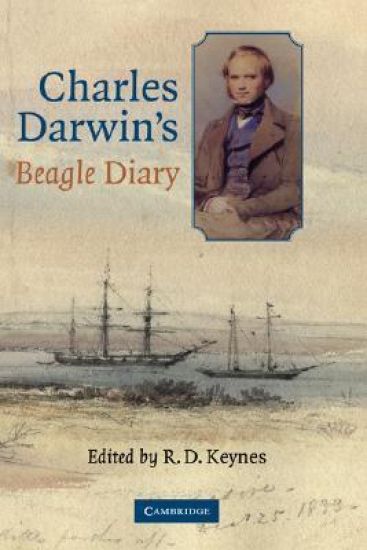
Charles Darwin's Beagle Diary

Charles Darwin's Beagle Diary

Charles Darwin

Cambridge University Press
2001
pokkari
On 27th December 1831, HMS Beagle set out from Plymouth under the command of Captain Robert Fitzroy on a voyage that lasted nearly 5 years. The purpose of the trip was to complete a survey of the southern coasts of South America, and afterwards to circumnavigate the globe. The ship's geologist and naturalist was Charles Darwin. Darwin kept a diary throughout the voyage in which he recorded his daily activities, not only on board the ship but also during the several long journeys that he made on horseback in Patagonia and Chile. His entries tell the story of one of the most important scientific journeys ever made with matchless immediacy and vivid descriptiveness.
The Correspondence of Charles Darwin: Volume 17, 1869

The Correspondence of Charles Darwin: Volume 17, 1869

Charles Darwin

Cambridge University Press
2009
sidottu
'I have always maintained that, excepting fools, men did not differ much in intellect, only in zeal & hard work; and I still think there is an eminently important difference'. Throughout 1869, Darwin continued to collect data for his two most significant books after Origin: The Descent of Man and Expression of the Emotions. Explorers, diplomats, and missionaries all over the world were politely encouraged to investigate, for example, how emotions such as surprise, anger and shame were expressed in different cultures. As Darwin's research on human evolution neared completion, he learned that Alfred Russel Wallace, the co-discoverer of the theory, had begun to raise questions about its application to certain aspects of human development, attributing these to the action of a 'higher power'. In his correspondence, Wallace alluded to his belief in spiritualism, which he fully believed to be open to scientific investigation, but which gave Darwin much pause.
The Correspondence of Charles Darwin: Volume 6, 1856–1857

The Correspondence of Charles Darwin: Volume 6, 1856–1857

Charles Darwin

Cambridge University Press
1990
sidottu
This volume covers the culmination of Darwin's work on species. From early in 1856, when he was persuaded that the time had come to publish an account of his heterodox theories, through 1857, Darwin's letters document the labour involved in composing his 'big species book', his zest for research, and his unflagging determination to succeed. As always, old friends and more recent acquaintances were drawn into the project. Darwin writes for the first time to Alfred Russel Wallace seeking specimens of Malayan fowls. Joseph Dalton Hooker is his sounding-board for botanical speculations and Thomas Henry Huxley soon takes up a similar role in matters of comparative anatomy and embryology. William Bernhard Tegetmeier is the provider of pigeons and poultry and Asa Gray dispatches from Massachusetts invaluable botanical data. Darwin fully exploits his gift for drawing the best from his correspondents and, collectively, their letters provide a remarkable survey of what was - and was not - believed about the nature and origin of species in the middle years of the nineteenthcentury.
The Correspondence of Charles Darwin: Volume 1, 1821–1836

The Correspondence of Charles Darwin: Volume 1, 1821–1836

Charles Darwin

Cambridge University Press
1985
sidottu
This volume inaugurates a complete edition of The Correspondence of Charles Darwin. For the first time full authoritative texts of Darwin’s letters are available, edited according to modern textual editorial principles and practice. The first volume of the edition contains the letters of the years 1821–1836. They begin with one written to Darwin at the age of twelve and continue through his school days at Shrewsbury, his two years as a medical student at Edinburgh, the undergraduate years at Cambridge, and his five years of exploration and learning during the voyage of the Beagle. These were Darwin’s years of initiation and preparation for a life of science. In the earliest letters Darwin appears already keenly interested in natural history and an avid collector of minerals, plants, marine invertebrates, and insects - especially beetles. The letters of the succeeding years tell the story of the young Darwin’s development up to his return to England when, at the age of twenty-seven, he was received as a colleague by Charles Lyell, Adam Sedgwick, and other leading scientists, who had already heard of his discoveries and observations during the Beagle voyage.
The Correspondence of Charles Darwin: Volume 2, 1837–1843

The Correspondence of Charles Darwin: Volume 2, 1837–1843

Charles Darwin

Cambridge University Press
1987
sidottu
This is the second volume of the complete edition of The Correspondence of Charles Darwin. For the first time full authoritative texts of Darwin’s letters are available, edited according to modern textual editorial principles and practice. The letters in this volume were written during the seven years following Darwin’s return to England from the Beagle voyage. It was a period of extraordinary activity and productivity in which he became recognised as a naturalist of outstanding ability, as an author and editor, and as a professional man with official responsibilities in several scientific organisations. During these years he published two books and fifteen papers and also organised and superintended the publication of the Zoology of the Voyage of HMS Beagle, for which he described the locations of the fossils and the habitats and behaviour of the living species he had collected. Busy as he was with scientific activities, Darwin found time to re-establish family ties and friendships, and to make new friends among the naturalists with whom his work brought him into close contact. In November 1838, two years after his return Darwin became engaged to his cousin, Emma Wedgwood, whom he subsequently married.
The Correspondence of Charles Darwin: Volume 3, 1844–1846

The Correspondence of Charles Darwin: Volume 3, 1844–1846

Charles Darwin

Cambridge University Press
1988
sidottu
This is the third volume of the complete edition of The Correspondence of Charles Darwin. For the first time full authoritative texts of Darwin's letters are available, edited according to modern textual editorial principles and practice. The letters in this volume were written during the years 1844–6. By 1844 Darwin had become an established figure within the circle of London naturalists and his life at Down had assumed the regularity that the responsibility for a thriving and growing household entailed. Despite his move to rural Kent, Darwin was not isolated, and this volume shows how frequent were his trips to London and further afield, how regular his meetings with his scientific colleagues, and how extensive his network of correspondents.
The Correspondence of Charles Darwin: Volume 4, 1847–1850

The Correspondence of Charles Darwin: Volume 4, 1847–1850

Charles Darwin

Cambridge University Press
1989
sidottu
This is the fourth volume of the complete edition of The Correspondence of Charles Darwin. For the first time full authoritative texts of Darwin’s letters are available, edited according to modern textual editorial principles and practice. This volume covers the first years of Darwin’s study of the structure and systematics of barnacles: work that involved a worldwide search for specimens, detailed microscopic investigations, a consideration of the theoretical assumptions underlying classification schemes, and the solution of practical problems of zoological nomenclature. Darwin’s convictions about the nature and origin of species influenced his observations and conclusions and provided insights that led to some remarkable discoveries. Throughout this period Darwin also maintained his involvement in major geological debates, as shown by important exchanges with Charles Lyell, Robert Chambers, James Dwight Dana, Bernhard Studer, and others. The letters to Darwin include Joseph Dalton Hooker’s descriptions of his dramatic and frequently dangerous travels through previously closed regions of Sikkim and Tibet.
The Correspondence of Charles Darwin: Volume 5, 1851–1855

The Correspondence of Charles Darwin: Volume 5, 1851–1855

Charles Darwin

Cambridge University Press
1990
sidottu
The correspondence in this volume reveals the two sides of Darwin’s life in a new intensity. It opens with a family tragedy in the death of Darwin’s oldest and best loved daughter, Anne, and goes on to show how Darwin sought relief from his loss through work, with a single-minded but increasingly weary commitment to the completion of his cirripede monographs. In September 1854, as soon as the final proofs of the last barnacle volume had been returned to the printer, Darwin threw himself into a resumption of his species work. He followed up old ideas by initiating new experiments and establishing a worldwide correspondence that encompassed geographical distribution, variation, and plant and animal breeding. The wealth of letters through 1855 makes evident the frenzy of intellectual activity that followed Darwin’s terse announcement in his diary: ‘Sept. 9th (1854) began sorting notes for Species Theory …’
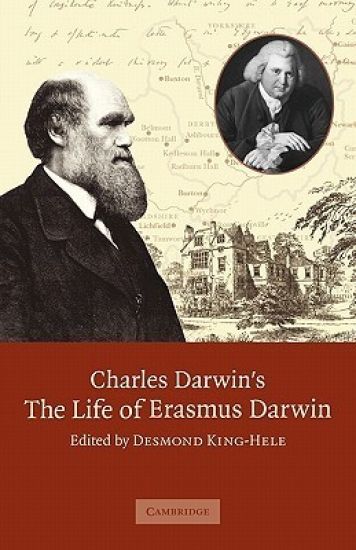
Charles Darwin's 'The Life of Erasmus Darwin'

Charles Darwin's 'The Life of Erasmus Darwin'

Charles Darwin

Cambridge University Press
2011
pokkari
Charles Darwin's book about his grandfather, The Life of Erasmus Darwin, is curiously fascinating. Before publication in 1879, it was shortened by 16%, with several of the cuts directed at its most provocative parts. The cutter, with Charles's permission, was his daughter Henrietta - an example of the strong hidden hand of meek-seeming Victorian women. Originally published in 2003, this first unabridged edition, edited by Desmond King-Hele, includes all that Charles originally intended, the cuts being restored and printed in italics. Erasmus Darwin was one of the leading intellectuals of the eighteenth century. He was a respected physician, a well-known poet, a keen mechanical inventor, and a founding member of the influential Lunar Society. He also possessed an amazing insight into the many branches of physical and biological science. Most notably, he adopted what we now call biological evolution as his theory of life, 65 years prior to Charles Darwin's Origin of Species.
Charles Darwin's Natural Selection

Charles Darwin's Natural Selection

Charles Darwin

Cambridge University Press
1987
pokkari
Charles Darwin’s On the Origin of Species is unquestionably one of the chief landmarks in biology. The Origin (as it is widely known) was literally only an abstract of the manuscript Darwin had originally intended to complete and publish as the formal presentation of his views on evolution. Compared with the Origin, his original long manuscript work on Natural Selection, which is presented here and made available for the first time in printed form, has more abundant examples and illustrations of Darwin’s argument, plus an extensive citation of sources.
The Correspondence of Charles Darwin: Volume 7, 1858–1859

The Correspondence of Charles Darwin: Volume 7, 1858–1859

Charles Darwin

Cambridge University Press
1992
sidottu
The letters in this volume cover two of the most momentous years in Darwin’s life. Begun in 1856 and the fruit of twenty years of study and reflection, Darwin’s manuscript on the species question was a little more than half finished, and at least two years from publication, when in June 1858 Darwin unexpectedly received a letter and a manuscript from Alfred Russel Wallace indicating that he too had independently formulated a theory of natural selection. The letters detail the various stages in the preparation of what was to become one of the world's most famous works: Darwin’s On the Origin of Species by Means of Natural Selection, published by John Murray in November 1859. They reveal the first impressions of Darwin’s book given by his most trusted confidants, and they relate Darwin’s anxious response to the early reception of his theory by friends, family members, and prominent naturalists. This volume provides the capstone to Darwin’s remarkable efforts for more than two decades to solve one of nature’s greatest riddles - the origin of species.
The Correspondence of Charles Darwin: Volume 8, 1860

The Correspondence of Charles Darwin: Volume 8, 1860

Charles Darwin

Cambridge University Press
1993
sidottu
The correspondence in this volume is dominated by the public and private response to the publication of Darwin's Origin of Species. Volume 8 opens with Darwin eagerly scrutinising each new review, as one by one all the major organs of the day carried notices of the book. To those who express their views privately in letters, Darwin responds patiently and thoughtfully, answering their objections and attempting to guide their fuller understanding of the operation of natural selection. His more personal thoughts emerge in letters to his friends Joseph Dalton Hooker, Charles Lyell, and Thomas Henry Huxley. This volume presents a wealth of detailed information, giving the full range of response to the Origin and revealing how the Victorians coped with a theory that many well recognised would revolutionise thinking about the organic world and human ancestry.
The Correspondence of Charles Darwin: Volume 9, 1861

The Correspondence of Charles Darwin: Volume 9, 1861

Charles Darwin

Cambridge University Press
1994
sidottu
The correspondence in this volume reveals Darwin carefully monitoring the response to The Origin of Species. Early in 1861 he completed the preparation of a third and much-revised edition, using the opportunity to answer his critics. As these letters make clear, Darwin understood the importance of support from younger scientists for the future of his theory. Darwin's long-time supporters - including Asa Gray, Charles Lyell and Joseph Dalton Hooker - also feature largely in his correspondence. Escaping the confines of collating and writing up his work on variation in domesticated animals and plants, Darwin plunged into detailed studies of insectivorous plants and orchid pollination. On a more personal side, the correspondence details Darwin in the role of solicitous father ensuring a secure future for his son William. The letters in Volume 9 provide another indispensable collection for those interested in Darwin's life, work and world.
The Correspondence of Charles Darwin Parts 1 and 2 Hardback: Volume 16, 1868: Parts 1 and 2
Charles Darwin depended on correspondence to collect data from all over the world, and to discuss his emerging ideas with scientific colleagues, many of whom he never met in person. In January of 1868, Darwin's Variation Under Domestication was published. The first printing of 1500 copies rapidly sold out and the publisher, John Murray, ordered a second printing. Responses to this new book, added to Darwin's continuing research into sexual selection and the expression of the emotions, increased the quantity of Darwin's correspondence to such an extent that the letters from 1868 fill two volumes. The letters he wrote and received during this year are presented here in chronological order across two volumes, with notes and appendices to put them into context, explain references, and provide information on related works. For information on the Charles Darwin Correspondence Project, see http://www.darwinproject.ac.uk.
The Correspondence of Charles Darwin: Volume 10, 1862

The Correspondence of Charles Darwin: Volume 10, 1862

Charles Darwin

Cambridge University Press
1997
sidottu
As the sheer volume of his correspondence indicates, 1862 was a very productive year for Darwin. This was not only the case in his published output (two botanical papers and a book on the pollination mechanisms of orchids), but more particularly in the extent and breadth of the botanical experiments he carried out. The promotion of his theory of natural selection also continued: Darwin's own work on it expanded, Thomas Henry Huxley gave lectures about it, and Henry Walter Bates invoked it to explain mimicry in butterflies. As well as monitoring the progress of his scientific work, the correspondence also records the continuing effects of Darwin's ill-health. Serious illness in two of his children also disrupts his work.
The Correspondence of Charles Darwin: Volume 11, 1863

The Correspondence of Charles Darwin: Volume 11, 1863

Charles Darwin

Cambridge University Press
1999
sidottu
This volume includes many letters not previously published, and chronicles a year that was enlivened by scientific controversy and filled with scientific queries and discussions relating to Darwin’s transmutation theory. His love of botany and his expanding experimental programme is well depicted by correspondence with professional botanists, horticulturalists, and hobbyists. Nine appendixes complement the letters by providing additional information from the Darwin Archive and from nineteenth-century publications. The letters also provide glimpses of life among the Victorian gentry, and reveal the practical and emotional support Darwin received from his family. Awarded the Founder’s Medal of the Society of the History of Natural History, and the Modern Language Association of America’s first Morton N. Cohen Award for a distinguished edition of letters.
The Correspondence of Charles Darwin: Volume 12, 1864

The Correspondence of Charles Darwin: Volume 12, 1864

Charles Darwin

Cambridge University Press
2001
sidottu
The Correspondence of Charles Darwin provides, for the first time, the full, authoritative texts of all known and available letters to and from Charles Darwin, the originator of the theory of evolution by natural selection. The letters are accompanied by detailed explanatory footnotes and relevant supplementary materials, and offer unparalleled insight into Darwin's experiments, thoughts, friendships, and family life. Volume 12 of this continuing series contains letters for 1864, when Darwin, despite continuing illness, was carrying out botanical experiments and working on his book, The Variation of Plants and Animals under Domestication. The volume also sheds light on the worldwide reception of Darwin's theory, with letters from correspondents in the United States and Germany, and also on the continuing controversy in Britain, especially with the award of the Royal Society's prestigious Copley Medal to Darwin at the end of the year.
Charles Darwin's Zoology Notes and Specimen Lists from H. M. S. Beagle
This transcription of notes made by Charles Darwin during the voyage of H. M. S. Beagle records his observations of the animals and plants that he encountered, and provides a valuable insight into the intellectual development of one of our most influential scientists. Darwin drew on many of these notes for his well known Journal of Researches (1839), but the majority of them have remained unpublished. This volume provides numerous examples of his unimpeachable accuracy in describing the wide range of animals seen in the course of his travels, and of his closely analytical approach towards every one of his observations. Only at the very end of the voyage were his first doubts about the immutability of species expressed consciously, but here are to be found the initial seeds of his theory of evolution, and of the fields of behavioural and ecological study of which he was one of the founding fathers.
The Correspondence of Charles Darwin: Volume 18, 1870

The Correspondence of Charles Darwin: Volume 18, 1870

Charles Darwin

Cambridge University Press
2010
sidottu
This volume is part of the definitive edition of letters written by and to Charles Darwin, the most celebrated naturalist of the nineteenth century. It is already an important source for students and scholars in many academic disciplines. Notes and appendixes put these fascinating and wide-ranging letters in context, making the letters accessible to both scholars and general readers. Darwin depended on correspondence to collect data from all over the world, and to discuss his emerging ideas with scientific colleagues, many of whom he never met in person. The letters are published chronologically: Volume 18 includes letters from 1870, as well as a supplement of more than a hundred recently discovered or redated letters from before 1870. During 1870 Darwin was making final preparations for publication of Descent of Man, as well as continuing his research on expression in humans and animals.