Kirjojen hintavertailu. Mukana 11 590 110 kirjaa ja 12 kauppaa.

Kirjahaku

Etsi kirjoja tekijän nimen, kirjan nimen tai ISBN:n perusteella.

22 kirjaa tekijältä Charles Doyle

A Dictionary of Marketing

A Dictionary of Marketing

Charles Doyle

Oxford University Press
2016
nidottu
A Dictionary of Marketing is an accessible and wide-ranging A-Z, providing over 2,500 entries on topics spanning terms for traditional marketing techniques (from strategy, positioning, segmentation, and branding, to all aspects of marketing planning, research, and analysis), as well as leading marketing theories and concepts. Both classic and modern marketing techniques are covered. Entries reflect modern changes in marketing practice, including the use of digital and multi media, the impact of the World Wide Web on advertising, and the increased influence of social media and search engines on advertising and the rise of global brand management. Also included is a time line of the development of marketing as a discipline and the key events that impacted the development, as well as over 100 relevant web links, accessed and updated via a companion website. In addition, the main appendix provides greater depth on the subject, including advertising and brand case studies with a strong international focus. These are arranged thematically, e.g. automobile industry, food and drink, luxury goods, and focus on iconic brands, marketing campaigns, and slogans of the 20th century that have permeated our collective consciousness, exploring how the ideas defined in the main text of the book have been utilised successfully in practice across the globe. This dictionary is an indispensable resource for students of marketing and related disciplines, as well as a practical guide for professional practitioners and people with a general interest in marketing.
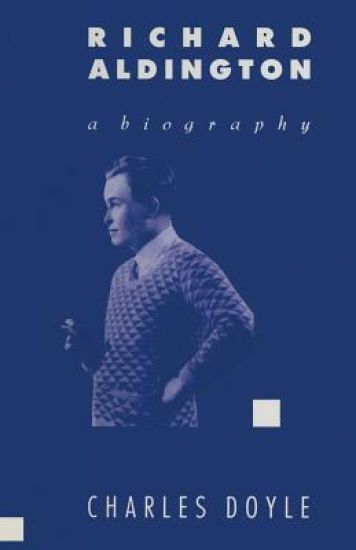
Richard Aldington: A Biography

Richard Aldington: A Biography

Charles Doyle

Palgrave Macmillan
1989
nidottu
This is the first biography of Richard Aldington, contemporary and friend of Ezra Pound, D.H. Lawrence and T.S. Eliot and notable as a poet, translator, editor, novelist, biographer and significant member of the Modernist era. A critical appraisal of his major writings is included.
Internet Gambling

Internet Gambling

Charles Doyle

Nova Biomedical
2003
nidottu
This book presents a review of the federal criminal statutes implicated by conducting illegal gambling using the Internet. It also discusses some of the constitutional and practical difficulties associated with prosecuting illegal Internet gambling and closes with a summary of the proposed Internet Gambling Prohibition Act (S.474). Gambling is primarily a matter of state law, reinforced by federal law in instances where the presence of an interstate or foreign feature might otherwise frustrate the enforcement policies of state law. State officials and others have expressed concern that the Internet may be used to conduct illegal gambling. Illicit Internet gambling implicates six federal criminal statutes. It is a federal crime to (1) conduct an illegal gambling business, 18 USC 1955; (2) use the telephone or telecommunications to conduct an illegal business; (3) use the facilities of interstate commerce to facilitate conducting an illegal gambling operation; (4) commit a related series of these gambling crimes to acquire or operate an interstate commercial enterprise; (5) launder the proceeds from an illegal gambling business or to plow them back into the business; or (6) spend over $10,000 of the proceeds from an illegal gambling operation at any one time or place. Although prosecution of illegal Internet gambling will likely encounter constitutional challenges, practical difficulties imposed by offshore operations, encryption, remailers and the like will probably pose a more substantial obstacle.
Internet Gambling

Internet Gambling

Charles Doyle

Nova Science Publishers Inc
2006
nidottu
This is a brief summary of the federal criminal status implicated by conducting illegal gambling using the Internet. It also discusses some of the constitutional issues associated with prosecuting illegal Internet gambling. Gambling is primarily a matter of state law, reinforced by federal law in instances where the presence of an interstate or foreign element might otherwise frustrate the enforcement policies of state law. State officials and others have expressed concern that the Internet may be used to bring illegal into their jurisdictions. Illicit Internet gambling implicates at least six federal criminal statutes. It is a federal crime to (1) conduct an illegal gambling business, 18 U.S.C. 1955; (2) use the telephone or telecommunications to conduct an illegal gambling business, 18 U.S.C. 1084; (3) use the facilities of interstate commerce to conduct an illegal gambling business, 18 U.S.C. 1952; (4) conduct the activities of an illegal gambling business involving either the collection of an unlawful debt or a pattern of gambling offences, 18 U.S.C. 1962; (5) launder the proceeds from an illegal gambling business or to plow them back into the business, 18 U.S.C. 1956; or (6) spend over $10,000 of the proceeds from an illegal gambling operation at any one time and place, 18 U.S.C. 1957. There have been suggestions that enforcement of these provisions against illegal Internet gambling raises constitutional issues under the Commerce Clause, the First Amendment's guarantee of free speech, and the Due Process Clause. The commercial nature of a gambling business and the reliance of the Internet on telephone communications seems to satisfy doubts under the Commerce Clause. The fact that illegal activities enjoy no First Amendment protection appears to quell free speech objections. The due process arguments raised in contemplation of federal prosecution of offshore Internet gambling operations suffer when financial transactions with individuals in the United States are involved. A bibliography, citations to state and federal gambling laws, and the text of the statutes cited above are appended.
Extraterritorial Application of American Criminal Law

Extraterritorial Application of American Criminal Law

Charles Doyle

Nova Science Publishers Inc
2007
nidottu
Crime is usually territorial. It is a matter of the law of the place where it occurs. Nevertheless, a surprising number of American criminal laws apply outside of the United States. Application is generally a question of legislative intent, expressed or implied. In either case, it most often involves crimes committed aboard a ship or airplane, crimes condemned by international treaty, crimes committed against government employees or property, or crimes that have an impact in this country even if planned or committed in part elsewhere. Although the crimes may be many, so are the obstacles to their enforcement. For both practical and diplomatic reasons, criminal investigations within another country require the acquiescence, consent, or preferably the assistance, of the authorities of the host country. The United States has mutual legal assistance treaties with several countries designed to formalise such co-operative law enforcement assistance. Searches and interrogations carried out on our behalf by foreign officials, certainly if they involve Americans, must be conducted within the confines of the Fourth and Fifth Amendments. And the Sixth Amendment imposes limits upon the use in American criminal trials of depositions taken abroad. Our recently negotiated extradition treaties address some of the features of our earlier agreements which complicate extradition for extraterritorial offences, i.e., dual criminality requirements and exemptions on the basis of nationality or political offences. To further facilitate the prosecution of federal crimes with extraterritorial application Congress has enacted special venue, statute of limitations, and evidentiary statutes.
Crime Victims' Rights Act

Crime Victims' Rights Act

Charles Doyle

Nova Science Publishers Inc
2008
nidottu
Legal reform in the name of victims of crime began to appear in state and federal law in the 1960's. It can be seen in victim restitution and compensation laws, in the reform of rape laws, drunk driving statutes, bail laws, and in provisions for victim impact statements at sentencing, to name a few. Over time in many jurisdictions these specific victim provisions were joined by a more general, more comprehensive victims' bills of rights. Thus, by the close of the twentieth century, thirty-three states had added victims' rights amendments to their state constitutions and each of the states had general statutory declarations of victims' rights.
Crime & Forfeiture

Crime & Forfeiture

Charles Doyle

Nova Science Publishers Inc
2008
nidottu
Forfeiture has long been an effective law enforcement tool. Congress and state legislatures have authorised its use for over two hundred years. Every year it redirects property worth hundreds of millions of dollars from criminal to lawful uses. Forfeiture law has always been somewhat unique. Legislative bodies, commentators and the courts, however, had begun to examine its eccentricities in greater detail because under some circumstances it could be not only harsh but unfair. The Civil Asset Forfeiture Reform Act, P.L. 106-185, 114 Stat. 202 (2000) is a product of that re-examination.
Obstruction of Congress

Obstruction of Congress

Charles Doyle

Nova Science Publishers Inc
2008
nidottu
Obstruction of justice is the frustration of governmental purposes by violence, corruption, destruction of evidence, or deceit. It is a federal crime. In fact, federal obstruction of justice laws are legion; too many for even passing reference to all of them in a single report. This is a brief description of those that outlaw interference with Congressional activities.