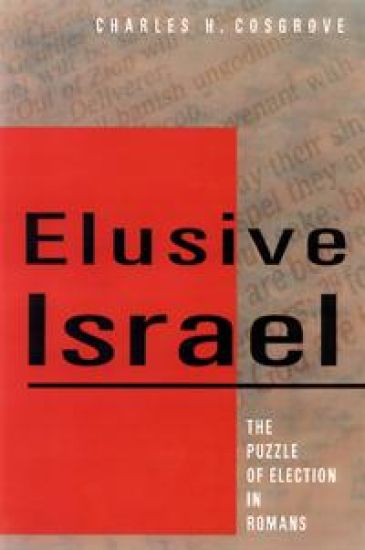
Many Bible interpreters assume a biblical text has only one right meaning and that it can be found if the reader uses the right methods. Charles Cosgrove, on the other hand, recognizes that language often admits multiple meanings and that scholars must deal with several sensible readings. As an example, Elusive Israel examines the identity of Israel in Romans 11, arguing for three equally plausible interpretations.
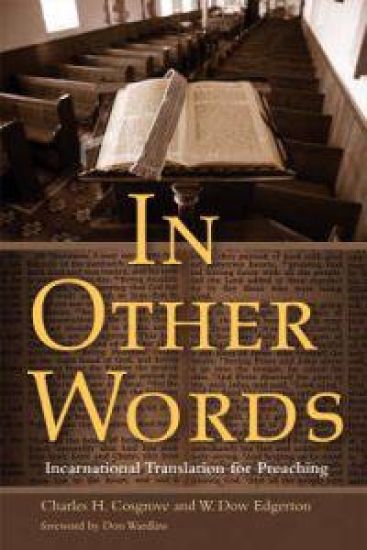
This title invites readers to think about what the Bible may have looked like if produced in their own time, culture and place. It draws on translation theory, genre studies and recent heremeneutical (interpretative) theory.
Arguing from scripture is one of the ways that Christians test theirmoral judgments. But are all methods of appealing to the Bibleequally valid and effective? In this book Charles Cosgrove looksat the churchs long tradition of moral debate and uncovers fivecentral rules that can best guide the use of scripture in con-temporaryethical debates.After introducing the nature of moral arguments generally, Cosgrove devotes one chapter to each of the five rules of biblicalinterpretation that make ethical appeals to scripture persuasive. Hesets forth each rules rationale, provides examples of its operation, and subjects it to critique.Based not only on the work of biblical scholars and Christianethicists but also on Cosgroves own experience with debates inclassrooms, churches, and other Christian contexts, this volume isbe a valuable aid to readers who employ moral reasoning inreal-life settings.
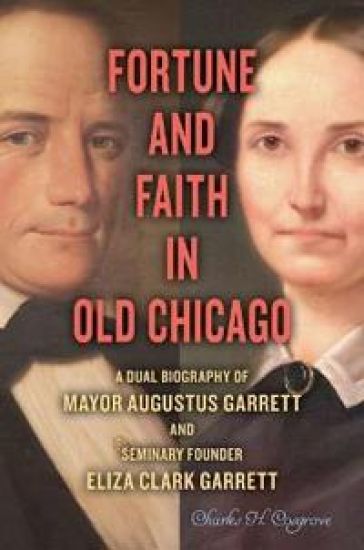
This well-crafted and engaging biography of Augustus Garrett and his wife, Eliza Clark Garrett, tells two equally compelling stories: an ambitious man's struggle to succeed and the remarkable spiritual journey of a woman attempting to overcome tragedy. By contextualising the couple's lives within the rich social, political, business, and religious milieu of Chicago's early urbanisation, author Charles H. Cosgrove fills a gap in the history of the city in the mid-nineteenth century. After the Garretts moved from the Hudson River Valley to Chicago, Augustus made his fortune in the land boom as an auctioneer and speculator. A mayor during the city's formative period, Augustus was at the center of the first mayoral election scandal in Chicago. To save his honor, he resigned dramatically and found vindication in his reelection the following year. His story reveals much about the inner workings of Chicago politics and business in the antebellum era. The couple had lost three young children to disease, and Eliza arrived in Chicago with deep emotional scars. Her journey exemplifies the struggles of sincere, pious women to come to terms with tragedy in an age when most people attributed unhappy events to divine discipline. Following Augustus's premature death, Eliza developed plans to devote her estate to founding a women’s college and a school for ministerial training, and in 1853 she endowed a Methodist theological school, the Garrett Biblical Institute (now the Garrett-Evangelical Theological Seminary), thereby becoming the first woman in North America to found an institution of higher learning. In addition to illuminating our understanding of Chicago from the 1830s to the 1850s, Fortune and Faith in Old Chicago explores American religious history, particularly Presbyterianism and Methodism, and its gendered approach shows how men and women experienced the same era in vastly different ways. The result is a rare, fascinating glimpse into old Chicago through the eyes of two of its important early residents.
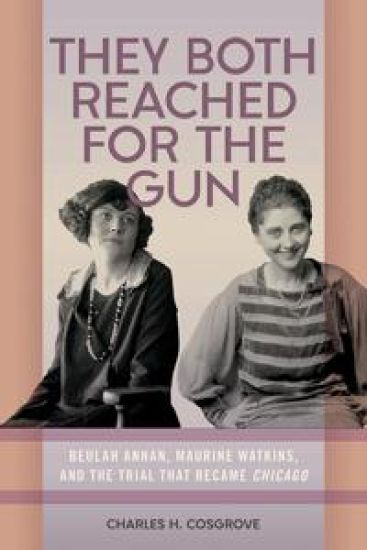
Examining the case that inspired a pop culture phenomenon In 1924 Beulah Annan was arrested and incarcerated for killing her lover, Harry Kalsted. Six weeks later, a jury acquitted her of murder. Inspired by the sordid event, trial, and acquittal, Maurine Watkins, a reporter at the time, wrote the play Chicago, a Broadway hit that was adapted several times. Through a fresh retelling of the story of Annan and of Watkins’s play, Charles H. Cosgrove provides the first critical examination of the criminal case, and an initial exploration of the era’s social assumptions that made the message of the play so plausible in its own time. His careful historical research challenges the received portrait of Annan as a killer who got away with murder, and of Watkins as a savvy cub reporter and precocious playwright. In They Both Reached for the Gun, Charles H. Cosgrove expertly combines inquest and police records, and interviews with Annan’s relatives, to analyze the participants, the trial, and the subsequent play. Although no one will ever know what really happened in the Kenwood apartment on Chicago’s south side one hundred years ago, Cosgrove’s interrogation shows how sensationalized Watkins’s writing was. Her reporting on the Annan case perpetuated falsehoods about Annan’s so-called “confession,” and her play gave an inaccurate portrayal of Chicago’s criminal justice system. Despite Watkins’s insistence that her drama revealed the truth about its subjects without any exaggeration, her play depicted police, prosecutors, and judges as the only “good guys” in the story, ignoring those who lied, misled, and used brutal methods to obtain forced confessions.
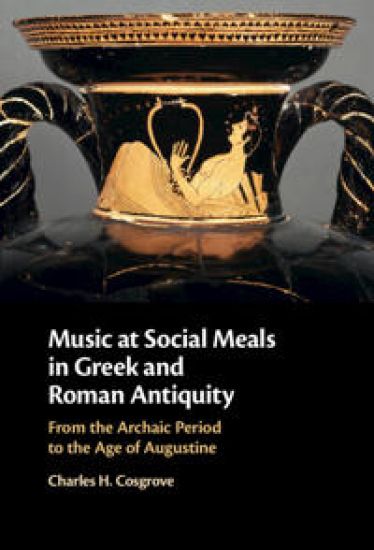
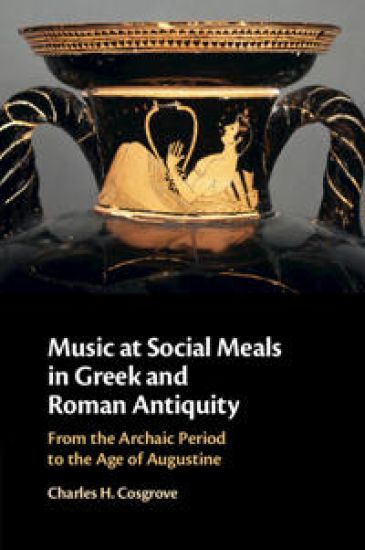
This is a captivating story of music-making at social recreations from Homeric times to the age of Augustine. It tells about the music itself and its purposes, as well as the ways in which people talked about it, telling anecdotes, picturing musical scenes, sometimes debating what kind of music was right at a party or a festival. In straightforward and engaging prose, the author covers a remarkably broad history, providing the big picture yet with vivid and nuanced descriptions of concrete practices and events. We hear of music at aristocratic parties, club music, people's music-making at festivals, political uses of music at the court of Alexander the Great and in the public banquets of Roman emperors in the Colosseum, opinions of music-making at social meals from Plato to Clement of Alexandria, and much more, making the book a treasure-trove of information and a fascinating journey through ancient times and places.
This is a captivating story of music-making at social recreations from Homeric times to the age of Augustine. It tells about the music itself and its purposes, as well as the ways in which people talked about it, telling anecdotes, picturing musical scenes, sometimes debating what kind of music was right at a party or a festival. In straightforward and engaging prose, the author covers a remarkably broad history, providing the big picture yet with vivid and nuanced descriptions of concrete practices and events. We hear of music at aristocratic parties, club music, people's music-making at festivals, political uses of music at the court of Alexander the Great and in the public banquets of Roman emperors in the Colosseum, opinions of music-making at social meals from Plato to Clement of Alexandria, and much more, making the book a treasure-trove of information and a fascinating journey through ancient times and places.
In this book, Charles Cosgrove undertakes a comprehensive examination of Papyrus Oxyrhynchus 1786, an ancient Greek Christian hymn dating to the late third century that offers the most ancient surviving example of a notated Christian melody. The author analyzes the text and music of the hymn, situating it in the context of the Greek literary and hymnic tradition, ancient Greek music, early Christian liturgy and devotion, and the social setting of Oxyrhynchus circa 300 C.E. The broad sweep of the commentary touches the interests of classical philologists, specialists in ancient Greek music, church historians, and students of church music history.
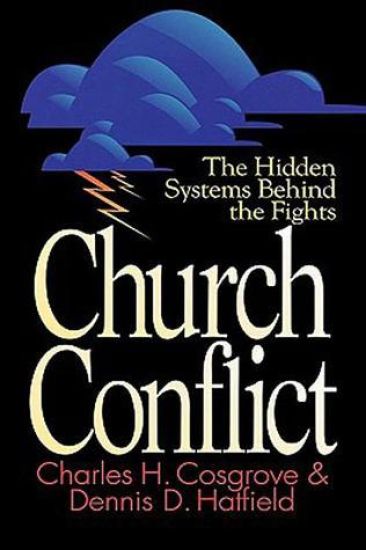
If church is like a family, it fights like one too! As in any family, conflict in the church family is natural and inevitable. But the way the church family handles its fights can make or break ministry. By using stories and examples of real problems at actual churches, Cosgrove and Hatfield have applied family-systems theory to help us identify the hidden structural boundaries in any group relationship. They show how the dynamics and 'family rules' operating in the informal family-like church system powerfully influence how church members relate to each other.
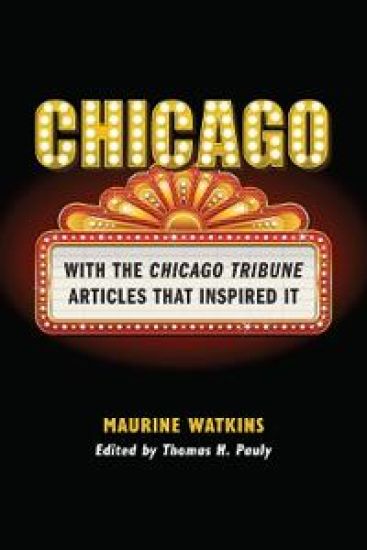
In 1924, the murder trials of Beulah Annan and Belva Gaertner shocked the world, providing the real-life inspiration for Maurine Watkins’s unforgettable characters, Roxie Hart and Velma Kelly. Now, a century later, this reissue of Watkins’s play offers a fresh look at the origins of the story that has since become a household name. From the silent film Chicago produced by Cecil B. DeMille in 1927 to the 1942 film Roxie Hart starring Ginger Rogers and the Broadway sensation created by Bob Fosse, Fred Ebb, and John Kander, this play has continuously evolved. It even inspired the 2002 Oscar-winning film Chicago starring RenÉe Zellweger, Catherine Zeta-Jones, and Richard Gere. But until recently, as editor Thomas H. Pauly writes in the book’s introduction, the real-life roots of the story were obscured. While researching for a book on crime-as-entertainment during the 1920s, Pauly came across Maurine Watkins’s play, which was then out of print. After noticing similarities between the play and a series of articles Watkins penned for the Chicago Tribune prior to the creation of her play, Pauly knew he had stumbled upon a revelation: Watkins’s play was based on real people. His republication of the play, alongside substantial background material and a reprinting of Watkins’s news articles, has become an indispensable starting point for all subsequent interest in Watkins and Chicago, whose subject remains as topical as ever. This special edition includes a new foreword by Charles H. Cosgrove, author of They Both Reached for the Gun: Beulah Annan, Maurine Watkins, and the Trial That Became Chicago. Cosgrove’s extensive research into the real-life cases provides deeper insight into the world that Watkins portrayed with such satirical brilliance. Additionally, the original editor, Thomas H. Pauly, has contributed a new preface, further enhancing understanding of the play and its inspiration, the thrilling true-crime story that captivated a nation and birthed a cultural phenomenon.