Kirjojen hintavertailu. Mukana 11 342 296 kirjaa ja 12 kauppaa.

Kirjahaku

Etsi kirjoja tekijän nimen, kirjan nimen tai ISBN:n perusteella.

989 kirjaa tekijältä Charles River

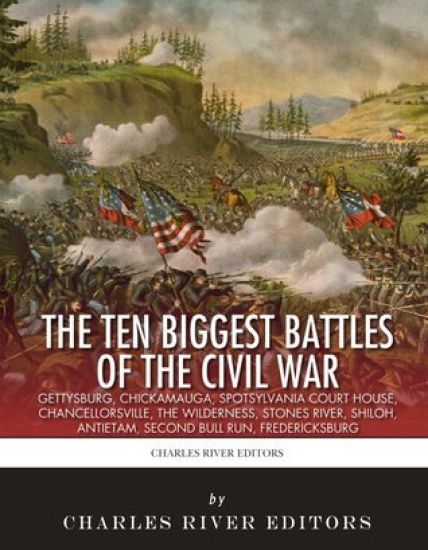
The 10 Biggest Civil War Battles: Gettysburg, Chickamauga, Spotsylvania Court House, Chancellorsville, The Wilderness, Stones River, Shiloh, Antietam,
*Includes pictures of the battles' important generals. *Includes several maps of the battles. *Includes accounts of the battles written by important generals. *Includes a Bibliography for each battle.. Americans have long been fascinated by the Civil War, marveling at the size of the battles, the leadership of the generals, and the courage of the soldiers. Since the war's start over 150 years ago, the battles have been subjected to endless debate among historians and the generals themselves. The Civil War was the deadliest conflict in American history, and had the two sides realized it would take 4 years and inflict over a million casualties, it might not have been fought. Since it did, however, historians and history buffs alike have been studying and analyzing the biggest battles ever since. The 10 biggest Civil War battles were incredibly bloody, desperate fights that involved the war's most famous figures and determined the fate of several states. All told, over a quarter of a million casualties were inflicted by the two sides during the 10 largest battles, and the fates of the battles and the war itself hung in the balance. Shiloh, Stones River and Chickamauga would all feature Union heroes like Ulysses S. Grant and George H. Thomas preserving Federal control over Tennessee and Kentucky. But during those same periods of time, Robert E. Lee was leading the Army of Northern Virginia to victory over several Union commanders at Fredericksburg, Second Bull Run, and Chancellorsville. Of course, the most famous battles of the war involved the Army of the Potomac blunting Lee's offensives at Antietam and Gettysburg. Antietam was the bloodiest day of the war and forced Lee out of Maryland, allowing Lincoln to issue the Emancipation Proclamation. The following summer would see the biggest and most famous battle at Gettysburg. Lee would try and fail to dislodge the Union army with attacks on both of its flanks during the second day and Pickett's Charge right down the center of the line on the third and final day. Meade's stout defense held, barely, repulsing each attempted assault, handing the Union a desperately needed victory that ended up being one of the Civil War's turning points. At the Battle of the Wilderness (May 5-7, 1864), Ulysses S. Grant and Robert E. Lee fought to a standstill in their first encounter, failing to dislodge each other despite incurring nearly 30,000 casualties between the Union Army of the Potomac and the Confederate Army of Northern Virginia. Despite the fierce fighting, Grant continued to push his battered but resilient army south, hoping to beat Lee's army to the crossroads at Spotsylvania Court House, but Lee's army beat Grant's to Spotsylvania and began digging in, setting the scene for on and off fighting from May 8-21 that ultimately inflicted more casualties than the Battle of the Wilderness. In fact, with over 32,000 casualties among the two sides, it was the deadliest battle of the Overland Campaign. The 10 Biggest Civil War Battles comprehensively covers all 10 battles, including the events that led up to the battle, the fighting itself, and the aftermath of the battles. Accounts of the battles by important participants are also included, along with maps of the battles and pictures of important people, places, and events. You will learn about the 10 bloodiest Civil War battles like you never have before.
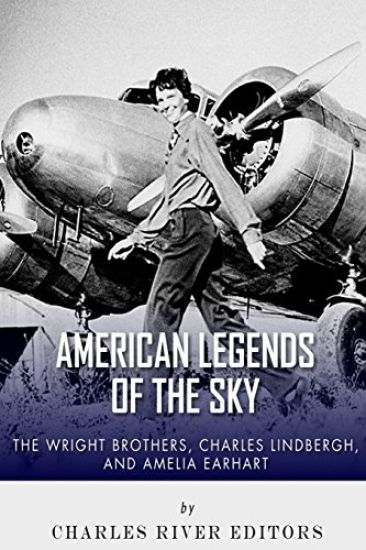
The Wright Brothers, Charles Lindbergh and Amelia Earhart: American Legends of the sky
*Includes pictures of important people, places, and events. *Includes Bibliographies on each for further reading. The lives of Wilbur and Orville Wright are quintessential American stories. Growing up in America's heartland, the boys lived very ordinary lives with 5 other siblings and worked in printing jobs and repair jobs that involved tinkering with tools and bicycles. But at the end of the 20th century, one of the brothers' passions became an obsession, especially for Wilbur, who would later write, "My brother and I became seriously interested in the problem of human flight in 1899." In December 1903, the brothers had done enough scientific work with concepts like lift to help their aeronautical designs, and they had the technical know-how to work with engines. On December 17, the brothers took turns making history's first successful powered flights. The fourth and final flight lasted nearly a minute and covered nearly 900 feet. Wilbur would work in aviation until dying of typhoid at the age of 45 in 1912, and by the time Orville died in 1948, planes had nearly reached supersonic speeds, a far cry from the days of bicycles and carriages he knew as a kid. In 1927, Charles Lindbergh became the first to make a nonstop Transatlantic solo flight, forever earning him fame and the moniker "Lucky Lindy". Two years later, Earhart was the first woman to cross the Atlantic in a plane, and her uncanny resemblance to Lindbergh earned her the nickname "Lady Lindy". Together they became America's most famous aviators, and their stories were inextricably interwoven by their lives, careers, and ill-fated destinies. In many ways, Charles Lindbergh represented the best and worst of America during the first half of the 20th century. Lindbergh became famous for being an aviation pioneer whose solo flight across the Atlantic captured the imagination of an entire world, yet he was an isolationist who wanted to keep American freedoms safe for Americans and no one else. Lindbergh was the quintessential family man, yet he fathered illegitimate children and suffered an unspeakable tragedy that became known as "The Crime of the Century." Lindbergh embodied some of his era's greatest virtues and harbored some of its worst prejudices, but it was those prejudices and his son's murder that have come to color much of his legacy.. By the mid-1930s, Earhart had set a multitude of altitude and distance records, but she wanted to attempt a circumnavigation of the world. After an ill-fated first attempt, Earhart and Fred Noonan set off on another attempt, creating one of the 20th century's most enduring mysteries. Earhart and Noonan were to land on Howland Island, 1700 miles southwest of Hawaii, but radio transmissions ceased between the plane and authorities on the ground the morning of July 2, 1937. Earhart and Noonan had disappeared, never to be seen again, despite one of the nation's largest and costliest manhunts to date. Unfortunately, the speculation over exactly what happened to Earhart and the mystery of her disappearance have come to overshadow and obscure her many accomplishments. American Legends of the Sky profiles the lives, careers, and legacies of America's most famous aviation pioneers. Along with pictures of important people, places, and events, you will learn about the Wright Brothers, Lindbergh, and Earhart like never before.
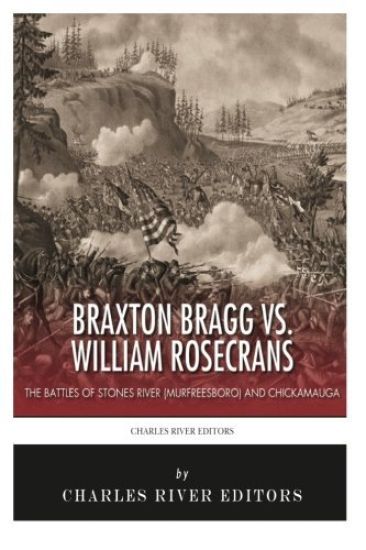
Braxton Bragg vs. William Rosecrans: The Battles of Stones River (Murfreesboro) and Chickamauga
*Includes pictures of the battles' important generals. *Includes several maps of the battles. *Includes accounts of the battles written by important generals. . *Includes a Bibliography for each battle. "I know Mr. Davis thinks he can do a great many things other men would hesitate to attempt. For instance, he tried to do what God failed to do. He tried to make a soldier of Braxton Bragg." - General Joseph E. Johnston Of all the commanders who led armies during major battles of the Civil War, historians have by and large agreed that the most inept generals to face each other were the Union's William Rosecrans and the Confederacy's Braxton Bragg. The two generals would command the Union Army of the Cumberland and the Confederate Army of Tennessee against each other during the Battle of Stones River (Battle of Murfreesboro) at the end of 1862 and at the Battle of Chickamauga in September 1863, two of the deadliest and most controversial battles of the war. In late December 1862, William Rosecrans's Union Army of the Cumberland was contesting Middle Tennessee against Braxton Bragg's Army of Tennessee, and for three days the two armies savaged each other as Bragg threw his army at Rosecrans in a series of desperate assaults. Bragg's army was unable to dislodge the Union army, and he eventually withdrew his army after learning that Rosecrans was on the verge of receiving reinforcements. Though the battle was stalemated, the fact that the Union army was left in possession of the field allowed Rosecrans to declare victory and embarrassed Bragg. Though Stones River is mostly overlooked as a Civil War battle today, it had a decisive impact on the war. The two armies had both suffered nearly 33% casualties, an astounding number in 1862 that also ensured Rosecrans would not start another offensive campaign in Tennessee until the following June. The Union victory also ensured control of Nashville, Middle Tennessee, and Kentucky for the rest of the war, prompting Lincoln to tell Rosecrans, "You gave us a hard-earned victory, which had there been a defeat instead, the nation could scarcely have lived over." The battle and its results also set into motion a chain of events that would lead to Rosecrans and Bragg facing off at the crucial battle of Chickamauga in September 1863, a battle that is often viewed as the last gasp for the Confederates' hopes in the West. During the height of the Battle of Chickamauga, Rosecrans inadvertently created a gap in his line just as a Confederate attack led by James Longstreet advanced straight toward that part of the line. Longstreet's attack was successful in driving one-third of the Union Army off the field, with Rosecrans himself running all the way to Chattanooga, where he was later allegedly found weeping and seeking solace from a staff priest. As the Confederate assault continued, George H. Thomas led the Union left wing against heavy Confederate attack even after nearly half of the Union army abandoned their defenses and retreated from the battlefield, racing toward Chattanooga. Dubbed "The Rock of Chickamauga", Thomas's heroics ensured that Rosecrans' army was able to successfully retreat back to Chattanooga. In the aftermath of the Battle of Chickamauga, several Confederate generals blamed the number of men lost during what would be the bloodiest battle of the Western Theater on Bragg's incompetence, and also criticizing him for refusing to pursue the escaping Union army. General Longstreet later stated to Jefferson Davis, "Nothing but the hand of God can help as long as we have our present commander." Bragg vs. Rosecrans comprehensively covers the campaigns and the events that led up to the battles, the fighting itself, and the aftermath of the battles. Accounts of the battles by important participants are also included, along with maps of the battles and pictures of important people, places, and events.
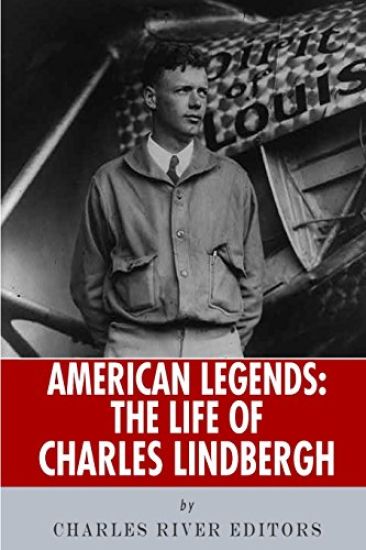
American Legends: The Life of Charles Lindbergh

American Legends: The Life of Charles Lindbergh

Charles River

Createspace Independent Publishing Platform
2013
nidottu
*Includes pictures of Lindbergh and important people, places, and events in your life. *Includes descriptions of Lindbergh's historic flight from his own words. *Includes a Bibliography for further reading. "If one took no chances, one would not fly at all." - Charles Lindbergh A lot of ink has been spilled covering the lives of history's most influential figures, but how much of the forest is lost for the trees? In Charles River Editors' American Legends series, readers can get caught up to speed on the lives of America's most important men and women in the time it takes to finish a commute, while learning interesting facts long forgotten or never known. In many ways, Charles Lindbergh represented the best and worst of America during the first half of the 20th century. Lindbergh became famous for being an aviation pioneer whose solo flight across the Atlantic captured the imagination of an entire world, yet he was an isolationist who wanted to keep American freedoms safe for Americans and no one else. Lindbergh was the quintessential family man, yet he fathered illegitimate children and suffered an unspeakable tragedy that became known as "The Crime of the Century." Lindbergh embodied some of his era's greatest virtues and harbored some of its worst prejudices. Lindbergh was a 25 year old U.S. Air Mail pilot who was probably best known for two crashes before shooting to fame with his non-stop flight across the Atlantic from New York City to Paris on May 20-21, 1927. Lindbergh was Time Magazine's first Man of the Year in 1927, and he used his newfound fame to promote the development of commercial flight and become a spokesman and symbol for advances in aviation. Tragically, Lindbergh was the subject of front page headlines in 1932 when his infant son, Charles, Jr., was kidnapped and murdered in the "Crime of the Century". After going into voluntary exile in Europe, Lindbergh found himself embroiled in scandals as he toured German (and Luftwaffe) aviation systems and took isolationist stances, at times making comments that were tinged with anti-Semitism and in favor of eugenics. Nevertheless, after Pearl Harbor, Lindbergh was rejected from serving in the armed forces, likely because President Roosevelt thought he was a Nazi sympathizer. But Lindbergh worked his way through administrative and technical positions to give himself the opportunity to fly about 50 combat missions in the Pacific, impressing his colleagues with his flying abilities and technical know-how. After World War II, as Lindbergh began to fade from the spotlight, he took up a number of causes, writing books and supporting environmental initiatives. The controversies began to fade as well, and when he died in 1974, he was remembered fondly for the Spirit of St. Louis and sympathetically for the Crime of the Century. American Legends: The Life of Charles Lindbergh chronicles the amazing life and career of Lindbergh, his greatest highs and most notorious lows, and everything inbetween. Along with pictures of important people, places, and events in his life, you will learn about "Lucky Lindy" like you never have before, in no time at all.
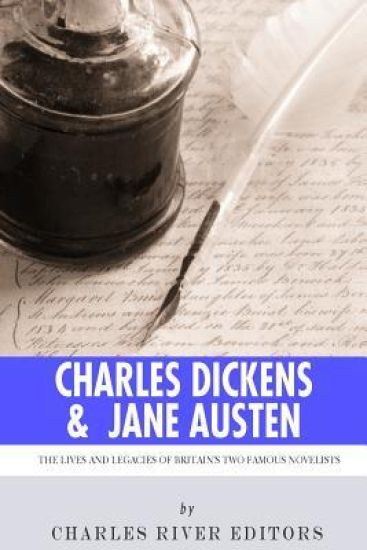
Charles Dickens & Jane Austen: The Lives and Legacies of Britain's Two Famous Novelists
*Includes pictures of Austen, Dickens and important people, places, and events in their lives. *Explains the real-life inspiration for many of Dickens's most famous characters. *Includes quotes about Austen and her novels by some of her most famous contemporaries. *Includes a Bibliography of Austen's works and works about her. Charles Dickens needs no formal introduction, having been the most popular English writer of the 19th century and still one of the most popular writers in history today. Dickens' upbringing was a mixture of happy times and sad: when he recalled his father being sent to debtor's prison in his memoirs, his tears actually left marks on the page. These qualities eventually helped forge him into a man many regard as the greatest Victorian era novelist, perhaps in the world, and the author of some of the most remarkable fictional characters who retain tremendous staying power to this day, including Fagin, Peepy, David Copperfield and Oliver Twist to name just a few. Unlike other great writers and artists, during his own lifetime Dickens' works enjoyed remarkable popularity and renown, to such an extent that even Queen Victoria and Prime Minister Benjamin Disraeli felicitated and feted Dickens. In the 20th century, well after Dickens's passing, his literary genius was truly and completely appreciated by ordinary readers as well as critics and scholars alike. Dickens's novels, novellas and short stories retain powerful and enduring popularity with the public largely because Dickens, apart from the usual attributes of good fiction writing, connected his thoughts with the universal by using history and the present as bridges. By the time he died at the relatively young age of 58 from a stroke, he was already Europe's most famous writer, and obituaries noted that Dickens was a "sympathiser with the poor, the suffering, and the oppressed." Dickens was interred in Westminster Abbey, a rare honor bestowed only among the greatest and most accomplished Britons. As has happened with many of history's greatest writers, Jane Austen (1775-1817) did not earn the credit she was due until well after her death. Austen was an English novelist whose works of romantic fiction, set among the landed gentry, has earned her a place as one of the most widely read writers in English literature over the last 150 years. Austen's romantic fiction was an interesting genre that belied the fact her writing was laden with realism and a scathing critique on society and the role women played in it during her life. Austen tried several different types of literary styles before settling on writing novels from 1811-1817, releasing Sense and Sensibility (1811), Mansfield Park (1814) and Emma (1816). The novels highlighted the dependence of women on marrying high to reach a better social status and financial security, but given the controversial nature of her topics and her writing, there was a strong debate in the 19th century over the merits of Jane's writing and her works. While some like Sir Walter Scott praised her writing, others like Charlotte Bronte thought poorly of it. Charles Dickens & Jane Austen looks at the lives, works, and influences the famous British novelists had over their contemporaries and successors, while also analyzing their lasting literary legacies. Along with pictures of important people and places, you will learn about Charles Dickens and Jane Austen like you never have before, in no time at all.
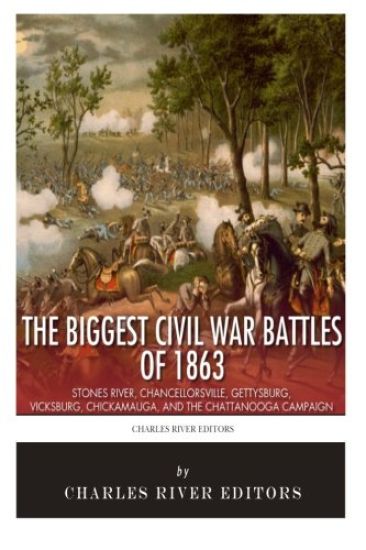
The Biggest Civil War Battles of 1863: Stones River, Chancellorsville, Gettysburg, Vicksburg, Chickamauga, and the Chattanooga Campaign
*Includes pictures. *Includes accounts of the battles by important generals who fought them. *Includes bibliographies for further reading. The Civil War was the deadliest conflict in American history, and had the two sides realized it would take 4 years and inflict over a million casualties, it might not have been fought. Since it did, however, historians and history buffs alike have been studying and analyzing the biggest battles ever since. Naturally, Americans have long been fascinated by the Civil War, marveling at the size of the battles, the leadership of the generals, and the courage of the soldiers. Since the war's start over 150 years ago, the battles have been subjected to endless debate among historians and the generals themselves. Of the 4 years, 1863 marked the year in which the Union truly turned the tide of the war. Robert E. Lee's Army of Northern Virginia had given the Confederacy hopes by turning away McClellan's Peninsula Campaign and winning decisive battles at Second Bull Run and Fredericksburg. In May 1863, he did it again at Chancellorsville, thwarting the Army of the Potomac and setting the stage for his invasion of Pennsylvania. After the South had lost the war, the importance of Gettysburg as one of the "high tide" marks of the Confederacy became apparent to everyone, making the battle all the more important in the years after it had been fought. While former Confederate generals cast about for scapegoats, with various officers pointing fingers at Robert E. Lee, James Longstreet, and James Stuart, historians and avid Civil War fans became obsessed with studying and analyzing all the command decisions and army movements during the entire campaign. At the start of 1863, Robert E. Lee's Army of Northern Virginia had been frustrating the Union in the Eastern theater for several months, but the situation in the West was completely different. The Confederates had lost control of several important states throughout 1862, and after New Orleans was taken by the Union, the North controlled almost all of the Mississippi River, which Confederate general James Longstreet called "the lungs of the Confederacy". By taking control of that vital river, the North would virtually cut the Confederacy in two, putting the South in a dire situation. The only domino left to fall was the stronghold of Vicksburg, and both sides knew it. Ulysses S. Grant's successful siege of Vicksburg ended the day after the Battle of Gettysburg, giving the Union two vital turning points in the war. At Chickamauga, the Union averted disaster when George H. Thomas prevented the destruction of the Army of the Cumberland, which would have certainly blunted the momentum Grant and Meade had secured in previous months at Vicksburg and Gettysburg. In fact, it might have completely changed the balance of power in the theater. After the Confederates squandered a golden opportunity to destroy a Union army in the field at Chickamauga, they lay siege to Chattanooga, only to have Grant and Sherman bring men, keep a line of supply open, and then lift the siege with the stunning battles of Lookout Mountain and Missionary Ridge. After the campaign, one Confederate soldier fatefully predicted, "This...is the death-knell of the Confederacy." The Biggest Civil War Battles of 1863 comprehensively covers the major campaigns of 1863, the battles, and the aftermath of the battles. Accounts of the battles by important participants are also included, along with maps of the battle and pictures of important people, places, and events. You will learn about the the biggest battles of 1863 like you never have before.
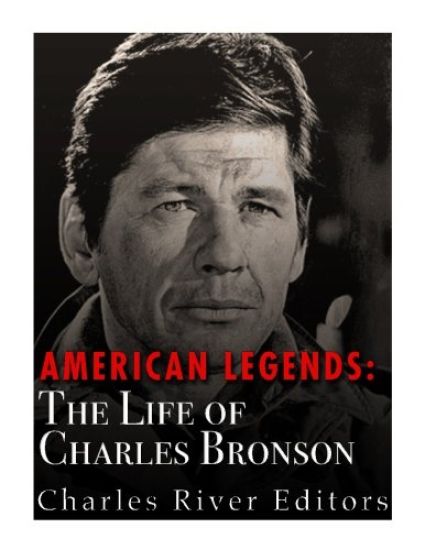
American Legends: The Life of Charles Bronson

American Legends: The Life of Charles Bronson

Charles River

Createspace Independent Publishing Platform
2016
nidottu
*Includes pictures*Includes Bronson's own quotes about his life and career*Includes footnotes, online resources and a bibliography for further reading*Includes a table of contents"Maybe I'm too masculine. Casting directors cast in their own, or an idealized image. Maybe I don't look like anybody's ideal." - Charles Bronson"I look like the kind of guy who has a bottle of beer in my hand." - Charles Bronson The leading men of the 1940s and '50s ably represented the visual and cultural expectations of those decades in their iconic films. Some were handsome and glib with quasi-classical dialogue, some could sing, and a few could dance, while others brought an imposing athletic presence to thrillers, westerns, and urban crime dramas. However, with the advent of the early 1960s, popular culture entered a heightened age of verismo, a more frank and severe view of societal reality. Motion picture studios on both sides of the Atlantic, aware of the changing times, were quick to reflect it. The harsher light of violent new genres required a different sort of male protagonist, a character type who could put his humanity and uncertainty aside to act as a more ruthless hero than his predecessors. Paralleling real concerns over crime and an increasing disrespect for life and property, the public fell in love with the new "avenging angel" image, and with Charles Bronson, the actor born at the perfect time in which to symbolize it in the grittier new films.By the time Bronson emerged from a series of miniscule, uncredited roles in the mid-1950s, the singing cowboy was two generations gone, save vestiges in television serials, such as Roy Rogers and Dale Evans. The dancing romantic lead of the Gene Kelly and Fred Astaire variety would soon exhaust itself as a genre in an age increasingly bent on realism and a more severe form of escape. Bronson possessed none of the gifts common to the heroes of the previous era. Light-heartedness did not become him, and by all accounts, he was neither a singer nor dancer. He could not offer the heft of Gary Cooper or John Wayne, although he shared a reserved quality with the former. He did not possess the pristine good looks of Gregory Peck. In fact, one good-natured description making the rounds in Bronson's heyday likened him to "A Clark Gable who has been left out in the sun too long." To accompany the rough-hewn appearance of Bronson's new class of hero, the typical script gave his remarkably enduring persona, little to say in terms of dialogue that would reveal his inner thoughts. With minimal text, even those he attempts to help are unsure of his intentions, and few clues are offered by which the viewer can come to know his mind. As the grotesqueness of his characters' violent acts increased, so did the heinous deeds of the criminals he fought, upping the ante to an eager public in search of a simple cure for its social ills. In a career of almost eighty films and a total body of work totaling 160 appearances including television, Bronson pushed the envelope of what graphic action the studios were willing to offer, what the censors would accept, and what the sensibilities of movie-goers were able to endure more than anyone in his era.Critics almost uniformly eviscerated most of these films as dramatic eyesores, and invariably equated Bronson's level of talent to their distasteful contents and ill fortunes at the box office. Only in recent years, as the genre has grown even more extreme, has Bronson's work been reviewed in a more kindly light. Critics aside, however, once established in the U.S. after a series of triumphs in Europe, Bronson never lost the adoration of either the international or domestic movie-going public who, he noted, are the ones buying the tickets, and are therefore the only people of importance. American Legends: The Life of Charles Bronson examines the life and career of the iconic actor.
Steve McQueen & Charles Bronson: The Lives and Careers of the Top Action Stars of the 1970s
*Includes pictures*Includes the actors' quotes about their lives and careers*Includes a bibliography for further reading In the 1960s and 1970s, no actor personified cool, calm and collected like Steve McQueen, whose suave anti-hero protagonists made men jealous and women swoon. As actor Donald Logue puts it in The Tao of Steve, "Steve is the prototypical cool American male. He's the guy on his horse, the guy alone. He has his own code of honor, his own code of ethics, his own rules of living. He never, ever tries to impress the women, but he always gets the girl." And indeed, that was the case not only in movies like The Thomas Crown Affair, Bullitt, The Getaway, and Papillon, but also in real life. Actress Ali MacGraw, who later became one of his wives, described his effect on women: "I remember seeing him across the swimming pool and my knees were knocking. He radiated such macho energy. Men wanted to be like him. Uptight society ladies and biker molls wanted to be with him."Unlike many actors who become this type of heartthrob, McQueen seemed to have the bona fides. Growing up rough and tough in the Midwest, McQueen was sent to a juvenile facility California because he didn't get along with his stepfather, and after that there he became a Marine. Like Jim Dean before him, McQueen also loved to race, and before he became an actor, he was actually making a living winning races in New York. As he once put it, "Racing is life. Anything before or after is just waiting."However, McQueen was destined to become "The King of Cool" on screen, and after a few quick stints in acting jobs in the early 1950s, he began to look at it as an actual occupation. He once noted, "I really don't like to act. At the beginning, back in '51, I had to force myself to stick with it. I was real uncomfortable, real uncomfortable." Eventually, McQueen was comfortable enough to simply act natural and thus exude the tough confidence that made him an idol. That kind of performance translated well on the old TV Westerns, and a few of those, Tales of Wells Fargo and Trackdown, catapulted McQueen to the conscience of Hollywood. From there, it would only take a few years and a few movie appearances for McQueen to become a huge box office draw. By the time Charles Bronson emerged from a series of miniscule, uncredited roles in the mid-1950s, the singing cowboy was two generations gone, save vestiges in television serials, such as Roy Rogers and Dale Evans. The dancing romantic lead of the Gene Kelly and Fred Astaire variety would soon exhaust itself as a genre in an age increasingly bent on realism and a more severe form of escape. Bronson possessed none of the gifts common to the heroes of the previous era. Light-heartedness did not become him, and by all accounts, he was neither a singer nor dancer. He could not offer the heft of Gary Cooper or John Wayne, although he shared a reserved quality with the former. He did not possess the pristine good looks of Gregory Peck. In fact, one good-natured description making the rounds in Bronson's heyday likened him to "A Clark Gable who has been left out in the sun too long." To accompany the rough-hewn appearance of Bronson's new class of hero, the typical script gave his remarkably enduring persona, little to say in terms of dialogue that would reveal his inner thoughts. With minimal text, even those he attempts to help are unsure of his intentions, and few clues are offered by which the viewer can come to know his mind. As the grotesqueness of his characters' violent acts increased, so did the heinous deeds of the criminals he fought, upping the ante to an eager public in search of a simple cure for its social ills. In a career of almost eighty films and a total body of work totaling 160 appearances including television, Bronson pushed the envelope of what graphic action the studios were willing to offer, and what the censors would accept.
American Legends: The Life of Charles Bronson

American Legends: The Life of Charles Bronson

Charles River

Createspace Independent Publishing Platform
2017
nidottu
*Includes pictures*Includes Bronson's own quotes about his life and career*Includes footnotes, online resources and a bibliography for further reading*Includes a table of contents"Maybe I'm too masculine. Casting directors cast in their own, or an idealized image. Maybe I don't look like anybody's ideal." - Charles Bronson"I look like the kind of guy who has a bottle of beer in my hand." - Charles Bronson The leading men of the 1940s and '50s ably represented the visual and cultural expectations of those decades in their iconic films. Some were handsome and glib with quasi-classical dialogue, some could sing, and a few could dance, while others brought an imposing athletic presence to thrillers, westerns, and urban crime dramas. However, with the advent of the early 1960s, popular culture entered a heightened age of verismo, a more frank and severe view of societal reality. Motion picture studios on both sides of the Atlantic, aware of the changing times, were quick to reflect it. The harsher light of violent new genres required a different sort of male protagonist, a character type who could put his humanity and uncertainty aside to act as a more ruthless hero than his predecessors. Paralleling real concerns over crime and an increasing disrespect for life and property, the public fell in love with the new "avenging angel" image, and with Charles Bronson, the actor born at the perfect time in which to symbolize it in the grittier new films.By the time Bronson emerged from a series of miniscule, uncredited roles in the mid-1950s, the singing cowboy was two generations gone, save vestiges in television serials, such as Roy Rogers and Dale Evans. The dancing romantic lead of the Gene Kelly and Fred Astaire variety would soon exhaust itself as a genre in an age increasingly bent on realism and a more severe form of escape. Bronson possessed none of the gifts common to the heroes of the previous era. Light-heartedness did not become him, and by all accounts, he was neither a singer nor dancer. He could not offer the heft of Gary Cooper or John Wayne, although he shared a reserved quality with the former. He did not possess the pristine good looks of Gregory Peck. In fact, one good-natured description making the rounds in Bronson's heyday likened him to "A Clark Gable who has been left out in the sun too long." To accompany the rough-hewn appearance of Bronson's new class of hero, the typical script gave his remarkably enduring persona, little to say in terms of dialogue that would reveal his inner thoughts. With minimal text, even those he attempts to help are unsure of his intentions, and few clues are offered by which the viewer can come to know his mind. As the grotesqueness of his characters' violent acts increased, so did the heinous deeds of the criminals he fought, upping the ante to an eager public in search of a simple cure for its social ills. In a career of almost eighty films and a total body of work totaling 160 appearances including television, Bronson pushed the envelope of what graphic action the studios were willing to offer, what the censors would accept, and what the sensibilities of movie-goers were able to endure more than anyone in his era.Critics almost uniformly eviscerated most of these films as dramatic eyesores, and invariably equated Bronson's level of talent to their distasteful contents and ill fortunes at the box office. Only in recent years, as the genre has grown even more extreme, has Bronson's work been reviewed in a more kindly light. Critics aside, however, once established in the U.S. after a series of triumphs in Europe, Bronson never lost the adoration of either the international or domestic movie-going public who, he noted, are the ones buying the tickets, and are therefore the only people of importance. American Legends: The Life of Charles Bronson examines the life and career of the iconic actor.
Steve McQueen & Charles Bronson: The Lives and Careers of the Top Action Stars of the 1970s
*Includes pictures*Includes the actors' quotes about their lives and careers*Includes a bibliography for further reading In the 1960s and 1970s, no actor personified cool, calm and collected like Steve McQueen, whose suave anti-hero protagonists made men jealous and women swoon. As actor Donald Logue puts it in The Tao of Steve, "Steve is the prototypical cool American male. He's the guy on his horse, the guy alone. He has his own code of honor, his own code of ethics, his own rules of living. He never, ever tries to impress the women, but he always gets the girl." And indeed, that was the case not only in movies like The Thomas Crown Affair, Bullitt, The Getaway, and Papillon, but also in real life. Actress Ali MacGraw, who later became one of his wives, described his effect on women: "I remember seeing him across the swimming pool and my knees were knocking. He radiated such macho energy. Men wanted to be like him. Uptight society ladies and biker molls wanted to be with him."Unlike many actors who become this type of heartthrob, McQueen seemed to have the bona fides. Growing up rough and tough in the Midwest, McQueen was sent to a juvenile facility California because he didn't get along with his stepfather, and after that there he became a Marine. Like Jim Dean before him, McQueen also loved to race, and before he became an actor, he was actually making a living winning races in New York. As he once put it, "Racing is life. Anything before or after is just waiting."However, McQueen was destined to become "The King of Cool" on screen, and after a few quick stints in acting jobs in the early 1950s, he began to look at it as an actual occupation. He once noted, "I really don't like to act. At the beginning, back in '51, I had to force myself to stick with it. I was real uncomfortable, real uncomfortable." Eventually, McQueen was comfortable enough to simply act natural and thus exude the tough confidence that made him an idol. That kind of performance translated well on the old TV Westerns, and a few of those, Tales of Wells Fargo and Trackdown, catapulted McQueen to the conscience of Hollywood. From there, it would only take a few years and a few movie appearances for McQueen to become a huge box office draw. By the time Charles Bronson emerged from a series of miniscule, uncredited roles in the mid-1950s, the singing cowboy was two generations gone, save vestiges in television serials, such as Roy Rogers and Dale Evans. The dancing romantic lead of the Gene Kelly and Fred Astaire variety would soon exhaust itself as a genre in an age increasingly bent on realism and a more severe form of escape. Bronson possessed none of the gifts common to the heroes of the previous era. Light-heartedness did not become him, and by all accounts, he was neither a singer nor dancer. He could not offer the heft of Gary Cooper or John Wayne, although he shared a reserved quality with the former. He did not possess the pristine good looks of Gregory Peck. In fact, one good-natured description making the rounds in Bronson's heyday likened him to "A Clark Gable who has been left out in the sun too long." To accompany the rough-hewn appearance of Bronson's new class of hero, the typical script gave his remarkably enduring persona, little to say in terms of dialogue that would reveal his inner thoughts. With minimal text, even those he attempts to help are unsure of his intentions, and few clues are offered by which the viewer can come to know his mind. As the grotesqueness of his characters' violent acts increased, so did the heinous deeds of the criminals he fought, upping the ante to an eager public in search of a simple cure for its social ills. In a career of almost eighty films and a total body of work totaling 160 appearances including television, Bronson pushed the envelope of what graphic action the studios were willing to offer, and what the censors would accept.
Father Charles Coughlin: The Life of the Controversial Catholic Priest Who Revolutionized Radio
*Includes pictures *Includes Coughlin's own quotes about the politics of the era *Includes online resources and a bibliography for further reading *Includes a table of contents "The people have spoken and the only American thing to do is abide by the will of the people." - Father Coughlin Traditionally in American culture, members of the clergy have been among the most trusted people in the nation, while politicians have been the least trusted. So, one might ask, what happens when these two classes collide and come in the form of one person? The result, it appears from history, is rarely all good, perhaps due to the difficulty of reconciling the moral high ground with political mud. Another reason why the political clergyman is usually a failure is that each of the world's major religions has its own identity, culture and even language, and it is often very hard for those outside that culture to understand what a member of the group means by what he is saying. This leaves the door open for misunderstanding and hostility, some of it by design and some by accident. For whatever reasons, clergymen rarely make good politicians, and there is perhaps no better example of this than Father Charles Coughlin, a Depression Era priest turned demagogue who was seen as an angel to some and a devil to others. Both viewpoints had plenty of reasons for their perspectives, for the same man who cruelly castigated the Jews also spoke eloquently on the needs and rights of the most downtrodden in society. The same orator who said, "Roosevelt or Ruin" later cried, "Roosevelt and Ruin." He was a radio priest who came to power after being victimized by the Ku Klux Klan and then used his power to spread racial hatred against others. He was a highly political Catholic who hated the first Catholic presidential candidate in American history. Coughlin has always been a slippery subject to wrap one's mind around, and this was so even at the height of his power, but nobody can deny his influence. In the 1930s, his effective use of the radio revolutionized mass communications, and millions of people listened to his every word. It would have been impossible for well known televangelists and religious figures like Jerry Falwell and Billy Graham to rise to national prominence without Coughlin setting the precedents decades earlier. Father Charles Coughlin: The Life of the Controversial Catholic Priest Who Revolutionized Radio chronicles the colorful life of one of the most famous priests in American history. Along with pictures of important people, places, and events, you will learn about Father Coughlin like never before, in no time at all.
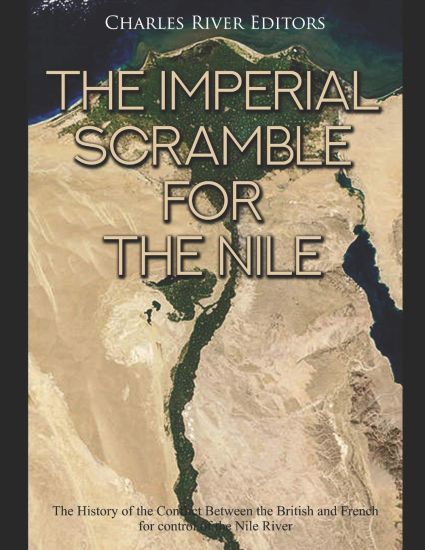
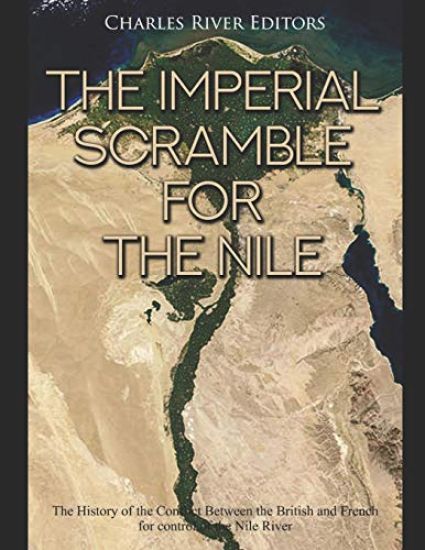
The Imperial Scramble for the Nile: The History of the Conflict Between the British and French for Control of the Nile River
*Includes pictures*Includes a bibliography for further reading"Before this time tomorrow I shall have gained a peerage, or Westminster Abbey." - Admiral Horatio Nelson before the Battle of the NileIn 1798, an initial review of France's naval forces had led Napoleon to conclude his navy could not hope to outfight the power of the Royal Navy, which had been the dominant naval power for centuries, so he was forced to look elsewhere. After months of planning, Napoleon crafted a scheme to attack and conquer Egypt, denying the British easy access to their colonies in India, with the ultimate goal of linking up with the Sultan Tipoo in India itself and defeating the British in the field there. Napoleon sailed with Admiral Brueys and 30,000 troops that June, heading for Egypt. Notionally part of the Ottoman Empire, Egypt was de facto a weak independent regime run by the breakaway Mamelukes. For France, it offered an overland route to India and a chance to beat Britain at her own game via economic strangulation. Napoleon could not have known it, but his campaign was the start of 150 years of imperialism along the Nile River, as Europeans endeavored to explore, control, and colonize the Nile River. This would bring them into all kinds of conflicts, not just with the indigenous natives residing there but also with each other, as each empire sought to get a leg up on the competition. Napoleon's Egyptian Campaign failed in all of its objectives other than in the acquisition of knowledge. Far from frustrating British ambitions in the Orient, the British triumphed in the minor war that Napoleon triggered, and it was the British who would dominate Egypt for the next 150 years. Even after the British took control of Egypt, knowledge about the Nile remained sparse, most importantly the source of the river, and exploration all over the continent took place among adventurers of various nationalities. Other countries also sought to get a foothold on the continent, to the extent that near the end of the 19th century, Otto von Bismarck, the German chancellor, brought the plenipotentiaries of all major powers of Europe together to deal with Africa's colonization in such a manner as to avoid provocation of war. This event, known as the Berlin Conference of 1884-1885, galvanized a phenomenon that came to be known as the Scramble for Africa. The conference established two fundamental rules for European seizure of Africa. The first of these was that no recognition of annexation would granted without evidence of a practical occupation, and the second, that a practical occupation would be deemed unlawful without a formal appeal for protection made on behalf of a territory by its leader, a plea that must be committed to paper in the form of a legal treaty.This began a rush, spearheaded mainly by European commercial interests in the form of Chartered Companies, to penetrate the African interior and woo its leadership with guns, trinkets and alcohol, and having thus obtained their marks or seals upon spurious treaties, begin establishing boundaries of future European African colonies. The ease with which this was achieved was due to the fact that, at that point, traditional African leadership was disunited, and the people had just staggered back from centuries of concussion inflicted by the slave trade. Thus, to usurp authority, to intimidate an already broken society, and to play one leader against the other was a diplomatic task so childishly simple, the matter was wrapped up, for the most part, in less than a decade.Even at that stage, however, the countries would keep jostling for position in Africa against each other, attempting to snap up more land and consolidate it. As such, the scramble kept going at a fevered pitch until the outbreak of World War I. The This book chronicles the competition between both countries for control of strategic parts of the continent.
The Imperial Scramble for the Nile: The History of the Conflict Between the British and French for Control of the Nile River
*Includes pictures*Includes a bibliography for further reading"Before this time tomorrow I shall have gained a peerage, or Westminster Abbey." - Admiral Horatio Nelson before the Battle of the NileIn 1798, an initial review of France's naval forces had led Napoleon to conclude his navy could not hope to outfight the power of the Royal Navy, which had been the dominant naval power for centuries, so he was forced to look elsewhere. After months of planning, Napoleon crafted a scheme to attack and conquer Egypt, denying the British easy access to their colonies in India, with the ultimate goal of linking up with the Sultan Tipoo in India itself and defeating the British in the field there. Napoleon sailed with Admiral Brueys and 30,000 troops that June, heading for Egypt. Notionally part of the Ottoman Empire, Egypt was de facto a weak independent regime run by the breakaway Mamelukes. For France, it offered an overland route to India and a chance to beat Britain at her own game via economic strangulation. Napoleon could not have known it, but his campaign was the start of 150 years of imperialism along the Nile River, as Europeans endeavored to explore, control, and colonize the Nile River. This would bring them into all kinds of conflicts, not just with the indigenous natives residing there but also with each other, as each empire sought to get a leg up on the competition. Napoleon's Egyptian Campaign failed in all of its objectives other than in the acquisition of knowledge. Far from frustrating British ambitions in the Orient, the British triumphed in the minor war that Napoleon triggered, and it was the British who would dominate Egypt for the next 150 years. Even after the British took control of Egypt, knowledge about the Nile remained sparse, most importantly the source of the river, and exploration all over the continent took place among adventurers of various nationalities. Other countries also sought to get a foothold on the continent, to the extent that near the end of the 19th century, Otto von Bismarck, the German chancellor, brought the plenipotentiaries of all major powers of Europe together to deal with Africa's colonization in such a manner as to avoid provocation of war. This event, known as the Berlin Conference of 1884-1885, galvanized a phenomenon that came to be known as the Scramble for Africa. The conference established two fundamental rules for European seizure of Africa. The first of these was that no recognition of annexation would granted without evidence of a practical occupation, and the second, that a practical occupation would be deemed unlawful without a formal appeal for protection made on behalf of a territory by its leader, a plea that must be committed to paper in the form of a legal treaty.This began a rush, spearheaded mainly by European commercial interests in the form of Chartered Companies, to penetrate the African interior and woo its leadership with guns, trinkets and alcohol, and having thus obtained their marks or seals upon spurious treaties, begin establishing boundaries of future European African colonies. The ease with which this was achieved was due to the fact that, at that point, traditional African leadership was disunited, and the people had just staggered back from centuries of concussion inflicted by the slave trade. Thus, to usurp authority, to intimidate an already broken society, and to play one leader against the other was a diplomatic task so childishly simple, the matter was wrapped up, for the most part, in less than a decade.Even at that stage, however, the countries would keep jostling for position in Africa against each other, attempting to snap up more land and consolidate it. As such, the scramble kept going at a fevered pitch until the outbreak of World War I. The This book chronicles the competition between both countries for control of strategic parts of the continent.
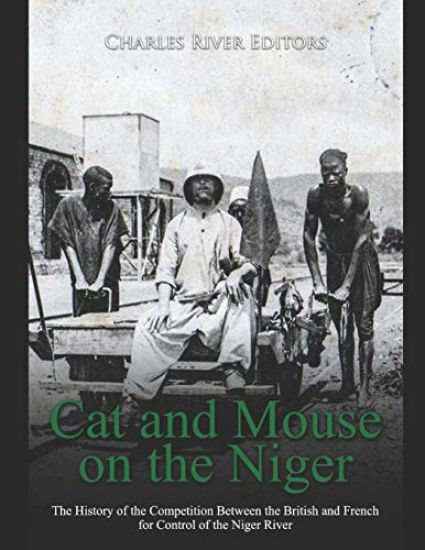
Cat and Mouse on the Niger: The History of the Competition Between the British and French for Control of the Niger River
*Includes pictures*Includes a bibliography for further reading"They have soldiers. We only have arguments." - French Foreign Minister Th ophile Delcass Near the end of the 19th century, Otto von Bismarck, the German chancellor, brought the plenipotentiaries of all major powers of Europe together to deal with Africa's colonization in such a manner as to avoid provocation of war. This event, known as the Berlin Conference of 1884-1885, galvanized a phenomenon that came to be known as the Scramble for Africa. The conference established two fundamental rules for European seizure of Africa. The first of these was that no recognition of annexation would granted without evidence of a practical occupation, and the second, that a practical occupation would be deemed unlawful without a formal appeal for protection made on behalf of a territory by its leader, a plea that must be committed to paper in the form of a legal treaty.This began a rush, spearheaded mainly by European commercial interests in the form of Chartered Companies, to penetrate the African interior and woo its leadership with guns, trinkets and alcohol, and having thus obtained their marks or seals upon spurious treaties, begin establishing boundaries of future European African colonies. The ease with which this was achieved was due to the fact that, at that point, traditional African leadership was disunited, and the people had just staggered back from centuries of concussion inflicted by the slave trade. Thus, to usurp authority, to intimidate an already broken society, and to play one leader against the other was a diplomatic task so childishly simple, the matter was wrapped up, for the most part, in less than a decade. Even at that stage, however, the countries would keep jostling for position in Africa against each other, attempting to snap up more land and consolidate it. As such, the scramble kept going at a fevered pitch until the outbreak of World War I. When they entered the negotiations in Berlin in 1884, the French were established in their flagship African territory of Senegal, situated at the westernmost point of continental Africa, which tended to give them an option over the vast reaches of the western continent so far unclaimed by any territory. The history of French engagement in Senegal can be traced back to 1677, with the French acquisition of a slave port on the island of Gor e, today a cantonment of the Senegalese capital of Dakar. From there, the French were apt to gaze across the vast expanse of unclaimed territory to their minor enclave of French Somaliland, founded between 1883 and 1887, and which would, in the post-independence era, become the state of Djibouti. The French imperial vision, therefore, became the establishment of French sovereignty over everything in between these two pints, including, if possible, Egypt. That obviously clashed with British objectives. As the British were working to establish a route from Cape Town in South Africa to Cairo in Egypt, the French were seeking to connect Dakar to Djibouti. If lines were drawn on the map to connect those places, the lines would intersect around the Sudanese river port of Kodok, which, during the imperial era, was known as Fashoda. The sequence of events across Africa would lead to a dramatic confrontation between a French expedition and British soldiers at Fashoda in 1898, and what happened there would help determine the boundaries of colonial Africa for the next several decades. Cat and Mouse on the Niger: The History of the Competition Between the British and French for Control of the Niger River chronicles the competition between both nations as they sought to make inroads on the African continent. Along with pictures depicting important people, places, and events, you will learn about the confrontations across the Niger like never before.
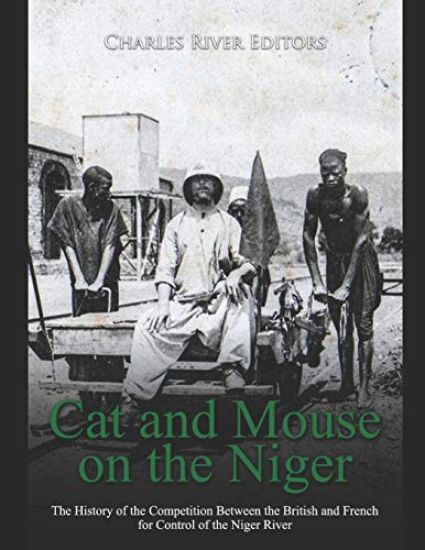
Cat and Mouse on the Niger: The History of the Competition Between the British and French for Control of the Niger River
*Includes pictures*Includes a bibliography for further reading"They have soldiers. We only have arguments." - French Foreign Minister Th ophile Delcass Near the end of the 19th century, Otto von Bismarck, the German chancellor, brought the plenipotentiaries of all major powers of Europe together to deal with Africa's colonization in such a manner as to avoid provocation of war. This event, known as the Berlin Conference of 1884-1885, galvanized a phenomenon that came to be known as the Scramble for Africa. The conference established two fundamental rules for European seizure of Africa. The first of these was that no recognition of annexation would granted without evidence of a practical occupation, and the second, that a practical occupation would be deemed unlawful without a formal appeal for protection made on behalf of a territory by its leader, a plea that must be committed to paper in the form of a legal treaty.This began a rush, spearheaded mainly by European commercial interests in the form of Chartered Companies, to penetrate the African interior and woo its leadership with guns, trinkets and alcohol, and having thus obtained their marks or seals upon spurious treaties, begin establishing boundaries of future European African colonies. The ease with which this was achieved was due to the fact that, at that point, traditional African leadership was disunited, and the people had just staggered back from centuries of concussion inflicted by the slave trade. Thus, to usurp authority, to intimidate an already broken society, and to play one leader against the other was a diplomatic task so childishly simple, the matter was wrapped up, for the most part, in less than a decade. Even at that stage, however, the countries would keep jostling for position in Africa against each other, attempting to snap up more land and consolidate it. As such, the scramble kept going at a fevered pitch until the outbreak of World War I. When they entered the negotiations in Berlin in 1884, the French were established in their flagship African territory of Senegal, situated at the westernmost point of continental Africa, which tended to give them an option over the vast reaches of the western continent so far unclaimed by any territory. The history of French engagement in Senegal can be traced back to 1677, with the French acquisition of a slave port on the island of Gor e, today a cantonment of the Senegalese capital of Dakar. From there, the French were apt to gaze across the vast expanse of unclaimed territory to their minor enclave of French Somaliland, founded between 1883 and 1887, and which would, in the post-independence era, become the state of Djibouti. The French imperial vision, therefore, became the establishment of French sovereignty over everything in between these two pints, including, if possible, Egypt. That obviously clashed with British objectives. As the British were working to establish a route from Cape Town in South Africa to Cairo in Egypt, the French were seeking to connect Dakar to Djibouti. If lines were drawn on the map to connect those places, the lines would intersect around the Sudanese river port of Kodok, which, during the imperial era, was known as Fashoda. The sequence of events across Africa would lead to a dramatic confrontation between a French expedition and British soldiers at Fashoda in 1898, and what happened there would help determine the boundaries of colonial Africa for the next several decades. Cat and Mouse on the Niger: The History of the Competition Between the British and French for Control of the Niger River chronicles the competition between both nations as they sought to make inroads on the African continent. Along with pictures depicting important people, places, and events, you will learn about the confrontations across the Niger like never before.