Kirjojen hintavertailu. Mukana 11 244 527 kirjaa ja 12 kauppaa.

Kirjahaku

Etsi kirjoja tekijän nimen, kirjan nimen tai ISBN:n perusteella.

33 kirjaa tekijältä Charles Ross

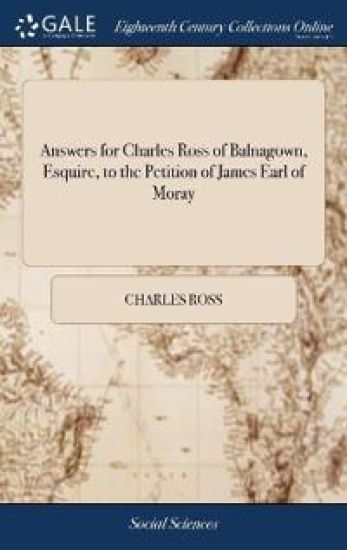
Answers for Charles Ross of Balnagown, Esquire, to the Petition of James Earl of Moray
The 18th century was a wealth of knowledge, exploration and rapidly growing technology and expanding record-keeping made possible by advances in the printing press. In its determination to preserve the century of revolution, Gale initiated a revolution of its own: digitization of epic proportions to preserve these invaluable works in the largest archive of its kind. Now for the first time these high-quality digital copies of original 18th century manuscripts are available in print, making them highly accessible to libraries, undergraduate students, and independent scholars.Delve into what it was like to live during the eighteenth century by reading the first-hand accounts of everyday people, including city dwellers and farmers, businessmen and bankers, artisans and merchants, artists and their patrons, politicians and their constituents. Original texts make the American, French, and Industrial revolutions vividly contemporary.++++The below data was compiled from various identification fields in the bibliographic record of this title. This data is provided as an additional tool in helping to insure edition identification: ++++National Library of ScotlandT191711Drop-head title, dated at head: January 3. 1744. Concerning the ownership of the tailzie of the estate of Balnagown. Edinburgh?, 1744]. 27, 1]p.; 4
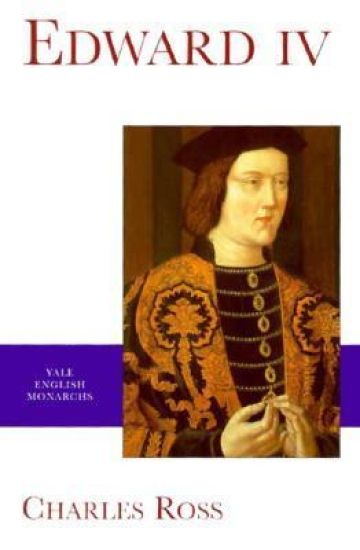
Edward IV

Edward IV

Charles Ross

Yale University Press
1998
pokkari
In his own time Edward IV was seen as an able and successful king who rescued England from the miseries of civil war and provided the country with firm, judicious, and popular government. The prejudices of later historians diminished this high reputation, until recent research confirmed Edward as a ruler of substantial achievement, whose methods and policies formed the foundation of early Tudor government. This classic study by Charles Ross places the reign firmly in the context of late medieval power politics, analyzing the methods by which a usurper sought to retain his throne and reassert the power of a monarchy seriously weakened by the feeble rule of Henry VI. Edward's relations with the politically active classes—the merchants, gentry, and nobility—form a major theme, and against this background Ross provides an evaluation of the many innovations in government on which the king's achievement rests.
Richard III

Richard III

Charles Ross

Yale University Press
2011
pokkari
Richard III ruled England for a mere twenty-six months, yet few English monarchs remain as compulsively fascinating, and none has been more persistently vilified. In his absorbing and universally praised account, Charles Ross assesses the king within the context of his violent age and explores the critical questions of the reign: why and how Richard Plantagenet usurped the throne; the belief that he ordered the murder of "the Princes in the Tower"; the events leading to the battle of Bosworth in 1485; and the death of the Yorkist dynasty with Richard himself. In a new foreword, Professor Richard A. Griffiths identifies the attributes that have made Ross's account the leading biography in the field, and assesses the impact of the research published since the book first appeared in 1981. "A fascinating study on a perennially fascinating topic… the base against which will be measured any future research."--Times Higher Education Supplement
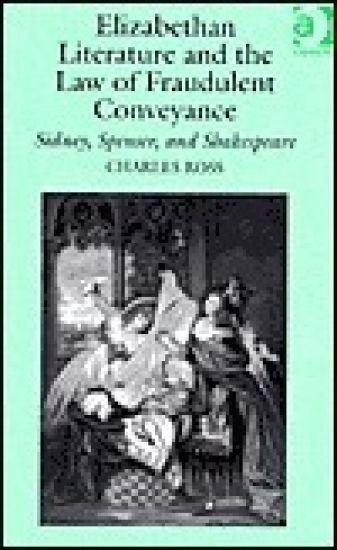
Elizabethan Literature and the Law of Fraudulent Conveyance
This book investigates the origins, impact, and outcome of the Elizabethan obsession with fraudulent conveyancing, the part of debtor-creditor law that determines when a court can void a transfer of assets. Focusing on the years between the passage of a key statute in 1571 and the court case that clarified the statute in 1601, Charles Ross convincingly argues that what might seem a minor matter in the law was in fact part of a wide-spread cultural practice. The legal and literary responses to fraudulent conveyancing expose ethical, practical, and jurisprudential contradictions in sixteenth-century English, as well as modern, society. At least in English Common Law, debt was more pervasive than sex. Ross brings to this discussion a dazzling knowledge of early modern legal practice that takes the conversation out of the universities and Inns of Court and brings it into the early modern courtroom, the site where it had most relevance to Renaissance poets and playwrights. Ross here examines how during the thirty years in which the law developed, Sidney, Spenser, and Shakespeare wrote works that reflect the moral ambiguity of fraudulent conveyancing, which was practiced by unscrupulous debtors but also by those unfairly oppressed by power. The book starts by showing that the language and plot of Shakespeare's Merry Wives of Windsor continually refers to this cultural practice that English society came to grips with during the period 1571-1601. The second chapter looks at the social, political, and economic climate in which Parliament in 1571 passed 13 Eliz. 5, and argues that the law, which may have been used to oppress Catholics, was probably passed to promote business. The Sidney chapter shows that Henry Sidney, as governor of Ireland (a site of religious oppression), and his son Philip were, surprisingly, on the side of the fraudulent conveyors, both in practice and imaginatively (Sidney's Arcadia is the first of several works to associate fraudulent conveyancing with the abduction of women). The fourth chapter shows that Edmund Spenser, who as an official in Ireland rails against fraudulent conveyors, nonetheless includes a balanced assessment of several forms of the practice in The Faerie Queene. Chapter five shows how Sir Edward Coke's use of narrative in Twyne's Case (1601) helped settle the issue of intentionality left open by the parliamentary statute. The final chapter reveals how the penalty clause of the Elizabethan law accounts for the punishment Portia imposes on Shylock at the end of The Merchant of Venice. The real strength of the book lies in Ross's provocative readings of individual cases, which will be of great use to literary critics wrestling with the applications of legal theory to the interpretation of individual texts. This study connects a major development in the law to the literature of the period, one that makes a contribution not only to the law but also to literary studies and political and social history.
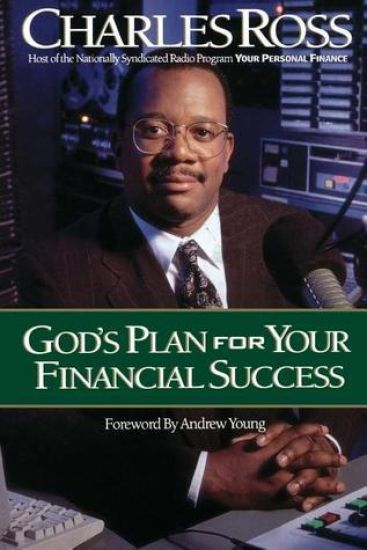
God's Plan For Your Financial Success

God's Plan For Your Financial Success

Charles Ross

Thomas Nelson Publishers
1998
nidottu
Charles Ross, a financial expert and a former investment officer with a major financial institution, offers a reliable source for Christians to turn to for guidance and help in today's financially complex world. Each chapter includes relevant Scriptures and biblical principles, as well as the experience of individuals who have applied the financial guidelines taught by Charles Ross.
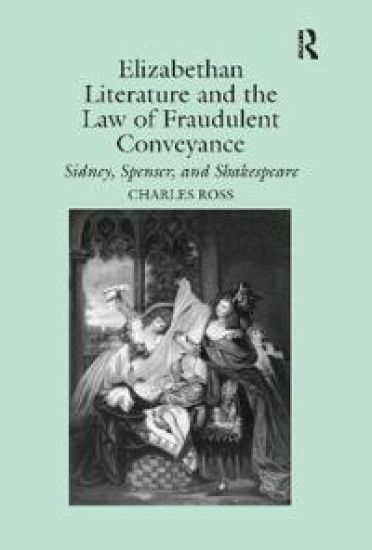
Elizabethan Literature and the Law of Fraudulent Conveyance
This book investigates the origins, impact, and outcome of the Elizabethan obsession with fraudulent conveyancing, the part of debtor-creditor law that determines when a court can void a transfer of assets. Focusing on the years between the passage of a key statute in 1571 and the court case that clarified the statute in 1601, Charles Ross convincingly argues that what might seem a minor matter in the law was in fact part of a wide-spread cultural practice. The legal and literary responses to fraudulent conveyancing expose ethical, practical, and jurisprudential contradictions in sixteenth-century English, as well as modern, society. At least in English Common Law, debt was more pervasive than sex. Ross brings to this discussion a dazzling knowledge of early modern legal practice that takes the conversation out of the universities and Inns of Court and brings it into the early modern courtroom, the site where it had most relevance to Renaissance poets and playwrights. Ross here examines how during the thirty years in which the law developed, Sidney, Spenser, and Shakespeare wrote works that reflect the moral ambiguity of fraudulent conveyancing, which was practiced by unscrupulous debtors but also by those unfairly oppressed by power. The book starts by showing that the language and plot of Shakespeare's Merry Wives of Windsor continually refers to this cultural practice that English society came to grips with during the period 1571-1601. The second chapter looks at the social, political, and economic climate in which Parliament in 1571 passed 13 Eliz. 5, and argues that the law, which may have been used to oppress Catholics, was probably passed to promote business. The Sidney chapter shows that Henry Sidney, as governor of Ireland (a site of religious oppression), and his son Philip were, surprisingly, on the side of the fraudulent conveyors, both in practice and imaginatively (Sidney's Arcadia is the first of several works to associate fraudulent conveyancing with the abduction of women). The fourth chapter shows that Edmund Spenser, who as an official in Ireland rails against fraudulent conveyors, nonetheless includes a balanced assessment of several forms of the practice in The Faerie Queene. Chapter five shows how Sir Edward Coke's use of narrative in Twyne's Case (1601) helped settle the issue of intentionality left open by the parliamentary statute. The final chapter reveals how the penalty clause of the Elizabethan law accounts for the punishment Portia imposes on Shylock at the end of The Merchant of Venice. The real strength of the book lies in Ross's provocative readings of individual cases, which will be of great use to literary critics wrestling with the applications of legal theory to the interpretation of individual texts. This study connects a major development in the law to the literature of the period, one that makes a contribution not only to the law but also to literary studies and political and social history.