Title: Journal of a Ramble in Scotland. By Charles Lesingham Smith.]Publisher: British Library, Historical Print EditionsThe British Library is the national library of the United Kingdom. It is one of the world's largest research libraries holding over 150 million items in all known languages and formats: books, journals, newspapers, sound recordings, patents, maps, stamps, prints and much more. Its collections include around 14 million books, along with substantial additional collections of manuscripts and historical items dating back as far as 300 BC.The HISTORY OF EUROPE collection includes books from the British Library digitised by Microsoft. This collection includes works chronicling the development of Western civilisation to the modern age. Highlights include the development of language, political and educational systems, philosophy, science, and the arts. The selection documents periods of civil war, migration, shifts in power, Muslim expansion into Central Europe, complex feudal loyalties, the aristocracy of new nations, and European expansion into the New World. ++++The below data was compiled from various identification fields in the bibliographic record of this title. This data is provided as an additional tool in helping to insure edition identification: ++++ British Library Anonymous; Smith, Charles; 1835. xi. 130 p.; 8 . 10370.cc.32.
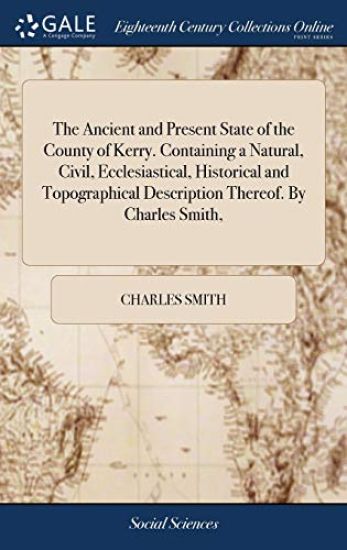
The 18th century was a wealth of knowledge, exploration and rapidly growing technology and expanding record-keeping made possible by advances in the printing press. In its determination to preserve the century of revolution, Gale initiated a revolution of its own: digitization of epic proportions to preserve these invaluable works in the largest archive of its kind. Now for the first time these high-quality digital copies of original 18th century manuscripts are available in print, making them highly accessible to libraries, undergraduate students, and independent scholars.Delve into what it was like to live during the eighteenth century by reading the first-hand accounts of everyday people, including city dwellers and farmers, businessmen and bankers, artisans and merchants, artists and their patrons, politicians and their constituents. Original texts make the American, French, and Industrial revolutions vividly contemporary.++++The below data was compiled from various identification fields in the bibliographic record of this title. This data is provided as an additional tool in helping to insure edition identification: ++++British LibraryT097656The second leaf is headed: A table shewing the variation of reference, from Dr. Smith's History of Kerry, to the old and new editions of his Histories of Cork and Waterford.Dublin: printed: and sold in London by W. Cater; J. Robson; T. Payne; D. Wilson and G. Nicol and T. Evans and 4 others], 1774. 2],419, 5]p., plates: map, port.; 8
The 18th century was a wealth of knowledge, exploration and rapidly growing technology and expanding record-keeping made possible by advances in the printing press. In its determination to preserve the century of revolution, Gale initiated a revolution of its own: digitization of epic proportions to preserve these invaluable works in the largest archive of its kind. Now for the first time these high-quality digital copies of original 18th century manuscripts are available in print, making them highly accessible to libraries, undergraduate students, and independent scholars.Delve into what it was like to live during the eighteenth century by reading the first-hand accounts of everyday people, including city dwellers and farmers, businessmen and bankers, artisans and merchants, artists and their patrons, politicians and their constituents. Original texts make the American, French, and Industrial revolutions vividly contemporary.++++The below data was compiled from various identification fields in the bibliographic record of this title. This data is provided as an additional tool in helping to insure edition identification: ++++British LibraryT097657A reissue of the 1756 edition with a new title page. The spelling, setting and ornament on the title page correspond to the 1774 edition of The ancient and present state of .. Waterford.Dublin: printed for the author, 1774?] 419, 5]p., plates: map, port.; 8
The 18th century was a wealth of knowledge, exploration and rapidly growing technology and expanding record-keeping made possible by advances in the printing press. In its determination to preserve the century of revolution, Gale initiated a revolution of its own: digitization of epic proportions to preserve these invaluable works in the largest archive of its kind. Now for the first time these high-quality digital copies of original 18th century manuscripts are available in print, making them highly accessible to libraries, undergraduate students, and independent scholars.Delve into what it was like to live during the eighteenth century by reading the first-hand accounts of everyday people, including city dwellers and farmers, businessmen and bankers, artisans and merchants, artists and their patrons, politicians and their constituents. Original texts make the American, French, and Industrial revolutions vividly contemporary.++++The below data was compiled from various identification fields in the bibliographic record of this title. This data is provided as an additional tool in helping to insure edition identification: ++++Huntington LibraryN016407Dublin: printed for W. Wilson, 1773. xx,376p., VII plates: maps, port.; 8
The 18th century was a wealth of knowledge, exploration and rapidly growing technology and expanding record-keeping made possible by advances in the printing press. In its determination to preserve the century of revolution, Gale initiated a revolution of its own: digitization of epic proportions to preserve these invaluable works in the largest archive of its kind. Now for the first time these high-quality digital copies of original 18th century manuscripts are available in print, making them highly accessible to libraries, undergraduate students, and independent scholars.Delve into what it was like to live during the eighteenth century by reading the first-hand accounts of everyday people, including city dwellers and farmers, businessmen and bankers, artisans and merchants, artists and their patrons, politicians and their constituents. Original texts make the American, French, and Industrial revolutions vividly contemporary.++++The below data was compiled from various identification fields in the bibliographic record of this title. This data is provided as an additional tool in helping to insure edition identification: ++++National Library of ScotlandT229424Maps with the legend: "Jones & Smith sculpt Pentonville".London: printed for C. Smith, mapseller, May 1800. 6]p., plates: maps; 12
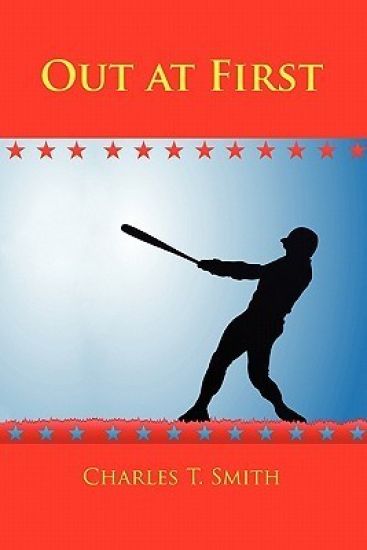
Erik Mitchell, a Little League baseball star on Long Island, must build his reputation anew after his family moves to Ohio. His reputation is no longer an asset in his new high school so he must prove himself to his coaches, peers, and himself. It does not go well.
Regarded as one of the most outstanding commanding officers on the Western Front, Wilfrid Abel Smith commanded an elite unit of 1,000 of the finest soldiers in the British Army. Educated at Eton and Sandhurst, Smith was a career soldier who led his battalion of Grenadiers with distinction through the First Battle of Ypres and the winter trench warfare of 1914–15. He died of wounds received at the Battle of Festubert in May 1915.The letters and diaries provide a vivid, first-hand account of the fighting and suffering on the front line, written by a compassionate commander and affectionate family man. Most of his brother officers were Old Etonians, including his brigade commander, Lord Cavan, and his second-in-command, George ‘Ma’ Jeffreys. Smith’s account offers a poignant insight into the way in which the privileged world of a Guards officer responded, with the highest sense of duty and courage, to the unprecedented demands of industrial warfare.From Eton to Ypres is edited by his great-grandson, Charles Abel Smith.
There is more than a touch of 'The Emperor's New Clothes' in the way many organizations approach project management and the consequences are all too clear: project methodology inappropriately applied; little or no consideration of complexity or ambiguity; alienation of the stakeholders and a statistically poor record of performance for major business or infrastructure projects. Charles Smith's groundbreaking book Making Sense of Project Realities offers convincing explanations as to why project management theory and practice have become disconnected and describes the kind of complex, human skills that are required to deliver successful projects. The text draws heavily on the experiences of practising project and programme managers from across private and public sector organizations, many of whose stories were shared and analysed during the two-year research network 'Rethinking Project Management', which brought together thought leaders on project management from consultancy, industry and academia. The result is a highly readable, very credible and imaginative exploration of the nature of projects and programmes that will strike a chord with every project practitioner; a book that offers a realistic set of ideas for developing creative and effective project players, who understand the purpose of what they are doing, the context within which they are working, and the people with whom they need to engage. Update: Several MBA Courses use this book and the tutor feedback is encouragingly positive, including: "can be used from day one to change the mindset of the students concerning projects and their management."
This book, first published in 1940, is a systematic analysis of Britain’s principal food supplies and the means by which they are distributed to the people. Its calculates the total quantities of food required to feed the whole nation properly, examines pricing structures and the sources of the food stuffs. Both home produced and imported foods are covered in this survey, as are restrictions in the form of the wartime governmental controls.
This book, first published in 1940, is a systematic analysis of Britain’s principal food supplies and the means by which they are distributed to the people. Its calculates the total quantities of food required to feed the whole nation properly, examines pricing structures and the sources of the food stuffs. Both home produced and imported foods are covered in this survey, as are restrictions in the form of the wartime governmental controls.
There is more than a touch of 'The Emperor's New Clothes' in the way many organizations approach project management and the consequences are all too clear: project methodology inappropriately applied; little or no consideration of complexity or ambiguity; alienation of the stakeholders and a statistically poor record of performance for major business or infrastructure projects. Charles Smith's groundbreaking book Making Sense of Project Realities offers convincing explanations as to why project management theory and practice have become disconnected and describes the kind of complex, human skills that are required to deliver successful projects. The text draws heavily on the experiences of practising project and programme managers from across private and public sector organizations, many of whose stories were shared and analysed during the two-year research network 'Rethinking Project Management', which brought together thought leaders on project management from consultancy, industry and academia. The result is a highly readable, very credible and imaginative exploration of the nature of projects and programmes that will strike a chord with every project practitioner; a book that offers a realistic set of ideas for developing creative and effective project players, who understand the purpose of what they are doing, the context within which they are working, and the people with whom they need to engage. Update: Several MBA Courses use this book and the tutor feedback is encouragingly positive, including: "can be used from day one to change the mindset of the students concerning projects and their management."



![Journal of a Ramble in Scotland. [By Charles Lesingham Smith.]](/covers/9781241596255.jpg)