Kirjojen hintavertailu. Mukana 12 390 323 kirjaa ja 12 kauppaa.

Kirjahaku

Etsi kirjoja tekijän nimen, kirjan nimen tai ISBN:n perusteella.

3 kirjaa tekijältä Charles T. Rubin

The Green Crusade

The Green Crusade

Charles T. Rubin

Rowman Littlefield
1998
pokkari
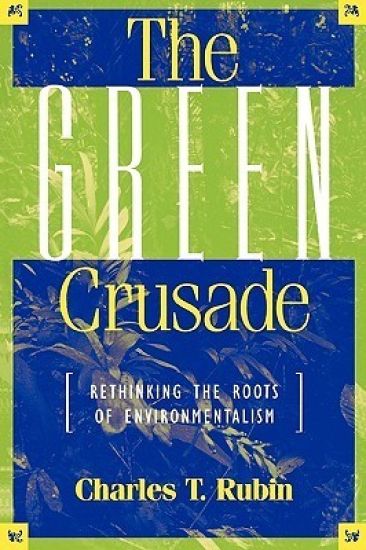
As recently as fifty years ago, the billowing industrial smokestack was a proud symbol of progress and power; today it is an image of unbridled corporate irresponsibility. This change in public attitudes reflects a shift in social values as rapid and profound as any in American history. Its effects are so far-reaching that scarcely anyone imagines there was ever an alternative view of the relationship between human beings and nature. Yet for all the time and energy devoted to discussion of environmentalism as a social and political movement, no one has questioned its existence as a coherent philosophy or given an account of how it first emerged in public consciousness. Most people would assume that the environmental idea, and the powerful political movement it inspired, must have emerged in response to self evident environmental problems such as air and water pollution, acid rain, the human destruction of natural habitats, and the resulting extinction of endangered species. But Charles T. Rubin argues that environmental problems are far from being a matter of common sense. He points out that while such situations almost certainly existed in the past, they were defined in different terms—implying different kinds of social and political solutions. Rubin tells the story of this massive yet strangely unnoticed transformation of public perception and social morality by focusing on the small group of influential writers and thinkers—Rachel Carson, Barry Commoner, Paul Ehrlich, E. F. Schumacher, and others -whose enormously popular writings gave birth to the environmental movement as we know it.
Conservation Reconsidered

Conservation Reconsidered

Charles T. Rubin

Rowman Littlefield
2000
nidottu
The prominent contributors in Conservation Reconsidered establish a fundamentally original view of the conservation movement and the impact of public policy on nature. This collection of essays articulate the belief that the thinkers and actors who helped develop the conservation movement-notably John Muir, Theodore Roosevelt, Gifford Pinchot and Aldo Leopold-have been seriously misunderstood by scholars who have analyzed them in the context of contemporary environmental debates. Conservationism, the contributors argue, was a diverse movement dealing with difficult questions about the relationship of human beings to nature in a modern liberal democratic state. The essays place conservationism within the framework of 19th century American political thinkers including Darwin, Emerson, Thoreau and Olmsted, and they illuminate perennial questions about citizenship and our place in the natural world. Conservation Reconsidered takes a new look at what is problematic about the legacy of American conservationism and explores worthy alternatives to the dominant environmentalist thinking of today.
Eclipse of Man

Eclipse of Man

Charles T. Rubin

Encounter Books,USA
2014
sidottu
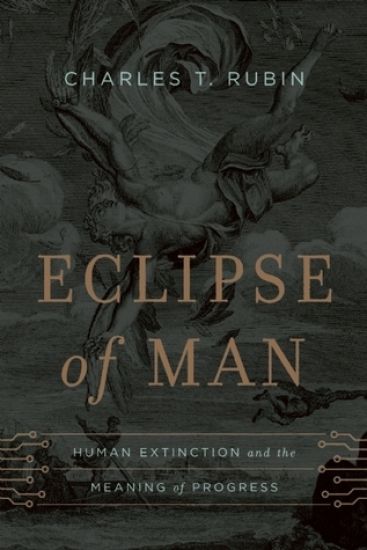
Tomorrow has never looked better. Breakthroughs in fields like genetic engineering and nanotechnology promise to give us unprecedented power to redesign our bodies and our world. Futurists and activists tell us that we are drawing ever closer to a day when we will be as smart as computers, will be able to link our minds telepathically, and will live for centuries--or maybe forever. The perfection of a "posthuman" future awaits us. Or so the story goes. In reality, the rush toward a posthuman destiny amounts to an ideology of human extinction, an ideology that sees little of value in humanity except the raw material for producing whatever might come next. In Eclipse of Man, Charles T. Rubin traces the intellectual origins of the movement to perfect and replace the human race. He shows how today's advocates of radical enhancement are--like their forebears--deeply dissatisfied with given human nature and fixated on grand visions of a future shaped by technological progress. Moreover, Rubin argues that this myopic vision of the future is not confined to charlatans and cheerleaders promoting this or that technology: it also runs through much of modern science and contemporary progressivism. By exploring and criticizing the dreams of post humanity, Rubin defends a more modest vision of the future, one that takes seriously both the limitations and the inherent dignity of our given nature.