Kirjojen hintavertailu. Mukana 11 717 486 kirjaa ja 12 kauppaa.

Kirjahaku

Etsi kirjoja tekijän nimen, kirjan nimen tai ISBN:n perusteella.

11 kirjaa tekijältä Charles W. Chestnutt

The Wife of His Youth and Other Stories of the Color Line
The Wife of His Youth and Other Stories of the Color-Line (1899) is a collection of short stories by African American writer, lawyer, and political activist Charles Chesnutt. Originally published in a July 1888 edition of The Atlantic—in which, in 1887, Chesnutt became the first African American to have a story published in its pages—“The Wife of His Youth” has become the author’s most frequently anthologized story. The Wife of His Youth and Other Stories of the Color-Line contains nine stories and three essays by Charles Chesnutt, a pioneer of African American literature. The title story of the collection follows Mr. Ryder, a light skinned man living in a city in the American Midwest. The founder of the Blue Veins Society, a local club whose members consist of black men with European ancestry, Mr. Ryder plans to propose to a beautiful mixed-race woman named Molly Dixon. As the day of the Blue Vein Ball approaches—he hopes to propose on stage while giving a speech—Ryder meets an older black woman named Liza Jane who assisted her husband, Sam Taylor, in escaping north before the Civil War, but never heard from him again. “The Passing of Grandison,” another story in the collection, is a tale of racial passing set in the 1850s that follows a slave who travels to Canada with the help of a white man. The Wife of His Youth and Other Stories of the Color-Line is a masterful work of short fiction and essay writing from a pioneer of African American literature. With a beautifully designed cover and professionally typeset manuscript, this edition of Charles Chesnutt’s The Wife of His Youth and Other Stories of the Color-Line is a classic of African American literature reimagined for modern readers.
The Conjure Woman

The Conjure Woman

Charles W. Chestnutt

Graphic Arts Books
2021
sidottu
The Conjure Woman (1899) is a collection of stories by African American author, lawyer, and political activist Charles Chesnutt. “The Goophered Grapevine,” the collection’s opening story, was originally published in The Atlantic in 1887, making Chesnutt the first African American to have a story published in the magazine. The Conjure Woman is now considered a masterpiece of African American fiction for its use of folklore and exploration of racist stereotypes of Black Americans, especially those living in the South. In “The Goophered Grapevine,” an old ex-slave named Julius McAdoo—a coachman hired by a white Northerner named John—warns his employer about the land he has decided to purchase. He tells him the story of the vineyard’s previous owner, who hired a woman named Aunt Peggy to put a curse on his famous scuppernong grapes in order to stop his slaves from eating them. Each story in The Conjure Woman follows a similar formula, beginning with a narrative situation involving John and his wife, Annie, before leading to a story from Uncle Julius. “Po’ Sandy,” one of Chesnutt’s most acclaimed tales—and a loose adaptation of Ovid’s Metamorphoses—opens with John deciding to build a new kitchen for his wife. Uncle Julius drives him to the saw mill, where, while watching the saw cut through a log, he is reminded of the story of Sandy, a local man who was turned into a tree by a conjurer in order to escape slavery. The Conjure Woman is a powerful collection of folk takes and stories exploring themes of race, identity, and class in the nineteenth century South. With a beautifully designed cover and professionally typeset manuscript, this edition of Charles Chesnutt’s The Conjure Woman is a classic of African American literature reimagined for modern readers.
The Marrow of Tradition

The Marrow of Tradition

Charles W. Chestnutt

Graphic Arts Books
2021
sidottu
The Marrow of Tradition (1901) is a historical novel by African American author, lawyer, and political activist Charles Chesnutt. Based on the Wilmington Insurrection of 1898—in which a group of white supremacists rioted and overthrew the elected government of Wilmington, North Carolina, killing hundreds of African Americans and displacing thousands more—The Marrow of Tradition follows two interconnected families on opposite sides of the violence. Set in the fictional city of Wellington, the story begins with Major Carteret, a white newspaper owner whose colleagues and powerful peers are growing increasingly outraged by widespread condemnation of local lynchings. At the same time, a black physician named William Miller is establishing a local medical practice while settling into married life with his wife, Janet, the unacknowledged half-sister of Major Carteret’s wife. When Polly Ochiltree, a local white woman, is murdered, a black servant named Sandy Campbell is initially accused. When the identity of the true killer—a white aristocrat—is discovered, however, and when authorities fail to arrest him, the racial tensions dominating Wellington reach their breaking point. The Marrow of Tradition is a harrowing story of family, race, and identity which brilliantly dissects the historical events of the Wilmington Insurrection without sensationalizing them. Although Chesnutt hoped that his book would help to improve race relations in the United States, the book was a commercial and critical failure. For readers today, however, the novel is a picture of how far we have come, and a chilling reminder of how far we have left to go. With a beautifully designed cover and professionally typeset manuscript, this edition of Charles Chesnutt’s The Marrow of Tradition is a classic of African American literature reimagined for modern readers.
The House Behind the Cedars

The House Behind the Cedars

Charles W. Chestnutt

Graphic Arts Books
2021
sidottu
The House Behind the Cedars (1900) is African-American writer Charles Chesnutt’s debut novel. Inspired by his own experience as a Black man capable of passing for white—which Chesnutt consciously chose not to do—as well as by Walter Scott’s Ivanhoe, The House Behind the Cedars explores themes of identity, race, and class in the post-Civil War South. Controversial for its portrayal of interracial romance, Chesnutt’s novel was critically acclaimed in its day, but failed financially. It was adapted into a 1927 silent film by pioneering Black director Oscar Micheaux. After years of living in the city, John Warwick visits his hometown to see his mother and sister. Hearing of his success as a lawyer and father, Rena, his sister, is intrigued with city life and decides to join him when he returns. With a black mother and white father, the two are able to pass for white, which allows them—Rena soon discovers—a certain amount of social mobility in the South. It being only a few years after the Civil War, there is of course some risk to this, but the opportunity is too enticing to pass up. Rena soon meets George, a wealthy white man and business partner of her brother, and the two fall in love. When she is called home to care for her sick mother, and as George begins to grow suspicious, it becomes more and more difficult to keep her secret—and her family—safe. With a beautifully designed cover and professionally typeset manuscript, this edition of Charles Chesnutt’s The House Behind the Cedars is a classic of African American literature reimagined for modern readers.
The House Behind the Cedars

The House Behind the Cedars

Charles W. Chestnutt

Graphic Arts Books
2020
pokkari
The House Behind the Cedars (1900) is African-American writer Charles Chesnutt’s debut novel. Inspired by his own experience as a Black man capable of passing for white—which Chesnutt consciously chose not to do—as well as by Walter Scott’s Ivanhoe, The House Behind the Cedars explores themes of identity, race, and class in the post-Civil War South. Controversial for its portrayal of interracial romance, Chesnutt’s novel was critically acclaimed in its day, but failed financially. It was adapted into a 1927 silent film by pioneering Black director Oscar Micheaux. After years of living in the city, John Warwick visits his hometown to see his mother and sister. Hearing of his success as a lawyer and father, Rena, his sister, is intrigued with city life and decides to join him when he returns. With a black mother and white father, the two are able to pass for white, which allows them—Rena soon discovers—a certain amount of social mobility in the South. It being only a few years after the Civil War, there is of course some risk to this, but the opportunity is too enticing to pass up. Rena soon meets George, a wealthy white man and business partner of her brother, and the two fall in love. When she is called home to care for her sick mother, and as George begins to grow suspicious, it becomes more and more difficult to keep her secret—and her family—safe. With a beautifully designed cover and professionally typeset manuscript, this edition of Charles Chesnutt’s The House Behind the Cedars is a classic of African American literature reimagined for modern readers.
The Conjure Woman

The Conjure Woman

Charles W. Chestnutt

Graphic Arts Books
2021
pokkari
The Conjure Woman (1899) is a collection of stories by African American author, lawyer, and political activist Charles Chesnutt. “The Goophered Grapevine,” the collection’s opening story, was originally published in The Atlantic in 1887, making Chesnutt the first African American to have a story published in the magazine. The Conjure Woman is now considered a masterpiece of African American fiction for its use of folklore and exploration of racist stereotypes of Black Americans, especially those living in the South. In “The Goophered Grapevine,” an old ex-slave named Julius McAdoo—a coachman hired by a white Northerner named John—warns his employer about the land he has decided to purchase. He tells him the story of the vineyard’s previous owner, who hired a woman named Aunt Peggy to put a curse on his famous scuppernong grapes in order to stop his slaves from eating them. Each story in The Conjure Woman follows a similar formula, beginning with a narrative situation involving John and his wife, Annie, before leading to a story from Uncle Julius. “Po’ Sandy,” one of Chesnutt’s most acclaimed tales—and a loose adaptation of Ovid’s Metamorphoses—opens with John deciding to build a new kitchen for his wife. Uncle Julius drives him to the saw mill, where, while watching the saw cut through a log, he is reminded of the story of Sandy, a local man who was turned into a tree by a conjurer in order to escape slavery. The Conjure Woman is a powerful collection of folk takes and stories exploring themes of race, identity, and class in the nineteenth century South. With a beautifully designed cover and professionally typeset manuscript, this edition of Charles Chesnutt’s The Conjure Woman is a classic of African American literature reimagined for modern readers.
The Marrow of Tradition

The Marrow of Tradition

Charles W. Chestnutt

Graphic Arts Books
2021
pokkari
The Marrow of Tradition (1901) is a historical novel by African American author, lawyer, and political activist Charles Chesnutt. Based on the Wilmington Insurrection of 1898—in which a group of white supremacists rioted and overthrew the elected government of Wilmington, North Carolina, killing hundreds of African Americans and displacing thousands more—The Marrow of Tradition follows two interconnected families on opposite sides of the violence. Set in the fictional city of Wellington, the story begins with Major Carteret, a white newspaper owner whose colleagues and powerful peers are growing increasingly outraged by widespread condemnation of local lynchings. At the same time, a black physician named William Miller is establishing a local medical practice while settling into married life with his wife, Janet, the unacknowledged half-sister of Major Carteret’s wife. When Polly Ochiltree, a local white woman, is murdered, a black servant named Sandy Campbell is initially accused. When the identity of the true killer—a white aristocrat—is discovered, however, and when authorities fail to arrest him, the racial tensions dominating Wellington reach their breaking point. The Marrow of Tradition is a harrowing story of family, race, and identity which brilliantly dissects the historical events of the Wilmington Insurrection without sensationalizing them. Although Chesnutt hoped that his book would help to improve race relations in the United States, the book was a commercial and critical failure. For readers today, however, the novel is a picture of how far we have come, and a chilling reminder of how far we have left to go. With a beautifully designed cover and professionally typeset manuscript, this edition of Charles Chesnutt’s The Marrow of Tradition is a classic of African American literature reimagined for modern readers.
The Wife of His Youth and Other Stories of the Color Line

The Wife of His Youth and Other Stories of the Color Line

Charles W. Chestnutt

Graphic Arts Books
2021
pokkari
The Wife of His Youth and Other Stories of the Color-Line (1899) is a collection of short stories by African American writer, lawyer, and political activist Charles Chesnutt. Originally published in a July 1888 edition of The Atlantic—in which, in 1887, Chesnutt became the first African American to have a story published in its pages—“The Wife of His Youth” has become the author’s most frequently anthologized story. The Wife of His Youth and Other Stories of the Color-Line contains nine stories and three essays by Charles Chesnutt, a pioneer of African American literature. The title story of the collection follows Mr. Ryder, a light skinned man living in a city in the American Midwest. The founder of the Blue Veins Society, a local club whose members consist of black men with European ancestry, Mr. Ryder plans to propose to a beautiful mixed-race woman named Molly Dixon. As the day of the Blue Vein Ball approaches—he hopes to propose on stage while giving a speech—Ryder meets an older black woman named Liza Jane who assisted her husband, Sam Taylor, in escaping north before the Civil War, but never heard from him again. “The Passing of Grandison,” another story in the collection, is a tale of racial passing set in the 1850s that follows a slave who travels to Canada with the help of a white man. The Wife of His Youth and Other Stories of the Color-Line is a masterful work of short fiction and essay writing from a pioneer of African American literature. With a beautifully designed cover and professionally typeset manuscript, this edition of Charles Chesnutt’s The Wife of His Youth and Other Stories of the Color-Line is a classic of African American literature reimagined for modern readers.
Frederick Douglass

Frederick Douglass

Charles W. Chestnutt

Mint Editions
2021
pokkari
Frederick Douglass: A Biography (1899) is a book by African American author, lawyer, and political activist Charles Chesnutt. While he is more widely known for “The Goophered Grapevine,” the first story published in The Atlantic by an African American author, Chesnutt was also a gifted biographer whose storytelling ability allowed him to present the life of such a man as Frederick Douglass in a fresh and revelatory light. “From this night of slavery Douglass emerged, passed through the limbo of prejudice which he encountered as a freeman, and took his place in history.” Born in Maryland, Douglass escaped slavery at the age of twenty with the help of his future wife Anna Murray Douglass, a free black woman from Baltimore. In New England, he connected with the influential abolitionist community and joined the African Methodist Episcopal Zion Church, a historically Black denomination which counted Sojourner Truth and Harriet Tubman among its members. In 1839, Douglass became a preacher and began his career as a captivating orator on religious, social, and political matters. He met William Lloyd Garrison, publisher of anti-slavery newspaper The Liberator, in 1841, and was deeply moved by his passionate abolitionism. As Douglass’ reputation and influence grew, he traveled across the country and eventually to Ireland and Great Britain to advocate on behalf of the American abolitionist movement, winning countless people over to the leading moral cause of the nineteenth century. Arguably one of the most influential Americans of all time, Douglass led a life dedicated to democracy and racial equality. With a beautifully designed cover and professionally typeset manuscript, this edition of Charles Chesnutt’s Frederick Douglass: A Biography is a classic of African American literature reimagined for modern readers.
The Marrow of Tradition: A Historical Novel

The Marrow of Tradition: A Historical Novel

Charles W. Chestnutt

Createspace Independent Publishing Platform
2018
nidottu
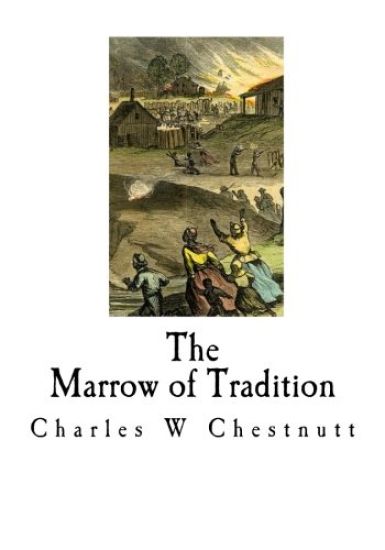
The Marrow of Traditionby Charles W. ChestnuttThe Marrow of Tradition (1901) is a historical novel by the African-American author Charles W. Chesnutt, set at the time and portraying a fictional account of the Wilmington Insurrection of 1898 in Wilmington, North Carolina.This story is a fictional account of the rise of the white supremacist movement, specifically as it contributed to the "race riots" that took place in Wilmington, North Carolina in 1898. Critics argue over what would be a more proper term; some favor "massacre" while a North Carolina state commission ruled that it was a coup d'etat, the only overthrow of a legitimately elected government in United States history. Whites attacked and killed blacks in the city and overthrew the county government, establishing white supremacists in power.Chesnutt anticipated the book would "become lodged in the popular mind as the legitimate successor of Uncle Tom's Cabin... as depicting an era in our national history". The book was poorly received in the South and received mixed reviews in the North. It ultimately sold only 3,726 copies in its first year.