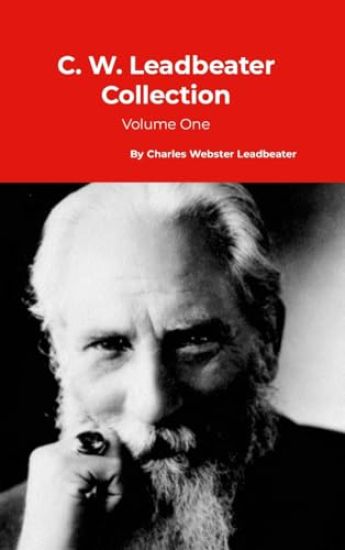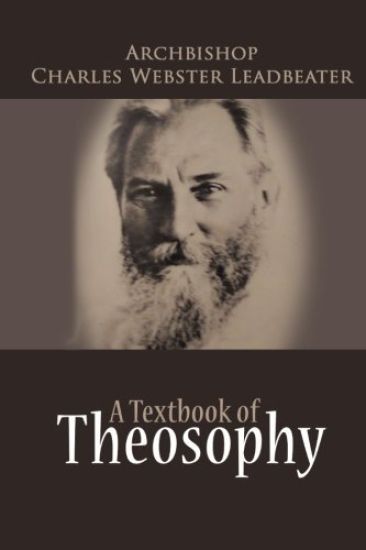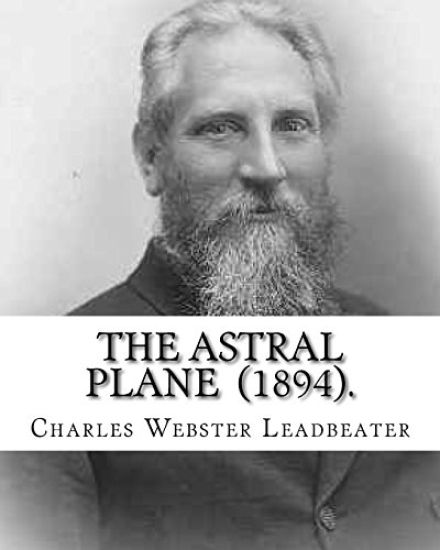
Charles Webster Leadbeater ( 16 February 1854 - 1 March 1934) was a member of the Theosophical Society, author on occult subjects and co-initiator with J. I. Wedgwood of the Liberal Catholic Church. Originally a priest of the Church of England, his interest in spiritualism caused him to end his affiliation with Anglicanism in favour of the Theosophical Society, where he became an associate of Annie Besant. He became a high-ranking officer of the society, but resigned in 1906 amid a sex scandal. Accusations of his detractors were never proven, and after Annie Besant became President of the Society, he was readmitted in 1908. Leadbeater went on to write over 69 books and pamphlets as well as maintain regular speaking engagements. His efforts on behalf of the society assured his status as one of its leading members until his death in 1934. Early life: Leadbeater was born in Stockport, Cheshire, in 1854. His father, Charles Sr., was born in Lincoln and his mother Emma was born in Liverpool. He was an only child. By 1861 the family had relocated to London, where his father was a railway contractor's clerk. In 1862, when Leadbeater was eight years old, his father died from tuberculosis. Four years later a bank in which the family's savings were invested became bankrupt. Without finances for college, Leadbeater sought work soon after graduating from high school in order to provide for his mother and himself. He worked at various clerical jobs.During the evenings he became largely self-educated. For example, he studied astronomy and had a 12-inch reflector telescope (which was very expensive at the time) to observe the heavens at night. He also studied French, Latin and Greek. An uncle, his father's brother-in-law, was the well-known Anglican cleric William Wolfe Capes. By his uncle's influence, Leadbeater was ordained an Anglican priest in 1879 in Farnham by the Bishop of Winchester. By 1881, he was living with his widowed mother at Bramshott in a cottage which his uncle had built, where he is listed as "Curate of Bramshott". He was an active priest and teacher who was remembered later as "a bright and cheerful and kindhearted man". About this time, after reading about the s ances of reputed medium Daniel Dunglas Home (1833-1886), Leadbeater developed an active interest in spiritualism................
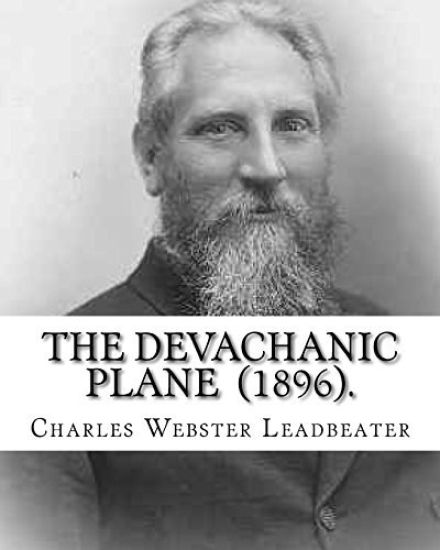
Charles Webster Leadbeater 16 February 1854 - 1 March 1934) was an influential member of the Theosophical Society, author on occult subjects and co-initiator with J. I. Wedgwood of the Liberal Catholic Church. Originally a priest of the Church of England, his interest in spiritualism caused him to end his affiliation with Anglicanism in favour of the Theosophical Society, where he became an associate of Annie Besant. He became a high-ranking officer of the society, but resigned in 1906 amid a sex scandal. Accusations of his detractors were never proven, and after Annie Besant became President of the Society, he was readmitted in 1908. Leadbeater went on to write over 69 books and pamphlets as well as maintain regular speaking engagements. His efforts on behalf of the society assured his status as one of its leading members until his death in 1934.Leadbeater was born in Stockport, Cheshire, in 1854. His father, Charles Sr., was born in Lincoln and his mother Emma was born in Liverpool. He was an only child. By 1861 the family had relocated to London, where his father was a railway contractor's clerk.
Everything there is to know about Theosophy and more. Some of the topics in this book are The Use and Abuse of Psychic Powers- The Trained and the Untrained- Mesmerism and mind-cure -Clairvoyance- Scandalous Misuse of it -Thought-Forms -The Work of the Thought-Form- Helpful Thought- Sensitiveness- Inharmonious Vibrations- Magic, White and Black- The Unrecognized Forces of Nature Nature -Spirits- The Magic of Command- Four Types of Magicians -Three Types of Force- Magic in Religion- Talismans- Charms or Mantrams- Invocatory Magic- Evil Invocations- The Darker Magic -Petty Magic- How Evil may be Resisted
Theosophy is a technique from the 1600s that showed quite a bit of interest in esoteric circles of the twentieth century. The theosophist seeks to understand the mysteries of the universe and the bonds that unite the universe, humanity and the divine. The goal of theosophy is to explore the origin of divinity and humanity, and the end of world, life and humanity. From investigation of those topics theosophists try to discover a coherent description of the purpose and origin of the universe. We often speak of Theosophy as not in itself a religion, but the truth, which lies behind all religions alike. As a philosophy, it explains to us that the solar system is a carefully - ordered mechanism, a manifestation of a magnificent life, of which man is but a small part. Nevertheless, it takes up that small part, which immediately concerns us, and treats it exhaustively under three heads - present, past and future.