Kirjojen hintavertailu. Mukana 12 016 292 kirjaa ja 12 kauppaa.

Kirjahaku

Etsi kirjoja tekijän nimen, kirjan nimen tai ISBN:n perusteella.

28 kirjaa tekijältä Charles Wright

The Collected Novels of Charles Wright: The Messenger, the Wig, and Absolutely Nothing to Get Alarmed about
"Reading Wright is a steep, stinging pleasure."--Dwight Garner, New York TimesIn this incisive, satirical collection of three classic American novels by Charles Wright--hailed by the New York Times as "malevolent, bitter, glittering"--a young, black intellectual from the South struggles to make it in New York City. This special compilation includes a foreword by acclaimed poet and novelist Ishmael Reed, who calls Wright, "Richard Pryor on paper."As fresh and poignant as when originally published in the sixties and seventies, The Messenger, The Wig, and Absolutely Nothing to get Alarmed About form Charles Wright's remarkable New York City trilogy. By turns brutally funny and starkly real, these three autobiographical novels create a memorable portrait of a young, working-class, black intellectual--a man caught between the bohemian elite of Greenwich Village and the dregs of male prostitution and drug abuse. Wright's fiction is searingly original in bringing to life a special time, a special place, and the remarkable story of a man living in two worlds. This updated edition shines a spotlight once again on this important writer--a writer whose work is so crucial to our times.
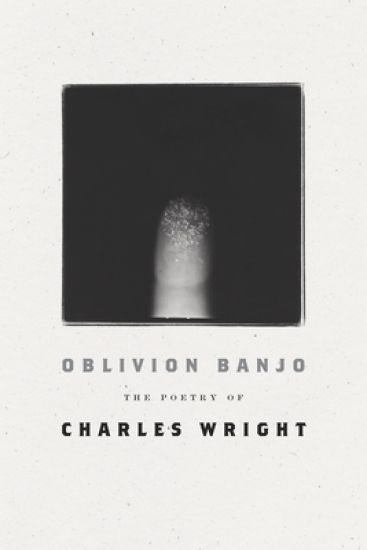
Oblivion Banjo: The Poetry of Charles Wright

Oblivion Banjo: The Poetry of Charles Wright

Charles Wright

Farrar, Straus and Giroux
2020
nidottu
The selected works of one of our finest American poets The thread that dangles us between a dark and a darker dark, Is luminous, sure, but smooth sided. Don't touch it here, and don't touch it there. Don't touch it, in fact, anywhere--Let it dangle and hold us hard, let it flash and swing.--from "Scar Tissue" Over the course of his work--more than twenty books in total--Charles Wright has built "one of the truly distinctive bodies of poetry created in the second half of the twentieth century" (David Young, Contemporary Poets). Oblivion Banjo, a capacious new selection spanning his decades-long career, showcases the central themes of Wright's poetry: "language, landscape, and the idea of God." No matter the precise subject of each poem, on display here is a vast and rich interior life, a mind wrestling with the tenuous relationship between the ways we describe the world and its reality. The recipient of almost every honor in poetry--the Pulitzer Prize, the National Book Award, and the Bollingen Prize, to name a few--and a former poet laureate of the United States, Wright is an essential voice in American letters. Oblivion Banjo is the perfect distillation of his inimitable career--for devout fans and newcomers alike.
Poems, on Several Occasions, Chiefly Divine and Moral. Principally Designed to Create an awe for the Supreme Creator, and Enlighten the Vain Notions of an Abandoned and Lukewarm age. By Charles Wright
The 18th century was a wealth of knowledge, exploration and rapidly growing technology and expanding record-keeping made possible by advances in the printing press. In its determination to preserve the century of revolution, Gale initiated a revolution of its own: digitization of epic proportions to preserve these invaluable works in the largest archive of its kind. Now for the first time these high-quality digital copies of original 18th century manuscripts are available in print, making them highly accessible to libraries, undergraduate students, and independent scholars.The Age of Enlightenment profoundly enriched religious and philosophical understanding and continues to influence present-day thinking. Works collected here include masterpieces by David Hume, Immanuel Kant, and Jean-Jacques Rousseau, as well as religious sermons and moral debates on the issues of the day, such as the slave trade. The Age of Reason saw conflict between Protestantism and Catholicism transformed into one between faith and logic -- a debate that continues in the twenty-first century.++++The below data was compiled from various identification fields in the bibliographic record of this title. This data is provided as an additional tool in helping to insure edition identification: ++++British LibraryT227473Yarm: printed by John Atkinson, for the author, anno 1781. 48p.; 4
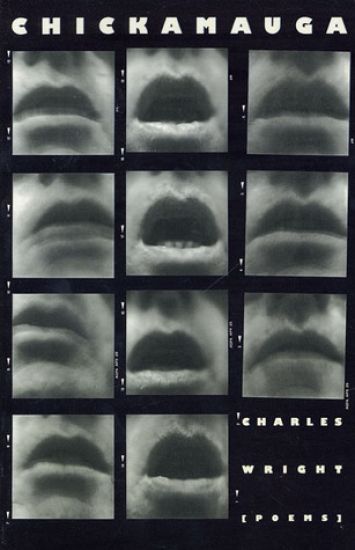
Chickamauga

Chickamauga

Charles Wright

Farrar, Straus and Giroux
1996
pokkari
This volume, Wright's eleventh book of poetry, is a vivid, contemplative, far-reaching, yet wholly plain-spoken collection of moments appearing as lenses through which to see the world beyond our moments. "Chickamauga" is also a virtuoso exploration of the power of concision in lyric poetry--a testament to the flexible music of the long line Wright has made his own. As a reviewer in "Library Journal" noted: "Wright is one of those rare and gifted poets who can turn thought into music. Following his self-prescribed regimen of purgatio, illuminato, and contemplatio, Wright spins one lovely lyric after another on such elemental subjects as sky, trees, birds, months, and seasons. But the real subject is the thinking process itself and the mysterious alchemy of language: 'The world is a language we never quite understand.'"
Appalachia

Appalachia

Charles Wright

Farrar, Straus Giroux Inc
1999
nidottu
Almost thirty years ago, Charles Wright (who teaches at the University of Virginia in Charlottesville and has won both the Pulitzer Prize and the National Book Award for Poetry) began a poetic project of astonishing scope--a series of three trilogies. The first trilogy was collected in "Country Music, the second in "The World of the Ten Thousand Things, and the third began with "Chickamauga and continued with "Black Zodiac. "Appalachia is the last book in the final trilogy of this pathbreaking and majestic series. If "Country Music traced "Wright's journey from the soil to the stars" and "The World of the Ten Thousand Things "lovingly detailed" our world and made "a visionary map of the world beyond" (James Longenbach, "The Nation), this final book in Wright's great work reveals a master's confrontation with his own mortality and his stunning ability to discover transcendence in the most beautifully ordinary of landscapes.
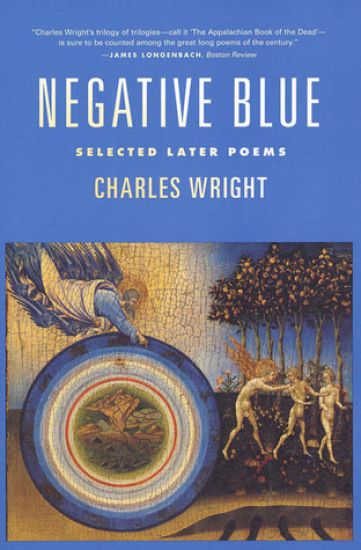
Negative Blue

Negative Blue

Charles Wright

Farrar Strauss Giroux-3pl
2001
pokkari
The culmination of the cycle that won Wright the Pulitzer Prize and National Book Critics Circle Award"Time will append us like suit coats left out overnight""On a deck chair, loose change dead weight in the right pocket, ""Silk handkerchief limp with dew, "" sleeves in a slow dance with the wind.""And love will kill us--""Love, and the winds from under the earth"" that grind us to grain-out."--from "Still Life with Spring and Time to Burn"When Charles Wright published "Appalachia "in 1998, it marked the completion of a nine-volume project, of which James Longenbach wrote in the "Boston Review," "Charles Wright's trilogy of trilogies--call it 'The Appalachian Book of the Dead'--is sure to be counted among the great long poems of the century."The first two of those trilogies were collected in "Country Music" (1982) and "The World of the Ten Thousand Things" (1990). Here Wright adds to his third trilogy ("Chickamauga " 1995], "Black Zodiac" 1997], and "Appalachia " 1998]) a section of new poems that suggest new directions in the work of this sensuous, spirit-haunted poet.
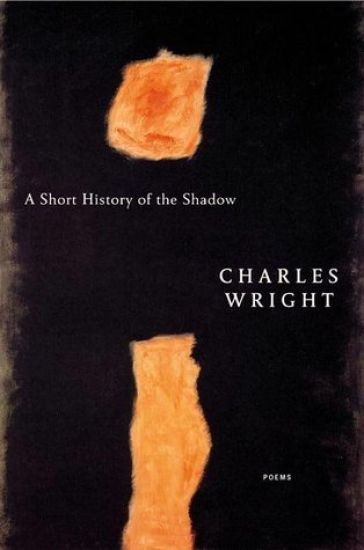
A Short History of the Shadow

A Short History of the Shadow

Charles Wright

Farrar, Straus and Giroux
2003
pokkari
Luminous new poems from one who "has long been a poet of gorgeous description" William Logan, "The New Criterion""Landscape, as Wang Wei says, softens the sharp edges of isolation.""Don't just do something, sit there.""And so I have, so I have, ""the seasons curling around me like smoke, ""Gone to the end of the earth and back without a sound." from "Body and Soul II"This is Charles Wright's first collection of verse since the gathering, in "Negative Blue," of his "Appalachian Book of the Dead," a trilogy of trilogies hailed "among the great long poems of the century" (James Longenbach, "Boston Review"). In "A Short History of the Shadow," Wright's return to the landscapes of his early work finds his art resilient in a world haunted by death and the dead."
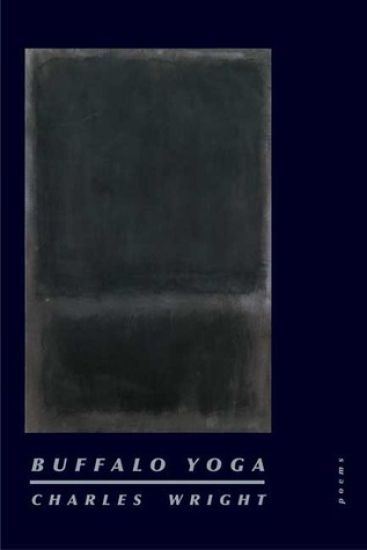
Buffalo Yoga: Poems

Buffalo Yoga: Poems

Charles Wright

Farrar, Straus and Giroux
2005
nidottu
" Wright's] penetrating and ravishingly gorgeous lyrical poems are at once classically philosophical and freshly revealing" (Booklist) Never has Charles Wright's vision been more closely aligned with the work of the ancient Chinese painters and writers who inform his poetry than in his newest collection. Wright's short lyrics, in Charles Simic's words, "achieve a level of eloquence where the reader says to himself, if this is not wisdom, I don't know what is" (The New York Review of Books). The poems in Buffalo Yoga are pristine examples of the Tennessee poet's deft, painterly touch-"crows in a caterwaul" are "scored like black notes in the bare oak"-and his oblique, expansive, and profound interrogation of mortality, as in the title sequence, where the soul is "a rhythmical knot. / That form unties. Or reties."
Poems

Poems

Charles Wright

Farrar, Straus Giroux Inc
2007
nidottu
In "Scar Tissue," the Pulitzer Prize winning poet Charles Wright not only investigates the tenuous relationship between description and actuality "A thing is not an image" but also reaffirms the project of attempting to describe, to capture the natural world and the beings in it, although he reminds us that landscape is not his subject matter but his technique: that language was always his subject language and "the ghost of god." And in the dolomites, the clouds, stars, wind, and water that populate these poems, "something un-ordinary persists.""Scar Tissue "is a groundbreaking work from a poet who "illuminates and exalts in the entire astonishing spectrum of existence" ("Booklist")."
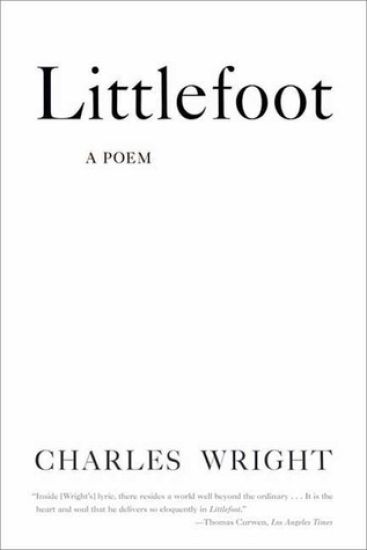
Littlefoot

Littlefoot

Charles Wright

Farrar, Straus Giroux Inc
2008
nidottu
"Littlefoot," the eighteenth book from one of this country's most acclaimed poets, is an extended meditation on mortality, on the narrator's search of the skies for a road map and for last instructions on "the other side of my own death." Following the course of one year, the poet's seventieth, we witness the seasons change over his familiar postage stamps of soil, realizing that we are reflected in them, that the true affinity is between writer and subject, human and nature, one becoming the other, as the river is like our blood, "it powers on, / out of sight, out of mind." Seeded with lyrics of old love songs and spirituals, here we meet solitude, resignation, and a glad cry that while a return to the beloved earth is impossible, "all things come from splendor," and the urgent question that the poet can't help but ask: "Will you miss me when I'm gone?
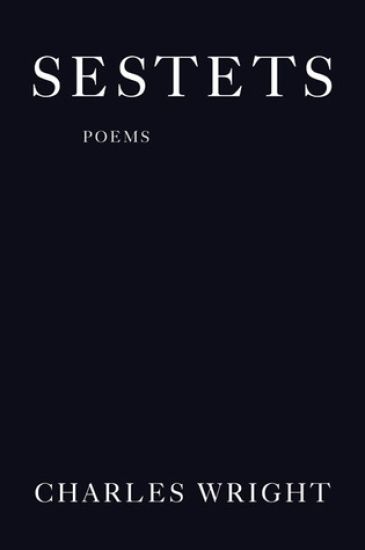
Sestets

Sestets

Charles Wright

Farrar, Strauss Giroux-3pl
2010
nidottu
Sestets is the nineteenth book from one of the country's most acclaimed poets, a masterpiece of formal rigor and a profound meditation on nature and mortality. It is yet another virtuosic showcase for Charles Wright's acclaimed descriptive powers, and also an inquiry into the nature of description itself, both seductive and dangerous: "a virtual world/ Unfit for the virtuous." Like his previous books, Sestets is seeded with the lyrics of old love songs and spirituals, and "there is always room to connect his highly polished poems to the world where most of us lead mundane lives" (Miami Herald). Soaring and earthy, lyrical and direct, Charles Wright is an American treasure, and his search for a truth that transcends change and death settles finally on the beauties of nature and language: "Time is a graceless enemy, but purls as it comes and goes."
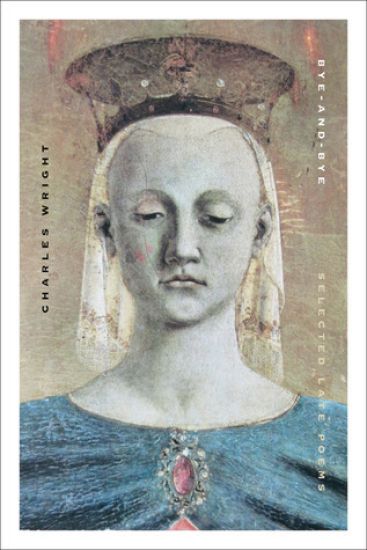
Bye and Bye

Bye and Bye

Charles Wright

Farrar, Straus and Giroux
2012
nidottu
Over the course of nineteen collections of poems, Charles Wright has built "one of the truly distinctive bodies of poetry created in the second half of the twentieth century" (David Young, Contemporary Poets). Bye-and-Bye, which brings together selections from Wright's more recent work--including the entirety of Littlefoot, Wright's moving, book-length meditation on mortality--showcases the themes and images that have defined his mature work: the true affinity between writer and subject, human and nature; the tenuous relationship between description and actuality; and the search for a truth that transcends change and death. Bye-and-Bye is a wonderful introduction to the late work of one of America's finest and best-loved poets.
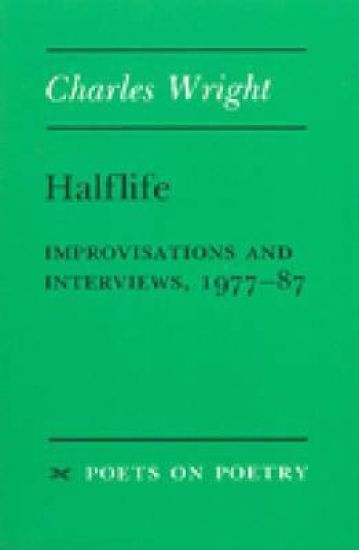
Halflife

Halflife

Charles Wright

The University of Michigan Press
1988
nidottu
"I myself am interested in a kind of structural investigation of the line, an attempt at some kind of harmonics involving new patterns and new designs using a long image-freighted line (the odd marriage of Emily and Walt) that can carry information (and 'sincerity' and a lyric intensity at the same time. Not only will it sing, but it will tell time too. Or as Fats Domino once observed, 'I don't want to bury the lyrics, man; I want 'em to understand what I'm saying.'" Halflife is captivating. Charles Wright, in disclosing the contents of his journal, reveals the influence of Ezra Pound, Eugenio Montale, Emily Dickinson, Italian painter Giorgio Morandi, and country music legend A.P. Carter.
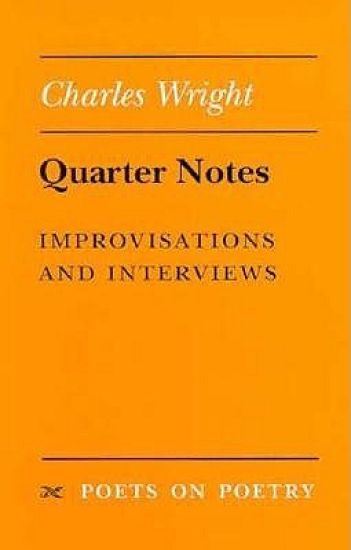
Quarter Notes

Quarter Notes

Charles Wright

The University of Michigan Press
1995
nidottu
Quarter Notes harvests recent reviews, essays, memoirs, and interviews by acclaimed poet Charles Wright. Wright uses creative variations on the form of the linear essay including interviews with himself as interviewee, correspondence (with Charles Simic), and experimentation with what he calls Improvisations "non- linear associational storylines". The book's short, staccato-like bursts add up to much more than the sum of their parts. This satisfying collection includes reminiscences and meditations on the details of memory and what it means to visit the past; the vices of titleism and the hydrosyllabic foot in poetry; a comparison of poems and journeys; appreciation of poets Donald Justice and John Crow Ransom; an attempt to define "image"; discussions of the current state of poetry; and various highlights from the Charles Wright Literary Festival. Charles Wright's books of poetry include The World of the Ten Thousand Things and Country Music: Selected Early Poems. He received the 1993 Ruth Lilly Poetry Prize and the 1992 Award of Merit Medal from the American Academy of Arts and Letters. He is Souder Family Professor of English, University of Virginia.
Quarter Notes

Quarter Notes

Charles Wright

The University of Michigan Press
1995
sidottu
Quarter Notes harvests recent reviews, essays, memoirs, and interviews by acclaimed poet Charles Wright. Wright uses creative variations on the form of the linear essay including interviews with himself as interviewee, correspondence (with Charles Simic), and experimentation with what he calls Improvisations "non- linear associational storylines". The book's short, staccato-like bursts add up to much more than the sum of their parts. This satisfying collection includes reminiscences and meditations on the details of memory and what it means to visit the past; the vices of titleism and the hydrosyllabic foot in poetry; a comparison of poems and journeys; appreciation of poets Donald Justice and John Crow Ransom; an attempt to define "image"; discussions of the current state of poetry; and various highlights from the Charles Wright Literary Festival. Charles Wright's books of poetry include The World of the Ten Thousand Things and Country Music: Selected Early Poems. He received the 1993 Ruth Lilly Poetry Prize and the 1992 Award of Merit Medal from the American Academy of Arts and Letters. He is Souder Family Professor of English, University of Virginia.
The Way of the Heart

The Way of the Heart

Charles Wright

Liturgical Press
2024
pokkari
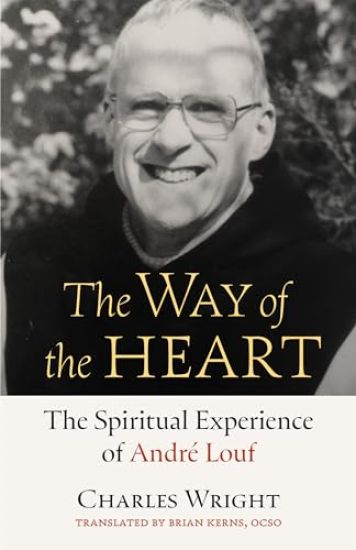
Award-winning French author shares the biography and spiritual journey of Cistercian abbot Dom André Louf. Based on a wide variety of interviews, printed sources, and Dom André Louf’s spiritual journal, The Way of the Heart narrates Louf’s spiritual journey from his childhood in Flanders through his becoming a monk in a Cistercian monastery, his ten years of retirement as a hermit in a Benedictine monastery in the south of France, and his death. Throughout his life he periodically struggled with conflicting vocational desires—sometimes wishing to serve as a pastor, academic, abbot, or to immerse himself in eremitic contemplation. That struggle is the leading thread through this biography, which portrays a man whose immense gifts pulled him in many directions, while always endeavoring to submit himself to God’s will.