Kirjojen hintavertailu. Mukana 11 244 527 kirjaa ja 12 kauppaa.

Kirjahaku

Etsi kirjoja tekijän nimen, kirjan nimen tai ISBN:n perusteella.

4 tulosta hakusanalla "Machine Learning for Text"

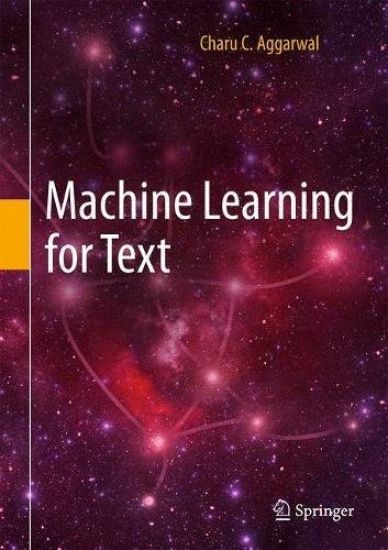
Machine Learning for Text

Machine Learning for Text

Charu C. Aggarwal

Springer Nature Switzerland AG
2019
nidottu
Text analytics is a field that lies on the interface of information retrieval,machine learning, and natural language processing, and this textbook carefully covers a coherently organized framework drawn from these intersecting topics. The chapters of this textbook is organized into three categories:- Basic algorithms: Chapters 1 through 7 discuss the classical algorithms for machine learning from text such as preprocessing, similarity computation, topic modeling, matrix factorization, clustering, classification, regression, and ensemble analysis.- Domain-sensitive mining: Chapters 8 and 9 discuss the learning methods from text when combined with different domains such as multimedia and the Web. The problem of information retrieval and Web search is also discussed in the context of its relationship with ranking and machine learning methods. - Sequence-centric mining: Chapters 10 through 14 discuss various sequence-centric and natural language applications, such as feature engineering, neural language models, deep learning, text summarization, information extraction, opinion mining, text segmentation, and event detection. This textbook covers machine learning topics for text in detail. Since the coverage is extensive,multiple courses can be offered from the same book, depending on course level. Even though the presentation is text-centric, Chapters 3 to 7 cover machine learning algorithms that are often used indomains beyond text data. Therefore, the book can be used to offer courses not just in text analytics but also from the broader perspective of machine learning (with text as a backdrop). This textbook targets graduate students in computer science, as well as researchers, professors, and industrial practitioners working in these related fields. This textbook is accompanied with a solution manual for classroom teaching.
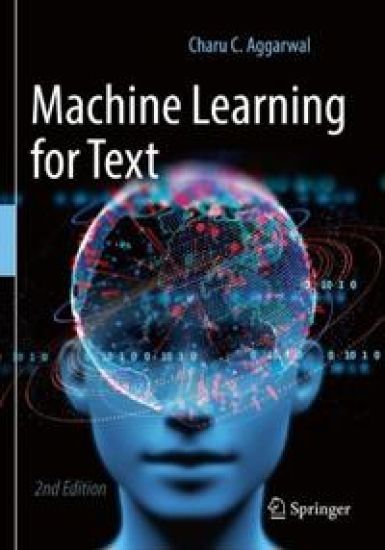
Machine Learning for Text

Machine Learning for Text

Charu C. Aggarwal

Springer Nature Switzerland AG
2022
sidottu
This second edition textbook covers a coherently organized framework for text analytics, which integrates material drawn from the intersecting topics of information retrieval, machine learning, and natural language processing. Particular importance is placed on deep learning methods. The chapters of this book span three broad categories:1. Basic algorithms: Chapters 1 through 7 discuss the classical algorithms for text analytics such as preprocessing, similarity computation, topic modeling, matrix factorization, clustering, classification, regression, and ensemble analysis.2. Domain-sensitive learning and information retrieval: Chapters 8 and 9 discuss learning models in heterogeneous settings such as a combination of text with multimedia or Web links. The problem of information retrieval and Web search is also discussed in the context of its relationship with ranking and machine learning methods. 3. Natural language processing: Chapters 10 through 16 discuss various sequence-centric and natural language applications, such as feature engineering, neural language models, deep learning, transformers, pre-trained language models, text summarization, information extraction, knowledge graphs, question answering, opinion mining, text segmentation, and event detection. Compared to the first edition, this second edition textbook (which targets mostly advanced level students majoring in computer science and math) has substantially more material on deep learning and natural language processing. Significant focus is placed on topics like transformers, pre-trained language models, knowledge graphs, and question answering.
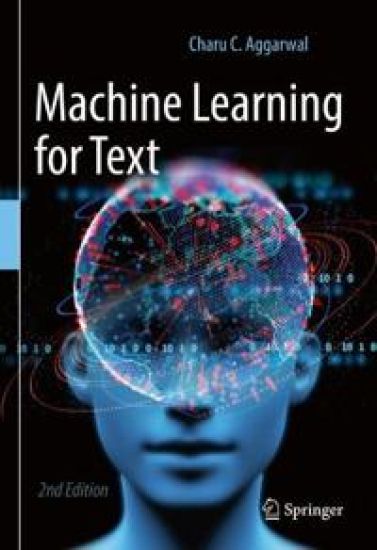
Machine Learning for Text

Machine Learning for Text

Charu C. Aggarwal

Springer Nature Switzerland AG
2023
nidottu
This second edition textbook covers a coherently organized framework for text analytics, which integrates material drawn from the intersecting topics of information retrieval, machine learning, and natural language processing. Particular importance is placed on deep learning methods. The chapters of this book span three broad categories:1. Basic algorithms: Chapters 1 through 7 discuss the classical algorithms for text analytics such as preprocessing, similarity computation, topic modeling, matrix factorization, clustering, classification, regression, and ensemble analysis.2. Domain-sensitive learning and information retrieval: Chapters 8 and 9 discuss learning models in heterogeneous settings such as a combination of text with multimedia or Web links. The problem of information retrieval and Web search is also discussed in the context of its relationship with ranking and machine learning methods. 3. Natural language processing: Chapters 10 through 16 discuss various sequence-centric and natural language applications, such as feature engineering, neural language models, deep learning, transformers, pre-trained language models, text summarization, information extraction, knowledge graphs, question answering, opinion mining, text segmentation, and event detection. Compared to the first edition, this second edition textbook (which targets mostly advanced level students majoring in computer science and math) has substantially more material on deep learning and natural language processing. Significant focus is placed on topics like transformers, pre-trained language models, knowledge graphs, and question answering.
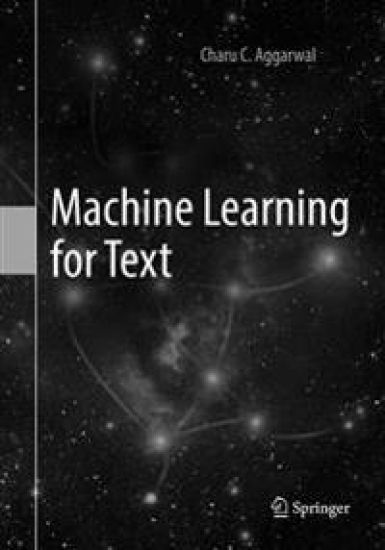
Machine Learning for Text

Machine Learning for Text

Charu C. Aggarwal

Springer International Publishing AG
2018
sidottu
Text analytics is a field that lies on the interface of information retrieval,machine learning, and natural language processing, and this textbook carefully covers a coherently organized framework drawn from these intersecting topics. The chapters of this textbook is organized into three categories:- Basic algorithms: Chapters 1 through 7 discuss the classical algorithms for machine learning from text such as preprocessing, similarity computation, topic modeling, matrix factorization, clustering, classification, regression, and ensemble analysis.- Domain-sensitive mining: Chapters 8 and 9 discuss the learning methods from text when combined with different domains such as multimedia and the Web. The problem of information retrieval and Web search is also discussed in the context of its relationship with ranking and machine learning methods. - Sequence-centric mining: Chapters 10 through 14 discuss various sequence-centric and natural language applications, such as feature engineering, neural language models, deep learning, text summarization, information extraction, opinion mining, text segmentation, and event detection. This textbook covers machine learning topics for text in detail. Since the coverage is extensive,multiple courses can be offered from the same book, depending on course level. Even though the presentation is text-centric, Chapters 3 to 7 cover machine learning algorithms that are often used indomains beyond text data. Therefore, the book can be used to offer courses not just in text analytics but also from the broader perspective of machine learning (with text as a backdrop). This textbook targets graduate students in computer science, as well as researchers, professors, and industrial practitioners working in these related fields. This textbook is accompanied with a solution manual for classroom teaching.