Kirjojen hintavertailu. Mukana 11 611 444 kirjaa ja 12 kauppaa.

Kirjahaku

Etsi kirjoja tekijän nimen, kirjan nimen tai ISBN:n perusteella.

12 kirjaa tekijältä Cheryl Miller

Language of Shalom: 7 Keys to Practical Reconciliation
Have you ever wished you could be a peacemaker but weren't really sure how to go about it? Sometimes when we try to resolve disputes, things blow up instead of getting better. Cheryl Miller, a trained mediator with over 1000 hours of experience in victim-offender mediation, has put together a guide for anyone who would like to learn basic principles to address conflict or problems in communities, families, or work. The Language of Shalom: 7 Keys to Practical Reconciliation is a practical guide to restorative justice, Christian community development, and mediation. Ms. Miller, Executive Director of a housing program for eighteen years, has used these techniques for the last ten years with the women who reside at the home. Now anyone can experience the transforming power of these keys to practical reconciliation.

Interpreting Arterial Blood Gases the Easy Way
Developed specifically for student nurses and based on the author's over thirty years of teaching experience, Interpreting Arterial Blood Gases the Easy Way teaches students a step-by-step method for interpreting blood gases and helps them learn how to apply the interpretations.The booklet is divided into two parts. Part I teaches students to differentiate between acidic and alkaline states, identify respiratory or metabolic changes in blood gases, and recognize compensated, partially compensated, and uncompensated states. In Part II students apply what they have learned in order to recognize signs and symptoms of abnormal blood gases, identify appropriate interventions, and understand the meaning and significance of specific oxygenation levels.Clear and well-organized, the material features quizzes for self-evaluation, critical thinking questions, and tips that may assist with the National Council Licensure Examination. Knowledge of basic physiology and acid-base balance is recommended before using the booklet, but the information is also reviewed. Interpreting Arterial Blood Gases the Easy Way is an excellent choice for nursing programs. It can also be used in training respiratory therapists and emergency medical technicians.
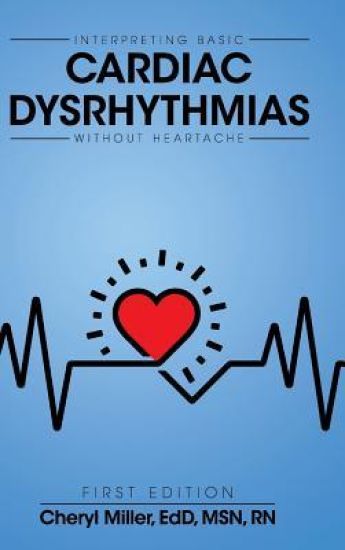
Interpreting Basic Cardiac Dysrhythmias Without Heartache
Interpreting Basic Cardiac Dysrhythmias Without Heartache is a step by step guide on interpreting basic electrocardiogram (EKG) readings in adults. Students benefit from first understanding normal sinus rhythm, as well as basic dysrhythmias, and then applying this understanding to rhythms that are more advanced and difficult.The book discusses the conduction system of the heart and the purpose of the electrocardiogram. Students learn how to read EKG waveforms and interpret rates and pacing. The book also addresses sinus and atrial dysrhythmias, atrial-ventricular blocks, and ventricular dysrhythmias. Each section of the text includes quizzes that students can use to check their comprehension and progress. Physiology and pathophysiology as they pertain to each dysrhythmia are also addressed, as are common interventions and medications.Clear and concise, Interpreting Basic Cardiac Dysrhythmias Without Heartache is an ideal teaching tool for students in all levels of nursing programs as well as for practicing nurses needing to refresh their knowledge. The practical applicability of the information also makes this a useful guide for paramedics and emergency medical technicians.
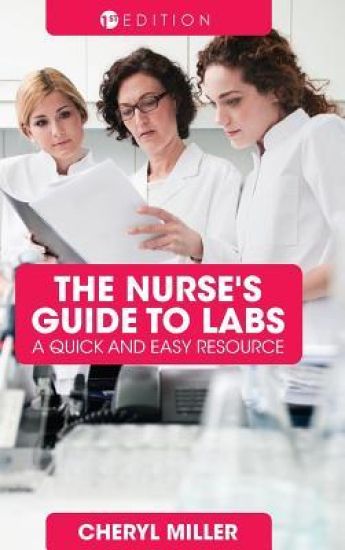
The Nurse's Guide to Labs

The Nurse's Guide to Labs

Cheryl Miller

Cognella, Inc
2017
nidottu
The Nurse's Guide to Labs: A Quick and Easy Resource is a quick, easy reference tool that helps nursing students understand common lab values. For each laboratory test, a clear definition is provided, along with some pathology if relevant. When relevant, students also learn what constitutes a normal versus a critical result. The guide explains common reasons for abnormal values, and addresses the nursing implications and responsibilities when such values occur.Students will learn about commonly ordered combined labs. There are specific chapters devoted to oxygenation/respiratory labs, hematology, and cardiac, liver, and pancreatic labs. The guide also discusses other endocrine systems labs, such as tests for pituitary, adrenal, and thyroid abnormalities, renal labs, urine labs, and cerebrospinal fluid labs.The Nurse's Guide to Labs has been developed for students preparing to become registered nurses, and can be kept as a useful reference tool for the working nurse. The guide is also well-suited to programs for licensed practical nurses, or anyone in a clinical setting who might need to know about and understand various lab tests and their results.
Interpreting Arterial Blood Gases the Easy Way

Interpreting Arterial Blood Gases the Easy Way

Cheryl Miller

Cognella Academic Publishing
2015
sidottu
"Developed specifically for student nurses and based on the author's over thirty years of teaching experience, Interpreting Arterial Blood Gases the Easy Way teaches students a step-by-step method for interpreting blood gases and helps them learn how to apply the interpretations. The booklet is divided into two parts. Part I teaches students to differentiate between acidic and alkaline states, identify respiratory or metabolic changes in blood gases, and recognize compensated, partially compensated, and uncompensated states. In Part II students apply what they have learned in order to recognize signs and symptoms of abnormal blood gases, identify appropriate interventions, and understand the meaning and significance of specific oxygenation levels. Clear and well-organized, the material features quizzes for self-evaluation, critical thinking questions, and tips that may assist with the National Council Licensure Examination. Knowledge of basic physiology and acid-base balance is recommended before using the booklet, but the information is also reviewed. Interpreting Arterial Blood Gases the Easy Way is an excellent choice for nursing programs. It can also be used in training respiratory therapists and emergency medical technicians. Cheryl Miller is a registered nurse who graduated with high honors from the University of Tennessee, Memphis, with a B.S.N. She earned both her M.S.N. and her Ed.D. at the University of Tennessee, Knoxville. Dr. Miller is a professor of nursing at Chattanooga State Community College where she teaches medical-surgical nursing specializing in critical care. In addition, she serves as the chair of the nursing program effectiveness committee, course coordinator for the last semester of the nursing program, and liaison with area hospitals for student clinical placement. She is a past recipient of the Chattanooga State Teaching Excellence Award."
Interpreting Basic Cardiac Dysrhythmias Without Heartache

Interpreting Basic Cardiac Dysrhythmias Without Heartache

Cheryl Miller

Cognella Academic Publishing
2017
sidottu
Interpreting Basic Cardiac Dysrhythmias Without Heartache is a step by step guide on interpreting basic electrocardiogram (EKG) readings in adults. Students benefit from first understanding normal sinus rhythm, as well as basic dysrhythmias, and then applying this understanding to rhythms that are more advanced and difficult. The book discusses the conduction system of the heart and the purpose of the electrocardiogram. Students learn how to read EKG waveforms and interpret rates and pacing. The book also addresses sinus and atrial dysrhythmias, atrial-ventricular blocks, and ventricular dysrhythmias. Each section of the text includes quizzes that students can use to check their comprehension and progress. Physiology and pathophysiology as they pertain to each dysrhythmia are also addressed, as are common interventions and medications. Clear and concise, Interpreting Basic Cardiac Dysrhythmias Without Heartache is an ideal teaching tool for students in all levels of nursing programs as well as for practicing nurses needing to refresh their knowledge. The practical applicability of the information also makes this a useful guide for paramedics and emergency medical technicians.Cheryl Miller is a registered nurse who earned both her M.S.N. and her Ed.D. at the University of Tennessee, Knoxville. Dr. Miller is a professor of nursing at Chattanooga State Community College where she teaches medical-surgical nursing specializing in critical care, serves as the chair of the nursing program effectiveness committee, and as liaison with area hospitals for student clinical placement. She is a past recipient of the Chattanooga State Teaching Excellence Award, and the author of Interpreting Arterial Blood Gases: The Easy Way and The Nurse's Guide to Labs: A Quick and Easy Resource.
The Nurse's Guide to Labs

The Nurse's Guide to Labs

Cheryl Miller

Cognella Academic Publishing
2017
sidottu
The Nurse's Guide to Labs: A Quick and Easy Resource is a quick, easy reference tool that helps nursing students understand common lab values. For each laboratory test, a clear definition is provided, along with some pathology if relevant. When relevant, students also learn what constitutes a normal versus a critical result. The guide explains common reasons for abnormal values, and addresses the nursing implications and responsibilities when such values occur. Students will learn about commonly ordered combined labs. There are specific chapters devoted to oxygenation/respiratory labs, hematology, and cardiac, liver, and pancreatic labs. The guide also discusses other endocrine systems labs, such as tests for pituitary, adrenal, and thyroid abnormalities, renal labs, urine labs, and cerebrospinal fluid labs. The Nurse's Guide to Labs has been developed for students preparing to become registered nurses, and can be kept as a useful reference tool for the working nurse. The guide is also well-suited to programs for licensed practical nurses, or anyone in a clinical setting who might need to know about and understand various lab tests and their results.Cheryl Miller is a registered nurse who earned both her M.S.N. and her Ed.D. at the University of Tennessee, Knoxville. Dr. Miller is a professor of nursing at Chattanooga State Community College where she teaches medical-surgical nursing specializing in critical care, and serves as the chair of the nursing program effectiveness committee, and as liaison with area hospitals for student clinical placement. She is a past recipient of the Chattanooga State Teaching Excellence Award, and the author of three nursing books.
Le Livre Gardien the Book Keeper: Discoveries Are Often the Beginning of Adventures

Le Livre Gardien the Book Keeper: Discoveries Are Often the Beginning of Adventures

Cheryl Miller

Createspace Independent Publishing Platform
2017
nidottu
Discoveries are often the beginning of adventures when Genelle visits rural France and purchases an old bookshop.Generations link the ties of love, war, and peace when the story unfolds of a Belgium Capitaine of a working barge 'p niche' who becomes involved with a young French girl during World War II.Photographs within LE LIVRE GARDIEN The Book Keeper capture the essence of France and Amsterdam