Kirjojen hintavertailu. Mukana 11 529 094 kirjaa ja 12 kauppaa.

Kirjahaku

Etsi kirjoja tekijän nimen, kirjan nimen tai ISBN:n perusteella.

6 kirjaa tekijältä Chet Hosmer

Python Forensics

Python Forensics

Chet Hosmer

Syngress Media,U.S.
2014
nidottu
Python Forensics provides many never-before-published proven forensic modules, libraries, and solutions that can be used right out of the box. In addition, detailed instruction and documentation provided with the code samples will allow even novice Python programmers to add their own unique twists or use the models presented to build new solutions. Rapid development of new cybercrime investigation tools is an essential ingredient in virtually every case and environment. Whether you are performing post-mortem investigation, executing live triage, extracting evidence from mobile devices or cloud services, or you are collecting and processing evidence from a network, Python forensic implementations can fill in the gaps. Drawing upon years of practical experience and using numerous examples and illustrative code samples, author Chet Hosmer discusses how to: Develop new forensic solutions independent of large vendor software release schedules Participate in an open-source workbench that facilitates direct involvement in the design and implementation of new methods that augment or replace existing tools Advance your career by creating new solutions along with the construction of cutting-edge automation solutions to solve old problems
Python Passive Network Mapping

Python Passive Network Mapping

Chet Hosmer

Syngress Media,U.S.
2015
nidottu
Python Passive Network Mapping: P2NMAP is the first book to reveal a revolutionary and open source method for exposing nefarious network activity. The "Heartbleed" vulnerability has revealed significant weaknesses within enterprise environments related to the lack of a definitive mapping of network assets. In Python Passive Network Mapping, Chet Hosmer shows you how to effectively and definitively passively map networks. Active or probing methods to network mapping have traditionally been used, but they have many drawbacks - they can disrupt operations, crash systems, and - most importantly - miss critical nefarious activity. You require an accurate picture of the environments you protect and operate in order to rapidly investigate, mitigate, and then recover from these new attack vectors. This book gives you a deep understanding of new innovations to passive network mapping, while delivering open source Python-based tools that can be put into practice immediately. Python Passive Network Mapping is for practitioners, forensic investigators, IT teams, and individuals who work together when performing incident response and investigating potential damage, or are examining the impacts of new malware threats. Those defending critical infrastructures will have a special interest in this book, as active or probing methods of network mapping are rarely used within these environments as any resulting impacts can be disastrous. Python Passive Network Mapping is ideally suited for use as a text in a variety of academic programs to expose and engage students in the art of passively mapping enterprise networks, with the added benefit of providing exposure to open source Python solutions.
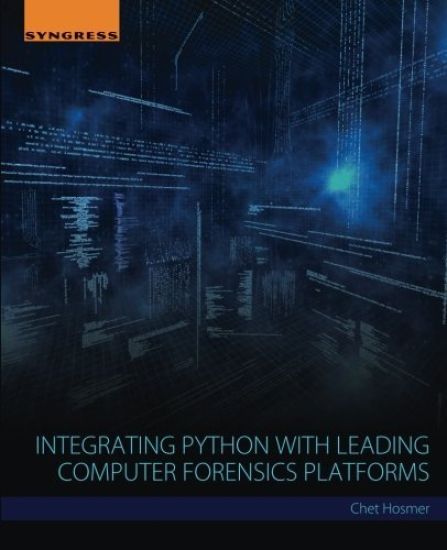
Integrating Python with Leading Computer Forensics Platforms
Integrating Python with Leading Computer Forensic Platforms takes a definitive look at how and why the integration of Python advances the field of digital forensics. In addition, the book includes practical, never seen Python examples that can be immediately put to use. Noted author Chet Hosmer demonstrates how to extend four key Forensic Platforms using Python, including EnCase by Guidance Software, MPE+ by AccessData, The Open Source Autopsy/SleuthKit by Brian Carrier and WetStone Technologies, and Live Acquisition and Triage Tool US-LATT. This book is for practitioners, forensic investigators, educators, students, private investigators, or anyone advancing digital forensics for investigating cybercrime. Additionally, the open source availability of the examples allows for sharing and growth within the industry. This book is the first to provide details on how to directly integrate Python into key forensic platforms.
Python Forensics

Python Forensics

Chet Hosmer

SYNGRESS
2024
nidottu
Python Forensics: A Workbench for Inventing and Sharing Digital Forensic Technology, Second Edition provides never-before-published, proven forensic modules, libraries, and turnkey solutions. In addition, detailed instruction and documentation provided with the code samples allow even novice Python programmers to add their own unique twists. Rapid development of new cybercrime investigation tools is an essential ingredient in virtually every case and environment. Whether you are performing post-mortem investigation, executing live triage, extracting evidence from mobile devices or cloud services, or are collecting and processing evidence from a network, Python forensic implementations can fill in the gaps. This updated edition addresses new and emerging needs of the Digital Forensics professional, including expanded integration of Python into forensics and cybersecurity platforms; extensive machine learning integration with the Python ecosystem; using Python for deep packet inspection investigations; using Python for the gathering and analysis of Open-Source Intelligence (OSINT) investigations; using Python during eDiscovery investigations; integration of Python with Generative Pre Trainer-Transformers such as GPT-3, ChatGPT, and others; extraction and interaction with social media platforms; integration and access to Virus Total and other Internet resources; and YARA rule processing with Python.
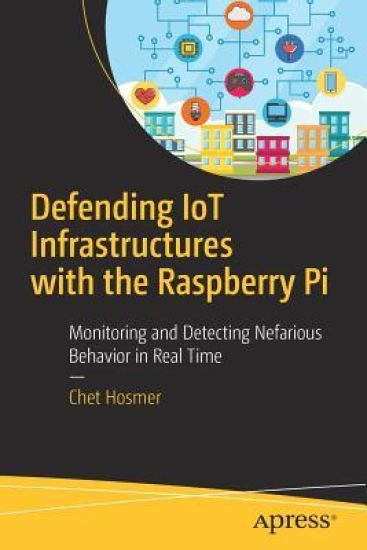
Defending IoT Infrastructures with the Raspberry Pi
Apply a methodology and practical solutions for monitoring the behavior of the Internet of Things (IoT), industrial control systems (ICS), and other critical network devices with the inexpensive Raspberry Pi. With this book, you will master passive monitoring and detection of aberrant behavior, and learn how to generate early indications and warning of attacks targeting IoT, ICS, and other critical network resources. Defending IoT Infrastructures with the Raspberry Pi provides techniques and scripts for the discovery of dangerous data leakage events emanating from IoT devices. Using Raspbian Linux and specialized Python scripts, the book walks through the steps necessary to monitor, detect, and respond to attacks targeting IoT devices. There are several books that cover IoT, IoT security, Raspberry Pi, and Python separately, but this book is the first of its kind to put them all together. It takes a practical approach, providing an entry point andlevel playing field for a wide range of individuals, small companies, researchers, academics, students, and hobbyists to participate. What You’ll Learn Create a secure, operational Raspberry Pi IoT sensorConfigure and train the sensor using “normal” IoT behaviorEstablish analytics for detecting aberrant activitiesGenerate real-time alerts to preempt attacksIdentify and report data-leakage events originating from IoT devicesDevelop custom Python applications for cybersecurity Who This Book Is For Cybersecurity specialists, professors teaching in undergraduate and graduate programs in cybersecurity, students in cybersecurity and computer science programs, software developers and engineers developing new cybersecurity defenses, incident response teams, software developers and engineers in general, and hobbyists wanting to expand the application of Raspberry Pi into both IoT and cybersecurity
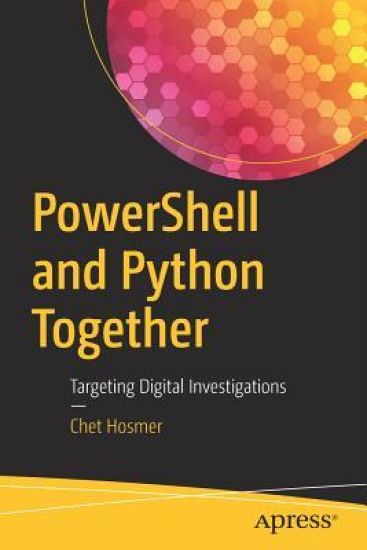
PowerShell and Python Together
Bring together the Python programming language and Microsoft’s PowerShell to address digital investigations and create state-of-the-art solutions for administrators, IT personnel, cyber response teams, and forensic investigators.You will learn how to join PowerShell's robust set of commands and access to the internals of both the MS Windows desktop and enterprise devices and Python's rich scripting environment allowing for the rapid development of new tools for investigation, automation, and deep analysis.PowerShell and Python Together takes a practical approach that provides an entry point and level playing field for a wide range of individuals, small companies, researchers, academics, students, and hobbyists to participate. What You’ll Learn Leverage the internals of PowerShell for: digital investigation, incident response, and forensicsLeverage Python to exploit already existing PowerShell CmdLets and aliases to build new automation and analysis capabilitiesCreate combined PowerShell and Python applications that provide: rapid response capabilities to cybersecurity events, assistance in the precipitous collection of critical evidence (from the desktop and enterprise), and the ability to analyze, reason about, and respond to events and evidence collected across the enterprise Who This Book Is For System administrators, IT personnel, incident response teams, forensic investigators, professors teaching in undergraduate and graduate programs in cybersecurity, students in cybersecurity and computer science programs, and software developers and engineers developing new cybersecurity defenses