Kirjojen hintavertailu. Mukana 12 370 808 kirjaa ja 12 kauppaa.

Kirjahaku

Etsi kirjoja tekijän nimen, kirjan nimen tai ISBN:n perusteella.

34 kirjaa tekijältä Chirag Shah

A Hands-On Introduction to Machine Learning

A Hands-On Introduction to Machine Learning

Chirag Shah

Cambridge University Press
2022
sidottu
Packed with real-world examples, industry insights and practical activities, this textbook is designed to teach machine learning in a way that is easy to understand and apply. It assumes only a basic knowledge of technology, making it an ideal resource for students and professionals, including those who are new to computer science. All the necessary topics are covered, including supervised and unsupervised learning, neural networks, reinforcement learning, cloud-based services, and the ethical issues still posing problems within the industry. While Python is used as the primary language, many exercises will also have the solutions provided in R for greater versatility. A suite of online resources is available to support teaching across a range of different courses, including example syllabi, a solutions manual, and lecture slides. Datasets and code are also available online for students, giving them everything they need to practice the examples and problems in the book.
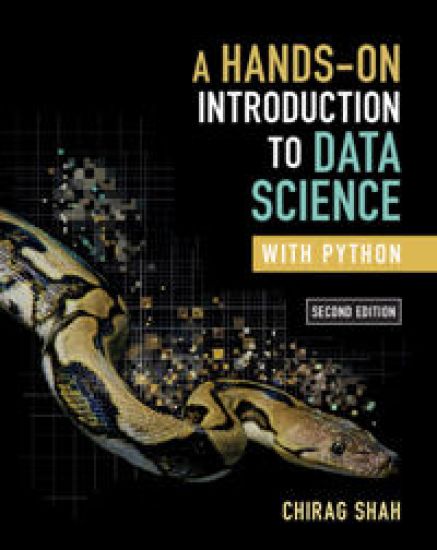
A Hands-On Introduction to Data Science with Python

A Hands-On Introduction to Data Science with Python

Chirag Shah

Cambridge University Press
2025
sidottu
Students will develop a practical understanding of data science with this hands-on textbook for introductory courses. This new edition is fully revised and updated, with numerous exercises and examples in the popular data science tool Python, a new chapter on using Python for statistical analysis, and a new chapter that demonstrates how to use Python within a range of cloud platforms. The many practice examples, drawn from real-life applications, range from small to big data and come to life in a new end-to-end project in Chapter 11. New 'Data Science in Practice' boxes highlight how concepts introduced work within an industry context and many chapters include new sections on AI and Generative AI. A suite of online material for instructors provides a strong supplement to the book, including lecture slides, solutions, additional assessment material and curriculum suggestions. Datasets and code are available for students online. This entry-level textbook is ideal for readers from a range of disciplines wishing to build a practical, working knowledge of data science.
A Hands-On Introduction to Data Science with Python

A Hands-On Introduction to Data Science with Python

Chirag Shah

Cambridge University Press
2025
pokkari
Students will develop a practical understanding of data science with this hands-on textbook for introductory courses. This new edition is fully revised and updated, with numerous exercises and examples in the popular data science tool Python, a new chapter on using Python for statistical analysis, and a new chapter that demonstrates how to use Python within a range of cloud platforms. The many practice examples, drawn from real-life applications, range from small to big data and come to life in a new end-to-end project in Chapter 11. New 'Data Science in Practice' boxes highlight how concepts introduced work within an industry context and many chapters include new sections on AI and Generative AI. A suite of online material for instructors provides a strong supplement to the book, including lecture slides, solutions, additional assessment material and curriculum suggestions. Datasets and code are available for students online. This entry-level textbook is ideal for readers from a range of disciplines wishing to build a practical, working knowledge of data science.
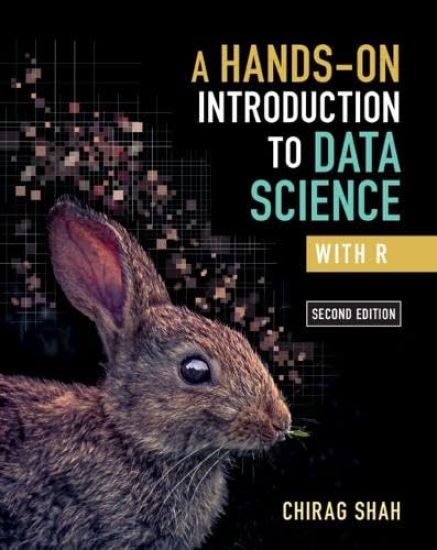
A Hands-On Introduction to Data Science with R

A Hands-On Introduction to Data Science with R

Chirag Shah

Cambridge University Press
2025
pokkari
Students will develop a practical understanding of data science with this hands-on textbook for introductory courses. This new edition is fully revised and updated, with numerous exercises and examples in the popular data science tool R, a new chapter on using R for statistical analysis, and a new chapter that demonstrates how to use R within a range of cloud platforms. The many practice examples, drawn from real-life applications, range from small to big data and come to life in a new end-to-end project in Chapter 11. New 'Data Science in Practice' boxes highlight how concepts introduced work within an industry context and many chapters include new sections on AI and Generative AI. A suite of online material for instructors provides a strong supplement to the book, including lecture slides, solutions, additional assessment material and curriculum suggestions. Datasets and code are available for students online. This entry-level textbook is ideal for readers from a range of disciplines wishing to build a practical, working knowledge of data science.
A Hands-On Introduction to Data Science with R

A Hands-On Introduction to Data Science with R

Chirag Shah

Cambridge University Press
2025
sidottu
Students will develop a practical understanding of data science with this hands-on textbook for introductory courses. This new edition is fully revised and updated, with numerous exercises and examples in the popular data science tool R, a new chapter on using R for statistical analysis, and a new chapter that demonstrates how to use R within a range of cloud platforms. The many practice examples, drawn from real-life applications, range from small to big data and come to life in a new end-to-end project in Chapter 11. New 'Data Science in Practice' boxes highlight how concepts introduced work within an industry context and many chapters include new sections on AI and Generative AI. A suite of online material for instructors provides a strong supplement to the book, including lecture slides, solutions, additional assessment material and curriculum suggestions. Datasets and code are available for students online. This entry-level textbook is ideal for readers from a range of disciplines wishing to build a practical, working knowledge of data science.
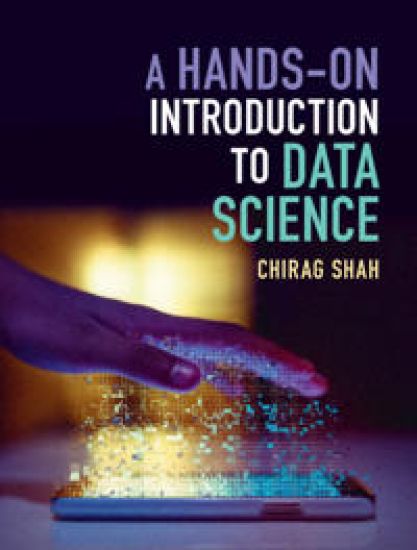
A Hands-On Introduction to Data Science

A Hands-On Introduction to Data Science

Chirag Shah

Cambridge University Press
2020
sidottu
This book introduces the field of data science in a practical and accessible manner, using a hands-on approach that assumes no prior knowledge of the subject. The foundational ideas and techniques of data science are provided independently from technology, allowing students to easily develop a firm understanding of the subject without a strong technical background, as well as being presented with material that will have continual relevance even after tools and technologies change. Using popular data science tools such as Python and R, the book offers many examples of real-life applications, with practice ranging from small to big data. A suite of online material for both instructors and students provides a strong supplement to the book, including datasets, chapter slides, solutions, sample exams and curriculum suggestions. This entry-level textbook is ideally suited to readers from a range of disciplines wishing to build a practical, working knowledge of data science.
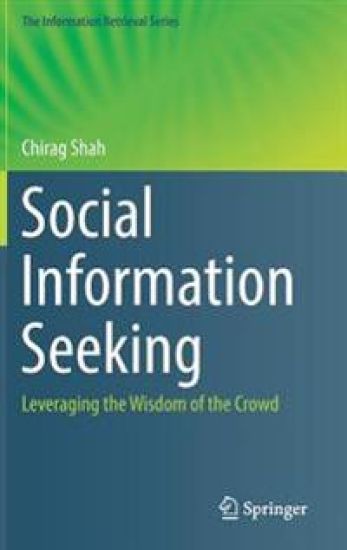
Social Information Seeking

Social Information Seeking

Chirag Shah

Springer International Publishing AG
2017
sidottu
This volume summarizes the author’s work on social information seeking (SIS), and at the same time serves as an introduction to the topic. Sometimes also referred to as social search or social information retrieval, this is a relatively new area of study concerned with the seeking and acquiring of information from social spaces on the Internet. It involves studying situations, motivations, and methods involved in seeking and sharing of information in participatory online social sites, such as Yahoo! Answers, WikiAnswers, and Twitter, as well as building systems for supporting such activities.The first part of the book introduces various foundational concepts, including information seeking, social media, and social networking. As such it provides the necessary basis to then discuss how those aspects could intertwine in different ways to create methods, tools, and opportunities for supporting and leveraging SIS. Next, Part II discusses the social dimension and primarily examines the online question-answering activity. Part III then emphasizes the collaborative aspect of information seeking, and examines what happens when social and collaborative dimensions are considered together. Lastly, Part IV provides a synthesis by consolidating methods, systems, and evaluation techniques related to social and collaborative information seeking. The book is completed by a list of challenges and opportunities for both theoretical and practical SIS work.The book is intended mainly for researchers and graduate students looking for an introduction to this new field, as well as developers and system designers interested in building interactive information retrieval systems or social/community-driven interfaces.
Social Information Seeking

Social Information Seeking

Chirag Shah

Springer International Publishing AG
2018
nidottu
This volume summarizes the author’s work on social information seeking (SIS), and at the same time serves as an introduction to the topic. Sometimes also referred to as social search or social information retrieval, this is a relatively new area of study concerned with the seeking and acquiring of information from social spaces on the Internet. It involves studying situations, motivations, and methods involved in seeking and sharing of information in participatory online social sites, such as Yahoo! Answers, WikiAnswers, and Twitter, as well as building systems for supporting such activities.The first part of the book introduces various foundational concepts, including information seeking, social media, and social networking. As such it provides the necessary basis to then discuss how those aspects could intertwine in different ways to create methods, tools, and opportunities for supporting and leveraging SIS. Next, Part II discusses the social dimension and primarily examines the online question-answering activity. Part III then emphasizes the collaborative aspect of information seeking, and examines what happens when social and collaborative dimensions are considered together. Lastly, Part IV provides a synthesis by consolidating methods, systems, and evaluation techniques related to social and collaborative information seeking. The book is completed by a list of challenges and opportunities for both theoretical and practical SIS work.The book is intended mainly for researchers and graduate students looking for an introduction to this new field, as well as developers and system designers interested in building interactive information retrieval systems or social/community-driven interfaces.
Collaborative Information Seeking

Collaborative Information Seeking

Chirag Shah

Springer-Verlag Berlin and Heidelberg GmbH Co. K
2012
sidottu
Today’s complex, information-intensive problems often require people to work together. Mostly these tasks go far beyond simply searching together; they include information lookup, sharing, synthesis, and decision-making. In addition, they all have an end-goal that is mutually beneficial to all parties involved. Such “collaborative information seeking” (CIS) projects typically last several sessions and the participants all share an intention to contribute and benefit. Not surprisingly, these processes are highly interactive.Shah focuses on two individually well-understood notions: collaboration and information seeking, with the goal of bringing them together to show how it is a natural tendency for humans to work together on complex tasks. The first part of his book introduces the general notions of collaboration and information seeking, as well as related concepts, terminology, and frameworks; and thus provides the reader with a comprehensive treatment of the concepts underlying CIS. The second part of the book details CIS as a standalone domain. A series of frameworks, theories, and models are introduced to provide a conceptual basis for CIS. The final part describes several systems and applications of CIS, along with their broader implications on other fields such as computer-supported cooperative work (CSCW) and human-computer interaction (HCI).With this first comprehensive overview of an exciting new research field, Shah delivers to graduate students and researchers in academia and industry an encompassing description of the technologies involved, state-of-the-art results, and open challenges as well as research opportunities.
Collaborative Information Seeking

Collaborative Information Seeking

Chirag Shah

Springer-Verlag Berlin and Heidelberg GmbH Co. K
2014
nidottu
Today’s complex, information-intensive problems often require people to work together. Mostly these tasks go far beyond simply searching together; they include information lookup, sharing, synthesis, and decision-making. In addition, they all have an end-goal that is mutually beneficial to all parties involved. Such “collaborative information seeking” (CIS) projects typically last several sessions and the participants all share an intention to contribute and benefit. Not surprisingly, these processes are highly interactive.Shah focuses on two individually well-understood notions: collaboration and information seeking, with the goal of bringing them together to show how it is a natural tendency for humans to work together on complex tasks. The first part of his book introduces the general notions of collaboration and information seeking, as well as related concepts, terminology, and frameworks; and thus provides the reader with a comprehensive treatment of the concepts underlying CIS. The second part of the book details CIS as a standalone domain. A series of frameworks, theories, and models are introduced to provide a conceptual basis for CIS. The final part describes several systems and applications of CIS, along with their broader implications on other fields such as computer-supported cooperative work (CSCW) and human-computer interaction (HCI).With this first comprehensive overview of an exciting new research field, Shah delivers to graduate students and researchers in academia and industry an encompassing description of the technologies involved, state-of-the-art results, and open challenges as well as research opportunities.
Raising AI

Raising AI

Chirag Shah

BLOOMSBURY PUBLISHING PLC
2026
sidottu
Most AI books either promise utopia or warn of apocalypse. This one does neither. We are living through the most consequential technology deployment in human history, yet most of the people making decisions about AI—from judges using it in courtrooms to HR executives screening job candidates—don't actually understand how it works or what could go wrong. AI systems embed the biases, assumptions, and blind spots of their creators, then amplify them at scale across society. Chirag Shah has spent his career building intelligent systems—and the last decade explaining them to the people who actually use them. In this book, he challenges us—and himself—to think deeper about how AI learns and why that matters for how we build and use these systems. Through vivid encounters with HAL, the Terminator, and TARS, Shah shows how science fiction has shaped our expectations of AI—for better and worse. And through the metaphor of parenting—from strict boundaries to guided autonomy to eventual partnership—he offers three principles for developing AI responsibly as it evolves from narrow tools toward general intelligence. Blending science fiction, personal narrative, and frontline experience with decision-makers, Shah delivers something rare: an AI book that educates without lecturing, acknowledges uncertainty without despair, and offers a practical framework for developing AI as it matures. Whether you're building these systems, deploying them, interacting with them, or simply living with their consequences, Raising AI is essential reading.
Financial Freedom Rx

Financial Freedom Rx

Chirag Shah; Jayanth Sridhar

SLACK Incorporated
2021
nidottu
"The best physician-specific general financial book published in 2021." - James M. Dahle, MD, author of The White Coat InvestorA step-by-step guidebook for doctors and other medical professionals about growing and preserving wealth, Financial Freedom Rx: The Physician’s Guide to Achieving Financial Independence gives physicians all the tools necessary to manage their own finances and includes a foreword by Mel Lindauer, co-author of The Bogleheads' Guide to Investing.Medical professionals, especially doctors, spend many years in training as they accumulate debt and delay their earnings. This book presents a time-tested formula that students and established professionals can follow at any stage during their careers to achieve fiscal peace of mind.Students will learn how to budget and adopt disciplined financial practices. Residents and other trainees will learn how to defend against calamity with various insurances and how to manage debt. Junior professionals will acquire the skills needed to invest and grow their portfolios, while senior professionals will better understand the essentials of estate planning and retirement.Drs. Chirag P. Shah and Jayanth Sridhar wrote this inspiring text to guide physicians where to put their next dollar. This is particularly important during the financial uncertainties brought on by COVID-19 and insurance cuts. Financial Freedom Rx sets forth principles that will pilot medical professionals toward financial independence.Chapters include useful advice on topics such as:Financial planningInvesting and asset allocationJobs and contractsTaxes and insuranceStudent loans and debtRetirement savings and distributionsFinancial Freedom Rx: The Physician’s Guide to Achieving Financial Independence serves as a timeless blueprint for financial planning that medical professionals will follow throughout their careers, and as a reference that readers will revisit again and again as they progress through the various stages of life.
Task Intelligence for Search and Recommendation

Task Intelligence for Search and Recommendation

Chirag Shah; Ryen W. White

Springer International Publishing AG
2021
nidottu
While great strides have been made in the field of search and recommendation, there are still challenges and opportunities to address information access issues that involve solving tasks and accomplishing goals for a wide variety of users. Specifically, we lack intelligent systems that can detect not only the request an individual is making (what), but also understand and utilize the intention (why) and strategies (how) while providing information and enabling task completion. Many scholars in the fields of information retrieval, recommender systems, productivity (especially in task management and time management), and artificial intelligence have recognized the importance of extracting and understanding people's tasks and the intentions behind performing those tasks in order to serve them better. However, we are still struggling to support them in task completion, e.g., in search and assistance, and it has been challenging to move beyond single-query or single-turn interactions. The proliferation of intelligent agents has unlocked new modalities for interacting with information, but these agents will need to be able to work understanding current and future contexts and assist users at task level. This book will focus on task intelligence in the context of search and recommendation. Chapter 1 introduces readers to the issues of detecting, understanding, and using task and task-related information in an information episode (with or without active searching). This is followed by presenting several prominent ideas and frameworks about how tasks are conceptualized and represented in Chapter 2. In Chapter 3, the narrative moves to showing how task type relates to user behaviors and search intentions. A task can be explicitly expressed in some cases, such as in a to-do application, but often it is unexpressed. Chapter 4 covers these two scenarios with several related works and case studies. Chapter 5 shows how task knowledge and task models can contribute to addressing emerging retrieval and recommendation problems. Chapter 6 covers evaluation methodologies and metrics for task-based systems, with relevant case studies to demonstrate their uses. Finally, the book concludes in Chapter 7, with ideas for future directions in this important research area.