

Kirjahaku
Etsi kirjoja tekijän nimen, kirjan nimen tai ISBN:n perusteella.
16 kirjaa tekijältä Chris Clarke

'A splendid critique' James O'Brien, Times Literary Supplement'Richly nuanced, the most stimulating book I have read on Labour in ages' Martin Kettle, Guardian'A brilliant book ... a reading of left-wing politics that suggests a road ahead' Independent A 'dark knight' conflict between good and evil; control by elite puppet masters; nostalgia for a golden age: these are the core myths of populism. And these narratives, argues Chris Clarke, have seduced the Left in Britain, causing bitter division and electoral disaster. Only by breaking this narrative spell and moving towards pluralism can Labour hope to fix itself - and to one day hold power again.Previously published by Rowman & Littlefield and Policy Network under the title Warring Fictions

This book collects the posts of a blog that Chris Clarke maintained from summer 2016 until his death in March 2019, in which he set out to explore the themes of 'Wisdom' and 'Isness'. What he meant by 'isness' is the theme that is expanded throughout the book, but a thing's isness is the essence of what it is for itself.As his health failed, what became very profound about these reflections is the way he reflected on each moment and experience for itself, searching deeply for the isness of each moment with no quest for a connecting narrative.
This book seeks to explore the ethical dimensions of economic governance through an engagement with Adam Smith and a critical analysis of economistic understandings of the Global Financial Crisis. It examines ethical and political dilemmas associated with key aspects of the financialisation of Anglo-American economy and society, including systems of asset-based welfare, modern risk management and debt.In the wake of the financial crisis, recognition of the way in which everyday lives and life chances are tied into global finance is widespread. Yet few contributions in IPE explicitly tackle this issue as a question of ethics. By developing Adam Smith’s under-utilised account of how market-oriented behaviour is constituted through a process of ‘sympathy’, this book provides an innovative way of understanding contemporary issues of economic governance and the possibilities and limits for intervention within it. By taking Adam Smith’s moral philosophy seriously, it becomes evident that the ever-deeper enmeshing of finance in our everyday lives is a failed experiment.Turning the common understanding of Smith on its head, we can also turn accepted wisdom about the recent financial crisis on its head and see the urgency of making better known the ethico-political contestation that lies at the heart of financial market relations. It will be of interest to students and scholars of IPE as well as those across the social sciences who wish to question the foundations of contemporary economy and society.

Walking With Zeke is a moving naturalist's journal about an aging dog, the people who loved him, and the wildlife-filled neighborhood in which he spent his last months.

Ice cream as we recognize it today has been in existence for at least 300 years, though its origins probably go much further back in time. Though no one knows who invented ice cream. The first ice cream making machine was invented by Nancy Johnson, of Philadelphia, in the 1840s. The Science of Ice Cream begins with an introductory chapter on the history of ice cream. Subsequent chapters outline the physical chemistry underlying its manufacture, describe the ingredients and industrial production of ice cream and ice cream products respectively, detail the wide range of different physical and sensory techniques used to measure and assess ice cream, describe its microstructure (i.e. ice crystals, air bubbles, fat droplets and sugar solution), and how this relates to the physical properties and ultimately the texture that you experience when you eat it. Finally, some suggestions are provided for experiments relating to ice cream and ways to make ice cream at home or in a school laboratory. The Science of Ice Cream is ideal for undergraduate food science students as well as for people working in the ice cream industry. It is also accessible to the general reader who has studied science to A level and provides teachers with ideas for using ice cream to illustrate scientific principles.
This book seeks to explore the ethical dimensions of economic governance through an engagement with Adam Smith and a critical analysis of economistic understandings of the Global Financial Crisis. It examines ethical and political dilemmas associated with key aspects of the financialisation of Anglo-American economy and society, including systems of asset-based welfare, modern risk management and debt.In the wake of the financial crisis, recognition of the way in which everyday lives and life chances are tied into global finance is widespread. Yet few contributions in IPE explicitly tackle this issue as a question of ethics. By developing Adam Smith’s under-utilised account of how market-oriented behaviour is constituted through a process of ‘sympathy’, this book provides an innovative way of understanding contemporary issues of economic governance and the possibilities and limits for intervention within it. By taking Adam Smith’s moral philosophy seriously, it becomes evident that the ever-deeper enmeshing of finance in our everyday lives is a failed experiment.Turning the common understanding of Smith on its head, we can also turn accepted wisdom about the recent financial crisis on its head and see the urgency of making better known the ethico-political contestation that lies at the heart of financial market relations. It will be of interest to students and scholars of IPE as well as those across the social sciences who wish to question the foundations of contemporary economy and society.
Between 1965 and 2002 several key lines of research emerged which, taken together, can potentially revolutionise our understanding of the place of consciousness in the universe. Two of these are crucial: first, the analyses of human mental processes by Barnard, and independently by McGilchrist, revealing two separate elements, one rational and one based on relationships; and, second, research by several workers linking quantum theory to consciousness in much greater detail than hitherto. Both of these investigations use an alternative logical system in order to make sense of the quantum/consciousness area. In this book the author explains the close connections between these new ingredients – connections which until now have barely been noticed. Using these insights the author set out a new foundation for consciousness studies in which consciousness is integrated with physics while retaining its qualitatively different character. Finally the book discusses how this affects our everyday approach to ecology, religion, and spiritual practice.
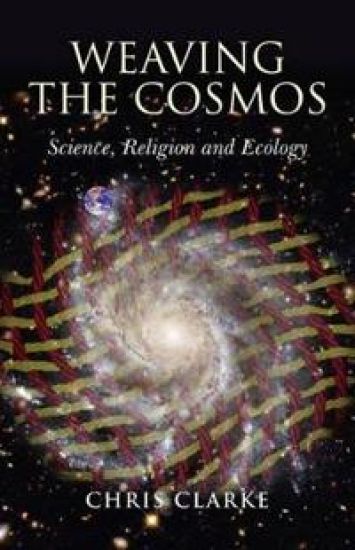
"Weaving the Cosmos" traces humanity's journey from the mythical origins of religion, through the struggles to make sense of Christianity in the fourth century, and the strangely similar struggles to make sense of quantum theory in the twentieth century, to modern quantum cosmology. What we see, both in the human mind and in the cosmos which has given birth to that mind, is a dance between rational Form and intuitive Being. This present moment of ecological crisis opens to us a unique opportunity for bringing together these two strands of our existence, represented by religion and science. As the story unfolds, the historical account is interwoven with the author's own experiences of learning the principles through which we can bring about this integration in ourselves and in society. The final chapter surveys the many changes now emerging in society which give us hope that a transformation can be achieved from our dysfunctional past to a future in which we can be truly human, in harmony with the earth.
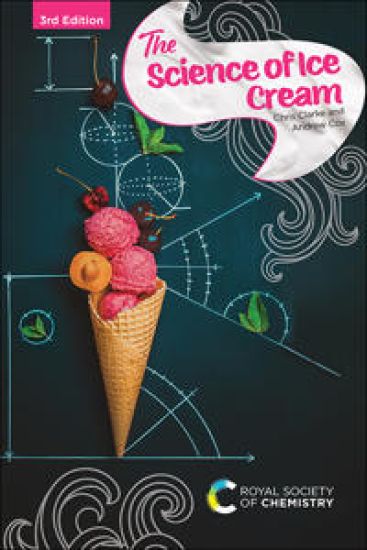
Ice cream as we recognize it today has been in existence for at least 300 years, though its origins probably go much further back in time. Before the development of refrigeration, ice cream was a luxury reserved for special occasions but its advance to commercial manufacture was helped by the first ice cream making machine patented by Nancy Johnson in Philadelphia in the 1840s. The third edition of The Science of Ice Cream has been fully revised and updated with new material. The book still begins with the history of ice cream, subsequent chapters looking at the link between the microscopic and macroscopic properties and how these relate to the ultimate texture of the product you eat. A new chapter on non-dairy ice cream has been added and the book is completed with some suggestions for experiments relating to ice cream and how to make it at home or in a school laboratory. The book has authenticity and immediacy, with a new co-author who is an active industrial practitioner, and is ideal for undergraduate food science students as well as those working in the food industry. It is also accessible to the general reader with a basic knowledge of science and provides teachers with ideas for using ice cream to illustrate scientific principles.
Adult Education and Community Action
Tom Lovett; Chris Clarke; Avila Kilmurray
Routledge
2018
sidottu
Originally published in 1982, this book discusses the role of adult education in social and community action. In particular it presents a critical assessment of 'community education' and the theories of Illich, Freire and Gramsci and it proves that there is a radical adult education tradition in the USA, Europe and North America which can offer many insights into the contemporary debate about the role of adult learning. The material is based on a decade of practical involvement in community action and education in Great Britain and Northern Ireland, where - despite deep political and religious divisions - community action has united Catholics and Protestants in a common resolve.
Adult Education and Community Action
Tom Lovett; Chris Clarke; Avila Kilmurray
Routledge
2020
nidottu
Originally published in 1982, this book discusses the role of adult education in social and community action. In particular it presents a critical assessment of 'community education' and the theories of Illich, Freire and Gramsci and it proves that there is a radical adult education tradition in the USA, Europe and North America which can offer many insights into the contemporary debate about the role of adult learning. The material is based on a decade of practical involvement in community action and education in Great Britain and Northern Ireland, where - despite deep political and religious divisions - community action has united Catholics and Protestants in a common resolve.
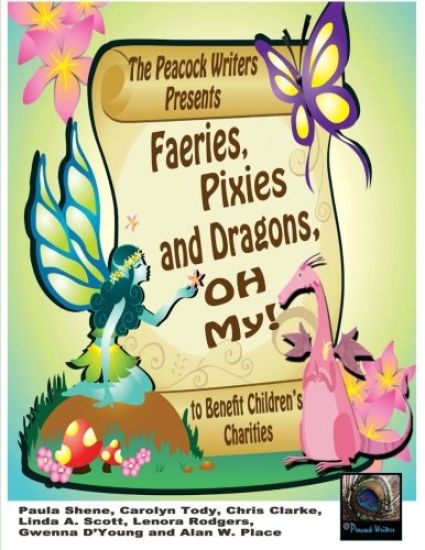
Faeries, Pixies and Dragons, Oh My!: To Benefit Children's Charities
Paula Shene; Chris Clarke; Linda A. Scott
Createspace Independent Publishing Platform
2013
nidottu
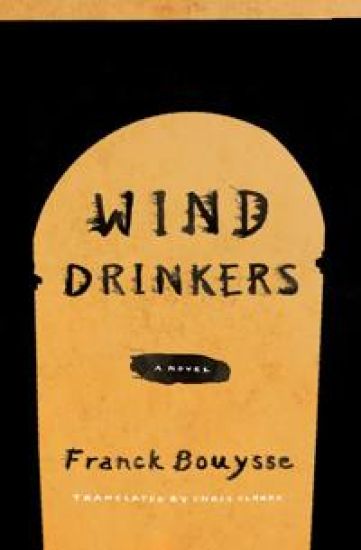
A thrilling mix of French noir and American Western, this novel charts a family's struggle for freedom and justice in a hostile mountain community. In Black Rimstone, an isolated valley cut off from the rest of the world, there live four siblings. Three brothers and one sister, who are united by an unfailing bond: Mark, who constantly reads in secret, in defiance of his father's wishes; Matthew, who can hear trees thinking; Mabel, a wondrously savage and graceful beauty; and Luke, the tragic child, the idiot, undoubtedly the wisest of them all, who can speak to frogs, deer, and birds, and dreams of one day becoming one of them. Like their father and grandfather before them, they all work for Joyce the tyrant, the cold-blooded beast of the Quarries and the Dam. Winner of the Prix Jean Giono, Wind Drinkers is a masterful, parable-like novel about the power of nature and the promise of rebellion.
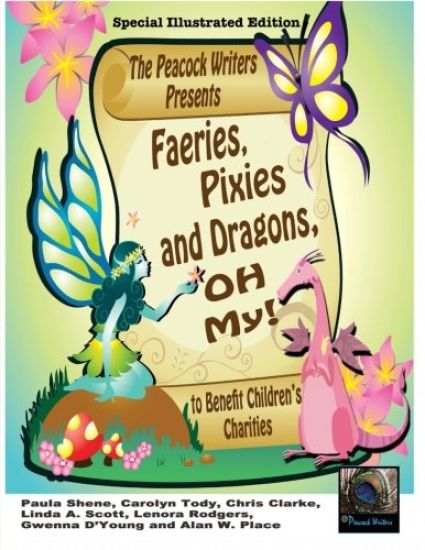
Faeries, Pixies and Dragons, Oh My! Special Illustrated Edition: To Benefit Children's Charities
Gwenna D'Young; Carolyn Tody; Chris Clarke
Createspace Independent Publishing Platform
2013
nidottu
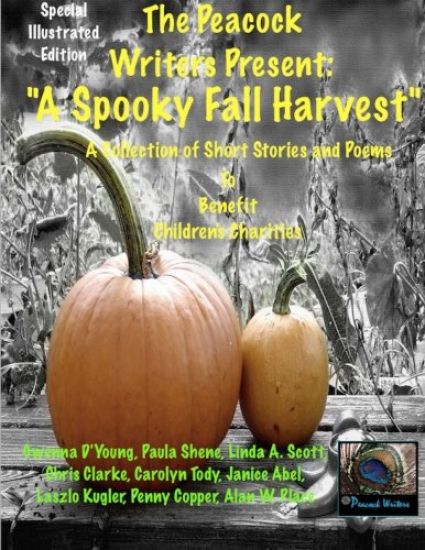
A Spooky Fall Harvest: The Peacock Writers Present
Paula Shene; Linda A. Scott; Chris Clarke
Createspace Independent Publishing Platform
2012
nidottu